

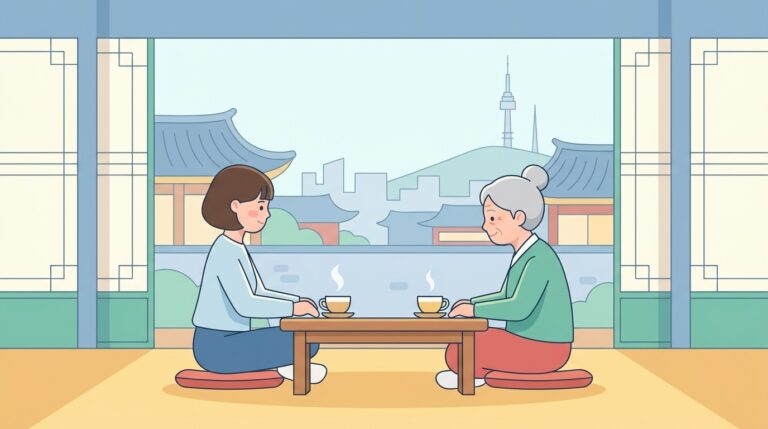
Phase 1: Empathy (Story-Driven Opening)
안녕하세요! It’s your Daily Hangul editor and cultural navigator. Have you ever watched a heartfelt K-drama scene—like in My Mister (나의 아저씨) or Reply 1988 (응답하라 1988)—where a seasoned elder sits down with a troubled young person, buys them warm soup, listens quietly without lecturing, and drops one piece of comforting wisdom? In contrast, you might have also seen the exasperating office drama where an older boss shouts “Back in my day!” and forces everyone to drink after work.
Navigating Korean social hierarchy and age dynamics can feel like walking through a conversational minefield. As intermediate (B2) learners, you already know basic honorifics like -yo and -kkeso, but understanding how modern Koreans differentiate between a pushy older person (a Kkondae) and a genuinely respected elder (참된 어른 or 존경받는 어른) is the real secret key to mastering nuanced communication. Our international students often tell us, “I want to show deep respect to my senior Korean colleagues without sounding like a robotic textbook or reinforcing toxic generational hierarchy.” Today, we will decode the exact expressions, cultural cues, and mindset that define true maturity and intergenerational respect in modern Korea!
Phase 2: Deep Dive into 3 Core Expressions
1. 말을 줄이고 지갑을 열다 (Māl-eul jul-i-go ji-gap-eul yeol-da)
- Pronunciation: Mahl-eul joo-ri-go jee-gahp-eul yeol-dah (Rhymes with English call and mall for māl, gool for jul)
- Meaning: Literal: To talk less and open your wallet. | Actual Nuance: The golden rule of being a beloved elder—listen generously and treat your juniors instead of giving uninvited lectures.
- K-Culture Moment: A popular meme and recurring phrase in variety shows like You Quiz on the Block when senior celebrities explain their secret to being loved by Gen Z staff.
- Editor’s Insight: This phrase playfully captures modern Korean culture’s biggest critique of older generations: talking too much about personal glory days (latte is horse / 라떼는 말이야). Showing affection through action and support rather than empty talk is considered the hallmark of a true mentor.
- Situation Spectrum: Casual ✅ | Semi-formal ✅ | Formal ⚠️
- 🤔 Think About It: In your home culture, is financial generosity tied to moral maturity, or is verbal mentorship valued more?
2. 귀감이 되다 (Gwi-gam-i doe-da)
- Pronunciation: Gwee-gahm-ee dweh-dah (Think Gwi like “Gwyneth” and gam like “calm”)
- Meaning: Literal: To become a mirror/model. | Actual Nuance: To serve as an inspiring role model or moral compass for others.
- K-Culture Moment: Used by juniors delivering sincere award acceptance speeches to veteran actors, or at retirement ceremonies for admired community leaders.
- Editor’s Insight: While words like 롤모델 (role model) are used casually, 귀감이 되다 carries profound emotional weight and gravitas. It denotes somebody whose quiet life choices and integrity naturally inspire others.
- Situation Spectrum: Casual 🚫 | Semi-formal ✅ | Formal ✅
- 🤔 Think About It: Why does the Korean language use mirror-related metaphors (귀감) to describe ethical leadership?
3. 품격을 지키다 (Pum-gyeok-eul ji-ki-da)
- Pronunciation: Poom-gyeok-eul jee-kee-dah (Pum rhymes with room/boom, gyeok like ge-yuck)
- Meaning: Literal: To maintain one’s grade of dignity. | Actual Nuance: To conduct oneself with grace, elegance, and emotional restraint in high-pressure situations.
- K-Culture Moment: Frequently heard in political dramas and corporate thrillers when seasoned leaders refuse to stoop to petty arguments.
- Editor’s Insight: Dignity (품격) in Korean culture is not about ostentatious wealth or intimidating authority. It is about emotional regulation, humility, and maintaining a respectful tone even when dealing with younger subordinates.
- Situation Spectrum: Casual ⚠️ | Semi-formal ✅ | Formal ✅
- 🤔 Think About It: How does your native language express the concept of “aging gracefully with moral authority”?
Phase 3: Textbook Korean vs. Real-World Korean
Situation 1: Praising a mentor’s deep wisdom and guidance
- 📖 교과서 한국어: 선생님은 나이가 많으셔서 지혜가 넘치십니다. (Seonsaengnimeun naiga maneusyeoseo jihyega neomchisipnida. – “Teacher, because you are old in years, wisdom overflows.”)
- 🗣️ 진짜 한국어: 역시 선배님은 통찰력이 남다르세요. 항상 든든합니다. (Yeoksi seonbaenimeun tongchallyeogi namdareuseyo. Hangsang deundeunhamnida. – “As expected, your insight is truly exceptional. You always make us feel supported.”)
- 💡 왜 다를까?: Directly pointing out someone’s physical age (나이가 많다) can feel blunt or awkward in modern Korean. Instead, complimenting their specific insight (통찰력) and reliable presence (든든하다) conveys sophisticated, polite reverence.
Situation 2: Describing an older person who respects younger boundaries
- 📖 교과서 한국어: 저 어른은 젊은 사람들의 말을 경청합니다. (Jeo eoreuneun jeolmeun saramdeurui mareul gyeongcheonghamnida. – “That elder listens attentively to young people’s words.”)
- 🗣️ 진짜 한국어: 저분은 참 열려 있으시고 후배들 의견을 존중해 주세요. (Jeobuneun cham yeollyeo isseusigo hubaedeul uigyeoneul jonjunghae juseyo. – “That person is truly open-minded and genuinely respects juniors’ opinions.”)
- 💡 왜 다를까?: 경청하다 sounds overly stiff and journalistic. In natural conversation, using 열려 있다 (open-minded) and humble subject honorifics (-아/어 주시다) reflects genuine warm admiration.
Phase 4: K-Culture Deep Dive & Non-Verbal Etiquette
4-1. Nunchi & Body Language
- Two-Handed Beverage Etiquette: When receiving or pouring tea/drinks with a respected elder, place your non-pouring hand gently beneath your wrist or on your chest. Turn your head slightly away when taking a sip.
- Attentive Nodding (고개 끄덕임): Never look into a mentor’s eyes with an intense, unblinking stare; instead, maintain soft eye contact focused around their brow, accompanied by rhythmic, small nods (맞장구) to show active engagement.
- Seating Nunchi (상석): When dining, the seat furthest from the entrance, facing the room, is the seat of honor (상석). True respected elders will often politely decline and say “편한 데 앉아요” (Sit wherever comfortable), but offering it first shows high cultural literacy.
4-2. Cultural Insight: The Shift from “Gwonwijuui” to “Seong-suk”
In contemporary K-dramas (e.g., Hospital Playlist / 슬기로운 의사생활), the most admired older figures are not authoritarian bosses (권위주의적 상사). Instead, society celebrates 성숙한 어른 (mature adults)—leaders who own up to mistakes, order good food for junior colleagues, and never demand loyalty simply based on the calendar year they were born.
Phase 5: Real-World Interactive Roleplay
Setting: A cozy traditional Sundubu restaurant in Euljiro after an exhausting company project deadline. You are dining with Senior Manager Park (부장님), a respected veteran known for his gentle leadership.
- Turn 1 (Manager Park): 오늘 프로젝트 마무리하느라 다들 고생 많았어요. 다 내 덕분이 아니라 팀원들 덕분이지.
(Oneul peurojekteu mamurihaneura dadeul gosaeng manasseoyo. Da nae deokbuni anira timwondeul deokbuniji.)
“You all worked so hard wrapping up the project today. It’s thanks to our team, not me.”
🎭 따뜻한 미소로 뚝배기를 건네며 -
Turn 2 (You): 아닙니다, 부장님께서 중심을 잘 잡아주셔서 무사히 끝낼 수 있었습니다.
(Animnida, bujangnimkkeseo jungsimeul jal jabajusyeoseo musahi kkeunnael su isseotseumnida.)
“Not at all, Manager Park. Because you held the core steady for us, we could finish safely.”
🎭 두 손으로 물잔을 채워드리며 -
Turn 3 (Manager Park): 그래요. 요즘 젊은 친구들 일하는 방식 보면서 나도 배우는 게 참 많아요.
(Geuraeyo. Yojeum jeolmeun chin-gudeul ilhaneun bangsik bomyeonseo nado baeuneun ge cham manayo.)
“Thank you. Looking at how younger folks work these days, I find myself learning a lot too.”
🎭 겸손하게 손을 내저으며 -
Turn 4 (You): 후배들 의견도 늘 귀담아들어 주셔서 저희는 정말 든든합니다.
(Hubaedeul uigyeondo neul gwidamadeureo juseyoseo jeohuineun jeongmal deundeunhamnida.)
“We always feel so reassured because you constantly listen to our junior perspectives carefully.”
🎭 진심 어린 눈빛으로 고개를 끄덕이며 -
Turn 5 (Manager Park): 나이 들수록 잔소리는 줄이고 밥은 자주 사야 좋은 선배라잖아요? 하하.
(Nai deulsurok jansorineun jurigo babeun jaju saya joeun seonbaerajannayo? Haha.)
“They say the older you get, the less you should nag and the more meals you should buy to be a good senior, right? Haha.”
🎭 호탕하게 웃으며 지갑을 꺼내며 -
Turn 6 (You): [Branching Choice – How do you respond?]
🔀 Interactive Choice Point
- Option A: “맞아요! 부장님은 꼰대가 절대 아니세요. 진짜 짱이에요!” (Majayo! Bujangnimeun kkondaega jeoldae aniseyo. Jinjja jjang-ieyo!)
- Option B: “부장님처럼 솔선수범하시고 배려해 주시는 게 진정한 어른의 모습인 것 같습니다.” (Bujangnimcheoreom solseonsubeomhasigo baeryeohae jusineun ge jinjeonghan eoreunui moseubin geot gatseumnida.)
- Option C: “네, 그러니까 다음 회식 소고기도 부장님이 다 쏘시는 거죠?” (Ne, geureonikka daeum hoesik sogogido bujangnimi da ssosineun geojyo?)
Feedback:
- Option A (Risk): While complimentary, using slang like 꼰대 and 짱 with a department head can sound overly casual and unrefined in a semi-formal work setting.
- Option B (Best ✅): Uses sophisticated intermediate B2 vocabulary (솔선수범 – leading by example, 진정한 어른 – true adult), expressing deep intellectual and emotional appreciation without flattery.
- Option C (Bad 🚫): Asking for expensive beef (소고기) immediately ruins the respectful ambiance and can appear entitled or tactless.
-
Turn 7 (Manager Park – continuing from Option B): 하하, 그렇게 말해주니 고맙네요. 앞으로도 힘든 일 있으면 언제든 편하게 이야기해요.
(Haha, geureoke malhaejuni gomaepneyo. Apeurodo himdeun il isseumyeon eonjedeun pyeonhage iyagihaeyo.)
“Haha, thank you for saying so. If anything gets tough in the future, please feel free to talk to me anytime.”
🎭 어깨를 가볍게 토닥이며 -
Turn 8 (You): 네, 부장님! 항상 솔선수범해 주셔서 진심으로 감사드립니다.
(Ne, bujangnim! Hangsang solseonsubeomhae jusyeoseo jinsimeuro gamsadeurimnida.)
“Yes, Manager Park! Thank you sincerely for always leading by example.”
🎭 정중하게 목례를 올리며
Phase 6: 10-Second Emotion Shadowing Drill
Master the melody and cadence of natural Korean respect by pausing at / marks!
[😊 존경과 신뢰를 담아 - Warm & Trusting]
선배님의 조언은 / 언제 들어도 / 큰 힘이 돼요.
(Seonbaenim-ui jo-eoneun / eonje deureodo / keun him-i dwaeyo.)
“Your advice / whenever I hear it / is always a huge source of strength.”-
[😌 겸손하고 차분하게 - Humble & Composed]
말씀해 주신 덕분에 / 제 부족한 점을 / 되돌아보게 되었습니다.
(Malsseumhae jusin deokbune / je bujokhan jeomeul / doedoraboge doe-eotseumnida.)
“Thanks to your guidance / on my shortcomings / I was able to reflect deeply.” -
[👏 진심 어린 감탄 - Sincere Appreciation]
후배들을 먼저 챙겨주시는 모습이 / 정말 본받고 싶습니다.
(Hubaedeureul meonjeo chaenggyeojusineun moseubi / jeongmal bonbatgo sipseumnida.)
“The way you take care of juniors first / is something I truly want to emulate.”
Phase 7: K-Culture Mini Dictionary
- 솔선수범 (Sol-seon-su-beom) | Leading by example
Usage: Describing an elder or manager who tackles difficult tasks first instead of just barking orders from a desk. - 꼰대 (Kkon-dae) | A condescending, rigid senior / boomer
Usage: Used informally among younger generations to describe someone who imposes outdated values and demands unearned deference. - 참어른 (Cham-eo-reun) | A true, authentic, admirable elder
Usage: A high compliment reserved for seniors who embody integrity, warmth, emotional maturity, and generosity. - 내리사랑 (Nae-ri-sa-rang) | Love flowing downward (from elder to junior)
Usage: The traditional Korean belief that affection and sacrifice should naturally flow from older generations down to younger ones without expecting immediate repayment.
Phase 8: Traveler’s Survival Kit
Top 3 Senior Interaction Expressions
- 어르신, 편히 앉으세요. (Eoreusin, pyeonhi anjeuseyo.)
Pro Tip: Use this when offering your seat on the Seoul subway to an elderly passenger. 어르신 is much more polite than 할머니/할아버지 to a stranger. - 말씀 많이 들었습니다. (Malsseum mani deureotseumnida.)
Pro Tip: The quintessential opening greeting when introduced to someone’s parents, senior boss, or professor (“I’ve heard so many great things about you”). - 먼저 들어가세요. (Meonjeo deureogaseyo.)
Pro Tip: When an elder gets into an elevator or leaves the restaurant first, say this with a light head bow.
Editor’s Travel Note
When traveling in South Korea, knowing local transit and dining etiquette will save you countless awkward moments. Be sure to prepare before landing by checking our guide on [Naver Map app download and navigation tips] to easily find senior-friendly traditional tea houses (인사동 전통 찻집) in Insadong and Samcheong-dong where respectful cross-generational hospitality thrives.
Phase 9: A Step Deeper (Reflection Essay)
In many Western cultures, egalitarian communication is established by removing titles and speaking as horizontal peers regardless of age. In contrast, Korean culture builds psychological safety not by erasing hierarchy, but by purifying it of ego. When an elder uses their seniority not to dominate, but to shield and sponsor younger generations (내리사랑), age ceases to be an oppressive barrier and becomes a comforting umbrella.
💬 Your Turn: Who is a person in your life that you would describe as a 참된 어른 (true elder)? What qualities make them special? Leave a comment below in Korean or English!
Phase 10: FAQ & Common Pitfalls
Q: Can I call any older Korean person “선배님” (Seonbaenim)?
A: No! 선배님 is specifically reserved for someone from the same school, university, department, or profession who entered before you. If you meet an older acquaintance socially without a shared institutional background, address them by their job title (팀장님, 작가님) or social relationship term (형님, 누님 when very close).
Q: Is the word “꼰대” (Kkondae) strictly an insult, or can it be used playfully?
A: While it originated as derogatory slang, it is now commonly used in self-deprecating humor (“내가 너무 꼰대 같나?” – “Am I acting like a boomer?”). However, calling an elder a 꼰대 directly to their face is extremely offensive unless they use it on themselves first in a self-mocking joke.
Q: What is the most respectful compliment for a senior’s youthful energy?
A: Avoid saying “나이보다 젊어 보이세요” (You look younger than your age) in formal settings as it reminds them of their age. Instead, use “항상 열정적인 에너지를 배우고 싶습니다” (I always want to learn from your passionate energy).
🚨 Common Mistakes Alert Board
- Mistake: Using 당신 (Dangsin) to mean “you” when speaking to an older mentor.
Correct Action: Never use 당신! Use their title + 님 (e.g., 선생님, 교수님, 부장님). - Mistake: Refusing food or drinks offered by an elder too aggressively.
Correct Action: Accept the first glass with two hands. If you cannot drink alcohol, accept it politely, set it down, and explain “건강상의 이유로 술을 못 마십니다”. - Mistake: Clinking glasses higher than the senior during a toast.
Correct Action: Clink the rim of your glass slightly lower than the senior’s glass to express modesty.
Phase 11: Action Missions
- 🥉 Bronze Mission (Solo Practice): Read Phase 6 Shadowing Drill aloud 3 times, recording your voice on your phone to match the emotion marks.
- 🥈 Silver Mission (Social Share): Write a 2-sentence appreciation post on social media or in our comments honoring a mentor using the phrase “본받고 싶습니다”.
- 🥇 Gold Mission (Real Life): Next time you interact with an older Korean speaker, use the non-verbal two-handed etiquette and thank them with “항상 든든합니다”.
- 🎮 K-Culture Mission: Watch an episode of the drama My Mister (나의 아저씨) and spot how Dong-hoon interacts with his neighborhood elders versus how younger team members speak to him.
Phase 12: Interactive Quiz Challenge
Question 1: Situational Judgment
Your veteran team leader stayed late to help you finish your emergency report without complaining. What is the most culturally mature (B2 level) way to thank them the next morning?
* A) “부장님, 진짜 짱이세요! 다음에 밥 사주세요!”
* B) “부장님께서 솔선수범해서 도와주신 덕분에 큰 위기를 넘겼습니다. 진심으로 감사드립니다.”
* C) “어제 부장님 일하는 속도가 저보다 빠르셔서 놀랐습니다.”
Question 2: Fill in the Blank
A beloved Korean proverb says that to be a respected elder, one must “말을 줄이고 ______을 열어야 한다” (Talk less and open one’s ______).
Question 3: True / False
In Korean culture, the concept of 내리사랑 implies that elders should continuously demand direct material compensation and praise from younger juniors. (True / False)
🔍 Click here to reveal Answers & Explanations!
- Q1 Answer: B | Option B expresses gratitude through formal honorifics and the refined term 솔선수범 (leading by example). Option A is excessively childish, and Option C sounds like an evaluation of a superior’s speed.
- Q2 Answer: 지갑 (Jigap – Wallet) | The phrase is 말을 줄이고 지갑을 열다 (Listen more, talk less, treat juniors generously).
- Q3 Answer: False | 내리사랑 is the unconditional downward flow of care, guidance, and affection from seniors to juniors without keeping score!







