

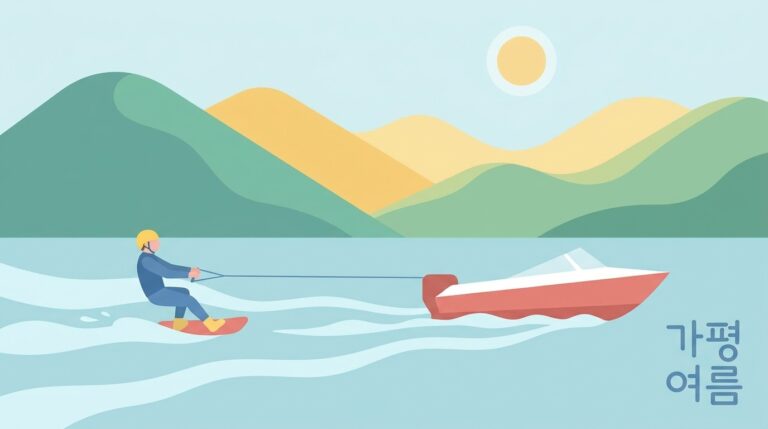
Conquering the Han River: The C1 Master Guide to Waterskiing and Wakeboarding in Korea
Phase 1: Empathy & K-Culture Immersion
안녕하세요! 매일한글 에디터입니다. (Annyeonghaseyo! It’s your Daily Hangul editor.)
Picture this: It is a blazing July afternoon in Gapyeong, the capital of Korean aquatic leisure. You are standing on a floating dock along the Bukhan River, surrounded by stylish locals donning slick rash guards and neon life vests. You hear the roaring motor of a MasterCraft speed boat slicing through crystalline water. Your Korean friends hype you up: “Show us what you’ve got!” You grab the tow rope handle, drop into the water, and suddenly… the coach fires off rapid instructions: “줄 팽팽하게 잡고, 시선은 정면 유지하세요!” (Jul paengpaenghage japgo, siseoneun jeongmyeon yujihaseyo!)
Panic sets in. You know standard dictionary words for ‘rope’ and ‘look’, but in the high-stakes, fast-paced world of Korean water sports, advanced somatic instructions, maritime banter, and dockside etiquette fly by at lightning speed. Many advanced learners feel their Korean freeze up when transitioning from quiet cafes to high-adrenaline river docks. Based on years of coaching international learners on outdoor excursions, this C1 guide is engineered to help you navigate waterskiing and wakeboarding docks with effortless, native-level fluency, precise technical jargon, and natural river banter.
Phase 2: Deep Dive into Core Expressions
1. 중심을 뒤에 두고 버티세요 (Jungsim-eul dwie dugo beotiseyo)
- Pronunciation: [Jung-shim-eul dwi-eh doo-go beo-ti-seh-yo] (Sounds like “Jung-sheam” + “Dwee-eh” + “Doo-go” + “Buh-tee-say-yo”)
- Meaning: Literal: “Keep your center behind and hold on.” | Real Nuance: “Shift your center of gravity backward and resist the boat’s initial pull without bending your arms.”
- K-Culture Moment: Seen in summer variety shows like Infinite Challenge or Running Man during their river training episodes when a coach sternly warns celebrity cast members before boat acceleration.
- Editor’s Insight: The verb 버티다 (beotida) conveys active endurance against strong mechanical forces. At a C1 level, pairing it with somatic terms like 중심 (center of gravity) demonstrates physical mastery.
- Situation Spectrum: Casual ⚠️ | Semi-formal ✅ | Formal ✅
- 🤔 Think About It: Notice how Korean instructors emphasize where the weight sits (중심) rather than telling you what individual limbs should do. How does your language structure dynamic balance cues?
2. 물살 가르면서 엣지 제대로 넣으셨네요 (Mulsal gareumyeonseo etji jedaero neoeusyeonneyo)
- Pronunciation: [Mool-sal gah-reum-yeon-seo edge-ee jeh-dae-ro neo-eu-syeon-neh-yo]
- Meaning: Literal: “You carved the edge properly while cutting through water.” | Real Nuance: “That was an incredible carve through the wake with crisp edge control!”
- K-Culture Moment: D-day celebrations on Instagram reels or Vlog highlights of trendy river outings (빠지 culture), where riding companions compliment each other’s technical line on the water.
- Editor’s Insight: 물살을 가르다 is a poetic, high-tier idiom meaning ‘to slice through waters,’ merged here with the imported technical term 엣지 (edge). It conveys high sports literacy.
- Situation Spectrum: Casual ✅ | Semi-formal ✅ | Formal ⚠️
- 🤔 Think About It: Blending native expressive verbs (가르다) with global sports terms (엣지) creates modern athletic Korean. Does your native language combine local idioms with imported loanwords similarly?
3. 보트 속도 좀 늦춰서 텐션 맞춰주실 수 있나요? (Boteu sokdo jom neutchwoseo tensyeon matchwojusil su innayo?)
- Pronunciation: [Boh-teu sok-doh jom noot-chwo-seo ten-shyun maht-chwo-joo-shil soo eent-nah-yoh?]
- Meaning: Literal: “Could you slow down the boat speed slightly to match the tension?” | Real Nuance: “Could you ease off the throttle slightly so I can stabilize line tension and find my groove?”
- K-Culture Moment: A calm and experienced rider speaking over the dock intercom or gesturing toward the boat driver (배 기사님) before initiating an advanced slalom cut.
- Editor’s Insight: 텐션을 맞추다 refers to maintaining the ideal towrope resistance without slack or sudden jolts. Using this polite request form (-실 수 있나요?) commands immediate professional respect.
- Situation Spectrum: Casual 🚫 | Semi-formal ✅ | Formal ✅
- 🤔 Think About It: Korean service culture at leisure spots values polite deference even when giving direct technical feedback to older boat captains (기사님). How do you balance assertiveness and politeness on sports docks in your home country?
Phase 3: Textbook Korean vs. Real Korean
Situation 1: Falling into the river during acceleration
- 📖 교과서 한국어: “제가 보트에서 떨어졌으니 다시 줄을 주십시오.” (Jega boteueseo tteoreojyeosseuni dasi jureul jusipsio. – “I fell from the boat, so please give me the rope again.”)
- 🗣️ 진짜 한국어: “아, 물 제대로 먹었네요! 라인 한 번만 다시 던져주세요.” (A, mul jedaero meogeonneyo! Lain han beonman dasi deonjyeojuseyo. – “Man, I totally swallowed river water on that wipeout! Toss me the line one more time, please.”)
- 💡 Why the difference? In authentic river culture, native speakers use the colorful idiom 물을 먹다 (to swallow water/wipe out) and call the tow rope 라인 (line) instead of textbook terms like 밧줄 or 줄.
Situation 2: Praising someone’s wakeboard jump
- 📖 교과서 한국어: “당신의 웨이크보드 점프 높이가 매우 높았습니다.” (Dangsinui weikeubodeu jeompeu nopiga maeu nopasseumnida. – “The height of your wakeboard jump was very high.”)
- 🗣️ 진짜 한국어: “방금 팝(Pop) 완전 미쳤다! 갤러리에서 다 소리 질렀어요.” (Banggeum pap wanjeon michyeotta! Gaelleorieseo da sori jilleosseoyo. – “That wake pop was completely insane! Everyone watching from the boat gallery cheered.”)
- 💡 Why the difference? C1 level Korean integrates contemporary youth intensifiers (완전 미쳤다) and specific river venue jargon (갤러리 for spectators on the boat or dock).
Phase 4: K-Culture Deep Dive & Non-Verbal Manners
4-1. Nunchi & Dockside Etiquette
- The Boat Captain Glance (기사님 눈맞춤): Before the throttle revs, establish steady eye contact with the driver through the rear mirror, give a crisp, upward nod, and raise your thumb only when your board tip is tilted at 45 degrees above the waterline.
- Dock Boarding Line Order: Never leave your wet board or ski boots lying around the staging platform (바지선 상판). Organize your gear compactly along the perimeter so other riders don’t trip over bindings.
4-2. Cultural Code: The ‘Ppaji’ (빠지) Phenomenon
In Korea, watersports hubs along the Bukhan River in Gapyeong and Yangpyeong are universally called 빠지 (Ppaji)—derived from the floating barge docks anchored on the water. Visiting a Ppaji isn’t just about athletic training; it is a full-day social ritual combining wakeboarding, inflatable water parks (워터파크), instant ramen cooked on electric foil induction burners (한강라면), and evening samgyeopsal barbecue parties with live acoustic indie tracks playing across the river.
Phase 5: Real-Life Roleplay Scenario
Setting: Gapyeong Bukhan River Ppaji dock. The morning mist is clearing, and the water is glass-smooth (장판).
Character: Min-seok (30s, veteran wakeboard coach with a bronze tan and neon board shorts).
- Coach Min-seok: “오늘 물 상태 완전 장판이네요! 지난번에 부상(water start)할 때 무릎 너무 일찍 펴서 고생하셨죠?” (Oneul mul sangtae wanjeon jangpan-ineyo! Jinanbeone busang-hal ttae mureup neomu iljjik pyeoseo gosaenghasyeotjyo?)
- 🎭 Action: Min-seok extends the training tow bar toward you, demonstrating a deep squat.
- Learner: “네, 보트 파워에 끌려가서 상체가 앞으로 쏠리더라고요.” (Ne, boteu pawoe kkeullyeogaseo sangchega apeuro ssolrideoragoyo.)
- Coach Min-seok: “맞아요. 이번엔 배가 출발해도 무릎 절대 펴지 말고, 가슴을 무릎에 붙인 상태로 끌려 나오세요.” (Majayo. Ibeonen baega chulbalhaedo mureup jeoldae pyeoji malgo, gaseumeul mureube buchin sangtaero kkeullyeo naoseyo.)
- Learner: “알겠습니다. 보트 속도는 초반에 조금 부드럽게 올려주실 수 있을까요?” (Algetseumnida. Boteu sokdoneun chobane jogeum budeureopge ollyeojusil su isseulkkayo?)
- 🎭 Action: You strap into the board bindings, slide into the cool river, and level your board tip above water.
- Coach Min-seok: “오케이, 자세 잡으시고! 준비되면 엄지 척 해주세요. 바로 당깁니다!” (Okei, jase jabusigo! Junbidoemyeon eomji cheok haejuseyo. Baro danggimnida!)
- Learner: “준비 완료입니다! 안전하게 다녀오겠습니다.” (Junbi wanryo-imnida! Anjeonhage danyeo-ogetseumnida.)
- 🎭 Action: You give a firm thumbs-up. The engine roars, and the boat surges forward smoothly.
- Coach Min-seok: “나이스! 엣지 누르면서 힐 사이드로 천천히 빠져보세요!” (Naiseu! Etji nureumyeonseo hil saideuro cheoncheonhi ppajyeoboseyo!)
🔀 Interactive Decision Branching
After completing a clean water start, the boat crosses a sudden wake wave. How do you respond to keep your balance?
- Choice A: “무릎을 살짝 굽혀서 충격 흡수하고 버틸게요!” (I will bend my knees slightly to absorb shock and hold my stance!)
- Choice B: “상체를 뒤로 확 젖혀서 보트를 더 세게 당기겠습니다!” (I will violently lean my upper body backward to pull the boat harder!)
- Choice C: “무서우니까 그냥 줄을 손에서 바로 놓아버릴게요.” (I am scared, so I will immediately let go of the tow rope.)
Feedback:
* Choice A (Best! 🏆): Outstanding bodily comprehension. Flexing knees to cushion wake chop keeps line tension intact and prevents severe whiplash.
* Choice B (Risk! ⚠️): Over-leaning shifts your center of gravity too far aft, making the board slip out instantly from under your feet, causing a rough spill.
* Choice C (Bad! ❌): While letting go is safer than tangling in the rope, dropping the handle unnecessarily in calm wakes breaks training rhythm and wastes boat run time.
Phase 6: 10-Second Emotional Shadowing Drill
- [🔥 자신감 넘치고 당당하게 – Confidently & Powerfully]
“보트 파워 / 절대 이기려 들지 말고, / 물 위로 미끄러지듯 / 쓱 일어나세요!”
(Boteu pawo / jeoldae igiryeo deulji malgo, / mul wiro mikkeureojideut / sseuk ireonaseyo!) -
[🌊 놀랍고 짜릿한 감탄으로 – Thrilled & Mesmerized]
“와, / 오늘 물결 하나 없는 / 완전 ‘장판’이라 / 슬라롬 타기 환상적이다!”
(Wa, / oneul mulgyeol hana eomneun / wanjeon ‘jangpan’-ira / seullarom tagi hwansangjeogida!) -
[🤝 겸손하고 프로페셔널하게 – Humble & Professional]
“기사님, / 웨이크 넘어갈 때 / 스로틀 한 템포만 / 천천히 감아주시면 감사하겠습니다.”
(Gisanim, / weikeu neomeogal ttae / seuroteul han tempoman / cheoncheonhi gama jusimyeon gamsahagetseumnida.)
Phase 7: K-Culture Mini-Dictionary
- 장판 (Jangpan) | Mirror-smooth flat water
Usage: Originating from smooth traditional Korean heated floor linoleum (장판), watersports enthusiasts use this word to describe morning river conditions completely devoid of surface chop. - 빠지 (Ppaji) | River barge dock & water leisure complex
Usage: “이번 주말에 가평 빠지 갈래?” (Do you want to head to a Gapyeong river barge leisure complex this weekend?) - 물먹다 (Mul-meokda) | To swallow water / to suffer an athletic wipeout or failure
Usage: Used both literally on the river when taking a tumble and figuratively in office culture when a project fails. - 갤러리 (Gaelleori) | Boat or dock spectators cheering on the active rider
Usage: Refers to friends riding along inside the towboat shooting 4K footage and hyping up the waterskier.
Phase 8: Traveler’s River Survival Kit
Survival Expressions TOP 3
- “구명조끼 버클 한 번만 더 조여주세요.” (Gumyeongjokki beokeul han beonman deo joyeojuseyo.)
Pro Tip: Ensuring your personal flotation device fits snugly prevents it from riding up to your chin when hitting the water. - “슈트 사이즈 L(라지)로 변경 가능한가요?” (Syutu sa-ijeu L-ro byeongyeong ganeunghangayo?)
Pro Tip: Rental neoprene tops and wetsuits in Korea often run half a size smaller than standard Western athletic apparel. - “끝나고 샤워실 온수 나오나요?” (Kkeutnago syawo-sil onsu naonayo?)
Pro Tip: Some rustic river docks turn off electric boilers in early spring or late autumn; always double-check water heaters.
Editor’s Travel Note
- Transport & Navigation: When booking weekend slots at river docks, use Kakao Map mobile application download or Naver Map navigation application install to search for “가평 수상레저” (Gapyeong Watersports).
- Local Commute: Catch the ITX-Cheongchun express train from Yongsan/Cheongnyangni to Gapyeong Station (가평역). Most major Ppaji resorts provide free private shuttle vans (픽업 서비스) directly from the station exit if booked in advance.
Phase 9: A Step Deeper — Thinking Humanistic Reflections
Watersports culture in Korea reveals a profound societal transition: the shift from industrial work ethic to intense leisure mastery (갓생 레저). In the West, spending a day on a boat is often a relaxed, unstructured pastime. In Korea, even river sports are approached with immense dedication, precision coaching, and high aesthetic standards. Riding the Bukhan River isn’t simply an escape; it is a collaborative communal celebration where boat captains, dock coaches, and fellow riders co-create safety and flow.
💬 Your Turn: In your culture, do people treat watersports as casual weekend relaxation or as a serious lifestyle discipline with specialized subculture codes? Share your thoughts below in the comments!
Phase 10: Structured FAQ & Common Mistakes
Q: What is the most natural way to address the speed boat pilot?
A: Always call them “기사님” (Gisanim) or “코치님” (Coach-nim). Never use casual pronouns like “아저씨” or foreign titles like “선장님” (Captain), which sounds archaic on sports rivers.
Q: Can I wear regular sunglasses while wakeboarding?
A: No. Standard eyewear will sink to the riverbed during a wipeout. Ask dock staff for a “수상스포츠용 스트랩” (water sports floating strap) or wear a water sports helmet with a visor.
Q: Do Korean river docks accept credit cards and foreign payment apps?
A: Major commercial Ppaji complexes readily accept international Visa and Mastercard, but mobile payment kiosks and snack stands often prefer Korean credit cards, KakaoPay, or cash for locker deposits.
🚨 Common Mistakes Board
- ❌ Mistake 1: Standing up instantly with locked straight knees upon boat acceleration.
✔️ Correct Action: Maintain a tucked ball posture (웅크린 자세) until the board planes on the water surface. - ❌ Mistake 2: Pulling the tow handle toward your chest with bent elbows.
✔️ Correct Action: Keep arms extended naturally and let the boat’s kinetic pull carry your weight forward. - ❌ Mistake 3: Shouting “출발!” (Depart!) while your head is turned sideways.
✔️ Correct Action: Keep your head facing dead center, brace your neck, and signal only with your thumb upward.
Phase 11: Action Missions
- 🥉 Bronze Mission (Solo Practice): Stand in front of a mirror in a semi-squat. Practice reciting: “시선 정면, 팔 펴고 중심 뒤에 유지!” (Eyes forward, arms straight, keep center back!) 5 times with natural flow.
- 🥈 Silver Mission (Social Sharing): Post a summer travel photo or clip with the Korean hashtag
#가평빠지or#웨이크보드and caption it using the slang word장판(mirror-smooth water). - 🥇 Gold Mission (Real Field Application): During your next river outing, ask the boat pilot: “기사님, 오늘 물 상태 완전 장판이네요! 잘 부탁드립니다!”
- 🎮 K-Culture Media Mission: Watch an episode of a Korean variety show (e.g., I Live Alone or Omniscient Interfering View) featuring celebrities wakeboarding, and listen for how many times the coaches say “버티세요”.
Phase 12: Interactive C1 Quiz Challenge
1. Situational Judgment: When the morning water is completely calm without any waves, which idiomatic term should you use?
* A) 물난리 (Mul-nanri)
* B) 장판 (Jangpan)
* C) 바닥 (Badak)
2. Fill-in-the-Blank: Complete the coach’s line:
“출발할 때 팔 힘으로 당기지 말고, 보트 힘에 그냥 몸을 (______)-세요.”
* A) 던지
* B) 맡기
* C) 숨기
3. True or False: In Korean river dock culture, it is considered polite and standard etiquette to call your towboat pilot “선장님 (Captain)”.
* [ True / False ]
🔍 Click here to reveal Answer Key & Explanations
- Answer: B (장판)
Explanation: 장판 refers to mirror-like, flat water conditions ideal for clean wake carves. - Answer: B (맡기)
Explanation: 몸을 맡기다 means to “entrust/surrender your body” to the boat’s pull, which is the foundational secret of a smooth water start. - Answer: False
Explanation: Sports towboat drivers are addressed as 기사님 (Gisanim) or 코치님 (Coach-nim). 선장님 is reserved for large sea vessels or fishing ships.






