

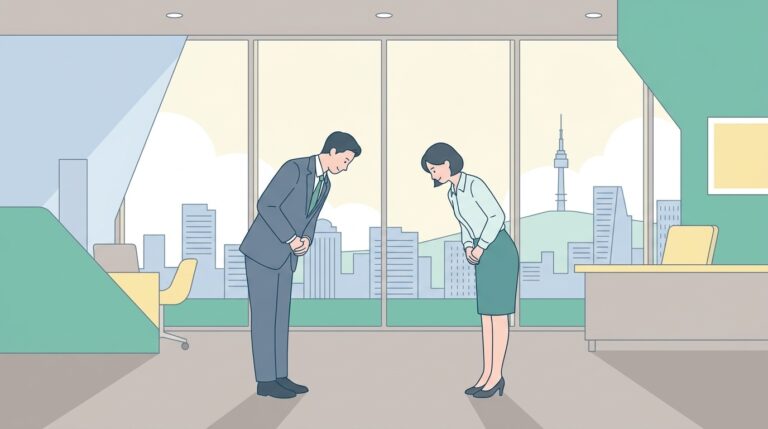
Phase 1: Empathy (Story-Immersed Opening)
안녕하세요! 매일한글 에디터입니다.
Picture this classic K-Drama workplace scene: An ambitious foreign project manager walks into a sleek Gangnam boardroom, looking the executive director straight in the eye with a confident, unwavering, 10-second gaze and a firm, one-handed handshake. In Western business manuals, that is textbook charisma. But in Seoul? The room freezes. The director smiles politely, yet subtly leans back, crossing his arms—an invisible barrier has just dropped.
As advanced learners navigating C1-level Korean, you already know grammar rules and polite verb conjugations. But Korean communication is high-context to its core: more than half of the actual message is transmitted through nonverbal choreography—the micro-nod, the angle of your tilt, the two-handed handoff, and the delicate dance of gaze avoidance known as nunchi.
Based on years of coaching global diplomats, corporate executives, and avid K-drama enthusiasts at Daily Hangul, we have distilled the subtle physics of Korean body language. Master these nonverbal codes, and you will transform from someone who merely speaks Korean to someone who intuitively belongs.
Phase 2: Deep Dive into 3 Core Nonverbal Expressions
1. 눈치껏 행동하다 (Nunchikkeot haengdonghada)
- Pronunciation: [Noon-chee-kkeot haeng-dong-ha-da] (Think of noon like the midday sun, chee like cheese, and kkeot with a sharp snap like clicking a pen).
- Meaning: Literal: “To act according to eye-measure.” / Real Nuance: To read the unspoken atmosphere, decipher micro-gestures, and act appropriately without being explicitly told.
- K-Culture Moment: In office dramas like Misaeng, whenever the senior manager sighs and rubs his neck, the observant junior instantly clears the meeting table and dims the lights without a single word uttered.
- Editor’s Insight: At a C1 level, nunchi is not just intuition; it is an active communicative virtue. Fast nunchi (nunchiga ppareuda) is the ultimate soft skill in Korea.
- Situation Spectrum: Casual: ✅ | Semi-formal: ✅ | Formal: ✅
- 🤔 Think About It: In low-context cultures, explicit verbal clarity is praised. Why does Korean society consider unspoken anticipation to be the highest form of consideration?
2. 양손으로 건네다 (Yang-soneuro geonneda)
- Pronunciation: [Yang-so-neu-ro geon-ne-da] (Pronounce yang like yin-yang, son like song without the ‘g’, geon like the beginning of ‘gun’).
- Meaning: Literal: “To hand over with both hands.” / Real Nuance: Demonstrating full deference, transparency, and respect by dedicating both hands to an exchange.
- K-Culture Moment: Watch any variety show like Running Man when a junior guest receives a drink from Yoo Jae-suk; they instinctively support their right forearm with their left hand while bowing.
- Editor’s Insight: You don’t always need both hands holding the object. In modern settings, simply placing your left hand under your right wrist or against your chest achieves the same polite resonance.
- Situation Spectrum: Casual: ⚠️ (Only with elders) | Semi-formal: ✅ | Formal: ✅
- 🤔 Think About It: How does the physical act of using two hands alter the perceived power dynamic between two speakers?
3. 고개를 숙이다 / 목례하다 (Gogaereul su-gida / Mong-nye-hada)
- Pronunciation: [Go-gae-reul soo-gi-da / Mong-nye-ha-da] (Mong-nye sounds smoothly linked like “mong-nyeh”).
- Meaning: Literal: “To lower one’s head / To nod-bow.” / Real Nuance: A nonverbal punctuation mark that signals humility, gratitude, acknowledgment, or silent apology.
- K-Culture Moment: In Crash Landing on You, characters repeatedly use small 15-degree head nods in hallways as an unobtrusive greeting that preserves social harmony.
- Editor’s Insight: Eye contact during this gesture is crucial: lower your gaze naturally with your head rather than staring up at the person while bending.
- Situation Spectrum: Casual: ⚠️ (Use light nod with friends) | Semi-formal: ✅ | Formal: ✅
- 🤔 Think About It: Why is maintaining rigid upright posture often interpreted as stubbornness or confrontation in collective social spaces?
Phase 3: Textbook Korean vs. Real Korean
Situation 1: Declining a business proposal without causing loss of face
- 📖 교과서 한국어: “그 제안을 거절하겠습니다.” (Geu jean-eul geojeol-hagesseumnida. – I refuse that proposal.)
- 🗣️ 진짜 한국어: “(말을 흐리며 뒷머리를 긁적이고) 아… 그 부분은 저희 팀 내부적으로 조금 더 검토가 필요할 것 같습니다.” ((Hesitating, lightly touching the back of the neck) Ah… as for that part, it seems our team might need a bit more internal review.)
- 💡 왜 다를까?: Outright verbal rejection creates direct friction (budichim). Native speakers soften negative answers using hesitant vocal pauses combined with a gentle neck-touch or head tilt to signal regret.
Situation 2: Acknowledging a senior colleague’s feedback
- 📖 교과서 한국어: “당신의 말이 맞습니다.” (Dangsin-ui mari matseumnida. – What you say is correct.)
- 🗣️ 진짜 한국어: “(상체를 10도 기울이고 펜을 쥔 채 연신 끄덕이며) 네, 부장님 말씀 취지 충분히 공감합니다. 바로 반영하겠습니다.” ((Leaning forward 10 degrees, holding a pen and nodding continuously) Yes, I fully understand the intent of your point, Director. I will reflect it immediately.)
- 💡 왜 다를까?: Using “당신” sounds unnatural and aggressive. Active physical nodding combined with leaning forward nonverbally validates the senior’s authority.
Phase 4: K-Culture Deep Dive & Nonverbal Etiquette
4-1. 눈치 (Nunchi) & Spatial Dynamics
In Korea, eye contact is nuanced. In Western contexts, intense eye contact signals honesty and engagement. In Korea, unbroken direct eye contact—especially with a superior, elder, or professor—can be interpreted as defensive or aggressive (chyeodaboda). The optimal strategy is the “triangular gaze”: alternate between looking gently at their eyes for 2–3 seconds, shifting your gaze to their bridge of the nose or collarbone, and nodding softly.
Furthermore, when passing through crowded spaces in Seoul (subways, busy restaurants), placing one hand flat against your chest or holding your arm inward while ducking your head 10 degrees is the universal nonverbal apology: Silryehapnida in motion.
4-2. Cultural Code: The Drinking Culture Pouring Etiquette
If you have watched K-Dramas like Itaewon Class, you know that pouring and receiving drinks is a masterclass in Korean kinesics. When an elder pours you soju, you hold your glass with both hands (right hand cupping the glass, left hand supporting the bottom or wrist). When taking the sip, you turn your torso and head slightly away from the elder, shielding the glass with your free hand. This gesture originated from historic court manners to conceal the consumption of alcohol as an act of modesty.
Phase 5: Real-World Roleplay Scenario
- Setting: A high-stakes project debriefing at a Seoul tech startup’s glass conference room.
- Character: 팀장 김민수 (Team Leader Kim Min-su, meticulous, senior, sharp-eyed).
-
Dialogue:
- 김 팀장: 앤디 씨, 이번 분기 마케팅 지표 분석 보고서 준비됐나요? (Andy-ssi, ibeon bungi maketing jibyo bunseok bogoseo junbidaennayo? – Andy, is the Q3 marketing analytics report ready?)
🎭 (안경을 고쳐 쓰며 진지한 눈빛으로 바라본다) - 앤디: 네, 팀장님. 여기 지난주 취합한 최종 데이터입니다. (Ne, timjangnim. Yeogi jinanju chwihapan choejong deiteoimnida. – Yes, Team Leader. Here is the finalized data gathered last week.)
🎭 (두 손으로 문서를 공손히 건네며 목례한다) - 김 팀장: 음… 전반적으로 괜찮은데, 이탈률 분석 그래프 축이 좀 이상한데요? (Eum… jeonbanjeogeuro gwaenchaneunde, itallyul bunseok geuraepu chugi jom isanghandeyo? – Hmm… overall it looks decent, but the churn rate graph axis seems a bit off?)
🎭 (서류를 검지로 톡톡 두드리며 고개를 갸웃한다) - 앤디: 아, 그 부분 말씀이시죠? 모바일 사용자 지표를 별도 분리하여 반영한 수치입니다. (A, geu bubeun malsseumisijyo? Mobail sayongja jibyoreul byeoldo bullihayeo banyeonghan suchiimnida. – Ah, you mean that section? It is the metric reflecting mobile users separated individually.)
🎭 (상체를 테이블 쪽으로 15도 숙이며 침착하게 설명한다) - 김 팀장: 아하, 그렇게 분리하니까 가독성이 훨씬 낫네요. 순발력 좋아요. (Aha, geureoke bullihanikka gadokseongi hwolssin nanneyo. Sunballyeok joayo. – Aha, separating it makes readability much better. Great adaptability.)
🎭 (표정이 누그러지며 미소를 짓고 고개를 끄덕인다) - 앤디: 좋게 봐주셔서 감사합니다. 피드백 주신 부분도 즉시 보완해 두겠습니다. (Joke bwajusyeoseo gamsahamnida. Pideubaek jusin bubeundo jeuksi bowanhae dugesseumnida. – Thank you for the positive assessment. I will immediately refine the feedback points as well.)
🎭 (가벼운 미소와 함께 양손을 가지런히 모은다) - 김 팀장: 수고 많았어요. 오늘 팀 회식 때 맛있는 거 먹으러 갑시다! (Sugo manasseoyo. Oneul tim hoesik ttae masinneun geo meogeureo gapsida! – Great work. Let’s go get something delicious at today’s team dinner!)
🎭 (어깨를 가볍게 툭 치며 일어선다) - 앤디: 네! 오늘 회식 기대하겠습니다, 팀장님! (Ne! Oneul hoesik gidaehagesseumnida, timjangnim! – Yes! Looking forward to the team dinner today, Team Leader!)
🎭 (활짝 웃으며 15도 각도로 정중히 인사한다)
🔀 Interactive Choice Point
During Turn 3, when Team Leader Kim points out the churn graph issue, how should Andy respond nonverbally?
- Option A: Maintain continuous, unblinking eye contact, cross arms, and immediately say “제 방식이 맞습니다” (My method is correct).
- Feedback: ❌ Bad (Social Friction): Crossing arms is defensive and unblinking eye contact can feel like open defiance in a hierarchical Korean workplace.
- Option B: Immediately look at the floor, stay silent for 15 seconds, and shrug shoulders.
- Feedback: ⚠️ Risk (Passive Disengagement): Shrugging and complete withdrawal makes you look unconfident and unprepared.
- Option C: Lean forward slightly, nod to acknowledge his observation, guide his gaze with an open palm toward the chart, and explain calmly.
- Feedback: 🏆 Best (Master Communicator): Demonstrates respect, poise, and high nunchi while defending the technical work.
Phase 6: 10-Second Emotion Shadowing Drill
- [😊 존경과 공감] “네, / 선배님 말씀의 취지를 / 충분히 이해했습니다.” (Ne, / seonbaenim malsseum-ui chwijireul / chungbunhi ihaehaesseumnida.)
- [🥺 조심스럽고 완곡하게] “죄송하지만… / 그 부분은 / 다시 한번 검토해 주실 수 있을까요?” (Joesonghajiman… / geu bubeun-eun / dasi hanbeon geomtohae jusil su isseulkkayo?)
- [🤝 진중하고 단호하게] “염려하시는 부분은 / 저희가 확실하게 / 책임지고 마무리하겠습니다.” (Yeomryeohasineun bubeun-eun / jeohuiga hwaksilhage / chaegimjigo mamurihagesseumnida.)
Phase 7: K-Culture Mini Dictionary
- 스킨십 (Seukinsip / Skinship): Physical affection or bonding touch. In Korea, casual touching (linking arms, patting shoulders) between same-gender close friends is a warm sign of jeong (affection), but unsolicited touch in formal business settings must be strictly avoided.
- 눈인사 (Nun-insa / Eye-greeting): A silent greeting performed with a warm, momentary eye-contact paired with a slight head dip when entering elevators or quiet meeting spaces.
- 손사래 (Sonsarae / Hand-waving denial): Waving both hands rapidly side-to-side in front of one’s chest to vehemently decline praise, offers, or gifts with polite humility.
- 뒷짐 (Dwitjim / Hands behind back): Interlocking hands behind one’s back while walking or observing. Culturally associated with senior supervisors, teachers, or elders inspecting surroundings.
Phase 8: Traveler’s Survival Kit
Survival Expressions TOP 3
- “잠시만 지나가겠습니다.” (Jamsiman jinagagesseumnida. – Just passing through for a moment.)
- Pro Tip: Keep your right hand straight along your chest line and tuck your head slightly as you squeeze through crowded subway doors.
- “영수증은 버려주셔도 돼요.” (Yeongsujeungeun beoryeojusyeodo dwaeyo. – You may discard the receipt.)
- Pro Tip: When handed a credit card back at convenience stores, receive it with both hands or lightly touch your right arm with your left hand.
- “저기요, 주문 도와주시겠어요?” (Jeogiyo, jumun dowajusigesseoyo? – Excuse me, could you help us order?)
- Pro Tip: Raise your hand at roughly shoulder height with palm facing forward—do not snap fingers or wave aggressively.
Editor’s Travel Note
When navigating Seoul’s bustling metro system, download the 네이버 지도 앱 다운로드 to check real-time carriage congestion levels. In crowded train cars, take off your heavy backpack and hold it down by your knees or wear it in front to show respect for the personal space of fellow commuters.
Phase 9: One Step Deeper (Reflection)
Nonverbal etiquette in Korean communication reflects the philosophical principle of Baeryeo (배려)—active, preventive consideration for the comfort of the collective whole. Unlike Western individualist frameworks where bodily autonomy is expressed through outward expansion, Korean body language utilizes spatial economy and gentle restraint to ensure others feel unthreatened and respected. When you adjust your posture, soften your gaze, and use two hands, you are essentially signaling: “I see you, I respect your standing, and I am tuning into your frequency.”
💬 Your Turn: Have you ever experienced a moment in Korea (or while watching a K-Drama) where body language communicated much more powerfully than words? Share your story in the comments below!
Phase 10: FAQ & Common Mistakes
Q: Is it always rude to maintain eye contact with Korean elders?
A: No, total avoidance makes you look untrustworthy. The golden rule is gentle, periodic eye contact combined with attentive nodding. Avoid intense, unbroken staring.
Q: Why do Koreans wave their hand with the palm facing down when calling someone over?
A: Waving with your palm facing up is used exclusively for calling animals in Korea. Calling a human with palm facing up can be deeply insulting. Always call someone with your palm facing downward, fluttering your fingers.
Q: Do I need to bow 90 degrees every time I say hello?
A: Absolutely not! A 90-degree bow (Baekbae or Geunjeol) is reserved for solemn ancestral rites, Lunar New Year ceremonies, or profound public apologies. In daily life, a crisp 15 to 30-degree nod-bow is ideal.
🚨 Common Mistakes Warning Board
- Mistake 1: Beckoning a taxi or waiter with an upturned single finger or palm.
- Correct Action: Extend your hand with the palm facing down and gently wave your fingers together.
- Mistake 2: Handing over a business card or payment card with one hand while keeping the other in your pocket.
- Correct Action: Keep both hands visible; hand the card over with both thumbs gripping the corners.
- Mistake 3: Slouching back and crossing legs so the sole of your shoe points directly at a senior colleague.
- Correct Action: Sit upright with knees together or ankles neatly crossed, keeping shoe soles directed firmly toward the floor.
Phase 11: Action Mission & Engagement
- 🥉 Bronze Mission: Practice the “two-handed item pass” at home today using your phone or coffee mug with a gentle 5-degree nod.
- 🥈 Silver Mission: Film a 5-second video demonstrating the proper palm-down calling gesture and tag
@DailyHangulon Instagram. - 🥇 Gold Mission: In your next live Korean conversation or meeting, intentionally implement the periodic triangular gaze and active micro-nodding.
- 🎮 K-Culture Mission: Watch episode 1 of any Korean workplace drama (Misaeng, King the Land, or Agency) and identify 3 instances where a character uses body language instead of verbal speech to express disagreement.
Phase 12: Interactive Quiz Challenge
Test your mastery of Korean nonverbal communication codes!
1. [Situational Judgment] You are introduced to your Korean company’s Vice President at a networking dinner. What is the most culturally adept greeting combination?
* A) Wide smile, strong one-handed grip, straight back, saying “반갑습니다!”
* B) A 30-degree bow, two-handed handshake (left hand supporting your right wrist), brief eye contact followed by lowering gaze, saying “처음 뵙겠습니다.”
* C) Waving with palm facing up from across the room.
2. [Fill in the Blank] When receiving a business card or gift from an elder, you must receive it with ______ (양손 / 한손).
3. [True / False] In Korea, pointing directly at a person with an index finger is considered acceptable in formal business meetings.
🔍 Click here to reveal the Quiz Answers & Explanations!
- Answer: B | Explanation: Combining a 30-degree bow with two-handed support (Yang-son) and standard formal language is the gold standard for high-level business etiquette in Korea.
- Answer: 양손 (Both hands) | Explanation: Receiving items with both hands signals sincerity, respect, and attentiveness.
- Answer: False | Explanation: Pointing with an index finger (Ssongarakjil) is considered rude and accusatory. Always gesture toward individuals with an open palm facing upward.







