

Phase 1: 공감 (Story-Driven Opening)
안녕하세요! 매일한글 에디터입니다.
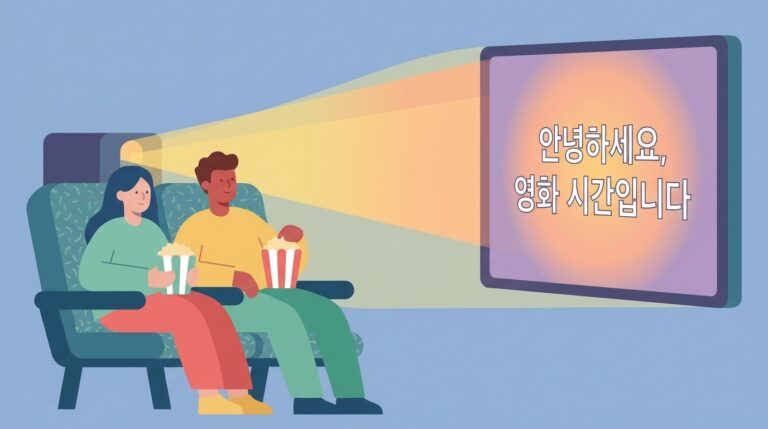
Picture this: You are sitting in a cozy indie theater in Jongno, watching a critically acclaimed Korean masterpiece like Bong Joon-ho’s Parasite or Park Chan-wook’s Decision to Leave. The actor delivers a sharp, witty line rich with bittersweet irony, and the Korean audience around you bursts into knowing laughter or lets out a collective gasp. Meanwhile, you glance at the English subtitles on the screen and think, “Wait, ‘I’m fine’? That’s all they wrote? That completely misses the double meaning!”
If you have ever felt that sting of frustration when English subtitles flatten the rich textures of Korean dialogue, welcome to the club of intermediate Korean learners! Moving into the B2 level means you are no longer just decoding basic words—you are starting to feel the rhythm, humor, and socio-cultural subtext of authentic speech. When subtitles fail to capture the clever wordplay or social hierarchy embedded in honorifics, you want to discuss it with fellow cinephiles over a drink.
In this guide, based on real feedback from Korean film buffs and translation studies, we will equip you with the exact natural phrases needed to critique subtitle translations and express that distinct cinephile disappointment in fluent, natural Korean.
Phase 2: 핵심 표현 3선 심층 분석 (Top 3 Key Expressions)
1. 뉘앙스가 완전히 죽었더라고요 (Nyuangseuga wanjeonhi jugeotdeoragoyo)
- Pronunciation: [Nyu-ang-seu-ga wan-jeon-hi ju-geot-deo-ra-go-yo] (Sounds like “Nuance-gah one-jun-hee joo-gut-duh-rah-goh-yo”)
- Meaning: Literally: “The nuance completely died.” -> Actual: “The subtle tone and nuance were completely lost in translation.”
- K-Culture Moment: Used when a dramatic or sarcastic inflection in Korean is rendered as a flat, emotionless factual statement in English subtitles.
- Editor’s Insight: The verb 죽다 (to die) is frequently used in Korean aesthetics and critique to describe when a flavor, visual style, or emotional resonance loses its vitality (e.g., 맛이 죽다, 색감이 죽다).
- Situation Spectrum: Casual ✅ | Semi-formal ✅ | Formal ⚠️
- 🤔 Think About It: In your native language, do you use biological metaphors (like “died” or “lost its pulse”) when art loses its punch?
2. 원문의 맛이 안 살아요 (Wonmuneui masi an sarayo)
- Pronunciation: [Won-mun-eui ma-si an sa-ra-yo] (Sounds like “Won-moon-eh mah-shee ahn sah-rah-yo”)
- Meaning: Literally: “The taste of the original text doesn’t live.” -> Actual: “It doesn’t capture the flavor or charm of the original script.”
- K-Culture Moment: Heated post-movie discussions at a pojangmacha (street pub) when discussing literary film scripts featuring dialect or vintage slang.
- Editor’s Insight: In Korean culinary and artistic philosophy, ‘맛’ (flavor) extends to linguistic texture—termed 말맛 (mal-mat, the mouth-feel and cadence of words). If subtitles are grammatically accurate but emotionally bland, this phrase is your go-to.
- Situation Spectrum: Casual ✅ | Semi-formal ✅ | Formal ✅
- 🤔 Think About It: How does your culture link food and sensory appreciation with language and literature?
3. 의역이 너무 심해서 몰입이 깨졌어요 (Uiyeogi neomu simhaeseo moribi kkaejyeosseoyo)
- Pronunciation: [Ui-yeog-i neo-mu sim-hae-seo mo-rib-i kkae-jyeo-sseo-yo] (Sounds like “Ee-yuck-ee nuh-moo shim-hae-suh moh-rib-ee kkeh-jyuh-ssuh-yo”)
- Meaning: Literally: “The liberal paraphrase was so severe that my immersion broke.” -> Actual: “The translation was overly localized/paraphrased, which completely pulled me out of the story.”
- K-Culture Moment: When iconic Korean cultural items (like ‘soju’ or ‘jjapaguri’) are localized into ‘whiskey’ or ‘ramen’, destroying the local atmosphere.
- Editor’s Insight: ‘몰입’ (immersion/flow) is an essential aesthetic metric in modern Korean entertainment. ‘몰입이 깨지다’ (immersion breaks) is standard jargon among K-Drama and cinema enthusiasts.
- Situation Spectrum: Casual ✅ | Semi-formal ✅ | Formal ✅
- 🤔 Think About It: Where should translators draw the line between making a line accessible to global audiences vs. preserving cultural authenticity?
Phase 3: 교과서 한국어 vs 진짜 한국어 (Textbook vs. Real-World Korean)
Situation 1: Pointing out that the English subtitle altered the entire character relationship
- 📖 교과서 한국어: 번역이 원작 대사와 다릅니다. (Beon-yeog-i won-jak dae-sa-wa da-reum-ni-da. / “The translation is different from the original line.”)
- 🗣️ 진짜 한국어: 자막이 캐릭터 관계성을 영 딴판으로 만들어 놨더라고요. (Ja-mag-i kae-rik-teo gwan-gye-seong-eul yeong ttan-pan-eu-ro man-deul-eo nwat-deo-ra-go-yo. / “The subtitles turned the character dynamics into something completely off-base.”)
- 💡 왜 다를까?: B2 speakers use ‘영 딴판’ (completely unrelated/different) and ‘관계성’ (character relational dynamics, a popular cinema/fandom keyword) to sound incisive and expressive.
Situation 2: Complaining about a punchline getting ruined
- 📖 교과서 한국어: 자막 때문에 농담이 재미없어졌습니다. (Ja-mak ttae-mun-e nong-dam-i jae-mi-eop-seo-jyeot-seum-ni-da. / “Because of the subtitles, the joke became unfunny.”)
- 🗣️ 진짜 한국어: 번역이 말장난을 하나도 못 살려서 개그가 다 죽었어요. (Beon-yeog-i mal-jang-nan-eul ha-na-do mot sal-lyeo-seo gae-geu-ga da jug-eoss-eo-yo. / “The translation couldn’t save the wordplay at all, so the comedic timing fell totally flat.”)
- 💡 왜 다를까?: Native speakers connect ‘말장난’ (pun/wordplay) directly with the lively metaphor ‘살리다/죽다’ (bring to life / kill).
Phase 4: K-Culture 딥다이브 & 비언어적 매너 (Deep Dive & Non-Verbal Cues)
4-1. 눈치 (Nunchi) & Cinema Critic Gestures
When discussing cinematic flaws among Korean peers, showing genuine passion without sounding arrogant requires specific physical manners:
* The Head Tilt & Sigh (고개 갸웃 & 탄식): Before dropping a critique like ‘자막이 좀 아쉽더라’ (The subtitles were a bit disappointing), slightly tilt your head and let out a gentle sigh. This signals that your frustration stems from your deep love for the movie, not pedantic superiority.
* The Finger Air-Quotes Alternative: In Korea, excessive air-quotes can look sarcastic. Instead, open your hands palms-up at chest level while emphasizing words like ‘말맛’ or ‘의역’ to convey a balanced, reflective attitude.
4-2. The Cultural Untranslatables of Korean Cinema
Korean film dialogue leans heavily on sociolinguistic registers. For instance, in Park Chan-wook’s films, shifting between formal -habnida and intimate -banmal reveals intimate psychological power shifts. When English subtitles reduce both to simple standard English, a huge narrative layer evaporates. Mentioning this structural limitation in film meetups instantly highlights your cultural fluency.
Phase 5: 실전 롤플레이 시나리오 (Real-Life Roleplay)
- Location: A warm, indie cinema cafe in Sangsu-dong filled with vintage movie posters.
- Character: Min-seo (민서), a sharp-eyed Korean film club moderator.
- 민서: 이번 영화 대사 진짜 시적이지 않았어요? 완전 감동받았어요.
(Ibeon yeonghwa daesa jinjja sijeogiji anat-eoyo? Wanjeon gamdong-bad-asseoyo.)
“Weren’t the lines in this movie so poetic? I was so moved.” -
You (🎭 nodding slightly with a thoughtful look): 맞아요, 배우들 딕션도 최고였어요. 근데 영어 자막 보셨어요?
(Maj-ayo, baeudeul diksyeondo choegoyeosseoyo. Geunde yeongeo jamak bosyeosseoyo?)
“Agreed, the actors’ diction was top-tier too. But did you happen to look at the English subtitles?” -
민서: 아, 저는 한국어 대사만 들었는데, 자막에 뭔가 문제가 있었나요?
(A, jeoneun hangugeo daesaman deureonneunde, jamage mwonga munjee-ga isseonnayo?)
“Ah, I was only listening to the Korean audio. Was there an issue with the subtitles?” -
You: 네, 명대사의 말맛이 전혀 안 살았더라고요.
(Ne, myeongdaesaeui mal-masi jeonhyeo an saratdeoragoyo.)
“Yeah, the subtle linguistic flavor of the iconic lines just didn’t come through at all.” -
민서: 헐, 진짜요? 어떤 대사가 특히 그랬는데요?
(Heol, jinjja-yo? Eotteon daesaga teukhi geuraenneundeyo?)
“Really? Which line in particular?” -
You (🎭 tapping table gently): 존댓말에서 반말로 넘어갈 때의 긴장감이 그냥 다 똑같이 번역됐어요.
(Jondaetmalese banmallo neomeogal ttae-eui ginjanggami geunyang da ttokgachi beonyeokdwaesseoyo.)
“The tension when switching from formal to informal speech was simply translated as identical plain English.” -
민서: 와… 그 미묘한 심리 변화가 번역에선 다 날아갔겠네요.
(Wa… geu mimyohan simni byeonhwaga beonyeogeseon da naragatgenneyo.)
“Wow… that subtle psychological shift must have flown completely out the window in translation.” -
You: 그러니까요! 의역이 너무 심해서 몰입이 좀 깨졌어요.
(Geureonikkayo! Uiyeogi neomu simhaeseo moribi jom kkaejyeosseoyo.)
“Exactly! The loose paraphrase was so heavy that it broke my immersion.”
🔀 Interactive Choice Point
Min-seo asks: “Do you think Korean cinema should use literal translation footnotes instead?” How do you respond?
- Option A: “각주를 달면 가독성이 떨어지니까, 문화적 맥락을 살리는 초월번역이 필요한 것 같아요.” (Adding footnotes hurts readability, so we need inspired creative translation that preserves cultural context.)
- 🏆 Feedback [Best]: Balanced, highly sophisticated B2/C1 film criticism vocabulary.
- Option B: “무조건 직역만 해야 원작 훼손이 없어요.” (Translators must only do direct literal translations to avoid ruining the original.)
- ⚠️ Feedback [Risk]: Sounds overly rigid; ignores film subtitle constraints (word count and reading speed).
- Option C: “자막 만드는 사람들은 영화를 전혀 모르는 것 같아요.” (Subtitle translators clearly know nothing about cinema.)
- 🚫 Feedback [Bad]: Aggressive, lacks empathy for the constraints of subtitling.
Phase 6: 10초 감정 섀도잉 드릴 (Emotion Shadowing Drill)
- [😮💨 아쉽고 안타까운 톤]
한국어 말맛은 / 온데간데없고 / 너무 밋밋하게 / 번역됐더라고요.
(Hangugeo malmaseun / onde-gande-eopsgo / neomu minmit-hage / beon-yeok-dwaet-deo-ra-go-yo.)
“The Korean word flavor / was nowhere to be found / and it was translated / way too blandly.” -
[🤔 진지하고 날카로운 비평 톤]
직역도 문제지만 / 이번 건 / 의역이 선을 넘어서 / 뉘앙스가 완전히 죽었어요.
(Jigyeokdo munjejiman / ibeon geon / uiyeogi seoneul neomeoseo / nyuangseuga wanjeonhi jugeosseoyo.)
“Literal translation is a problem, but in this case / the paraphrase crossed the line / and the nuance completely died.”
Phase 7: K-Culture 미니 사전 (Mini Dictionary)
- 초월번역 (Chowol-beonyeok) | Transcendent Translation
- Translations that creatively adapt idioms or jokes so brilliantly that they rival or surpass the original script.
- 말맛 (Mal-mat) | Verbal Cadence / Linguistic Flavor
- The unique rhythmic crunch, wit, and emotional texture of spoken Korean phrases.
- 오역 (O-yeok) | Mistranslation
- A factual error or linguistic misunderstanding in subtitles that alters the narrative meaning.
- 직역 vs. 의역 (Jigyeok vs. Uiyeok) | Literal vs. Free Translation
- The eternal cinema debate: translating word-for-word versus capturing contextual intent.
Phase 8: 여행자를 위한 생존 키트 (Traveler’s Survival Kit)
Top 3 Survival Phrases for Korean Theaters
- 영어 자막 지원되는 상영관인가요? (Yeongeo jamak jiwon-doeneun sang-yeong-gwan-ingayo?)
- “Does this screening support English subtitles?”
- 원작 대사의 뉘앙스를 알고 싶어요. (Wonjak daesaeui nyuangseureul algo sipeoyo.)
- “I want to understand the nuance of the original dialogue.”
- 이 장면에서 관객들이 왜 웃은 거예요? (I jangmyeon-eseo gwan-gaek-deuri wae useun geoyeyo?)
- “Why did the audience laugh at this specific scene?”
Editor’s Travel Note
When hunting for English-subtitled Korean screenings in Seoul, check out Seoul Art Cinema official screening schedule or indie hub Emu Cinema in Gwanghwamun. For logging film reviews with native cinephiles, look into the Watcha Pedia movie curation app guide to practice your Korean film commentary!
Phase 9: “한 발 더 깊이” (Cultural Insights)
Korean is a contextual language where unspoken hierarchies, historical sentiment (한, Han), and affective warmth (정, Jeong) are encoded into grammatical particles and speech endings. When a character suddenly switches from formal 하십시오체 to blunt 해라체, the entire balance of power flips without a single vocabulary change. Subtitles operating on Western syntactic structures often struggle to capture this without lengthy annotations. Discussing these gaps isn’t just about spotting errors; it is an exploration of the unique Korean worldview.
💬 Your Turn: What Korean line in a K-Drama or movie felt completely lost in the English subtitles for you? Leave your favorite example in the comments!
Phase 10: FAQ & 오해 방지 (FAQ Schema & Common Mistakes)
Q: Isn’t criticizing subtitles considered disrespectful to the translators?
A: Not at all, provided you focus on linguistic and cultural nuances rather than making personal attacks. Film clubs in Korea frequently debate subtitle choices as part of their cinematic analysis.
Q: What is the difference between ‘오역’ and ‘의역’?
A: ‘오역’ (O-yeok) means an outright error or wrong translation. ‘의역’ (Ui-yeok) is an intentional semantic paraphrase to make the line sound natural in the target language.
Q: Can I use ‘자막이 구려요’ (The subtitles suck) in polite company?
A: Avoid it! ‘구리다’ is heavy slang. Stick to ‘자막 번역이 많이 아쉽네요’ (The subtitle translation is rather disappointing) for a polished, polite critique.
🚨 Common Mistakes TOP 3
- ❌ Saying: “자막이 틀렸어요” (The subtitles are wrong) for stylistic differences.
- ✅ Fix: Use “뉘앙스가 좀 다르게 전달된 것 같아요” (It seems the nuance was conveyed a bit differently).
- ❌ Confusing: 번역 (Written translation) vs. 통역 (Oral interpretation).
- ✅ Fix: Always refer to movie subtitles as 번역 / 자막, not 통역.
- ❌ Literal translation: “The flavor died” as “맛이 죽었어요” without specifying 말맛.
- ✅ Fix: Say “원문의 말맛이 안 살았어요” for clarity.
Phase 11: 액션 미션 & 참여 유도 (Action Missions)
- 🥉 Bronze Mission: Pause your next K-Drama episode, pick one line, and practice saying: “이 대사는 자막보다 원문의 말맛이 훨씬 좋네요!”
- 🥈 Silver Mission: Write a 2-sentence movie review on social media or Watcha Pedia comparing a Korean line with its English subtitle using ‘뉘앙스가 아쉽다’.
- 🥇 Gold Mission: Join a Korean language film meetup and articulate why a specific cultural concept (like 반말 transition) got lost in translation.
- 🎮 K-Culture Mission: Watch the peach scene in Parasite or the interrogation scene in Decision to Leave and spot one subtitle line where you would translate the ‘말맛’ differently!
Phase 12: 인터랙티브 퀴즈 챌린지 (Interactive Quiz)
1. 상황 판단 (Situation Choice)
You want to tell your Korean friend that a clever comedic pun in a new comedy film was totally ignored by the English subtitles. Which sentence sounds most natural?
* A) 자막이 단어를 틀려서 기분이 나빴어요.
* B) 번역에서 말장난을 전혀 못 살려서 너무 아쉬웠어요.
* C) 자막 때문에 영화가 완전히 망했어요.
2. 빈칸 채우기 (Fill-in-the-Blank)
- “한국어 특유의 가 번역에서는 전혀 안 느껴져요.” (I can’t feel the unique flavor/cadence of Korean speech in the translation at all.)
3. True or False
- ‘초월번역’ means a completely failed mistranslation that ruined the movie. (T/F)
🔍 정답 및 해설 확인하기 (Click for Answers & Explanations)
- 정답: B (번역에서 말장난을 전혀 못 살려서 너무 아쉬웠어요.)
- 해설: Expresses specific critique of the pun (말장난) and missed flavor (못 살리다) in a polite, natural tone.
- 정답: 말맛
- 해설: 말맛 refers to the unique linguistic cadence and savory texture of authentic Korean spoken phrasing.
- 정답: False
- 해설: ‘초월번역’ (Transcendent translation) refers to an extraordinarily creative, well-adapted translation that elevates the source material!
- 해설: ‘초월번역’ (Transcendent translation) refers to an extraordinarily creative, well-adapted translation that elevates the source material!







