

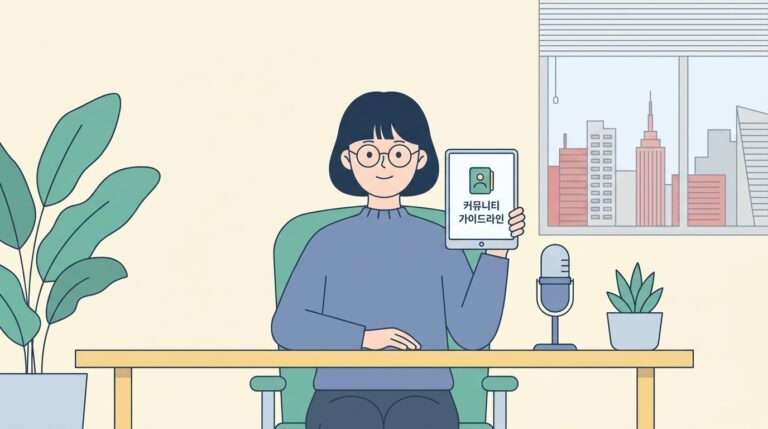
Mastering Community Management: How to Handle Malicious Comments Like a Pro Korean Creator
Phase 1: Empathy & Storytelling
안녕하세요! 매일한글 에디터입니다. Have you ever poured your heart and soul into editing a 15-minute vlog or writing an in-depth Naver blog review about your life in Seoul, only to wake up to toxic, spiteful remarks under your post?
In the vibrant Korean digital space—from YouTube comment sections to Naver cafes—community dynamics move at lightning speed. If you have watched K-dramas like Celebrity or followed K-Pop entertainment agencies addressing online rumors, you know how critically official statements and comment moderation are handled in Korea. Navigating cyber etiquette requires more than just knowing basic grammar; at the C1 level, it demands sophisticated linguistic diplomacy, decisive legal vocabulary, and nuanced community moderation skills. Today, drawing directly from the experiences of seasoned digital creators and digital culture specialists, we will equip you with the exact high-level Korean expressions to protect your peace, set clear boundaries, and manage your online tribe with dignity.
Phase 2: Top 3 Core Expressions Deep Dive
1. 선처 없는 강경 대응 (Seoncheo eomneun ganggyeong daeeung)
- Pronunciation: Seon-cheo eom-neun gang-gyeong dae-eung (Sounds like “Sun-chuh um-noon gahng-gyung dae-oong”)
- Meaning: Literal: “Tough response without leniency” | Nuance: “Zero-tolerance policy with strict legal action.”
- K-Culture Moment: Commonly used in agency press releases and pinned creator announcements when addressing defamation, malicious slander, or privacy invasion.
- Editor’s Insight: 선처 (leniency/clemency) paired with 강경 대응 (resolute/hardline counteraction) establishes a formal legal boundary. It immediately signals that you will not let trolls get away with unlawful behavior.
- Situation Spectrum: Casual 🚫 | Semi-formal ⚠️ | Formal/Official ✅
- 🤔 Think About It: Why does Korean digital culture rely so heavily on legal terms (고소, 법적 조치) in community moderation compared to English-speaking creators who often just use “Block and report”?
2. 무분별한 억측은 자제해 주시기 바랍니다 (Mubunbyeolhan eokcheugeun jajehae jusigi baramnida)
- Pronunciation: Mu-bun-byeol-han eok-cheu-geun ja-je-hae ju-si-gi ba-ram-ni-da (Sounds like “Moo-boon-byul-hahn uk-cheu-goon jah-jeh-hae joo-see-gee bah-rahm-nee-dah”)
- Meaning: Literal: “Please refrain from indiscreet speculations” | Nuance: “Kindly stop spreading unverified rumors and false narratives.”
- K-Culture Moment: Featured regularly in official pinned comments when a creator clarifies misunderstandings before a rumor escalates across community forums like TheQoo or DC Inside.
- Editor’s Insight: Using 자제하다 (to exercise restraint) combined with the respectful request ~해 주시기 바랍니다 allows you to maintain professional authority without sounding overly aggressive or emotional.
- Situation Spectrum: Casual 🚫 | Semi-formal ✅ | Formal ✅
- 🤔 Think About It: Notice how this phrasing targets the behavior (억측, speculation) rather than attacking the person directly. How does indirect phrasing preserve face in public discourse?
3. 건전한 비판은 겸허히 수용하겠습니다 (Geonjeonhan bipaneun gyeomheohi suyonghagetseumnida)
- Pronunciation: Geon-jeon-han bi-pan-eun gyeom-heo-hi su-yong-ha-get-seum-ni-da (Sounds like “Gun-jun-hahn bee-pahn-oon gyum-huh-hee soo-yong-hah-get-soom-nee-dah”)
- Meaning: Literal: “I will humbly accept sound criticism” | Nuance: “Constructive feedback is welcomed, but toxic hate will not be tolerated.”
- K-Culture Moment: A hallmark sentence in balanced creator community notices separating healthy engagement from hate speech.
- Editor’s Insight: 겸허히 (humbly) and 수용하다 (to accept/embrace) demonstrate maturity and openness to community growth while drawing a subtle distinction against blind hostility (비난 vs 비판).
- Situation Spectrum: Casual ⚠️ | Semi-formal ✅ | Formal ✅
- 🤔 Think About It: In Korean, 비판 (constructive critique) and 비난 (malicious condemnation) have distinct weight. Which one do you encounter most on your channels?
Phase 3: Textbook Korean vs. Real Korean
Situation 1: Warning malicious commenters against crossing the line
- 📖 교과서 한국어: 나쁜 댓글 달지 마세요. 신고할 것입니다. (Nappeun daetgeul dalji maseyo. Singgohal geosimnida.) — Do not leave bad comments. I will report you.
- 🗣️ 진짜 한국어: 도를 넘은 악의적 비방은 캡처 후 법적 조치 진행 중입니다. (Doreul neomeun aguijeok bibangeun kaepcheo hu beopjeok jochi jinhaeng jung-imnida.) — Malicious slander that crosses the line has been documented, and legal proceedings are underway.
- 💡 왜 다를까?: Native Korean creators rarely use simplistic words like 나쁜 댓글. Instead, they employ precise terms like 악의적 비방 (malicious slander) and 도를 넘다 (to cross the line) to demonstrate that the issue is being handled methodically.
Situation 2: Asking subscribers not to fight in the comments
- 📖 교과서 한국어: 댓글에서 싸우지 말고 친하게 지내세요. (Daetgeureseo ssauji malgo chinhage jinaeseyo.) — Do not fight in the comments and get along well.
- 🗣️ 진짜 한국어: 과열된 댓글창 관리를 위해 본 영상의 댓글은 잠시 닫아두겠습니다. (Gwayeol-doen daetgeulchang gwanrireul wihae bon yeongsang-ui daetgeureun jamsi dadadugesseumnida.) — To manage heated discussions, comments on this video will be temporarily disabled.
- 💡 왜 다를까?: Instead of asking commenters to be nice, creators proactively set boundaries using administrative terminology (과열된 댓글창, 댓글 비활성화/잠시 닫아두다).
Phase 4: K-Culture Deep Dive & Non-verbal Etiquette
4-1. Nunchi & Public Tone Dynamics
In Korea, internet defamation (사이버 명예훼손) is heavily regulated under the Information and Communications Network Act. Because words carry legal and social consequences, how a creator responds to controversy determines their longevity.
* Avoid emotional retaliation: Responding angrily with slang (너나 잘하세요) often triggers 역풍 (adverse public backlash).
* Maintain formal linguistic distance: Using 하십시오체 (formal speech) creates psychological distance, portraying you as calm, objective, and authoritative.
4-2. Community Culture: PDF 박제 & Archiving
Korean netizens use the slang term 박제 (literally taxidermy, meaning “permanent archiving/screenshotting”). When dealing with hate comments, experienced creators quietly collect PDF screenshots with visible timestamps and URLs before issuing warnings. Public announcements are usually posted as a clean black-and-white community text banner to indicate gravity and sincerity.
Phase 5: Real-World Creator Roleplay Scenario
- Setting: A lively studio cafe in Mapo-gu. You are reviewing hate comments on your latest Seoul life vlog with your Korean channel manager, Min-ji.
-
Min-ji (Manager): 🎭 Looking worried at the tablet screen
“크리에이터님, 어제 올린 영상 댓글창에 루머 유포하는 악플러가 몇 명 보이네요. 어떻게 조치할까요?”
(Keurieiteonim, eoje ollin yeongsang daetgeulchange rumeo yupohaneun akpeulleoga myeot myeong boineyo. Eotteoke jochihalkkayo?)
“Creator, there are a few trolls spreading false rumors in the comments of yesterday’s video. How should we handle this?” -
You (Creator): 🎭 Taking a deep breath and opening the community guidelines
“확인했어요. 일단 증거용으로 PDF 캡처부터 꼼꼼히 해 둘게요.”
(Hwaginaesseoyo. Ildan jeunggeoyongeuro PDF kaepcheobuteo kkomkkomhi hae dulgeyo.)
“I saw it. First, I will thoroughly take PDF screenshots for evidence.” -
Min-ji: 🎭 Nodding and typing notes
“좋은 생각이에요. 댓글을 바로 삭제할까요, 아니면 공지글을 상단에 고정할까요?”
(Joeun saenggagieoyo. Daetgeureul baro sakjehalkkayo, animyeon gongjigeureul sangdane gojeonghalkkayo?)
“Good idea. Should we delete the comments right away, or pin an official announcement at the top?” -
You: 🎭 Calmly drafting a statement
“상단에 공식 입장부터 고정하는 게 좋겠어요. 건전한 비판은 환영하지만, 무분별한 억측은 자제해 달라고요.”
(Sangdane gongsik ipjangbuteo gojeonghaneun ge jokeesseoyo. Geonjeonhan bipaneun hwanyeonghajiman, mubunbyeolhan eokcheugeun jajehae dallagoyo.)
“Let’s pin an official statement at the top first. State that constructive criticism is welcome, but please refrain from reckless speculation.” -
Min-ji: 🎭 Looking relieved
“네, 그리고 반복되는 악의적인 계정은 차단 조치하겠습니다.”
(Ne, geurigo banbokdoeneun aguijeogin gyejeongeun chadan jochihagetseumnida.)
“Yes, and I will block the accounts that repeatedly post malicious content.” -
You: 🎭 Setting down the coffee cup firmly
“지속적으로 허위 사실을 유포할 경우 선처 없이 강경 대응하겠다고 명시해 주세요.”
(Jisokjeogeuro heowi sasireul yupohal gyeong-u seoncheo eopsi ganggyeong daeeunghagetdago myeongsihae juseyo.)
“Please specify that if false information continues to be disseminated, we will take strict legal action without leniency.” -
Min-ji: 🎭 Smiling with confidence
“완벽해요. 깔끔하게 정리해서 커뮤니티 탭에도 함께 게시할게요.”
(Wanbyeokhaeyo. Kkalkkeumhage jeongnihaeseo keomyuniti taebedo hamkke gesihalkgeyo.)
“Perfect. I’ll summarize it cleanly and post it on the Community tab as well.” -
You: 🎭 Smiling back warmly
“고마워요 민지 씨! 우리 채널 구독자분들과 건강한 소통을 이어가 봐요.”
(Gomawoyo Minji ssi! Uri chaeneol gudokjabundeulgwa geonganghan sotong-eul ieoga bwayo.)
“Thank you, Minji! Let’s continue fostering healthy communication with our subscribers.”
🔀 Interactive Decision Point
How would you reply to a persistent commenter claiming: “외국인이 한국 와서 돈 쉽게 버네ㅋ” (Foreigners come to Korea and make easy money lol)?
- Option A: “너나 일하세요. 차단합니다.” (Work on yourself. Blocked.)
- Option B: “근거 없는 비방 댓글은 삭제 및 차단 조치되며, 심각한 경우 법적 조치를 취할 수 있습니다.” (Unsubstantiated defamatory comments will be deleted and blocked, and severe cases may be subject to legal action.)
- Option C: “아니에요, 저 진짜 힘들게 일하고 있어요! 믿어주세요.” (No, that’s not true, I work really hard! Please believe me.)
Feedback:
* Option A (Bad): Responding with direct anger gives trolls ammunition (먹이 금지) and lowers your channel’s professional standing.
* Option B (Best): Dignified, factual, and sets an unwavering standard according to community guidelines.
* Option C (Risk): Over-explaining (해명) can appear defensive and invites further bad-faith debate.
Phase 6: 10-Second Emotion Shadowing Drill
Practice these lines out loud with the designated rhythm and emotional delivery!
[🛡️ 단호하고 차분하게 / Firm and composed]
“도를 넘은 / 악의적 비방에 대해서는 / 선처 없이 / 강경 대응하겠습니다.”
(Doreul neomeun / aguijeok bibang-e daehaeseoneun / seoncheo eopsi / ganggyeong daeeunghagetseumnida.)-
[🤝 정중하지만 경계를 명확히 / Polite yet resolute]
“건전한 피드백은 / 감사히 수용하되, / 무분별한 억측은 / 자제 부탁드립니다.”
(Geonjeonhan pideubaegeun / gamsahi suyonghadoe, / mubunbyeolhan eokcheugeun / jaje butakdeurimnida.) -
[🧘 의연하고 프로페셔널하게 / Unfazed and professional]
“소모적인 논쟁을 방지하기 위해 / 관련 댓글은 / 숨김 처리하겠습니다.”
(Somojeogin nonjaeng-eul bangjihagi wihae / gwanryeon daetgeureun / sumgim cheorihagetseumnida.)
Phase 7: K-Culture Mini Dictionary
- 악플러 (Akpeulleo): Malicious commenter / Cyber troll. Derived from combining Sino-Korean 악 (惡, evil) with English reply (리플) + er.
- 박제 (Bakje): Archiving / Screenshotting for evidence. Originally meaning taxidermy; widely used in online communities to mean capturing permanent digital records.
- 선처 (Seoncheo): Judicial leniency / Clemency. Frequently heard in entertainment legal battles when settlement conditions are discussed.
- 차단 및 숨김 (Chadan mit Sumgim): Blocking and hiding user comments. The primary moderation feature used in YouTube Studio and Instagram creator tools.
Phase 8: Creator Survival Kit
Top 3 Channel Moderation Phrases
- 댓글창을 일시적으로 폐쇄합니다. (Daetgeulchang-eul ilsijeogeuro pyoeswehamnida.)
Pro Tip: Use this when discussions get out of hand and you need time to moderate. - 사실관계가 확인되지 않은 내용은 삼가 주세요. (Sasilgwangyega hwagindoeji aneun naeyong-eun samga juseyo.)
Pro Tip: Excellent for addressing unverified rumors neutrally. - 클린한 댓글 문화를 위해 협조해 주시기 바랍니다. (Keullinhan daetgeul munhwareul wihae hyeopjohae jusigi baramnida.)
Pro Tip: Encourages positive community engagement without sounding harsh.
Editor’s Digital Survival Note
When operating a creator channel in South Korea, bookmark official digital security and cyber complaint portals such as the Cyber Bureau of the National Police Agency Official Website for rapid consultation on defamation and cyber threats.
Phase 9: Going Deeper
In Korean society, public communication operates under a collective concept of relational responsibility (체면 and 공동체 의식). Because a creator’s public comment section is perceived as a shared living room rather than an unmoderated free-for-all, leaving destructive comments unaddressed can unintentionally signal negligence to your broader audience. Setting polite, high-register boundaries is not censorship—it is establishing your digital home’s hospitality standards.
💬 Your Turn: What is your personal philosophy for handling negative comments? Have you ever had to moderate a community in another language? Share your experience in the comments below!
Phase 10: FAQ & Common Mistakes
Q: Should I delete hate comments immediately or leave them?
A: If comments contain clear defamation or illegal threats, capture timestamped screenshots (PDF 박제) first before deleting or hiding them to preserve evidence.
Q: What is the difference between 비판 (bipan) and 비난 (binan)?
A: 비판 (bipan) refers to constructive, logical critique aimed at improvement, whereas 비난 (binan) refers to emotional, malicious condemnation without objective grounds.
Q: Can foreigners file legal complaints for cyber defamation in Korea?
A: Yes. Anyone residing in Korea or operating within Korean jurisdiction who suffers severe online defamation or harassment can report through the cyber investigation division.
🚨 Common Mistakes Warning Board
- Mistake: Using emotional counter-attacks like 너나 잘해 (Mind your own business).
- Correct Action: Use restrained formal phrasing: 본 채널의 가이드라인에 맞지 않는 댓글은 삭제 조치됩니다.
- Mistake: Confusing 수용하다 (to accept) with 묵인하다 (to condone/overlook).
- Correct Action: Say 비판은 수용하되, 비난은 거부합니다.
- Mistake: Deleting valid constructive feedback along with toxic comments.
- Correct Action: Publicly thank constructive viewers while filtering bad-faith attacks.
Phase 11: Action Missions
- 🥉 Bronze Mission (Solo Practice): Read the 3 shadowing sentences in Phase 6 out loud 5 times with a calm, authoritative voice.
- 🥈 Silver Mission (Social Share): Draft your own 2-sentence channel moderation guideline in Korean and leave it as a comment on this post.
- 🥇 Gold Mission (Real-World Application): The next time you see a heated Korean comment thread, identify whether the comments fall under 건전한 비판 or 악의적 비방.
- 🎮 K-Culture Mission: Watch an episode of a Korean entertainment news program or creator vlog and listen for the phrase “선처 없는 강경 대응”.
Phase 12: Interactive Quiz Challenge
1. Situational Judgment
Which sentence is the most professional response to pin on a community post regarding ungrounded rumors?
* A) 왜 거짓말을 퍼뜨려요? 다 고소할 거예요!
* B) 무분별한 억측은 자제해 주시기 바라며, 사실과 다른 내용에는 강경 대응하겠습니다.
* C) 그냥 다 신경 안 쓰기로 했습니다.
2. Fill-in-the-Blank
“건전한 비판은 겸허히 (_______)하겠습니다.”
* A) 수용 (suyong)
* B) 방치 (bangchi)
* C) 무시 (musi)
3. True or False
Korean creators usually recommend arguing directly with malicious commenters to prove their innocence in public comment threads. (True / False)
👉 Click here to check the Answers & Explanations
- Answer: B — Option B maintains an objective, polite, yet decisive legal tone (하십시오체).
- Answer: A (수용) — 수용하다 means to accept/embrace feedback humbly.
- Answer: False — Direct public arguing often escalates the issue (먹이 주기). Professional creators capture evidence and address the situation through formal notices or channel filters.






