

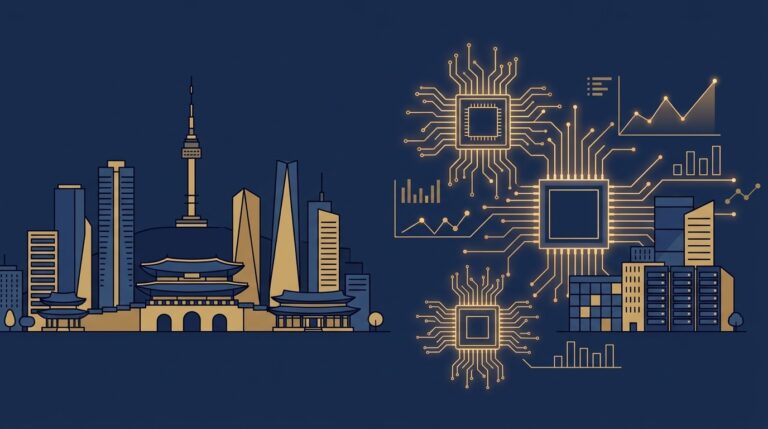
Talk Like a Seoul Tech Insider: The Semiconductor Supercycle in Korean
Phase 1: Empathy (Story-Immersive Opening)
안녕하세요! (Annyeonghaseyo!) It’s your Daily Hangul editor here!
Picture this: You are sitting at a bustling cafe in Pangyo Techno Valley—Korea’s Silicon Valley—surrounded by engineers, analysts, and venture capitalists. Your Korean colleagues are sipping their iced Americanos, intensely debating the latest earnings call. Suddenly, someone leans in and remarks, “이번 AI 붐 덕분에 반도체 업황이 완전히 바닥을 치고 올라왔네요. 이제 진짜 슈퍼사이클 진입인가요?” (Thanks to the AI boom, semiconductor business conditions have completely hit bottom and bounced back. Are we truly entering a supercycle now?)
You understand the words for “AI” and “semiconductor,” but the advanced business nuance slips right through your fingers. You hesitate, wanting to weigh in on memory chip dynamics or export trends, but textbook Korean didn’t prepare you for high-stakes industry forecasting.
Navigating Korea’s corporate tech discussions requires more than simple vocabulary—it requires mastering the strategic metaphors and analytical phrases that native professionals use daily. Based on real feedback from international professionals working in Korean conglomerates and tech startups, this guide will empower you to speak with clarity, confidence, and native-level fluency about the semiconductor supercycle. Let’s dive in!
Phase 2: Core Expressions Deep Dive
1. 바닥을 치고 반등하다 (Badaegeul chigo bandeunghada)
- Pronunciation: [Bah-dah-geul chee-go bahn-deung-hah-dah] (Sounds like “Bah-dahk” snappy tap + “Bahn-deung” bouncing up)
- Meaning: Literally “to hit the floor and rebound”; used to describe an economic market, stock, or business cycle hitting rock bottom before a strong recovery.
- K-Culture Moment: Frequently heard in Korean business news (like Korea Economic Daily or SBS Biz) and corporate K-Dramas like Reborn Rich when analyzing tech industry turnarounds.
- Editor’s Insight: 바닥을 치다 means reaching the absolute lowest point. Adding 반등하다 signifies positive momentum. In tech boardrooms, saying this shows you understand cyclical market patterns.
- Situation Spectrum: Casual (⚠️ – use 바닥 찍고 올라오다) / Semi-formal (✅) / Formal (✅)
- 🤔 Think About It: In English, we say “bottomed out.” In Korean, the physical metaphor of “striking the floor” (치다) implies dynamic energy bouncing back up. How does this reflect Korea’s dynamic economic mindset?
2. 슈퍼사이클에 접어들다 (Syupeosaikeure jeobeodeulda)
- Pronunciation: [Syoo-peo-sah-ee-keu-re juh-beo-deul-dah] (“Super-cycle” + “Juh-beo-deul-dah” sliding into a phase)
- Meaning: To enter a supercycle (a prolonged period of booming demand and rising prices).
- K-Culture Moment: Common headline jargon on Korean financial YouTube channels like Sampro TV whenever HBM (High Bandwidth Memory) or AI chip demand surges.
- Editor’s Insight: 접어들다 means smoothly crossing a threshold into a new season, era, or stage. It sounds far more sophisticated and natural than simply saying 시작하다 (to start).
- Situation Spectrum: Casual (⚠️) / Semi-formal (✅) / Formal (✅)
- 🤔 Think About It: Why do Koreans prefer transitional verbs like 접어들다 over absolute start/end terms in business forecasting?
3. 공급이 수요를 못 따라가다 (Gonggeubi suyoreul mot ttaragada)
- Pronunciation: [Gong-geu-bee soo-yoh-reul mot ttah-rah-gah-dah] (“Gong-geub” supply + “Su-yo” demand + “Mot ttaragada” can’t catch up)
- Meaning: Supply cannot keep up with demand (severe shortage/supply crunch).
- K-Culture Moment: Used by tech reviewers on IT YouTube channels (like ITSub) when explaining why next-gen graphics cards or AI chips are out of stock everywhere.
- Editor’s Insight: Instead of the rigid academic phrase 초과 수요 상태이다 (to be in an excess demand state), native professionals naturally use this dynamic motion phrase (못 따라가다 – cannot catch up).
- Situation Spectrum: Casual (✅) / Semi-formal (✅) / Formal (✅)
- 🤔 Think About It: Notice how Korean business discourse frequently uses athletic and physical movement metaphors to describe macroeconomic phenomena.
Phase 3: Textbook Korean vs. Real Korean
Situation 1: Describing market recovery
- 📖 교과서 한국어 (Textbook): 반도체 시장이 내년에 좋아질 것입니다. (The semiconductor market will be good next year.)
- 🗣️ 진짜 한국어 (Real Native C1): 반도체 업황이 내년 상반기부터 본격적인 상승 궤도에 오를 것으로 보입니다. (Semiconductor market conditions are projected to enter a full-fledged upward trajectory starting early next year.)
- 💡 왜 다를까? (Why the difference?): Real corporate communication uses precise domain words like 업황 (market/business conditions) and evocative idioms like 상승 궤도에 오르다 (to enter an upward orbit) rather than generic adjectives like 좋다.
Situation 2: Discussing inventory reduction
- 📖 교과서 한국어 (Textbook): 회사에 남은 재고가 줄어들고 있습니다. (The remaining inventory in the company is decreasing.)
- 🗣️ 진짜 한국어 (Real Native C1): 재고 조정을 성공적으로 마치면서 공급망에 숨통이 트이기 시작했어요. (With inventory adjustments successfully completed, the supply chain is finally catching its breath.)
- 💡 왜 다를까? (Why the difference?): Advanced Korean professionals use vivid somatic idioms like 숨통이 트이다 (to breathe freely again / relief from pressure) to describe overcoming operational bottlenecks.
Phase 4: K-Culture Deep Dive & Non-Verbal Manners
4-1. 눈치 (Nunchi) & Tech Meeting Etiquette
When discussing macroeconomic forecasts in a Korean corporate setting, absolute certainty can come across as reckless. Even if you are 100% convinced a supercycle is imminent, Korean executives expect measured optimism.
* Physical Posture: Lean slightly forward with open hands on the conference table when presenting data. Avoid crossing your arms, as it projects skepticism.
* Verbal Cushioning: Conclude analytical opinions with ~것으로 조심스럽게 전망됩니다 (It is cautiously projected that…) rather than definitive statements. This shows respect (Nunchi) for market volatility and leadership consensus.
4-2. Cultural Code: The “Chogyeokcha (초격차)” Mindset
In the Korean semiconductor ecosystem (spearheaded by giants like Samsung Electronics and SK Hynix), the prevailing philosophy is 초격차 (Super Gap)—creating an insurmountable lead over competitors. When discussing the supercycle, Koreans do not just focus on short-term profits; they evaluate whether Korean chipmakers can maintain this technological “super gap” in next-gen AI packaging and HBM.
Phase 5: Real-World Roleplay Scenario
Setting: A modern glass-walled conference room at an IT venture firm in Pangyo. You are discussing quarterly strategy with Team Lead Park (박 팀장).
- 박 팀장: 민수 씨, 이번 3분기 글로벌 메모리 반도체 동향 보고서 확인했나요? 분위기가 심상치 않네요.
(Minsu-ssi, ibeon sambungi geullobeol memori bandoche donghyang bogoseo hwaginhaennayo? Bunwigiga simsangchi anneyo.)
“Minsu, did you check the Q3 global memory semiconductor trend report? The momentum feels extraordinary.”
🎭 Adjusts his glasses while tapping his tablet pen on the desk. -
Learner (You): 네, 팀장님. AI 서버용 고대역폭 메모리(HBM) 수요가 폭발하면서 업황 회복세가 뚜렷합니다.
(Ne, timjangnim. AI seobeoyong godaeyeokpok memori(HBM) suyoga pokbalhamyeonseo eophwang hoeboksega ttyuryeothamnida.)
“Yes, Team Lead Park. With explosive demand for AI server HBM, the industry recovery trend is clearly visible.”
🎭 Nods respectfully while pointing toward the quarterly chart on the screen. -
박 팀장: 맞아요. 작년까지만 해도 재고 부담 때문에 다들 감산하느라 고생했는데, 이제 바닥을 친 게 확실해 보여요.
(Majayo. Jaknyeonkkajiman haedo jaego budam ttaemune dadeul gamsanhaneura gosaenghaenneunde, ije badaegeul chin ge hwaksilhae boyeoyo.)
“Exactly. Up until last year, everyone suffered through production cuts due to inventory buildup, but it looks certain we’ve hit bottom.”
🎭 Sighs with relief and takes a sip of his Americano. -
Learner (You): 맞습니다. 주요 공급사들이 감산 효과를 보면서 가격 프리미엄도 빠르게 회복되는 추세입니다.
(Masseumnida. Juyo gonggeupsadeuri gamsan hyogwareul bomyeonseo gagyeok peurimieomdo ppareuge hoebokdoeneun chuseimnida.)
“That’s right. As major suppliers reap the benefits of production cuts, price premiums are also rebounding quickly.”
🎭 Maintains steady eye contact with a confident tone. -
박 팀장: 그럼 시장에서 거론되는 ‘반도체 슈퍼사이클’ 진입 설에 대해서는 어떻게 보시나요?
(Geureom sijang-eseo georondoeneun ‘bandoche syupeosaikeul’ jin-ip seore daehaeseoneun eotteoke bosinayo?)
“Then how do you view the market speculation regarding an entry into a ‘Semiconductor Supercycle’?”
🎭 Tilts his head attentively, waiting for your strategic assessment. -
Learner (You): 단순한 단기 반등을 넘어서, AI 인프라 확충에 따른 구조적 호황기에 접어든 것으로 판단됩니다.
(Dansunhan danggi bandeungeul neomeoseo, AI impeura hwakchunge ttareun gujojeok hohwanggi-e jeobeodeun geoseuro pandandoemnida.)
“Beyond a simple short-term rebound, I evaluate that we have entered a structural boom driven by AI infrastructure expansion.”
🎭 Speaks calmly with analytical emphasis. -
박 팀장: 오, 구조적 호황이라… 그럼 우리 하반기 투자 계획도 그에 맞춰 공격적으로 수정해야겠군요.
(Oh, gujojeok hohwang-ira… Geureom uri habangi tuja gyehoekdo geue matchwo gonggyeokjeogeuro sujeonghaeyagetgunyo.)
“Oh, a structural boom… Then we should aggressively revise our second-half investment plans accordingly.”
🎭 Nods approvingly and starts jotting down notes. -
Learner (You): 네, 공급망 병목 현상에 대비해 선제적 투자와 파트너십 강화가 필요한 시점입니다.
(Ne, gonggeummang byeongmok hyeonsange daebihae seonjejeok tujawa pateuneosip ganghwaga piryohan sijeomimnida.)
“Yes, this is the precise moment when preemptive investments and strengthened partnerships are vital to prepare for supply chain bottlenecks.”
🎭 Offers a confident smile and closes the presentation slide.
🔀 Interactive Decision Point
How would you respond if Team Lead Park asks: “이번 사이클이 언제까지 이어질까요?” (How long will this cycle last?)
- Option A: “무조건 5년 이상 계속 갈 거니까 걱정 마세요!” (Don’t worry, it’ll definitely last over 5 years!)
- ❌ Bad: Overly casual and recklessly definitive for Korean executive culture.
- Option B: “AI 수요 지속 여부에 따라 달라지겠지만, 최소 내년 말까지는 타이트한 수급이 이어질 것으로 조심스럽게 전망됩니다.” (Depending on AI demand sustainability, it is cautiously projected that tight supply-demand conditions will continue at least through the end of next year.)
- 🏆 Best: Sophisticated, balanced, perfectly cushions foresight with professional business terminology.
- Option C: “글쎄요, 시장 상황은 아무도 모르는 거 아닌가요?” (Well, doesn’t nobody know market conditions?)
- ⚠️ Risk: Too evasive and passive, misses the opportunity to display strategic insight.
Phase 6: 10-Second Emotion Shadowing Drill
Practice reading these sentences aloud with natural rhythmic pauses marked by /.
[📈 확신에 찬 어조로 (Confident & Visionary)]
“AI 수요 급증으로 / 이번 반도체 시장은 / 역대급 슈퍼사이클에 접어들었습니다.”
(AI suyo geupjeungeuro / ibeon bandoche sijangeun / yeokdaegeup syupeosaikeure jeobeodeureotseumnida.)
“Driven by surging AI demand, this semiconductor market has entered an unprecedented supercycle.”-
[🤔 신중하고 분석적으로 (Analytical & Cautious)]
“공급망 병목 현상이 지속되면 / 단기적인 가격 변동성이 / 커질 수 있습니다.”
(Gonggeummang byeongmok hyeonsangi jisokdoemyeon / dangijeogin gagyeok byeondongseongi / keojil su itseumnida.)
“If supply chain bottlenecks persist, short-term price volatility could expand.” -
[🤝 결단력 있게 (Decisive & Collaborative)]
“지금이 바로 / 기술적 초격차를 확보하기 위한 / 골든타임입니다.”
(Jigeumi baro / gisuljeok chogyeokchareul hwakbohagi wihan / goldeuntaimimnida.)
“Right now is the golden window of opportunity to secure our technological super gap.”
Phase 7: K-Culture Mini Dictionary
- 업황 (Eophwang) | Business/Industry Conditions
Usage: Refers to the economic climate of a specific sector. Collocations: 업황 개선 (improvement of conditions), 업황 둔화 (slowdown of conditions). - 초격차 (Chogyeokcha) | Super Gap / Overwhelming Lead
Usage: Originally coined by Samsung leadership; describes creating an insurmountable technological gap so competitors cannot replicate your lead. - 품귀 현상 (Pumgwi hyeonsang) | Acute Shortage Phenomenon
Usage: Used when high-tech components (like high-end memory chips) become extremely scarce due to overwhelming market demand. - 수급 불균형 (Su-geup bulgyunhyeong) | Supply-Demand Imbalance
Usage: Professional financial shorthand for supply (공급) and demand (수요) falling out of equilibrium.
Phase 8: Traveler’s Survival Kit for Business Nomads
Top 3 Business Tech Survival Phrases
- 명함 한 장 건네 드려도 될까요? (Myeongham han jang geonne deoryeodo doelkkayo?)
“May I present my business card?”
Pro Tip: Always present and receive business cards with both hands, taking 3–5 seconds to read their title before setting it respectfully on the table. - IR 자료 공유해 주실 수 있나요? (IR jaryo gong-yuhye jusil su innayo?)
“Could you share the Investor Relations materials?”
Pro Tip: Essential phrase when attending tech conferences at COEX or BEXCO. - 회의록 정리해서 메일로 공유하겠습니다. (Hoe-ui-rok jeongnihaeseo meillo gong-yuhagetseumnida.)
“I will summarize the meeting minutes and share them via email.”
Pro Tip: Demonstrates proactiveness (일머리) after high-level strategy sessions.
Editor’s Travel Note
- Navigation in Tech Hubs: Google Maps often lags in Korea. Make sure to download the Naver Map application or KakaoMap navigation app for precise subway exits in Pangyo Techno Valley and Gangnam Business District.
- Tech Field Visit: When in Seoul, check out the Samsung Innovation Museum (SIM) in Suwon or the high-tech showroom at COEX to see Korea’s semiconductor milestones firsthand.
Phase 9: One Step Deeper (Thought Essay)
In Western business cultures, macroeconomic discussions often emphasize individualized quantitative modeling and portfolio hedges. In contrast, Korean corporate discourse around the semiconductor industry carries deep national pride and collective resilience. Semiconductors are frequently termed Korea’s “산업의 쌀” (the rice of industries)—the fundamental staple that feeds the nation’s economic ecosystem. Discussing the “supercycle” is not merely an investment assessment; it represents collective momentum, hard-fought technological sovereignty, and pride in overcoming historical hardships.
💬 Your Turn: Does your native culture view major technological cycles purely as economic opportunities, or do they carry broader national and communal significance? Share your thoughts in the comments below!
Phase 10: FAQ & Misconception Prevention
Q: Can I use the English word ‘Supercycle’ directly in Korean meetings?
A: Yes! Koreans routinely say 슈퍼사이클 (Syupeosaikeul). However, pairing it with advanced native verbs such as 접어들다 (to enter into) or 도래하다 (to arrive) makes your Korean sound professional rather than broken.
Q: What is the difference between 경기 (Gyeonggi) and 업황 (Eophwang)?
A: 경기 refers to the general overall economy (macro level), whereas 업황 specifically denotes the operating and financial conditions of a particular industry or business sector (micro/industry level).
Q: When is it appropriate to say ‘대박’ (Daebak) during a business success?
A: Reserve 대박 strictly for casual after-work dinners (회식). In meetings, boardroom presentations, or client discussions, replace it with 괄목할 만한 성과 (Gwalmokhal manhan seonggwa – remarkable achievement) or 사상 최대 실적 (Sasang choedae siljeok – record-breaking earnings).
🚨 Common Mistakes Warning Board
- ❌ 반도체 날씨가 좋아요. (Literal translation of “business climate is good”)
➡️ Correct Action: Use 반도체 업황이 호조세를 보이고 있습니다. - ❌ 가격이 위로 올라갔어요. (Sounds elementary)
➡️ Correct Action: Use 가격이 상승세를 타고 있습니다. - ❌ Using casual speech (반말) during Q&A sessions because you got excited.
➡️ Correct Action: Stick to the 하십시오체 / 해요체 formal spectrum (~로 판단됩니다, ~것으로 사료됩니다).
Phase 11: Action Missions
- 🥉 Bronze Mission (Solo Practice): Record yourself reading the 3 sentences in Phase 6. Focus on pausing naturally at the
/marks. - 🥈 Silver Mission (Social Share): Post a short tweet or LinkedIn update using the term 반도체 슈퍼사이클 and tag @DailyHangul!
- 🥇 Gold Mission (Real-World Execution): In your next professional exchange or language exchange, use the phrase “업황이 바닥을 치고 반등하고 있어요” when discussing tech news.
- 🎮 K-Culture Mission: Watch a 5-minute clip of Korean economic news (e.g., 한국경제TV or 삼프로TV) on YouTube and identify at least two keywords introduced in Phase 7.
Phase 12: Interactive Quiz Challenge
1. Scenario Judgment: You are presenting quarterly semiconductor forecasts to a Korean executive. Which phrase sounds most polished and native?
* (A) 메모리 가격이 짱 많이 올랐어요.
* (B) AI 메모리 수요 확대로 업황이 본격적인 상승 궤도에 진입했습니다.
* (C) 칩이 부족해서 큰일이 났습니다.
2. Fill-in-the-Blank:
“재고 조정을 마치고 하반기부터 수요가 급증하면서 시장이 완전히 바닥을 치고 _________.”
(Having completed inventory adjustments and with demand surging from 2H, the market has completely hit bottom and rebounded.)
3. True or False: In formal Korean business meetings, it is encouraged to speak in definitive, absolute certainties without hedging expressions like ~것으로 전망됩니다.
🔍 Click here to view Quiz Answers & Explanations!
- Answer: (B)
Explanation: (B) uses sophisticated C1 vocabulary (업황, 상승 궤도, 진입). (A) uses childish slang (짱), and (C) sounds dramatic and informal. - Answer: 반등했습니다 (or 반등하고 있습니다)
Explanation: The natural idiom following 바닥을 치고 is 반등하다 (to rebound). - Answer: False
Explanation: Korean executive culture values measured optimism and analytical humility, favoring probabilistic framing (~것으로 조심스럽게 전망됩니다).






