

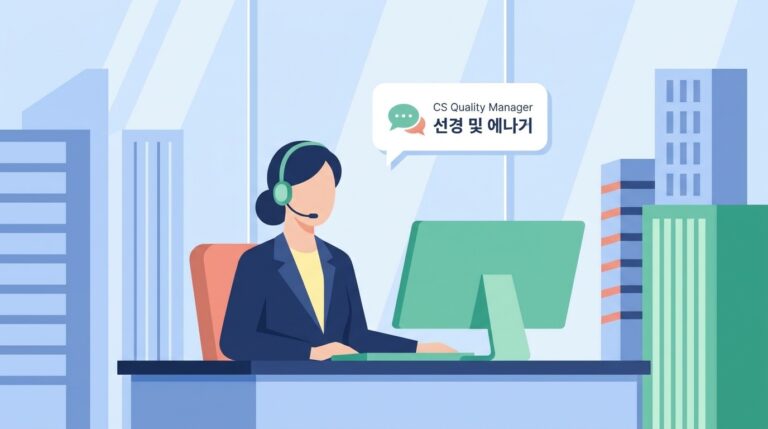
Phase 1: Empathy & Immersion
안녕하세요! 매일한글 에디터입니다.
Imagine this scenario: You are sitting in the modern glass-and-steel office of a prominent Korean e-commerce conglomerate in Pangyo Techno Valley. You are listening in on real-time customer calls to assess consultation quality (상담 품질 관리, QA). Suddenly, a customer’s tone shifts from mildly annoyed to icy formal. If your ear isn’t tuned to the intricate layers of Korean honorific hierarchy, passive avoidance, and subtle vocal inflections, everything sounds like polite corporate Korean. In reality, the customer just delivered a scathing, formal ultimatum—and the agent’s deflection might cost the company a crucial client!
At a C1 level, mastering Korean Customer Service (CS) Quality Assurance is not merely about understanding vocabulary; it is about decoding the subtext of corporate accountability, emotional mitigation, and hyper-polite de-escalation tactics. As a cultural navigator who has coached foreign managers across Seoul’s fintech and logistics hubs, I know the frustration of deciphering why a grammatically flawless agent response still receives a failing score in a Korean QA rubric. This guide delivers the exact linguistic frameworks, pragmatic nuances, and socio-cultural subtext required to evaluate and lead high-stakes Korean customer service operations with native precision.
Phase 2: Deep Dive into 3 Core Expressions
1. 불편을 끼쳐 드려 대단히 죄송합니다
- Pronunciation: [Bul-pyeon-eul kki-chyeo deu-ryeo dae-dan-hi joe-song-ham-ni-da] (Think: Pool-pyeon-ul kkee-chyeo deu-ryeo dae-dahn-hee jway-song-hahm-nee-dah)
- Meaning: Literal: “We are immensely sorry for causing you inconvenience.” | QA Nuance: The non-negotiable gold standard of active corporate apology, signaling that the company takes 100% emotional responsibility before addressing technical fault.
- K-Culture Moment: Seen frequently in high-stakes office dramas like Misaeng or Search: WWW when executive crisis teams issue public reconciliations or handle VIP escalations.
- Editor’s Insight: Notice the verb ‘끼치다’ (to cause/inflict harm/burden). In quality assessments, substituting this with weaker verbs like ‘불편을 드려서’ can reduce formal professionalism.
- Situation Spectrum: Casual 🚫 | Semi-formal ⚠️ | Formal ✅
- 🤔 Think About It: How does taking collective responsibility verbally differ from Western corporate apologies that often avoid admitting liability for legal reasons?
2. 신속하게 확인 후 안내해 드리겠습니다
- Pronunciation: [Sin-sok-ha-ge hwa-gin hu an-nae-hae deu-ri-get-seum-ni-da] (Think: Sheen-soke-hah-geh hwah-geen hoo ahn-neh-heh deu-ree-get-seum-nee-dah)
- Meaning: Literal: “We will guide you after confirming swiftly.” | QA Nuance: A commitment to time-sensitive action designed to reassure the hyper-fast Korean consumer mindset (Ppalli-Ppalli).
- K-Culture Moment: The signature response delivered by elite concierge desk agents in K-Dramas whenever an unpredictable crisis strikes a five-star hotel or conglomerate.
- Editor’s Insight: ‘신속하게’ (swiftly/expeditiously) carries far more professional weight and urgency than standard adverbs like ‘빨리’. In QA grading, it checks the box for proactivity.
- Situation Spectrum: Casual 🚫 | Semi-formal ⚠️ | Formal ✅
- 🤔 Think About It: Why is specifying “process first, answer second” considered the most reassuring sequence for Korean customers?
3. 양해를 부탁드립니다
- Pronunciation: [Yang-hae-reul bu-tak-deu-rim-ni-da] (Think: Yahng-heh-reul boo-tahk-deu-reem-nee-dah)
- Meaning: Literal: “I request your understanding/forbearance.” | QA Nuance: The definitive phrase used when delivering unchangeable policies or delays without sounding defensive or confrontational.
- K-Culture Moment: Heard on airport announcements or luxury flagship store hotlines during unexpected technical maintenance or policy enforcement.
- Editor’s Insight: ‘양해’ (forbearing consideration) appeals directly to the customer’s generosity of spirit. It turns a rigid corporate constraint into an empathetic social pact.
- Situation Spectrum: Casual 🚫 | Semi-formal ⚠️ | Formal ✅
- 🤔 Think About It: In your native language, how do you politely tell a customer “there is nothing more we can do” without triggering anger?
Phase 3: Textbook Korean vs. Real Korean
Situation 1: Asking the caller to hold the line
- 📖 Textbook Korean: 잠시만 기다리세요. (Jamsiman gidariseyo. – “Please wait a moment.”)
- 🗣️ Real Korean: 확인을 위해 잠시만 대기해 주시겠습니까? (Hwageneul wihae jamsiman daegihae jusigetseumnikka? – “Could you kindly hold the line for a moment while I verify the details?”)
- 💡 Why it differs: Standard imperative forms, even with ‘세요’, sound demanding over the phone. Real CS QA requires interrogative honorific phrasing (-주시겠습니까?) with a stated purpose (확인을 위해).
Situation 2: De-escalating an impatient customer who demands immediate answers
- 📖 Textbook Korean: 지금은 알 수 없습니다. (Jigeumeun al su eopseumnida. – “I cannot know right now.”)
- 🗣️ Real Korean: 해당 부서와 즉시 크로스체크하여 10분 내로 재인입 드리도록 조치하겠습니다. (Haedang buseowa jeuksi keuroseuchekeuhayeo sip-bun naero jaeinip deuridorok jochihagetseumnida. – “I will immediately cross-check with the relevant department and arrange a callback within 10 minutes.”)
- 💡 Why it differs: Advanced business Korean replaces blunt negatives with precise operational commitments and industry jargon like ‘재인입’ (callback/re-contact).
Phase 4: K-Culture Deep Dive & Non-Verbal Manners
4-1. Voice Nunchi (눈치) and Telephonic Etiquette
In Korean call center quality management, vocal acoustics carry as much weight as verbal choices. Agents are evaluated on Sol Tone (솔 톤)—an intentional slight elevation in pitch conveying warmth, energy, and deference. When evaluating quality:
* Acoustic Nodding (맞장구): Failing to produce affirmative interjections like ‘네, 고객님’ (Yes, esteemed customer) every 3–4 seconds is flagged as disengagement.
* Posture on the Wire: Even when invisible to the caller, top-tier agents maintain upright posture or slight nods; Korean vocal QA metrics prove that physical body language directly shapes vocal timber and deference.
4-2. Cultural Code: The ‘Gamjeong Nodong’ (감정노동) & Respect Paradigm
Emotional labor (감정노동) in South Korea is governed by intense social scrutiny and protective legislation. Recent quality control models do not merely reward submissiveness; they assess an agent’s ability to maintain polite authority (상담 주도권) while preserving the customer’s face (체면). A QA auditor at C1 level must distinguish between sincere empathy and over-promising unapproved compensation.
Phase 5: Live Role-Play Scenario
Setting: Quality Assurance Review Session between Alex (Foreign QA Director) and Min-ji (Senior Korean QA Lead) reviewing a recorded escalation call.
- Alex: 민지 팀장님, 방금 청취한 상담 건은 QA 평가표상 어떻게 보시나요?
(Min-ji timjangnim, banggeum cheongchwihan sangdam geoneun QA pyeonggapyo-sang eotteoke bosinayo?)
🎭 Looking over the analytics dashboard with furrowed brows.
“Team Lead Min-ji, how do you evaluate the consultation we just listened to based on our QA rubric?” -
Min-ji: 초기 감정 공감은 양호했으나, 해결책 제시 단계에서 명확한 기한 언급이 누락되었습니다.
(Chogi gamjeong gonggameun yanghohaesseuna, haegyeolchaek jesi danggyeeseo myeonghwak-han gihan eongeubi nurakdoeeotseumnida.)
🎭 Pointing at the audio waveform timestamp.
“Initial emotional empathy was satisfactory, but specific timeline commitments were omitted during the resolution phase.” -
Alex: 고객이 클레임을 강하게 제기할 때 상담원의 톤 조절은 어땠습니까?
(Gogaegi keulleimeul ganghage jegihal ttae sangdamwon-ui ton jojeoreun eottaetseumnikka?)
🎭 Taking detailed notes on the evaluation tablet.
“How was the agent’s tone modulation when the customer raised a strong complaint?” -
Min-ji: 정중했으나 솔 톤 유지가 다소 무너지며 방어적인 뉘앙스로 변질되었습니다.
(Jeongjunghaesseuna sol ton yujiga daso muneojimyeo bangeojeogin nyu-angseuro byeonjildoeeotseumnida.)
🎭 Nodding thoughtfully while adjusting headphones.
“It was polite, but the ‘Sol Tone’ faltered slightly, shifting into a defensive undertone.” -
Alex: 그렇다면 이 상담원에 대한 코칭 피드백은 어떻게 구성해야 할까요?
(Geureotamyeon i sangdamwon-e daehan koching pideubaekeun eotteoke guseonghaeya halkkayo?)
🎭 Leaning forward with genuine curiosity.
“In that case, how should we structure the coaching feedback for this agent?” -
Min-ji: 쿠션어 활용을 강화하고, 프로세스 중심의 명확한 확답 스크립트를 재훈련해야 합니다.
(Kusyeoneo hwalyong-eul ganghwahago, peuroseseu jungsim-ui myeonghwak-han hwakdap seukeuripteureul jaehullyeonhaeya hamnida.)
🎭 Pulling up the standardized CS training manual.
“We need to reinforce the use of cushion words and retrain on process-centered affirmation scripts.” -
Alex: 특히 재발 방지 약속 표현을 체계화할 필요가 있겠네요.
(Teukhi jaebal bangji yaksok pyohyeoneul chegye-hwahal piryoga itgenneyo.)
🎭 Highlighting the quality benchmark score.
“We especially need to standardize our phrasing regarding commitments to prevent recurrence.” -
Min-ji: 맞습니다. 이번 주 품질 미팅에서 우수 녹취 콜과 비교 분석을 진행하겠습니다.
(Masseumnida. Ibeon ju pumjil miting-eseo usu nokchwi kolgwa bigyo bunseogeul jinhaenghagetseumnida.)
🎭 Closing the QA ticket with a professional smile.
“Precisely. I will conduct a comparative analysis against best-practice call recordings in this week’s quality meeting.”
🔀 Interactive Decision Point
How would you direct the QA debrief for the team?
* Option A: “상담원이 사과를 너무 많이 해서 규정을 위반한 것처럼 보입니다. 무조건 사과 횟수를 절반으로 줄이세요.” (Risk: Stripping empathetic de-escalation may trigger higher formal customer complaints.)
* Option B: “스크립트의 쿠션어 사용 빈도를 점검하고, 감정 공감 후 신속한 대안 제시로 이어지는 표준 템플릿을 코칭합시다.” (Best: Balances emotional mitigation with efficient problem resolution.)
* Option C: “상담 태도는 완벽하니 점수를 만점으로 처리하고 추가 피드백은 생략합시다.” (Bad: Ignores missed resolution commitments, harming long-term CS metrics.)
Phase 6: 10-Second Emotional Shadowing Drill
[🛡️ 차분하고 단호하며 신뢰감 넘치는 톤]
“고객님의 우려 사항을 / 충분히 인지하였으며, / 신속히 정상화하도록 / 조치하겠습니다.”
(Gogaengnim-ui u-ryeo sahang-eul / chungbunhi injihayeosseumyeo, / sinsokhi jeongsanghwahadorok / jochihagetseumnida.)-
[🤝 진심 어린 공감과 정중한 사과]
“서비스 이용에 불편을 겪으신 점, / 다시 한번 / 깊은 사과의 말씀을 올립니다.”
(Seobiseu iyong-e bulpyeon-eul gyeokkeusin jeom, / dasi hanbeon / gipeun sagwa-ui malsseum-eul ollimnida.) -
[⏳ 신뢰감을 주는 절제된 정중함]
“정확한 조사를 위해 / 잠시만 시간을 양해해 주신다면 / 정확한 결과를 / 즉시 보고드리겠습니다.”
(Jeonghwak-han josareul wihae / jamsiman sigan-eul yanghaehae jusindamyeon / jeonghwak-han gyeolgwaleul / jeuksi bogodeurigetseumnida.)
Phase 7: K-Culture Mini Dictionary
- 쿠션어 (Cushion-eo) | Cushion Words: Softening polite prefixes (e.g., 번거로우시겠지만, 죄송하오나) placed before requests to absorb friction and maintain politeness.
- 스크립트 준수율 (Seukeuripteu Junsu-yul) | Script Adherence Rate: The core QA metric measuring how faithfully an agent applies standardized legal, brand, and empathy phrasing.
- 콜 인입량 (Kol In-im-nyang) | Inbound Call Volume: The traffic rate of incoming customer inquiries monitored dynamically in contact center operations.
- 종결 처리 (Jong-gyeol Cheori) | Ticket Resolution / Call Wrap-up: The final stage of consultation logging where call disposition and follow-up tasks are codified.
Phase 8: Travel & Corporate Survival Kit
- Top 3 CS Survival Phrases for Professionals:
- 담당 부서로 이관해 드리겠습니다. (Damdang buseoro igwanhae deurigetseumnida.) – Pro Tip: Use when routing tickets without causing customer frustration.
- 추가적으로 확인이 필요하신 사항이 있으십니까? (Chugajeogeuro hwageneul piryohasin sahang-i isseusimnikka?) – Pro Tip: The mandatory golden closing line in formal quality checklists.
- 소중한 의견 감사드리며, 서비스 개선에 적극 반영하겠습니다. (Sojunghan uigyeon gamsadeurimyeo, seobiseu gaeseone jeokgeuk banyeonghagetseumnida.) – Pro Tip: Professional wrap-up for critical feedback.
- Editor’s Travel & Tech Note: When navigating enterprise hubs in Seoul or visiting local branches, ensure your team utilizes Naver Map app download to locate enterprise offices accurately, and use Kakao T app download for seamless transit between business meetings in Gangnam and Pangyo.
Phase 9: A Step Deeper (Reflection)
In Korean corporate sociology, customer consultation is not a simple exchange of transactional data; it is an intricate performance of relational harmony (Jonbi-beop). The hyper-refined honorific system constructs a hierarchy where the client is elevated to absolute social prestige, yet the professional must maintain systemic control without fracturing the illusion of service hospitality. When quality managers evaluate calls, they are evaluating how seamlessly an agent balances structural rules with high-context emotional resonance (Jeong and Nunchi).
💬 Your Turn: In your culture’s CS landscape, is brevity prioritized over formal deference, or do you also expect elaborate linguistic cushions? Share your perspective in the comments below!
Phase 10: FAQ & Common Pitfalls
Q: Why do Korean QA rubrics penalize agents who use direct grammatical imperatives like ‘기다리세요’?
A: Even though ‘-세요’ is polite, in call center quality standards it carries an instructional, commanding undertone. Standard CS QA requires question-style honorific requests such as ‘기다려 주시겠습니까?’ to show supreme respect.
Q: What is the difference between ‘죄송합니다’ and ‘사과드립니다’ in a quality audit?
A: ‘죄송합니다’ is the baseline emotional apology. ‘사과의 말씀을 올립니다’ or ‘사과드립니다’ is an elevated, formal performative apology typically reserved for verified operational errors, structural escalations, or official complaints.
Q: How should an agent professionally conclude a call if the customer remains unsatisfied?
A: Instead of repeating identical apologies, top-scoring agents summarize the action steps: “고객님의 말씀을 유념하여 조속히 개선 방안을 모색하겠습니다. 추가 문의 시 언제든 연락 주십시오.” (We will bear your words in mind to devise improvements promptly. Please contact us whenever you have further inquiries.)
🚨 Common Mistakes Warning Board
- Over-Honorification (사물존칭): Saying “커피가 나오셨습니다” or “환불금이 없으십니다” (attaching honorifics to inanimate objects). Correct Action: Honor only the customer: “환불 금액은 0원입니다.”
- Cold Policy Quotation: Saying “규정상 불가능합니다” without a cushion word. Correct Action: Add a cushion: “안타깝게도 사내 규정상 지원에 제한이 있는 점 양해 부탁드립니다.”
- Premature Promise: Saying “오늘 중으로 무조건 해결해 드립니다” before confirmation. Correct Action: Promise process, not unconfirmed outcome: “금일 중으로 진행 상황을 1차 안내해 드리겠습니다.”
Phase 11: Action Missions
- 🥉 Bronze Mission: Practice the 3 expressions from Phase 2 out loud 5 times using Sol Tone.
- 🥈 Silver Mission: Write a sample 3-sentence Korean CS de-escalation response and share it on LinkedIn or your language journal.
- 🥇 Gold Mission: Listen to a real Korean corporate hotline automated message or drama business scene, and score the agent’s cushion words and ending particles.
- 🎮 K-Culture Mission: Watch an episode of an office K-Drama (such as Misaeng or Agency) and identify every time an employee softens a refusal using ‘양해’ or ‘죄송하오나’.
Phase 12: Interactive Quiz Challenge
-
Scenario Judgment: An agent says: “고객님, 그건 규정 위반이라 절대 안 됩니다.” How would you evaluate this in a C1 QA score?
👉 Click to reveal Answer & Explanation
Score: FAIL (Critical Error).
Directly telling a customer they are “violating rules” with the absolute negative ‘절대 안 됩니다’ breaks both cushion etiquette and face-saving manners. It should be reframed as: “고객님, 도움을 드리고 싶으나 현행 규정상 적용에 어려움이 있는 점 너른 양해 부탁드립니다.”
-
Fill in the Blank: Fill in the essential cushion word for an escalated delay:
“[_________], 시스템 점검으로 인해 처리가 5분 정도 지연될 예정입니다.”👉 Click to reveal Answer & Explanation
Answer: “번거로우시겠지만” or “대단히 송구스럽지만” / “너른 양해를 구하오나”
Explanation: Advanced QA rubrics require acknowledging the disruption before stating technical delays.
-
True / False Culture Quiz: In Korean CS QA, using higher acoustic pitch (‘Sol Tone’) is universally evaluated as unprofessional.
👉 Click to reveal Answer & Explanation
Answer: FALSE.
Explanation: In Korean customer consultation quality standards, a well-calibrated ‘Sol Tone’ is considered the benchmark of professional warmth, attentiveness, and high-energy politeness.







