

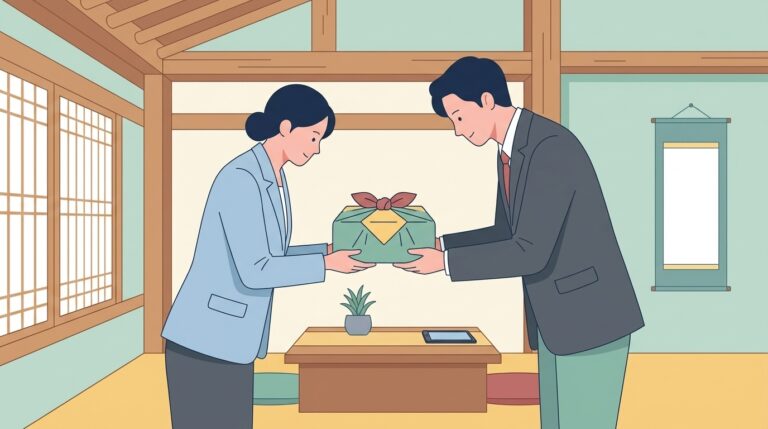
Mastering Korean Business Hospitality: How to Present Gifts & Explain Their Meaning
Phase 1: Empathy & Storytelling
안녕하세요! 매일한글 (Daily Hangul) editor here, your 10-year Korean cultural navigator and trusted study buddy!
Imagine this scenario: You have just wrapped up a high-stakes partner meeting in Gangnam. Everything went smoothly, and dinner at a traditional Hanjeongsik restaurant is drawing to a close. You pull out a beautifully wrapped package brought all the way from your home office. You smile, hand it over with one hand across the table, and announce proudly in literal English-translated Korean: “이것은 당신을 위해 산 비싼 선물입니다! (This is an expensive gift I bought for you!)”
Suddenly, the room falls dead silent. Your Korean business counterpart gives a slightly strained smile, bows awkwardly, and gently sets the box aside without opening it. You find yourself wondering: Did I offend them? Why isn’t anyone opening the wrapping paper? Was the gift wrong?
If you have ever felt that cold sweat in a Korean corporate setting, take a deep breath—you are not alone. In Korean business culture, gift-giving (Seonmul Munhwa) is not merely an exchange of goods; it is an intricate dance of humility, relational investment (Jeong), and mutual respect (Gyeokshik). Handing over a gift too casually or boasting about its worth disrupts the delicate balance of Korean etiquette. In this comprehensive guide, we will transform your intermediate Korean into polished, executive-level business communication so you can present gifts, articulate their deeper meaning with elegance, and forge unbreakable professional bonds.
Phase 2: Top 3 Essential Expressions for Gift-Giving
Here are three B2-level power expressions that will make you sound like a seasoned diplomat in any Korean boardroom or business dinner.
1. 약소하지만 감사의 마음으로 준비했습니다.
- Pronunciation: Yaksohajiman gamsaui maeumeuro junbihaetseumnida. (Sound analogy: Yahk-so-ha-ji-mahn gahm-sa-eui mah-eum-eu-ro joon-bi-haet-seum-ni-da)
- Meaning:
- Literal: “Although it is meager/small, I prepared it with a heart of gratitude.”
- Nuance: “Please accept this token of our sincere appreciation.” (A classic showcase of humble etiquette).
- K-Culture Moment: In corporate K-Dramas like Misaeng or Agency, you will notice department leaders handing high-end red ginseng or premium tea to VIP clients while uttering this exact phrase. Even if the gift costs hundreds of dollars, calling it yaksohada (meager) lowers the giver and elevates the receiver.
- Editor’s Insight: Never call your gift daedanhan geot (something grand) or bissan geot (something expensive) in business. Korean business honorifics require downplaying your own contribution to eliminate any burdensome psychological debt (buram) on the counterparty.
- Situation Spectrum:
- Casual: 🚫
- Semi-formal: ⚠️ (Better: 약소하지만 받아주세요)
- Formal / Business: ✅
- 🤔 Think About It: In Western business settings, highlighting the exclusivity or difficulty of acquiring a gift shows effort. Why does Korean culture prioritize rhetorical modesty over showcasing effort?
2. 대표님의 건강과 사업 번창을 기원하며 골랐습니다.
- Pronunciation: Daepyonom-ui geon-gang-gwa sa-eop beon-chang-eul giwonhamyeo gollasseumnida. (Sound analogy: Dae-pyo-neem-eui gun-gahng-gwa sah-up bun-chahng-eul gee-won-ha-myeo gol-laht-seum-ni-da)
- Meaning:
- Literal: “I selected this while wishing for your health and business prosperity, CEO.”
- Nuance: “We chose this specifically to convey our best wishes for your health and continued success.”
- K-Culture Moment: When foreign executives meet Korean directors during Chuseok or New Year business greetings, gifting high-grade traditional liquor or health supplements accompanied by this phrase instantly establishes long-term partnership goals.
- Editor’s Insight: Notice the structure
[Target's Wellbeing/Goal] + 을/를 기원하며. This shifts the focus away from the material object itself onto the auspicious blessing for the recipient’s enterprise. - Situation Spectrum:
- Casual: 🚫
- Semi-formal: ⚠️
- Formal / Business: ✅
- 🤔 Think About It: How does tying a physical object to a metaphysical wish (health/prosperity) elevate a simple business transaction into relational networking?
3. 저희 지역 특산품인데, 입맛에 맞으셨으면 좋겠습니다.
- Pronunciation: Jeohui jiyeok teuksanpum-inde, immase majeosyeosseumyeon jotgetseumnida. (Sound analogy: Juh-hee jee-yeok teuk-sahn-poom-in-deh, eep-mah-seh mah-jeo-syeot-seu-myeon joat-get-seum-ni-da)
- Meaning:
- Literal: “This is a specialty from our region, and I hope it suits your palate.”
- Nuance: “This is a regional specialty from our hometown; we truly hope you enjoy it.”
- K-Culture Moment: Seen frequently when regional branch managers visit Seoul headquarters in corporate dramas. Bringing local treats (teuksanpum) bridges geographic distance through shared gastronomic appreciation.
- Editor’s Insight: The ending
-셨으면 좋겠습니다expresses a polite wish with high honorific inflection (-si-), granting the recipient total freedom to enjoy the gift comfortably without feeling obligated to praise it excessively. - Situation Spectrum:
- Casual: ⚠️ (To friends: 우리 동네 특산물인데 맛있게 먹어!)
- Semi-formal: ✅
- Formal / Business: ✅
- 🤔 Think About It: Why is sharing edible regional specialties (Teuksanpum) considered one of the safest and most cherished business icebreakers across East Asia?
Phase 3: Textbook Korean vs. Real Business Korean
Let’s compare textbook-stiff sentences with the sleek, authentic phrases used by modern Korean professionals.
Situation 1: Presenting a gift during a formal corporate exchange
- 📖 Textbook Korean: 이 선물을 당신에게 줍니다. (I give this gift to you.)
- 🗣️ Real Business Korean: 작은 성의로 준비했으니, 부담 없이 편하게 받아주셨으면 합니다. (We prepared this as a small token of sincerity, so we hope you will accept it without any pressure.)
- 💡 Why is it different? The pronoun 당신 (dangsin) can sound confrontational or overly intimate in business. Replacing the blunt verb 주다 (to give) with the humble conceptual noun 작은 성의 (small sincerity) softens the tone and showcases emotional maturity.
Situation 2: Explaining why you brought this specific item
- 📖 Textbook Korean: 이것은 유명한 술이라서 샀습니다. (I bought this because it is famous liquor.)
- 🗣️ Real Business Korean: 팀원분들과 뜻깊은 자리에 함께 나누시길 바라는 마음으로 준비했습니다. (We prepared this in the hope that you might share it with your team members on a meaningful occasion.)
- 💡 Why is it different? Korean corporate culture values collective sharing (Hoe-sik and team harmony). Framing a gift as something to be enjoyed collectively with colleagues demonstrates high emotional intelligence (Nunchi).
Phase 4: K-Culture Deep Dive & Non-Verbal Protocol
[Korean Business Gift Protocol]
1. Hold gift with BOTH hands (두 손으로 전달)
2. Slight upper body bow (약 15도 정중한 인사)
3. Wrap elegantly in Bojagi or corporate bag (고급스러운 포장)
4. Never demand the recipient open it on the spot (현장에서 즉시 개봉 강요 금지)
4-1. Nunchi & Non-Verbal Etiquette
- The Two-Hand Rule (두 손 전달): Always hold the gift box using both hands, with your elbows gently drawn toward your torso. If holding with one hand due to weight, support your forearm or wrist with your other hand.
- Opening Etiquette (개봉 매너): Unlike Western customs where opening gifts immediately shows enthusiasm, Koreans traditionally set the gift aside to open privately later, avoiding any appearance of greed or making other guests feel uncomfortable. Only open it if the giver explicitly encourages: “지금 열어보셔도 됩니다” (You may open it right now).
- The Anti-Bribery Check (Kim Young-ran Act awareness): Be mindful of the Cheongtak Geumji-beop (Improper Solicitation and Graft Act). When gifting civil servants, public enterprise partners, or educators, gifts must stay within legal financial caps (usually under 50,000 to 100,000 KRW for agricultural goods).
4-2. Cultural Code: Bojagi (보자기) & The Art of Jeong
In Korea, presentation is communication. High-end gifts are traditionally wrapped in Bojagi (traditional silk or cotton wrapping cloth). The intricate knotting of Bojagi symbolizes tying good fortune (Bok) into the gift and protecting the recipient’s prosperity. When presenting gifts to executive clients, opting for Bojagi wrapping communicates that you respect their heritage and prestige.
Phase 5: Real-Life Roleplay Scenario
Setting: A private dining room at a traditional restaurant in Jongno, Seoul.
Characters:
* Alex (You): Regional Director visiting the Seoul branch.
* Managing Director Park (박 전무): Veteran Executive at a Korean partner company.
- Turn 1 (Alex):
- 한글: 전무님, 오늘 귀한 시간 내어 환대해 주셔서 진심으로 감사드립니다.
- Romanization: Jeonmunim, oneul gwihan sigan naeeo hwandaehae jusyeoseo jinsimeuro gamsadeurimnida.
- English: “Managing Director Park, thank you very much for sparing your valuable time and hosting us so warmly today.”
🎭 Action:(Bow head 15 degrees while placing chopsticks neatly on the holder)
- Turn 2 (MD Park):
- 한글: 별말씀을요, 알렉스 이사님. 한국 방문 일정 중 저희와 함께해 주셔서 오히려 저희가 영광입니다.
- Romanization: Byeolmalsseumeullyo, Alex isanim. Hanguk bangmun iljeong jung jeohuiwa hamkkehae jusyeoseo ohiryeo jeohuiga yeonggwang-imnida.
- English: “Don’t mention it, Director Alex. It is our honor to have you join us during your visit to Korea.”
🎭 Action:(Smiles warmly and pours hot barley tea)
- Turn 3 (Alex):
- 한글: 이번 프로젝트를 준비하며 전무님의 조언이 큰 힘이 되었습니다. 약소하지만 감사의 마음으로 작은 선물을 준비했습니다.
- Romanization: Ibeon peurojekteureul junbihamyeo jeonmunim-ui joeon-i keun him-i doeeotseumnida. Yaksohajiman gamsaui maeumeuro jageun seonmureul junbihaetseumnida.
- English: “Your guidance was of immense help while preparing this project. Though modest, we prepared a small token of gratitude.”
🎭 Action:(Pulls out a refined, Bojagi-wrapped box and lifts it with both hands)
- Turn 4 (MD Park):
- 한글: 아이고, 이런 걸 다 준비하셨습니까? 빈손으로 오셔도 되는데 참 세심하십니다.
- Romanization: Aigo, ireon geol da junbihasyeotseumnikka? Binsoneuro osyeodo doeneunde cham sesimhasimnida.
- English: “Oh goodness, you prepared something like this? You could have come empty-handed, you are truly thoughtful.”
🎭 Action:(Wave hands lightly in modest surprise before placing both hands on the table)
- Turn 5 (Alex):
- 한글: 저희 본사가 위치한 지역의 특산 와인입니다. 전무님의 건강과 양사 사업의 번창을 기원하는 의미를 담았습니다.
- Romanization: Jeohui bonsaga wichi-han jiyeogui teuksan wain-imnida. Jeonmunim-ui geon-gang-gwa yangsa sa-eobui beonchangeul giwonhaneun uimireul damasseumnida.
- English: “It is a specialty wine from our headquarters’ region. It carries our sincere wishes for your health and the shared prosperity of our businesses.”
🎭 Action:(Carefully passes the gift across the table with both hands, lowering eyes politely)
- Turn 6 (MD Park):
- 한글: 뜻깊은 선물이군요. 포장도 참 고급스럽습니다. 정말 소중히 잘 간직하고 나누겠습니다.
- Romanization: Tteutgipeun seonmurigunyo. Pojangdo cham gogeupseureopseumnida. Jeongmal sojunghi jal ganjikhago nanugetseumnida.
- English: “What a meaningful gift. The packaging is exceptionally refined as well. I will treasure and share it with great care.”
🎭 Action:(Receives the box with both hands, gently stroking the fabric knot)
- Turn 7 (Alex):
- 한글: 팀원분들과 축하할 일이 있으실 때 편하게 즐겨주셨으면 좋겠습니다.
- Romanization: Tim-wonbungwa chukhahal iri isseusil ttae pyeonhage jeulgyeojusyeosseumyeon jotgetseumnida.
- English: “I hope you and your team can comfortably enjoy it whenever there is an occasion to celebrate.”
🎭 Action:(Nods with a warm, humble smile)
- Turn 8 (MD Park):
- 한글: 고맙습니다, 알렉스 이사님. 다음 분기 파트너십도 아주 순조로울 것 같습니다!
- Romanization: Gomapseumnida, Alex isanim. Daeum bungi pateuneosipdo aju sunjoroul geot gatseumnida!
- English: “Thank you, Director Alex. Our partnership for the upcoming quarter looks exceedingly bright!”
🎭 Action:(Raises his glass for a cordial toast)
🔀 Interactive Decision Fork
MD Park receives your gift with modest reluctance: “아이구, 빈손으로 오셔도 되는데 이런 걸 다… (Oh, you shouldn’t have brought anything…)” How do you respond?
- Option A: “진짜 비싸고 좋은 거니까 꼭 오늘 집에 가서 바로 뜯어보세요! (It’s really expensive and good, so make sure to open it at home today!)”
- 👉 Feedback (Risk): Boasting about the price and giving commands makes the Korean executive lose face and feel burdened. Avoid!
- Option B: “지난번 도움에 비하면 정말 약소합니다. 부담 없이 받아주십시오. (Compared to your generous help last time, this is truly meager. Please accept it without burden.)”
- 👉 Feedback (Best!): Perfect score. Balances extreme humility, acknowledges past favors, and frees the partner from obligation.
- Option C: “아, 싫으시면 제가 다시 가져가겠습니다. (Ah, if you don’t like it, I will take it back.)”
- 👉 Feedback (Bad): Taking polite Asian refusal literally (Nunchi failure) creates unbearable awkwardness.
Phase 6: 10-Second Emotion Shadowing Drill
Practice matching the cadence, tone pauses (/), and emotional intent of these high-frequency executive lines!
[😊 정중하고 진심 어린 미소로 - Polite & Sincere]- 약소하지만 / 감사의 마음으로 / 준비했습니다.
- Yaksohajiman / gamsaui maeumeuro / junbihaetseumnida.
[🤝 신뢰감을 주며 무게감 있게 - Trustworthy & Dignified]- 대표님의 건강과 / 사업 번창을 기원하며 / 골랐습니다.
- Daepyonom-ui geon-gang-gwa / sa-eop beon-chang-eul giwonhamyeo / gollasseumnida.
[ 따뜻하고 배려 깊게 - Warm & Considerate]- 부담 없이 / 편하게 나누어 드셨으면 / 좋겠습니다.
- Budam eop-si / pyeonhage nanueo deusyeosseumyeon / jotgetseumnida.
Phase 7: K-Culture Mini Dictionary
- 성심성의 (誠心誠意 – Seong-sim-seong-ui) | Wholehearted Sincerity
- Usage: Used to express putting pure devotion and genuine good faith into hospitality or gift selection.
- 답례 (答禮 – Dam-nye) | Return Courtesy / Reciprocal Gift
- Usage: The cultural obligation and courtesy of offering a return gift or favor after receiving hospitality.
- 격식 (格式 – Gyeok-sik) | Formal Decorum / Etiquette
- Usage: Adhering to proper protocol, packaging, and honorific speech fitting the counterparty’s social status.
- 김영란법 (Kim Young-ran Act) | Anti-Graft Legislation
- Usage: Practical law setting value ceilings on food, gifts, and congratulatory/condolence money for public figures.
Phase 8: Business Traveler’s Survival Kit
Top 3 Business Etiquette Quick Phrases
- 명함 한 장 건네겠습니다. (Myeongham han jang geonnegessumnida.)
- Pro Tip: Hand your business card with both hands with text facing the recipient.
- 환대해 주셔서 대단히 감사합니다. (Hwandaehae jusyeoseo daedanhi gamsadeurimnida.)
- Pro Tip: Essential closing phrase when stepping out of a hosted restaurant.
- 좋은 인연이 되었으면 합니다. (Joeun inyeon-i doeeosseumyeon hamnida.)
- Pro Tip: Perfect for expressing a desire for fruitful long-term partnership.
Editor’s Travel Note for Business Visitors
- Navigation: Google Maps has limited transit accuracy in Korea. Be sure to install Naver Map Application to calculate punctual taxi/subway routes for your business appointments.
- High-End Corporate Gift Shopping: If you need emergency high-end gift sets in Seoul, visit the basement food & luxury hall (Sikpimgwan) of Shinsegae Department Store Myeongdong or Hyundai Department Store COEX for bespoke Bojagi wrapping services.
Phase 9: A Step Deeper — The Philosophy of Giving
In Western individualist frameworks, a gift often celebrates personal taste or unique quirkiness. In Korean corporate sociology, gift-giving is an embodiment of Jeong (情) and Che-myeon (體面 – Social Dignity). When you minimize your gift as yaksohada (humble), you are engaging in self-effacing politeness that creates harmonious social space. Giving is not a declaration of wealth, but a physical guarantee that you value the relationship far above the balance sheet.
💬 Your Turn: What is the standard gift-giving protocol in your home business culture? How does your culture express humility when presenting a present? Share your thoughts in the comments below!
Phase 10: FAQ & Common Mistakes
Q: Can I give red wine or spirits to a Korean business partner?
A: Yes, premium spirits (whisky, cognac, high-end regional wine) are highly favored in Korean business. Just ensure you present it with both hands and mention wishing for their enterprise’s success.
Q: What gifts should strictly be avoided in Korean business?
A: Avoid anything with sharp edges (knives, scissors—symbolizes severing ties), gifts packaged in plain white/black envelopes (reminiscent of funerals), and items associated with the number 4 (tetraphobia).
Q: Should I expect my partner to open the gift during our dinner?
A: Generally, no. Korean executives will thank you and open it in private. If they do ask for permission to open it, smile and say: “네, 편하게 열어보셔도 됩니다.”
🚨 Common Mistakes Alert
| Mistake | Why It Causes Awkwardness | Correct Action |
|---|---|---|
| Handing gift with one hand | Interpreted as dismissive or arrogant | Use both hands with a gentle 15-degree bow |
| Saying “이거 진짜 비싸요” (This was so expensive) | Puts heavy social burden (Buram) on the client | Say “약소하지만 마음을 담았습니다” |
| Insisting “Open it right now!” | Pressures the recipient into an awkward public reaction | Allow them to place it beside them gracefully |
Phase 11: Action Missions
- 🥉 Bronze Mission (Self Practice): Stand in front of a mirror with a notebook. Practice saying “약소하지만 감사의 마음으로 준비했습니다” while bowing 15 degrees and extending both hands smoothly.
- 🥈 Silver Mission (Social Share): Write your own customized gift-presentation sentence targeting your dream business partner in the comments section below for direct editor feedback!
- 🥇 Gold Mission (Real Life): During your next business meeting or exchange with a Korean speaker, present a small treat (like local cookies) using the phrase “저희 지역 특산품인데 편하게 드셔보세요.”
🎮 K-Culture Mission: Watch Episode 1 or 2 of the classic workplace drama Misaeng (Incomplete Life). Spot the subtle two-handed object handoffs and notice the deferential body language!
Phase 12: Interactive Quiz Challenge
Question 1: Situation Judgment
You are presenting a box of premium hometown snacks to Director Choi at a corporate dinner. Which statement is the most culturally refined?
* (A) 제가 직접 비싼 돈 주고 산 거니까 맛있게 드세요.
* (B) 저희 지역 특산품인데, 입맛에 맞으셨으면 좋겠습니다.
* (C) 이건 선물인데 무조건 지금 바로 열어보셔야 합니다.
🔍 Click to Reveal Answer & Analysis
Correct Answer: (B)
* Explanation: (B) displays authentic Korean B2-level business hospitality by highlighting regional heritage while politely wishing it pleases their palate using honorifics (-셨으면 좋겠습니다). (A) is boastful, and (C) violates opening etiquette.
Question 2: Fill in the Blank
Complete the standard modest business phrase:
* “________지만 감사의 마음으로 준비했습니다.” (Although it is humble/meager…)
🔍 Click to Reveal Answer & Analysis
Correct Answer: 약소하 (약소하지만)
* Explanation: 약소하다 (to be meager/small) is the quintessential humble adjective used in formal corporate exchanges.
Question 3: True / False Cultural Check
In Korean corporate hospitality, it is considered rude if the recipient does not tear open the gift wrapping paper the very second they receive it across the table. (True / False)
🔍 Click to Reveal Answer & Analysis
Correct Answer: False
* Explanation: Refraining from opening gifts immediately is a sign of considerate decorum (Gyeokshik), preventing public comparison or awkwardness.







