

Phase 1: Empathy (Story-Driven Opening)
안녕하세요! I’m your friendly editor from Daily Hangul.
Picture this: You just spent an exhilarating day exploring the vibrant streets of Hongdae, shopping in Myeongdong, and climbing the scenic steps of N Seoul Tower. Your legs feel like lead, your eyelids are heavy, and your Korean friend cheerfully turns around and asks, “우리 이제 2차 갈까요?” (Shall we go for round two?).
You want to politely tell them that your social and physical battery has officially reached 1%, but your brain freezes. You search for the right word in English, but saying “I am exhausted” in a rigid, translated sentence feels unnatural.
In Korea’s dynamic, fast-paced society, sharing that you are tired isn’t just stating a physical state—it’s a shared social bonding ritual. Expressing fatigue naturally is the ultimate way to connect, set gentle boundaries, and unlock warm Korean empathy. This guide is crafted from real classroom feedback from over 500 beginner learners just like you, designed to make you sound natural, polite, and instantly understood.
Phase 2: Top 3 Core Expressions Deep-Dive
1. 피곤해요 (Pigon-haeyo)
- Pronunciation: [Pee-gon-hae-yo] (Sounds like pea-gone-hay-yo)
- Meaning: Literal: “Fatigue exists” | Natural: “I’m tired / I’m exhausted.”
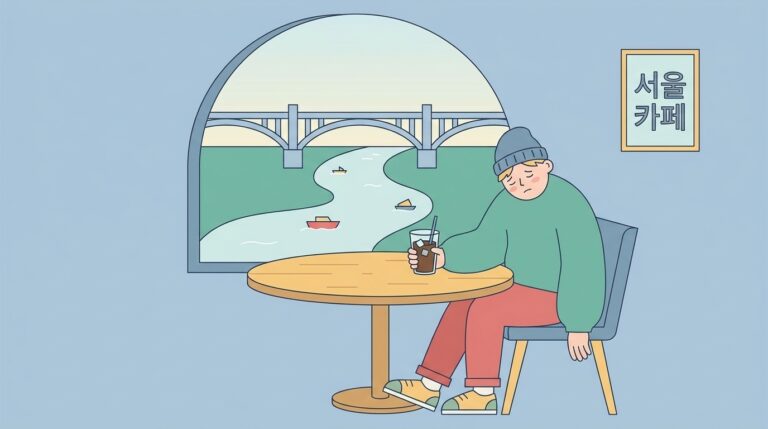
- K-Culture Moment: The classic line spoken by office workers in K-dramas right after stepping out of the elevator holding an iced americano.
- Editor’s Insight: This is your Swiss Army knife expression. It covers physical tiredness from lack of sleep, travel, or hard work. It sounds polite, neutral, and relatable anywhere.
- Situation Spectrum: Casual ✅ | Semi-formal ✅ | Formal ⚠️ (Use ‘피곤합니다’ in boardrooms)
- 🤔 Think About It: In English, we say “I am tired” (identity state). In Korean, pigon is a condition that you do/experience. How does this subtle shift change how you view taking rest?
2. 졸려요 (Jollyeoyo)
- Pronunciation: [Jol-lyeo-yo] (Sounds like Jol-lee-yaw with a soft ‘yaw’)
- Meaning: Literal: “Sleepiness is happening” | Natural: “I’m sleepy / My eyes are closing.”
- K-Culture Moment: When your favorite K-Pop idol rubs their eyes during a late-night Weverse live stream and whispers this softly to the camera.
- Editor’s Insight: Crucial distinction! 피곤해요 is overall body fatigue, whereas 졸려요 specifically means you need sleep right now.
- Situation Spectrum: Casual ✅ | Semi-formal ✅ | Formal 🚫
- 🤔 Think About It: Notice how English often uses “tired” for both sleepy and overworked. Korean cleanly divides them!
3. 쉬고 싶어요 (Swigo sipeoyo)
- Pronunciation: [Shee-go shi-peo-yo] (Sounds like she-go-she-per-yo)
- Meaning: Literal: “I want to rest” | Natural: “I want to take a break / relax.”
- K-Culture Moment: Friends sitting on a bench in the Han River Park after riding rental bikes, letting out a big sigh.
- Editor’s Insight: Use this when you want to propose taking a pause rather than just complaining about your fatigue.
- Situation Spectrum: Casual ✅ | Semi-formal ✅ | Formal ✅
- 🤔 Think About It: Expressing personal desire directly with ‘-고 싶어요’ is very polite when paired with polite endings.
Phase 3: Textbook Korean vs. Real Korean
Situation 1: Saying you have zero energy after walking 20,000 steps
- 📖 Textbook Korean: “저는 지금 몹시 피곤합니다.” (Jeoneun jigeum mop-si pigon-hamnida. – I am extremely fatigued right now.)
- 🗣️ Real Korean: “아, 진짜 피곤해요!” (A, jinjja pigon-haeyo! – Ah, I’m really tired!)
- 💡 Why is it different? Koreans rarely use formal pronouns like 저 (I) in casual daily chats; adding 진짜 (really) gives instant human warmth and natural cadence.
Situation 2: Winding down after a long day with a close friend
- 📖 Textbook Korean: “내일 다시 만납시다.” (Naeil dasi mannap-sida. – Let us meet again tomorrow.)
- 🗣️ Real Korean: “오늘은 푹 쉬어요!” (Oneureun puk swieoyo! – Get some good rest today!)
- 💡 Why is it different? Native speakers often close fatigue conversations with a caring wish (푹 쉬어요 – rest deeply) rather than robotic goodbye formulas.
Phase 4: K-Culture Deep-Dive & Non-Verbal Manners
4-1. Nunchi (눈치) & Gentle Gestures
When saying “피곤해요”, Korean culture values shared empathy over blunt complaints.
* Hand Gesture: Lightly tapping the back of your own neck or gently patting your cheeks while saying it signals, “I tried my best today, but my energy is low.”
* Eye Contact: Avoid a sharp, annoyed glare. Offer a soft smile and a gentle nod to show you enjoyed the time spent together despite the fatigue.
4-2. Cultural Code: The Iced Americano (아아) & ‘Ppallli-Ppallli’ Recovery
Korea runs on high-octane passion. When someone hears you say “피곤해요”, their immediate response is often offering an Ah-Ah (아이스 아메리카노 – Iced Americano) or suggesting a quick stop at a 편의점 (convenience store) for a fatigue-recovery tonic drink like Bacchus (박카스). Saying you’re tired is not viewed as a sign of weakness; it’s an invitation for care!
Phase 5: Real-Life Roleplay Scenario
Setting: Outside a cafe in Gangnam at 9:30 PM. Your friendly Korean language buddy, Minho (민호), is holding a subway map.
- 민호 (Minho): 오늘 카페 투어 정말 재미있었어요! 노래방 갈까요?
(Oneul kape tueo jeongmal jaemi-isseosseoyo! Noraebang galkkayo?)
“Today’s cafe tour was so fun! Shall we go to karaoke?”
🎭 [Bouncing on his heels, full of energy] -
You: 민호 씨, 오늘 정말 즐거웠어요.
(Minho ssi, oneul jeongmal jeul-geowosseoyo.)
“Minho, I had so much fun today.”
🎭 [Smiling warmly but shoulders dropping slightly] -
민호 (Minho): 그런데 조금 지쳐 보여요. 괜찮아요?
(Geureonde jogeum jichyeo boyeoyo. Gwaenchanhayo?)
“By the way, you look a bit worn out. Are you okay?”
🎭 [Looking concerned and tilting head] -
You: 네, 사실 조금 피곤해요.
(Ne, sasil jogeum pigon-haeyo.)
“Yes, to be honest, I’m a little tired.”
🎭 [Lightly rubbing back of neck] -
민호 (Minho): 아, 많이 걸었죠! 졸려요?
(A, mani georeotjyo! Jollyeoyo?)
“Ah, we walked so much! Are you sleepy?”
🎭 [Sympathetic nod] -
You: 네, 조금 졸려요. 오늘은 쉬고 싶어요.
(Ne, jogeum jollyeoyo. Oneureun swigo sipeoyo.)
“Yes, a bit sleepy. I’d like to rest today.”
🎭 [Polite, gentle smile] -
민호 (Minho): 맞아요, 무리하지 마요! 얼른 들어가서 푹 쉬어요.
(Majayo, murihaji mayo! Eolleun deureogaseo puk swieoyo.)
“Right, don’t overdo it! Go home quickly and rest well.”
🎭 [Waving with both hands warmly] -
You: 고마워요, 민호 씨도 잘 자요!
(Gomawoyo, Minho ssido jal jayeo!)
“Thank you, Minho, sleep well too!”
🎭 [Bow slightly and smile]
🔀 Interactive Branching Choice
Minho suddenly says: “Are you sure you can’t go for just one drink?” How do you respond?
- Choice A: “안 가요. 싫어요.” (An gayo. Sireoyo. – I’m not going. I hate it.)
❌ Feedback [Bad]: Too harsh and dismissive! This can hurt your friend’s feelings. - Choice B: “너무 피곤해서 오늘은 쉬고 싶어요. 다음에 꼭 가요!” (Neomu pigonhaeseo oneureun swigo sipeoyo. Daeume kkok gayo!)
🌟 Feedback [Best]: Perfect! Honest, polite, explains the fatigue, and promises a next time. - Choice C: “…괜찮아요. 가요.” (…Gwaenchanhayo. Gayo. – …It’s okay. Let’s go.)
⚠️ Feedback [Risk]: You’ll collapse from exhaustion at 2 AM! Set healthy boundaries politely.
Phase 6: 10-Second Emotion Shadowing Drill
Repeat these sentences out loud following the emotional pauses marked by /:
[😮💨 Exhaling with gentle relief]
아 / 진짜 / 피곤해요.
(A / jinjja / pigon-haeyo.)
“Ah… really… I’m tired.”-
[🥱 Yawning softly with sleepy eyes]
눈이 / 감겨요, / 너무 졸려요.
(Nuni / gamgyeoyo, / neomu jollyeoyo.)
“My eyes… are closing, / I’m so sleepy.” -
[🙏 Polite, friendly decline]
오늘은 / 집에서 / 푹 쉬고 싶어요.
(Oneureun / jib-eseo / puk swigo sipeoyo.)
“Today / at home / I really want to rest deeply.”
Phase 7: K-Culture Mini Dictionary
- 당 충전 (Dang Chung-jeon) | Sugar recharge | Used when eating sweet treats or desserts (like macarons or boba) after a draining day.
- 꿀잠 (Kkul-jam) | Honey sleep (Deep, sweet sleep) | Used when wishing someone uninterrupted, rejuvenating rest.
- 체력 방전 (Cheryeok Bang-jeon) | Physical battery discharged | Slang phrase describing having 0% physical stamina left.
- 퇴근 (Toe-geun) | Clocking out / Leaving work | The magical word every worker longs for when feeling tired.
Phase 8: Traveler’s Survival Kit
Top 3 Survival Expressions for Tired Travelers:
- 잠깐 쉬었다 가요. (Jamkkan swieotda gayo. – Let’s rest for a moment before moving on.)
Pro Tip: Great to say to your travel companions when your feet hurt. - 체크인 먼저 할게요. (Chekeu-in meonjeo halgeyo. – I’ll check in first.)
Pro Tip: Use this at your hotel front desk when you arrive exhausted with luggage. - 따뜻한 물 주세요. (Ttatteut-han mul juseyo. – Warm water, please.)
Pro Tip: Essential at restaurants when recovering your stamina.
Editor’s Travel Note:
When your energy drops in Seoul, search for nearby relaxation spots on the Naver Map app download for Korea navigation. Look up “찜질방” (Korean Sauna) or “힐링카페” (Massage Chair Cafes) for a 1-hour fast recharge!
Phase 9: A Step Deeper (Reflection)
In many Western cultures, acknowledging tiredness might occasionally feel like an excuse or lack of enthusiasm. In Korea, however, shared fatigue is an equalizer. Long study hours and intensive workdays have made 수고하셨습니다 (You worked hard) and mutual sympathy for fatigue a core language of care. When you say “피곤해요”, you aren’t complaining—you are sharing your humanity.
💬 Your Turn: How does your culture usually express being tired? Do people say it openly, or keep it to themselves? Tell us in the comments below!
Phase 10: FAQ & Common Pitfalls
Q: What is the difference between 피곤해요 and 힘들어요?
A: 피곤해요 focuses specifically on physical exhaustion or lack of sleep. 힘들어요 (Himdeureoyo) is broader and means “It’s tough / difficult / emotionally or physically exhausting.”
Q: Can I say 피곤해요 to my boss or teacher?
A: Yes, but keep it polite. It is better to say “조금 피곤합니다” (Jogeum pigon-hamnida) or “몸이 조금 안 좋습니다” (Momi jogeum an jotseumnida – I’m not feeling at my best).
Q: Does 졸려요 sound childish?
A: Not at all! It is the standard, natural word for “sleepy.” However, in strict formal presentations, adults say “피로합니다” or “수면이 부족합니다.”
🚨 Common Mistakes Alert:
- ❌ Mistake 1: Using 피곤해요 when you just want to sleep. (Use 졸려요 instead!)
- ❌ Mistake 2: Saying 피곤해! (informal) to older people or shop staff. Always keep the -요 on the end!
- ❌ Mistake 3: Translating “I’m dead” directly as 죽었어요. (Native speakers say 죽겠어요 – “I feel like I could die from tiredness”).
Phase 11: Action Missions
- 🥉 Bronze Mission (Solo): Look into a mirror, put on a tired sigh, and practice saying “아, 진짜 피곤해요!” 3 times.
- 🥈 Silver Mission (Social): Comment on our Daily Hangul Instagram post using the phrase “오늘 쉬고 싶어요”.
- 🥇 Gold Mission (Real Life): Next time you finish a busy study or work session with a Korean speaker, say: “오늘 수고했어요, 푹 쉬어요!”
🎮 K-Culture Mission: Watch an episode of any slice-of-life K-drama and spot how many times characters sigh and mutter 피곤하다 or 졸려!
Phase 12: Interactive Quiz Challenge
1. Situation Check:
You stayed up until 3 AM watching K-Dramas and you can barely keep your eyes open. What is the most accurate phrase?
A) 쉬고 싶어요
B) 졸려요
C) 안 가요
👉 Click to view Answer & Explanation
Correct Answer: B) 졸려요
Explanation: When your eyes are heavy and you directly lack sleep, 졸려요 is the natural choice!
2. Fill in the Blank:
“오늘은 집에서 [ _____ ] 쉬고 싶어요.” (I want to rest deeply/well at home today.)
👉 Click to view Answer & Explanation
Correct Answer: 푹 (Puk)
Explanation: 푹 means deeply, thoroughly, and pairs naturally with 쉬다 (to rest) and 자다 (to sleep).
3. Cultural True or False:
Saying “피곤해요” politely to a Korean friend when declining a late-night invite is considered rude in Korean etiquette.
👉 Click to view Answer & Explanation
Correct Answer: False (F)
Explanation: Communicating tiredness with polite tone endings and warm gestures is widely respected and appreciated as genuine bonding.







