

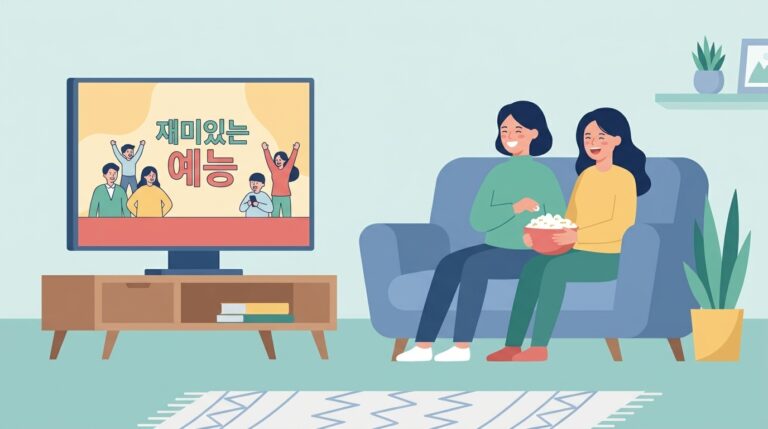
How to Talk About a Variety Show Guest Who Totally Stole the Spotlight
Phase 1: Empathy & Storytelling Opening
안녕하세요! 매일한글 에디터입니다 (Hello! It’s your Daily Hangul editor).
Picture this: You are chilling with your Korean friends on a Sunday evening, catching up on the latest episode of Running Man or Earth Arcade (뿅뿅 지구오락실). A surprise idol or veteran actor appears as a special guest. From the very first game, they drop their glamorous celebrity image, trip over bubble wrap, deliver quick-witted banter, and have everyone rolling on the floor laughing. You desperately want to jump into the conversation and express just how wildly entertaining they were, but your mind freezes. All you can manage to utter is: “그 게스트가 재미있었어요” (That guest was fun).
While grammatically correct, it feels like describing a dazzling firework show as just “bright.” In real Korean conversations, native speakers use dynamic, vivid slang and punchy media jargon to celebrate a guest who carried the entire episode on their shoulders. This guide is built on feedback from hundreds of intermediate learners who wanted to bridge the gap between stiff textbook grammar and the vibrant, high-energy world of K-variety banter. By mastering these expressions, you will not only dissect variety shows like a Seoul insider but also level up your social chemistry during watch parties!
Phase 2: 3 Core Expressions In-Depth
1. 하드캐리하다 (Hard carry-hada)
- Pronunciation: [Hadeu-kae-ri-ha-da] (Sounds like “Hard carry” blended with the Korean verb ending “hada”)
- Meaning: Literal: “To hard carry” (borrowed from gaming) | Actual Nuance: To single-handedly save or lead an entire episode/event to massive success through outstanding performance.
- K-Culture Moment: Used whenever a timid-looking guest unexpectedly dominates all the physical games or produces the funniest moments of the broadcast.
- Editor’s Insight: This word evolved from MOBA gaming terms into mainstream Korean culture. When someone “hard carries” a broadcast, it implies the show would have been dull without their heroic contribution.
- Situation Spectrum: Casual: ✅ | Semi-formal: ✅ | Formal: ⚠️ (Acceptable in casual work chats, but avoid in corporate boardrooms)
- 🤔 Think About It: How does gaming slang penetrate everyday conversational culture in your native language compared to Korea’s ultra-connected digital society?
2. 분량을 뽑다 / 분량을 챙기다 (Bul-lyang-eul ppop-da / chaeng-gi-da)
- Pronunciation: [Bulyang-eul ppop-dda] (Say “pool-ryang-eul pope-da” with a crisp, popping ‘p’ at the end)
- Meaning: Literal: “To extract/secure screen volume” | Actual Nuance: To guarantee lots of airtime/screen time by doing hilarious or unforgettable actions that editors cannot cut.
- K-Culture Moment: When a guest willingly does funny facial expressions, impersonations, or self-deprecating dances just to make sure they aren’t edited out (통편집).
- Editor’s Insight: Korean variety shows are notorious for ruthless editing. If a guest is boring, their 10 hours of recording turn into 30 seconds of broadcast. Saying someone “분량을 뽑았다” is high praise for their entertainment hustle.
- Situation Spectrum: Casual: ✅ | Semi-formal: ✅ | Formal: 🚫
- 🤔 Think About It: Why is “airtime” viewed as a hard-earned reward rather than an automatic privilege in Korean broadcasting culture?
3. 예능감이 터지다 (Ye-neung-gam-i teo-ji-da)
- Pronunciation: [Ye-neung-gam-i teo-ji-da] (Think “Yeah-neung-gahm-ee” followed by “tuh-jee-da”)
- Meaning: Literal: “Variety sense exploded” | Actual Nuance: To unleash peak comedic timing and instincts that surprise even seasoned professional comedians.
- K-Culture Moment: When a serious ballad singer or an intense method actor drops an unexpected one-liner that leaves the main MC speechless.
- Editor’s Insight: 예능감 (variety show instinct) is regarded almost like a sixth sense in Korea—the innate ability to read the room, understand pacing, and deliver punchlines effortlessly.
- Situation Spectrum: Casual: ✅ | Semi-formal: ✅ | Formal: ⚠️
- 🤔 Think About It: Is natural wit viewed as an inborn talent or an adaptable skill in your home culture?
Phase 3: Textbook Korean vs. Real-World Korean
Situation 1: Praising the Guest’s Leadership & Entertainment Value
- 📖 교과서 한국어 (Textbook): 그 게스트가 방송을 아주 재미있게 이끌었습니다. (Geu geseuteuga bangsong-eul aju jaemi-itge ikkeureosseumnida. / That guest led the broadcast very entertainingly.)
- 🗣️ 진짜 한국어 (Real-World): 오늘 게스트가 멱살 잡고 완전 하드캐리했잖아! (Oneul geseuteuga myeoksal japgo wanjeon hadeukae-ri-haetjan-a! / Today’s guest literally grabbed the show by the collar and hard-carried the entire thing!)
- 💡 왜 다를까? (Why the difference?): Koreans love physical idioms like “멱살 잡고” (grabbing by the collar) to hyperbolize dramatic effort. It paints a vivid picture of one person dragging the entire episode toward comedy gold.
Situation 2: Remarking on How Much Screen Time They Earned
- 📖 교과서 한국어 (Textbook): 그 연예인이 방송에 많이 나왔습니다. (Geu yeon-ye-in-i bangsong-e mani nawasseumnida. / That celebrity appeared a lot on the broadcast.)
- 🗣️ 진짜 한국어 (Real-World): 첫 출연인데 혼자 분량 싹 쓸어갔네. (Cheot chulyeon-inde honja bullyang ssak sseureogatne. / It’s their first appearance, yet they swept up all the screen time for themselves.)
- 💡 왜 다를까? (Why the difference?): Using “싹 쓸어가다” (to sweep clean) emphasizes that the guest outshone even the fixed regular cast members through sheer variety talent.
Phase 4: K-Culture Deep Dive & Non-Verbal Manners
4-1. 눈치 (Nunchi) & Reaction Dynamics
When discussing variety shows with Koreans, conversation is an interactive sport! To match the vibe:
* The Clapping Laugh (물개 박수): When recalling a funny moment, clap your hands rapidly while leaning forward. It mirrors the studio audience and MC reactions.
* The Thigh Slap (무릎 탁 치기): Slap your own knee lightly when mentioning the climax of a punchline: “거기서 진짜 빵 터졌잖아!” (I burst out laughing right there!).
* Nunchi Tip: If you praise a guest who happens to be involved in a recent celebrity controversy, read the room first. Koreans stay attuned to recent entertainment news before hyping someone up.
4-2. The Cultural Code: “내려놓기” (Letting Go of Vanity)
In Korean variety culture, audiences respect celebrities who practice “내려놓기”—setting aside their pristine visual reputation (체면) to wear silly wigs, get covered in flour, or share embarrassing personal anecdotes (흑역사). A guest who tries too hard to look cool or pretty on a variety show is often labeled “노잼” (no-fun). True star power in K-variety lies in authentic humility and comic sacrifice.
Phase 5: Real-World Roleplay Scenario
- Setting: A cozy craft beer pub in Yeonnam-dong. You and your Korean close friend, Min-woo (민우), are watching a variety recap clip on YouTube over fried chicken.
민우: 야, 어제 ‘놀면 뭐하니’ 봤어? 이번 게스트 진짜 의외더라!
(Ya, eoje ‘Nol-myeon mwohani’ bwasseo? Ibeon geseuteu jinjja ui-oedeora!)
“Hey, did you watch ‘Hangout with Yoo’ yesterday? That guest was such a pleasant surprise!”
🎭 (Eyes wide, showing you his phone screen)
You: 응, 봤지! 그 배우 예능 처음이라며? 근데 진짜 예능감 터지더라.
(Eung, bwatji! Geu bae-u yeneung cheo-um-iramyeo? Geunde jinjja yeneunggam teojideora.)
“Yeah, I did! I heard it was that actor’s first variety show? But their comedic instinct totally exploded.”
🎭 (Nodding eagerly while tapping the table)
민우: 맞아, 특히 그 삼행시 짓는 미션에서 배 잡고 굴렀잖아.
(Maja, teukhi geu samhaengsi jinneun misyeon-eseo bae japgo gulleotjan-a.)
“Right? Especially during that acrostic poem mission, I was literally holding my belly rolling with laughter.”
🎭 (Laughing aloud, mimicking the gesture)
You: 인정! 완전 혼자 분량 싹 뽑았어. 고정 멤버들보다 더 웃겼음!
(Injeong! Wanjeon honja bullyang ssak ppobasseo. Gojeong membeodeulboda deo utgyeosseum!)
“Totally agree! They extracted all the airtime alone. Funnier than the regular cast!”
🎭 (Giving a thumbs up)
민우: 원래 조용한 이미지였는데, 어제는 완전 하드캐리한 것 같아.
(Wonlae joyonghan imijiyeonneunde, eojeneun wanjeon hadeukae-rihan geot gata.)
“They used to have such a quiet image, but yesterday they completely hard-carried the show.”
🎭 (Taking a sip of beer with satisfaction)
You: 맞아, 본인 이미지 다 내려놓고 망가지는 모습이 진짜 호감이었어.
(Maja, bonin imiji da naeryeonoko manggajineun moseub-i jinjja hogam-ieosseo.)
“Exactly, seeing them completely let go of their image and look goofy made them so likable.”
🎭 (Smiling genuinely)
민우: 다음 주에 2편 나온다는데 본방사수 각이다. 같이 볼래?
(Daeum jue ipyeon naondaneunde bonbangsasu gak-ida. Gachi bollae?)
“They say part 2 airs next week, it’s definitely a live broadcast must-watch. Wanna watch together?”
🎭 (Looking expectant with a smile)
You: 당연하지! 치킨 내가 시킬 테니까 우리 집으로 와!
(Dang-yeonhaji! Chikin naega sikil tenikka uri jibeuro wa!)
“Of course! I’ll order the chicken, so just come over to my place!”
🎭 (High-fiving Min-woo)
🔀 Interactive Branching Moment
Min-woo asks: “야, 솔직히 그 게스트 다음 주에 또 나왔으면 좋겠지?” (Hey, honestly, you want that guest to come out again next week too, right?)
- Choice A: “응, 완전 꿀잼이라 고정 멤버로 합류했으면 좋겠어!” (Best Choice: Expresses enthusiasm using natural slang ‘꿀잼’ and proposes regular member status)
- Choice B: “네, 그 사람은 매우 훌륭한 엔터테이너였습니다.” (Bad Choice: Overly stiff and formal like a newspaper editorial, ruins the casual drinking vibe)
- Choice C: “다른 멤버들이 너무 재미없어서 걔만 돋보인 거 아냐?” (Risk Choice: Disrespects the regular cast members who set up the comedic assists, potentially creating awkward tension)
Phase 6: 10-Second Emotional Shadowing Drill
- [🔥 신나고 감탄하며 / Excited & Impressed]
“오늘 게스트 / 혼자 멱살 잡고 / 하드캐리했잖아!”
(Oneul geseuteu / honja myeoksal japgo / hadeukae-ri-haetjan-a!) -
[😆 빵 터져서 웃으며 / Bursting into Laughter]
“그 장면에서 / 예능감 제대로 터져서 / 배 잡고 웃었어!”
(Geu jangmyeon-eseo / yeneunggam jedaero teojyeoseo / bae japgo useosseo!) -
[👍 확신에 차서 / Confident & Appreciative]
“신인인데도 / 알아서 분량 싹 챙겨가네!”
(Sinin-indedo / araseo bullyang ssak chaeng-gyeogane!)
Phase 7: K-Culture Mini Dictionary
-
치고 빠지다 (Chigo ppajida)
Meaning: Hit and run / Knowing when to chime in with a joke and when to stay quiet.
Usage: Praises a guest’s instinct: “토크 치고 빠지는 타이밍이 예술이다” (Their timing for jumping in and stepping back in talk segments is an art). -
리액션 봇 (Riaeksyeon bot)
Meaning: Reaction Robot.
Usage: Describes someone whose expressive facial responses and laughter keep the show’s energy lively even when they aren’t talking. -
몰아주기 (Morajugi)
Meaning: Collective focus / Backing up one person to maximize their comic payoff.
Usage: In games, when the entire cast conspires to let the guest become the funny hero or victim: “게스트 몰아주기 가자!” (Let’s all set up the spotlight for the guest!). -
흑역사 (Heuk-yeoksa)
Meaning: Dark past / Cringe-worthy embarrassing memories.
Usage: Variety shows love bringing up old debut clips: “과거 흑역사 영상 공개돼서 멘붕 왔잖아” (They had a mental breakdown after their past cringe video was revealed).
Phase 8: Survival Kit for Travelers & K-Media Fans
Top 3 Survival Phrases
-
“이 게스트 나온 편 몇 화예요?”
[I geseuteu naon pyeon myeot hwayeyo?]
(Which episode did this guest appear on?)
Pro Tip: Show a YouTube Short to your Korean friend and ask this to find the full broadcast. -
“이 장면 클립 어디서 봐요?”
[I jangmyeon keullip eodiseo bwayo?]
(Where can I watch clips of this scene?)
Pro Tip: Useful when searching for official unedited cuts (미방분). -
“다음 주 예고편 봤어요?”
[Daeum ju yegopyeon bwasseoyo?]
(Did you see the preview for next week?)
Pro Tip: The ultimate icebreaker on Monday morning at language exchanges or offices.
Editor’s Travel Note
- Catch It Live & Stream Legal Clips: While traveling in Korea, you can catch live reruns and variety shows using Korean streaming apps. Search and download the [Tving 공식 앱 다운로드 페이지] or [Wavve 공식 스트리밍 서비스] to watch ongoing episodes.
- Visit the Mecca of Variety Shows: Head over to Digital Media City (DMC) in Sangam-dong, Seoul. You can visit the open lobbies of CJ ENM, SBS Prism Tower, and MBC, where legendary variety shows are planned and recorded!
Phase 9: “A Step Deeper” (생각 질문)
Korean variety entertainment thrives on the delicate balance between 개인기 (individual talent) and 배려 (consideration for group harmony). When a guest shines, it is rarely a solitary achievement; it is usually orchestrated because the veteran MCs deliberately toss conversational “passes” (토크 패스) to them. Acknowledging both the guest’s boldness and the cast’s teamwork reflects deep insight into Korea’s collectivist communication etiquette.
💬 Your Turn: Who is your all-time favorite K-variety show guest, and what made their performance so unforgettable? Share your thoughts in Korean below!
Phase 10: FAQ & Common Mistakes
Q: Can I use “하드캐리” in everyday academic or office life?
A: Absolutely! When a team member completes most of a group presentation slides or wins a client pitch single-handedly, you can say: “오늘 김 대리님이 피칭 하드캐리하셨어요!” (Assistant Manager Kim totally hard-carried the pitch today!).
Q: What is the difference between “분량을 챙기다” and “분량을 뽑다”?
A: “분량을 뽑다” emphasizes the extraction of quality content (focused on production output), while “분량을 챙기다” highlights the guest taking care of their own presence and ensuring they get recognized.
Q: Is calling a celebrity “망가지다” (ruined/broken) rude in Korea?
A: In daily life, 망가지다 means broken, but in the context of variety shows, “망가지는 것을 두려워하지 않는다” (not being afraid of looking ruined/silly) is one of the highest compliments for entertainment dedication!
🚨 Common Mistakes Warning Board
| Mistake | Why It’s Wrong | Correct Action |
|---|---|---|
| “그 게스트가 개그를 만들었어요.” | Sounds translated word-for-word from English “made a joke.” Unnatural in Korean. | Use “개그를 쳤어요” (threw a joke) or “웃겼어요” (was funny). |
| “분량을 많이 샀어요.” | You cannot “buy” screen volume in this context. | Use “분량을 뽑았어요” or “분량을 챙겼어요”. |
| “예능이 폭발했어요.” | 예능 is the genre; 예능감 is the personal sense/skill. | Use “예능감이 터졌어요”. |
Phase 11: Action Mission & Engagement
- 🥉 Bronze Mission (Solo): Pick your favorite K-pop idol variety clip and whisper to yourself: “와, 오늘 진짜 예능감 터졌다!” with high excitement.
- 🥈 Silver Mission (Social): Leave a comment under a YouTube variety recap in Korean using: “OOO 게스트 하드캐리 인정!” (Admit it, guest [Name] hard-carried!).
- 🥇 Gold Mission (Real Life): Next time a friend helps resolve a tough group situation, say: “오늘 네가 완전 하드캐리했다!”
- 🎮 K-Culture Challenge: Watch an episode of Knowing Bros (아는 형님) and count how many times subtitles use the words “하드캐리” or “분량”!
Phase 12: Interactive Quiz Challenge
1. Situation Judgment Quiz
Your friend was the life of the party, making everyone laugh non-stop for three hours. Which compliment sounds the most natural and modern?
(A) 오늘 너 정말 연예인처럼 프로그램을 이끌었어.
(B) 오늘 네가 분위기 멱살 잡고 완전 하드캐리했잖아!
(C) 너의 개그가 텔레비전에 방영되어야 해.
2. Fill-in-the-Blank Quiz
배우가 체면을 다 내려놓고 웃겨서 혼자 방송 _________ 싹 챙겨갔다.
(The actor let go of their pride to be funny and secured all the broadcast screen time alone.)
(Hint: A 2-syllable word meaning broadcast length/volume)
3. True or False Cultural Quiz
In Korean variety culture, guests who maintain a flawless, serious, and stoic persona throughout comical games are praised more than guests who let go of their image. (T / F)
👉 Click to view Answers & Explanations (정답 및 해설)
-
Answer: (B)
Explanation: (B) uses the authentic colloquial idiom “멱살 잡고 하드캐리하다”, capturing enthusiasm perfectly. (A) and (C) sound unnaturally literal. -
Answer: 분량 (Bul-lyang)
Explanation: 분량 refers to the allocated screen time or content volume in media broadcasts. -
Answer: False (F)
Explanation: Audiences and producers appreciate guests who practice 내려놓기 (letting go of vanity) and actively throw themselves into comedy over those who remain stoic.







