

Phase 1: Empathy (Story-Driven Opening)
안녕하세요! 매일한글 에디터입니다. (Hello! This is your Daily Hangul editor.)
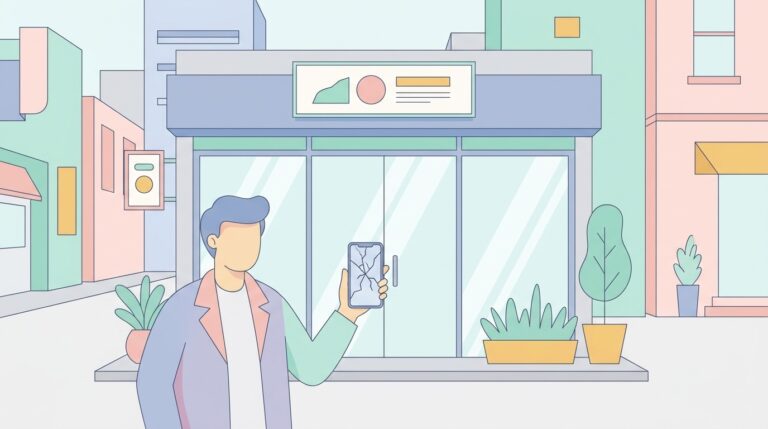
Picture this: You are walking down the vibrant streets of Hongdae, holding your phone up to capture the street performers or snapping a quick picture of your delicious strawberry waffle for Instagram. Suddenly, your foot catches the curb—or someone bumps your arm—and your phone takes a slow-motion dive straight onto the hard concrete pavement. You pick it up with trembling hands, turn it over, and see the dreaded spiderweb: the screen is completely shattered.
You rush into a nearby repair shop or official service center, hoping it’s just a cheap scratch, only for the technician to inspect it and deliver the bad news with a hefty price tag. In Korea, where digital life runs at lightspeed and smartphones are practically an extension of the body, dealing with a broken display and an unexpectedly high repair bill is a rite of passage every local has endured. Today, we will explore practical, natural B1-level expressions to express your shock, understand repair estimates, and negotiate like a true local. Based on feedback from hundreds of our intermediate learners, mastering these real-world situational phrases will take your Korean conversational skills beyond the textbook and save your wallet from unexpected heartbreak!
Phase 2: Deep Dive into 3 Core Expressions
1. 액정이 산산조각 났어요 (Aekjeong-i sansanjogak nasseoyo)
- Pronunciation: [Aek-jeong-i san-san-jo-gak na-sseo-yo] (Sounds like “eck-jung-ee sahn-sahn-jo-gahk nah-ssuh-yo”)
- Meaning: Literal: “The LCD/screen broke into small pieces.” | Actual Nuance: “My phone screen is completely shattered!”
- K-Culture Moment: Seen frequently in K-Dramas when the protagonist drops their phone in shock after hearing shocking news, staring blankly at the spiderweb glass.
- Editor’s Insight: 액정 (aekjeong) refers to the glass/LCD screen of a phone or tablet. The word 산산조각 (sansanjogak) paints a dramatic picture of something shattering into fragments. You use this when a small crack turns into a total mess.
- Situation Spectrum: Casual: ✅ | Semi-formal: ✅ | Formal: ⚠️
- 🤔 Think About It: In English, we simply say “my screen cracked” or “shattered.” How does using evocative imagery like 산산조각 change the emotional weight of an accident in Korean?
2. 수리비가 너무 많이 나왔어요 (Suribiga neomu mani nawasseoyo)
- Pronunciation: [Su-ri-bi-ga neo-mu ma-ni na-wa-sseo-yo] (Sounds like “soo-ree-bee-gah nuh-moo mah-nee nah-wah-ssuh-yo”)
- Meaning: Literal: “Too much repair fee came out.” | Actual Nuance: “The repair estimate / bill is way higher than I expected.”
- K-Culture Moment: Heard among friends at a cafe when someone shares their smartphone repair receipt, accompanied by loud groans and mutual sympathy.
- Editor’s Insight: In Korean, costs and bills “come out” (나오다). Instead of saying “the repair was expensive” (수리가 비쌌어요), native speakers naturalize costs by saying 수리비가 많이 나왔어요 or 수리비 폭탄 맞았어요 (hit by a repair fee bomb).
- Situation Spectrum: Casual: ✅ | Semi-formal: ✅ | Formal: ✅
- 🤔 Think About It: Why do you think Korean often frames financial costs as things that “emerge” or “come out” (나오다) rather than active charges?
3. 배보다 배꼽이 더 커요 (Baeboda baekkobi deo keoyo)
- Pronunciation: [Bae-bo-da bae-kko-bi deo keo-yo] (Sounds like “bae-boh-dah baek-koh-bee duh kuh-yoh”)
- Meaning: Literal: “The belly button is bigger than the belly.” | Actual Nuance: “The extra cost/repair cost exceeds the value of the main item! (It’s not worth fixing!)”
- K-Culture Moment: Common variety show catchphrase when secondary expenses ridiculously outpace the original purchase.
- Editor’s Insight: This classic Korean proverb is your secret weapon. When an old phone’s screen repair quote is 300,000 KRW while buying a used replacement is 250,000 KRW, a Korean will shake their head and mutter: 배보다 배꼽이 더 크네요. It shows deep cultural fluency!
- Situation Spectrum: Casual: ✅ | Semi-formal: ✅ | Formal: ⚠️
- 🤔 Think About It: What idiom exists in your native language to describe minor repairs or accessories costing more than the original product?
Phase 3: Textbook Korean vs. Real-Life Korean
Situation 1: Telling someone your display is broken
- 📖 Textbook Korean: 휴대폰 화면이 고장 났습니다. (Hyudae-pon hwamyeon-i gojang nasseumnida. / The mobile phone screen is out of order.)
- 🗣️ Real-Life Korean: 휴대폰 액정이 완전히 나갔어요. (Hyudae-pon aekjeong-i wanjeonhi nagasseoyo. / My phone screen is completely dead/broken.)
- 💡 Why is it different? While 화면 (screen/display) is correct, native speakers almost universally call smartphone glass 액정. Also, 나갔다 (went out) is the colloquial idiom for electronics dying or glass cracking beyond use.
Situation 2: Complaining about an exorbitant repair bill
- 📖 Textbook Korean: 수리 비용이 너무 비쌉니다. (Suri biyong-i neomu bissamnida. / The repair expense is very expensive.)
- 🗣️ Real-Life Korean: 수리비 폭탄 맞았어요. 새 거 사는 게 낫겠어요. (Suribi poktan majasseoyo. Sae geo saneun ge natgesseoyo. / I got hit with a repair fee bomb. Buying a new one would be better.)
- 💡 Why is it different? Koreans love colorful metaphors for sudden high costs. Combining 폭탄 (bomb) with 맞다 (hit/struck) conveys shock much better than simply saying 비싸요.
Phase 4: K-Culture Deep Dive & Non-Verbal Manners
4-1. Nunchi & Body Language at the Repair Center (AS센터)
When visiting a Korean service center (often called AS 센터 [After Service Center]), politeness and composure go a long way:
* Presenting the device with both hands: When handing your damaged phone over to the service engineer, hold it with both hands and tilt your head slightly in a mini-bow. This shows respect for the technician’s expertise.
* Expressing mild disappointment gently: If the quote is high, don’t raise your voice. Instead, exhale softly, touch your forehead or chin in contemplation, and say: “생각보다 많이 나왔네요… 혹시 할인이나 보험 적용이 되나요?” (It came out higher than expected… Is there any discount or insurance applicable?)
4-2. Cultural Code: Korea’s High-Speed ‘AS’ Culture
In Korea, after-sales service is a key selling point for tech giants like Samsung and Apple. Centers are equipped with waiting kiosks, free charging stations, and rapid turnaround times (often screen replacements take under 45 minutes!). Because speed and customer satisfaction are top priorities, technicians will clearly break down parts costs (부품비) versus labor costs (공임비).
Phase 5: Real-Life Roleplay Scenario
- Setting: A bustling Samsung / Electronics AS Center in Gangnam.
- Characters:
- 민우 (Min-woo): A friendly, efficient repair technician.
- Alex: A foreign resident who accidentally dropped his phone on the subway platform.
- 민우: 안녕하세요, 고객님! 어떤 문제가 있으신가요?
(Annyeohaseyo, gogaeknim! Eotteon munjega isseusingayo?)
“Hello, customer! What seems to be the problem?”
🎭 [친절한 미소로 접수 번호표를 받으며] -
Alex: 지하철 계단에서 폰을 떨어뜨려서 액정이 산산조각 났어요.
(Jihacheol gyedaneseo poneul tteoreotteuryeoseo aekjeong-i sansanjogak nasseoyo.)
“I dropped my phone on the subway stairs, and the screen completely shattered.”
🎭 [깨진 화면을 조심스럽게 두 손으로 건네며] -
민우: 아이고, 충격이 꽤 컸나 보네요. 잠시 내부 점검 좀 해보겠습니다.
(Aigo, chunggyeogi kkwae keonna boneyo. Jamsi naebu jeomgeom jom haebogesseumnida.)
“Oh dear, the impact must have been strong. Let me inspect the interior for a moment.”
🎭 [돋보기 램프를 켜고 스마트폰을 이리저리 살피며] -
Alex: 화면 터치도 잘 안 먹히더라고요. 메인보드도 다친 건 아니겠죠?
(Hwamyeon teochido jal an meokhideragoyo. Meinbodeudo dachin geon anigetjyo?)
“The touch screen isn’t working well either. The motherboard isn’t damaged too, right?”
🎭 [초조한 눈빛으로 기사를 바라보며] -
민우: 다행히 메인보드는 멀쩡한데, 패널 교체 비용이랑 공임비 합쳐서 28만 원 정도 나올 것 같아요.
(Dahaenghi meinbodeuneun meoljjeonghande, paeneol gyochae biyong-irang gong-imbi hapchyeoseo isip-palman won jeongdo naol geot gatayo.)
“Fortunately the motherboard is fine, but replacing the panel plus labor will be around 280,000 KRW.”
🎭 [모니터 견적 화면을 돌려 보여주며] -
Alex: 28만 원이요? 수리비가 생각보다 너무 많이 나왔네요…
(Isip-palman won-iyo? Suribiga saenggakboda neomu mani nawasseoneyo…)
“280,000 KRW? The repair bill came out way higher than I expected…”
🎭 [당황하며 영수증 견적서를 쳐다보며] -
민우: 혹시 가입해 두신 통신사 휴대폰 보험 있으신가요? 서류 떼어 드릴 수 있습니다.
(Hoksi gaiphae dusin tongsinsa hyudaepon boheom isseusingayo? Seoryu tteeeo deuril su isseumnida.)
“Do you happen to have mobile phone insurance through your telecom carrier? I can issue the paperwork.”
🎭 [안내 책자를 가리키며] -
Alex: 네! 통신사 보험 있어요. 보험 청구 서류 같이 부탁드릴게요.
(Ne! Tongsinsa boheom isseoyo. Boheom cheong-gu seoryu gachi butakdeurilgeyo.)
“Yes! I have telecom insurance. Please prepare the claim documents for me.”
🎭 [안도의 한숨을 내쉬며 고개를 끄덕인다]
🔀 Interactive Choice Point
The technician says it will take 40 minutes and cost 280,000 KRW. How do you respond?
- Option A: “너무 비싸요! 깎아주세요!” (Neomu bissayo! Kkakka-juseyo! / Too expensive! Give me a discount!)
- Option B: “보험 청구용 수리비 영수증이랑 내역서 챙겨주실 수 있나요?” (Boheom cheongguyong suribi yeongsujeung-irang naeyeokseo chaeng-gyeojusil su innayo? / Could you provide the repair receipt and itemized breakdown for insurance claim?)
- Option C: “그냥 수리 안 하고 새 폰 살게요. 취소해주세요.” (Geunyang suri an hago sae pon salgeyo. Chwisohaejuseyo. / I won’t fix it, I will just buy a new phone. Please cancel.)
Feedback:
* Option A (Bad): Official service centers have fixed pricing systems for parts and labor. Demanding discounts aggressively may cause awkwardness.
* Option B (Best): Polite, proactive, and perfectly suited for saving up to 70-80% through carrier or travel insurance.
* Option C (Risk): If your phone contains unbacked-up data (KakaoTalk history, photos), leaving without a repair or temporary backup might cost you your memories!
Phase 6: 10-Second Emotional Shadowing Drill
Practice these lines with pause marks (/) and dynamic voice inflections:
- [😱 Shock & Despair]
액정이 / 산산조각 났어요… / 데이터는 괜찮을까요?
(Aekjeong-i / sansanjogak nasseoyo… / De-iteoneun gwaenchanheulkkayo?) -
[💸 Bitter Reality]
수리비가 / 생각보다 / 너무 많이 나왔네요.
(Suribiga / saenggakboda / neomu mani nawasseoneyo.) -
[🤝 Polite Request]
보험 청구 서류 / 같이 발급해 주실 수 있나요?
(Boheom cheong-gu seoryu / gachi balgeuphae jusil su innayo?)
Phase 7: K-Culture Mini Dictionary
- 액정 (Aekjeong) | Noun: LCD screen / display glass | Crucial word when visiting repair shops; always used instead of general words like 유리 (glass).
- 수리비 폭탄 (Suribi Poktan) | Slang/Noun: Repair bill bomb | Used playfully or distressingly when a minor repair costs hundreds of thousands of Won.
- AS 센터 (Ae-iseu Senteo) | Noun: After-Service / Repair Center | The universal Korean konglish term for certified technical repair facilities.
- 보험 처리 (Boheom Cheori) | Noun: Insurance processing / claim | Used when submitting telecom or traveler insurance claims to cover device repair expenses.
Phase 8: Traveler’s Survival Kit
Survival Expressions TOP 3
- 수리 시간 얼마나 걸려요? (Suri sigan eolmana geollyeoyo?) – Pro Tip: Most screen replacements take between 30 to 50 minutes in Korea.
- 견적서 먼저 뽑아주세요. (Gyeonjeokseo meonje ppobajuseyo.) – Pro Tip: Ask for an estimate sheet before agreeing to proceed with the repair.
- 임대폰 대여 가능한가요? (Imdaepon daeyeo ganeunghangayo?) – Pro Tip: If parts aren’t in stock, ask if a temporary rental phone is available.
Editor’s Travel Note
- Finding Centers: Open your [Naver Map Navigation App] and search for
삼성전자서비스센터(Samsung) or애플 공인 서비스센터(Apple Authorized Center) to locate the nearest walk-in branches. - Payment Tip: All major foreign credit cards are accepted. Remember to ask for the 카드 매출전표 (card sales slip) alongside the 수리 명세서 (repair specification breakdown) for your travel insurance claim.
Phase 9: “One Step Deeper” (Reflective Cultural Thought)
In modern Korea, smartphones represent far more than communication devices; they are wallets, train passes, identity verification cards, and digital portfolios. When a Korean says 배보다 배꼽이 더 크다 regarding a high repair cost, it reflects a society that values pragmatic efficiency (가성비, price-to-performance ratio). Navigating repair negotiations with tact and good humor turns a frustrating mishap into an empowering cultural milestone.
💬 Your Turn: Have you ever cracked your phone screen while traveling abroad? How did you handle the situation in a foreign language? Share your story in the comments below!
Phase 10: FAQ & Mistake Prevention
Q: Can I negotiate repair fees at Korean service centers?
A: Official centers like Samsung or Apple have strictly fixed system prices for parts and labor, so haggling is not practiced. However, you can ask about certified refurbished parts (재생 액정) or insurance claim paperwork.
Q: What is the difference between 화면 and 액정?
A: 화면 refers to the general picture or display screen (like on a TV or monitor), while 액정 specifically refers to the glass/LCD hardware layer of a smartphone or tablet.
Q: Will the repair technician speak English?
A: Centers in major international hubs like Gangnam, Hongdae, Myeongdong, and Itaewon often have English-speaking staff, but knowing key Korean terms ensures smooth communication anywhere.
🚨 Common Mistakes Alert
- Mistake: Saying “폰이 죽었어요” (Literal translation of ‘My phone died’).
- Correct Action: Say “배터리가 다 나갔어요” (Battery ran out) or “전원이 안 켜져요” (Power won’t turn on).
- Mistake: Using 유리값 instead of 액정 수리비.
- Correct Action: Use 액정 교체 비용 (screen replacement fee) to sound natural.
- Mistake: Asking for a discount aggressively (깎아주세요).
- Correct Action: Inquire about insurance documents (보험 서류) or warranty status (무상 보증 기간).
Phase 11: Action Missions
- 🥉 Bronze Mission (Solo Practice): Stand in front of a mirror and practice saying: “액정이 깨져서 수리비가 많이 나왔어요” 3 times smoothly.
- 🥈 Silver Mission (Social Connection): Write a mock Instagram caption in Korean about your cracked phone using the phrase #배보다배꼽.
- 🥇 Gold Mission (Real Life): If you visit a Korean electronics shop or carrier store, ask the staff: “혹시 액정 보호 필름 교체 얼마예요?” (How much is a screen protector replacement?).
- 🎮 K-Culture Mission: Watch an episode of a modern K-Drama and spot a scene where someone drops their phone or checks a repair bill!
Phase 12: Interactive Quiz Challenge
1. Situational Judgment: Your phone fell and the screen is badly shattered. What is the most natural sentence to tell the technician?
* A) 폰 유리가 맛이 갔습니다.
* B) 액정이 완전히 산산조각 났어요.
* C) 스마트폰이 사망했습니다.
2. Fill in the Blank:
“수리비가 새 폰 가격이랑 비슷해요. 정말 (배 / 배꼽)보다 (배 / 배꼽)이 더 크네요!”
3. True or False: In Korea, labor costs (공임비) and parts costs (부품비) are typically detailed separately on your repair receipt.
🔍 Click to Reveal Quiz Answers & Explanations
- Answer: B (액정이 완전히 산산조각 났어요. is the natural, idiomatic way to describe a severely shattered screen).
- Answer: 배보다 배꼽이 (The idiom is 배보다 배꼽이 더 크다 – the belly button is bigger than the belly).
- Answer: True (T) (Korean AS centers pride themselves on transparency and list parts and labor costs clearly for insurance claims).







