

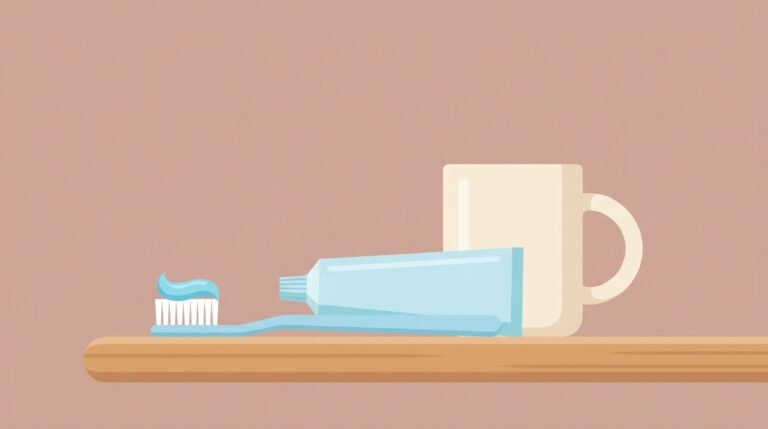
Why Koreans Brush Their Teeth at the Office: Master Daily Routine Korean
Phase 1: Empathy & Storytelling
안녕하세요! It’s your Daily Hangul editor and Korean culture buddy!
If you have ever watched a K-Drama or visited an office building in Seoul right after lunch around 1:00 PM, you might have witnessed a funny and surprising scene: dozens of stylish office workers in suits lined up in front of the bathroom mirror, vigorously brushing their teeth while chatting and laughing! For many beginners, brushing teeth seems like a quiet, private ritual before bed. But in Korea, dental hygiene is practically an Olympic sport and a key social routine.
When I first coached foreign exchange students in Seoul, they were constantly confused about how to naturally talk about their morning and night routines in Korean without sounding like an archaic robot. In this guide, you will master the most natural way to talk about brushing your teeth (이 닦다), uncover Korea’s famous “3-3-3 Toothbrushing Rule,” and learn real-life A1 expressions you can use today.
Phase 2: 3 Core Expressions
1. 이 닦아요 (I brush my teeth / Brush your teeth)
- Pronunciation: [I da-ka-yo] (Sounds like “ee-dah-kah-yo”)
- Meaning: Literal: “Wipe/polish teeth” | Nuance: The most common, polite everyday phrase for brushing teeth.
- K-Culture Moment: A mom knocking on her child’s bedroom door in a morning K-Drama scene saying, “빨리 일어나서 이 닦아!” (Wake up and brush your teeth quickly!).
- Editor’s Insight: In Korean, the verb 닦다 means to wipe, buff, or scrub clean. You polish your teeth shiny and bright!
- Situation Spectrum: Casual: ✅ | Semi-formal: ✅ | Formal: ⚠️
- 🤔 Think About It: In English, we “brush” with a tool; in Korean, we “wipe/clean” (닦다) the surface. How does focusing on the action of making something clean change your feeling about the routine?
2. 양치해요 (I’m doing oral care / brushing & rinsing)
- Pronunciation: [Yang-chi-hae-yo] (Sounds like “yahng-chee-heh-yo”)
- Meaning: Literal: “Caring for teeth and mouth” | Nuance: A slightly broader and very natural term covering brushing, rinsing, and mouth care.
- K-Culture Moment: An office colleague grabbing their portable toothbrush pouch after lunch and saying to their deskmate, “저 양치하고 올게요!” (I’ll go brush and be right back!).
- Editor’s Insight: Originating from traditional medicine (Yangchi), it specifically refers to comprehensive mouth washing.
- Situation Spectrum: Casual: ✅ | Semi-formal: ✅ | Formal: ✅
- 🤔 Think About It: Why do you think Korean has a distinct single word dedicated exclusively to the full ritual of mouth hygiene?
3. 치약 좀 빌려줘 (Can I borrow some toothpaste?)
- Pronunciation: [Chi-yak jom bil-lyeo-jwo] (Sounds like “chee-yahk johm beel-lyuh-jwo”)
- Meaning: Literal: “Please lend a little toothpaste” | Nuance: A friendly request among close friends or roommates in dorms.
- K-Culture Moment: In reality shows like Single’s Inferno or Heart Signal, housemates sharing a communal sink ask this naturally before going to bed.
- Editor’s Insight: In Korean, adding 좀 (jom) softens any request, making it sound polite and non-demanding.
- Situation Spectrum: Casual: ✅ | Semi-formal: 🚫 | Formal: 🚫
- 🤔 Think About It: In Western cultures, borrowing toothpaste from someone’s tube might feel overly intimate. Why is sharing daily essentials considered affectionate and normal among Korean peers?
Phase 3: Textbook Korean vs. Real Korean
Situation 1: Saying you are going to brush your teeth right now
- 📖 교과서 한국어: 저는 지금 이를 닦겠습니다. (Jeoneun jigeum ireul dakgetseumnida. – “I shall now brush my teeth.”)
- 🗣️ 진짜 한국어: 저 양치하고 올게요! (Jeo yangchihago olgeyo! – “I’ll go brush my teeth and come back!”)
- 💡 왜 다를까?: Textbook Korean often uses rigid formal declarations. Native speakers use the warm and connected phrase “I’ll do X and come back” to stay socially polite.
Situation 2: Asking if someone has finished brushing
- 📖 교과서 한국어: 당신은 치아 닦기를 완료했습니까? (Dangsineun chia dakgireul wanryohaetseumnikka? – “Did you complete tooth cleaning?”)
- 🗣️ 진짜 한국어: 이 다 닦았어? (I da dakkasseo? – “All done brushing?”)
- 💡 왜 다를까?: Koreans drop subjects like “you” (당신) and use 다 (da – all/completely) to easily ask if a daily action is finished.
Phase 4: K-Culture Deep Dive & Non-Verbal Manners
4-1. 눈치 (Nunchi) & Bathroom Manners
In Korean shared offices or university dorms, people carry cute toothbrush pouches with mini portable UV sterilizers. When someone is brushing at a shared sink, it is customary not to stare directly into their mirror space. If someone talks to you with foam in their mouth, a quick nod and a covered-mouth smile (using your left hand to cup your mouth) is the golden standard of Nunchi!
4-2. The Famous “3-3-3 Rule” in Korean Culture
From kindergarten, every Korean child learns the 3-3-3 법칙 (3-3-3 Rule): brush within 3 minutes after eating, for 3 minutes each time, 3 times a day. Because Korean food contains garlic, kimchi, and fermented pastes with rich aromas, brushing after lunch at work or school is an absolute social courtesy, not just a bedtime chore.
Phase 5: Real-Life Roleplay Scenario
Setting: A cozy sharehouse in Hongdae at 8:00 AM. Your Korean roommate, Minji, is rushing around getting ready for university.
- Minji: 좋은 아침! 오늘 일찍 일어났네? (Joeun achim! Oneul iljjik ireonanne? / “Good morning! You woke up early today?”) 🎭 Yawning while organizing her backpack
- You: 응, 좋은 아침! 너 지금 나가? (Eung, joeun achim! Neo jigeum naga? / “Yeah, good morning! Are you heading out now?”) 🎭 Holding a bathroom mug and toothbrush
- Minji: 아니, 세수 먼저 하려고. 너 화장실 쓸 거야? (Ani, sesu meonjeo haryeogo. Neo hwajangsil sseul geoya? / “No, I’m going to wash my face first. Are you going to use the bathroom?”) 🎭 Looking at your toothbrush
- You: 나 먼저 이 닦아도 돼? 3분이면 돼! (Na meonjeo i dakkado dwae? Sambunimyeon dwae! / “Can I brush my teeth first? It will take just 3 minutes!”) 🎭 Pointing gently towards the sink
- Minji: 그래! 치약 저기 파란색 써. (Geurae! Chiyak jeogi paransaek sseo. / “Sure! Use that blue toothpaste over there.”) 🎭 Handing you the toothpaste tube
- You: 고마워! 나 얼른 양치하고 나올게. (Gomawo! Na eolleun yangchihago naoulge. / “Thanks! I will quickly brush and come out.”) 🎭 Squeezing the toothpaste onto the brush
- Minji: 천천히 해~ 나 커피 내리고 있을게. (Cheoncheonhi hae~ Na keopi naerigo isseulge. / “Take your time~ I’ll be brewing coffee.”) 🎭 Smiling and walking to the kitchen counter
- You: 알겠어, 금방 끝낼게! (Algesseo, geumbang kkeunnaelge! / “Got it, I’ll finish quickly!”) 🎭 Starting to brush with a cheerful hum
🔀 Interactive Branch Point:
Minji asks if you want to borrow her famous K-beauty brand foaming toothpaste:
* Choice A: “네, 치약 빌려주세요!” (Ne, chiyak billyeojuseyo! – Yes, please lend me toothpaste!)
* 👉 Feedback (Best!): Polite, friendly, and uses perfect beginner Korean honorifics.
* Choice B: “치약 필요 없어.” (Chiyak piryo eopseo. – Don’t need toothpaste.)
* 👉 Feedback (Bad): Too blunt and lacks warmth between roommates.
* Choice C: “이 안 닦을래.” (I an dakgeullae. – I won’t brush my teeth.)
* 👉 Feedback (Risk): Sounds unhygienic and might shock your hygiene-conscious Korean friend!
Phase 6: 10-Second Emotion Shadowing Drill
Read these sentences aloud following the emotional tempo markers and pauses (/):
[😊 Cheerful & Fresh]아침에 일어나서 / 이 닦아요! (Achime ireonaseo / i dakgayo! / In the morning, I wake up and brush my teeth!)[🏃 Hurried & Busy]저 밥 먹고 / 양치하고 올게요! (Jeo bap meokgo / yangchihago olgeyo! / I’ll eat and quickly go brush my teeth!)[🥺 Cute & Inquiring]치약 다 썼어? / 치약 좀 빌려줘! (Chiyak da sseosseo? / Chiyak jom bil-lyeo-jwo! / Are we out of toothpaste? Lend me some!)
Phase 7: K-Culture Mini Dictionary
- 칫솔 (Chit-sol) | Toothbrush | Essential item sold in every convenience store, often packaged with a mini case for workers and students.
- 치약 (Chi-yak) | Toothpaste | Literally “tooth medicine” (Chi = tooth, Yak = medicine). Popular souvenirs include bamboo salt (Juk-yeom) toothpaste.
- 가글 (Ga-geul) | Mouthwash / Gargle | Used casually as a noun and verb in Korea; common in restaurant restrooms next to dental floss picks.
- 세수 (Se-su) | Washing face | Paired constantly with teeth brushing in morning routine dialogues (세수하고 이 닦다).
Phase 8: Traveler’s Survival Kit
Survival Expressions TOP 3:
- 칫솔 세트 있어요? (Chitsol seteuisseoyo? – Do you have a toothbrush set?)
- Pro Tip: Korean hotels often charge for disposable amenity kits due to eco-friendly laws. Ask this at the front desk or convenience store.
- 치약 어디에 있어요? (Chiyak eodie isseoyo? – Where is the toothpaste?)
- Pro Tip: Use this when exploring the aisles of Olive Young or Daiso.
- 가글 있나요? (Gageul innayo? – Do you have mouthwash?)
- Pro Tip: Many upscale Korean barbecue (K-BBQ) restaurants provide disposable mouthwash packets near the cash register.
Editor’s Travel Note:
Need to locate the nearest 24-hour pharmacy (약국) or Daiso for cheap travel toiletries? Avoid relying on Google Maps in Korea; instead, make sure to check the Naver Map app on your phone for real-time inventory and operating hours!
Phase 9: A Step Deeper (Reflection)
In many Western cultures, oral hygiene is strictly private. However, in Korean collectivist culture, taking care of your personal freshness after eating together is seen as deep consideration (배려) for those you converse with. Brushing teeth in office restrooms together creates spontaneous bonding moments where coworkers debrief meetings and share daily gossip.
💬 Your Turn: Does your culture have specific daily routine habits that happen in public or shared spaces? Let’s chat in the comments below!
Phase 10: FAQ & Common Mistakes
Q: What is the exact difference between “이 닦다” and “양치하다”?
A: 이 닦다 literally means “to brush teeth” focusing directly on the physical teeth. 양치하다 is a broader, slightly more refined Sino-Korean term referring to oral hygiene (brushing, rinsing, gargling). Both are completely natural in daily conversation!
Q: Can I use “이 닦다” when talking to someone older?
A: Yes, but you must conjugate it into polite speech: “이 닦으세요” (Please brush your teeth) or “치아 관리하세요” in formal medical contexts.
Q: Is it rude to brush teeth in public restrooms in Korea?
A: Not at all! In universities, office towers, subway station bathrooms, and highway rest stops, seeing people brushing teeth is completely normal and welcomed.
🚨 Common Mistakes Warning Board:
- ❌ Mistake 1: Saying “이빨 닦으세요” to an elder or boss.
- 👉 Correct Action: 이빨 (Ippal) is only used for animals or very rough slang among peers. Always use 이 (I) or 치아 (Chi-a) for humans!
- ❌ Mistake 2: Translating “brush” as 빗다 (Bitda).
- 👉 Correct Action: 빗다 is only for combing hair (머리를 빗다). For teeth, always use 닦다 (Dakda).
- ❌ Mistake 3: Forgetting to add 좀 (Jom) when borrowing items.
- 👉 Correct Action: Say “치약 좀 빌려줘” instead of “치약 빌려줘” to sound naturally sweet.
Phase 11: Action Missions
- 🥉 Bronze Mission (Solo Practice): Stand in front of your bathroom mirror tonight and say aloud: “지금 이 닦아요!” (3 times).
- 🥈 Silver Mission (Social Share): Post a photo of your favorite Korean toothpaste or travel pouch with the caption: #DailyHangul #양치시간.
- 🥇 Gold Mission (Real Life): Next time you brush teeth around Korean friends or in a Korean class, say: “저 양치하고 올게요!”.
- 🎮 K-Culture Spotting Mission: Watch one episode of a slice-of-life K-Drama (like Hospital Playlist or Reply 1988) and spot character scenes brushing teeth together at the sink!
Phase 12: Interactive Quiz Challenge
Question 1: Which verb correctly pairs with teeth in Korean?
* A) 빗다 (Bitda)
* B) 닦다 (Dakda)
* C) 빨다 (Ppalda)
Question 2: Fill in the blank:
* “밥 먹고 3분 안에 ______ 해요.” (Hint: General word for oral hygiene)
Question 3: True or False?
* In Korea, it is considered impolite and strange to brush your teeth in the company office restroom after lunch.
🔍 Click here to reveal Answers & Explanations!
- Answer: B) 닦다 (Dakda)
- Explanation: We wipe/polish teeth (이 닦다), whereas 빗다 is for combing hair and 빨다 is for washing laundry.
- Answer: 양치 (Yangchi)
- Explanation: 양치해요 or 이 닦아요 completes the sentence perfectly!
- Answer: False
- Explanation: It is an extremely standard and respected daily routine in Korean workplace culture!
- Explanation: It is an extremely standard and respected daily routine in Korean workplace culture!







