

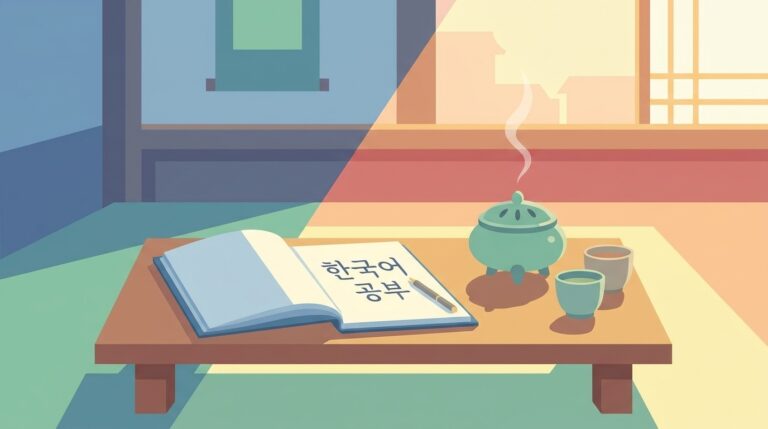
The Art of Scent: Exploring Korean Incense (향) & Tea Meditation
Phase 1: Empathy & Story Immersion
안녕하세요! 매일한글 에디터입니다.
Picture this: You step off the bustling streets of Seoul and slide open the wooden lattice door of a traditional Hanok tea room in Bukchon. The frantic honking of city traffic fades, replaced by the soft whisper of water boiling in an iron kettle and a subtle, smoky plume rising from a celadon burner. You want to ask about the incense—what type of wood it is, how it enhances the green tea notes, or how to properly hold the stick—but your mind defaults to basic phrases like “이거 냄새 좋아요” (This smell is good).
Instinctively, you know that word choices in spaces dedicated to Dado (다도, Korean Tea Ceremony) and mindfulness require subtlety, elegance, and cultural nuance. That’s where we step in. Based on real feedback from advanced learners who felt tongue-tied in traditional Korean cultural workshops, this guide will elevate your conversational mastery from functional to profound. By the end of this lesson, you will possess the C1-level vocabulary to articulate sensory nuances, respect mindful etiquette, and engage in philosophical reflections with tea masters and lifestyle connoisseurs alike.
Phase 2: Deep-Dive into 3 Core Expressions
1. 잔향이 은은하게 감도네요 (Janhangi euneunhage gamdone-yo)
- Pronunciation: Jan-hyang-i eun-eun-ha-ge gam-do-ne-yo (Think of the gentle humming sound “eun” repeated softly like a quiet chime).
- Meaning: Literal: “The lingering scent subtly circles around.” / Nuance: “The after-scent has a delightfully delicate, persistent presence that envelops the room.”
- K-Culture Moment: Used in tranquil aesthetic vlogs or high-end lifestyle dramas (like Thirty-Nine) when visiting private ateliers or traditional tea ateliers.
- Editor’s Insight: The word 잔향 (Janhang – lingering scent) combined with 감돌다 (to linger/drift gently) reveals the Korean appreciation for subtlety over overpowering fragrance.
- Situation Spectrum: Casual ⚠️ | Semi-formal ✅ | Formal ✅
- 🤔 Think About It: In Western perfumery, we often discuss “top, heart, and base notes.” Korean sensory vocabulary often personifies scent through verbs of movement like 감돌다 (to circle gently) or 스며들다 (to seep in). How does your native language describe fading sensory traces?
2. 마음을 가라앉히는 데는 백단향만 한 게 없죠 (Maeumeul garaanjhineun deneun baekdanhangman han ge eopjyo)
- Pronunciation: Ma-eum-eul ga-ra-an-chi-neun de-neun baek-dan-hyang-man han ge eop-jyo
- Meaning: Literal: “When it comes to settling the mind, there is nothing quite like sandalwood.” / Nuance: Expressing high appreciation for sandalwood’s grounding, meditative quality.
- K-Culture Moment: Said by an experienced tea master or monk on healing variety shows like Three Meals a Day or temple stay documentaries.
- Editor’s Insight: The grammatical structure ~만 한 게 없다 is an indispensable C1 idiom meaning “nothing compares to X in the context of Y.” Pair it with sensory nouns to sound remarkably authentic.
- Situation Spectrum: Casual ✅ | Semi-formal ✅ | Formal ✅
- 🤔 Think About It: Notice how emotional states (마음을 가라앉히다 – to settle the agitated mind) are directly paired with specific botanical aromas in Korean wellness culture.
3. 향을 피우며 잡념을 비워내 보세요 (Hyangeul piumyeo jamnyeomeul biwonae boseyo)
- Pronunciation: Hyang-eul pi-u-myeo jam-nyeom-eul bi-wo-nae bo-se-yo
- Meaning: Literal: “While burning incense, try emptying out idle thoughts.” / Nuance: “Let the rising incense smoke clear your mind of mental clutter.”
- K-Culture Moment: Frequently featured in wellness journaling apps, meditation retreats in Mount Jirisan, or indie slow-life channels on YouTube.
- Editor’s Insight: 잡념 (Jamnyeom) refers to chaotic, superfluous thoughts that disrupt inner peace. The verb 비워내다 (to empty out completely) emphasizes intentional mindfulness.
- Situation Spectrum: Casual ⚠️ | Semi-formal ✅ | Formal ✅
- 🤔 Think About It: Why is “emptying” (비움) considered an aesthetic and spiritual virtue in traditional East Asian philosophy compared to active problem solving?
Phase 3: Textbook Korean vs. Real Native Korean
Situation 1: Describing a refined woody scent
- 📖 교과서 한국어 (Textbook): “이 인센스 스틱은 나무 냄새가 나고 좋습니다.” (This incense stick smells like wood and is good.)
- 🗣️ 진짜 한국어 (Native C1): “특유의 그윽한 흙내음과 나무 향이 어우러져서 차분해지네요.” (The distinctive, deep earthy notes harmonize with the wood scent, bringing such a sense of calm.)
- 💡 왜 다를까? (Why the difference?): Standard textbooks rely on the generic noun 냄새 (which can often skew towards unpleasant odors). Advanced native speakers use 향 (pleasant fragrance), 내음 (poetic scent), and 그윽하다 (deep, tranquil, and profound).
Situation 2: Extinguishing an incense stick respectfully
- 📖 교과서 한국어 (Textbook): “불을 입으로 세게 불어서 끄세요.” (Blow the fire out hard with your mouth.)
- 🗣️ 진짜 한국어 (Native C1): “입김으로 끄지 마시고, 손이나 부채로 살짝 바람을 일으켜 꺼주세요.” (Please avoid blowing with your breath; extinguish it gently by fanning with your hand or a fan.)
- 💡 왜 다를까? (Why the difference?): In Korean tradition, blowing directly onto incense with human breath is considered disrespectful (as breath is seen as impure in ritual and meditative contexts). Native phrasing uses polite guidance with honorific suggestions.
Phase 4: K-Culture Deep-Dive & Non-Verbal Etiquette
4-1. 눈치 (Nunchi) & Gestural Etiquette: The Grace of Handling Scent
- Extinguishing Without Breath: Never blow directly onto a burning incense stick. Instead, wave your hand smoothly back and forth to create a subtle breeze, or use an incense snuffer.
- Appreciating the Scent (문향 – Munhyang): When offered an incense burner to appreciate, do not plunge your nose directly over the flame. Hold the burner at chest level with both hands, gently cup your free hand to waft the smoke toward your nose, and close your eyes slightly to show contemplative appreciation.
- Posture during Tea & Incense: Maintain an upright yet relaxed spine (정좌 – formal seated posture). Avoid shifting your legs abruptly, as the ash (향재) can scatter.
4-2. Cultural Code: The Trend of Hyang-meong (향멍)
In modern Korea, the traditional Buddhist and aristocratic ritual of burning natural incense (선향/침향) has evolved into the viral trend of 향멍 (Hyang-meong)—spacing out in calm contemplation while watching the curling trail of incense smoke. Alongside Bul-meong (campfire spacing-out) and Mul-meong (water spacing-out), Hyang-meong represents contemporary young Koreans’ quest for sensory detoxification from high-pressure urban work environments.
Phase 5: Real-World Roleplay Scenario
Setting: Yeonwoon Tea House (연운다실), a serene boutique tea atelier in Samcheong-dong.
Characters:
* Master Min-ji (민지 명인): A gentle, seasoned tea master and incense maker.
* Julian (줄리안): A tea enthusiast and Korean language student practicing mindful appreciation.
민지: 어서 오세요. 차를 내어드리기 전에 심신을 정돈할 수 있도록 선향을 먼저 피워드릴게요.
(Eoseo oseyo. Chareul naeeodeurigie jeone simsineul jeongdonhal su itdorok seonhyangeul meonjeo piwodeurilgeyo.)
“Welcome. Before I serve the tea, let me light a line incense stick so you can compose your mind and body.”
🎭 Gently ignites a slender sandalwood stick and places it into a white porcelain burner.
줄리안: 감사합니다. 연기가 피어오르는 모습만 봐도 잡념이 비워지는 기분이에요.
(Gamsahamnida. Yeongiga pieooreuneun moseumman bwado jamnyeomi biwojineun gibunieyo.)
“Thank you. Just watching the smoke drift upward feels like it empties out all my idle thoughts.”
🎭 Watches the smoke trail with a relaxed gaze.
민지: 호흡을 가다듬고 손으로 살짝 향을 끌어당겨 음미해 보세요. 어떤 느낌이 드시나요?
(Hoheubeul gadadeumgo soneuro saljjak hyangeul kkeureodanggyeo eummihae boseyo. Eotteon neukkimi deusinayo?)
“Regulate your breathing and gently draw the scent toward you with your hand to savor it. What do you feel?”
🎭 Offers the burner toward Julian with both hands.
줄리안: 첫 향은 스파이시한데, 이어서 묵직한 흙내음과 잔향이 은은하게 감도네요.
(Cheot hyangeun seupaisihande, ieoseo mukjikhan heulknae-eumgwa janhangi euneunhage gamdone-yo.)
“The first note is spicy, followed by a heavy earthy scent, and the lingering finish wraps around so subtly.”
🎭 Cups hand gently to waft the scent, nodding appreciatively.
민지: 정확히 짚으셨네요. 자연산 침향과 백단나무를 배합해 직접 빚은 향입니다.
(Jeonghwakhi jipeusyeonne-yo. Jayeonsan chimhyanggwa baekdannamureul baehaphae jikjeop bijeun hyang-imnida.)
“You caught that precisely. It is handmade by blending wild agarwood and sandalwood.”
🎭 Smiles warmly and begins pouring hot water over fermented green tea.
줄리안: 과하지 않고 담백해서, 오늘 준비해주신 발효차와도 참 잘 어우러집니다.
(Gwahaji anko dambaekhaeseo, oneul junbihaejusin balhyochawado cham jal eoureojimnida.)
“It’s not overpowering but wonderfully clean, so it harmonizes perfectly with the fermented tea you prepared today.”
🎭 Receives the small tea cup with both hands.
민지: 향과 차의 궁합을 알아봐 주시니 차를 우리는 보람이 있네요.
(Hyanggwa chaui gunghabeul arabwa jusini chareul urineun borami inne-yo.)
“Since you recognize the harmony between the scent and the tea, it is truly rewarding to brew for you.”
🎭 Lightly bows her head in mutual respect.
줄리안: 다음에는 저도 집에서 향멍을 즐길 수 있게 몇 개 추천해 주시겠어요?
(Daeumeneun jeodo jibeseo hyangmeongeul jeulgil su itge myeot gae chucheonhae jusigesseoyo?)
“Could you recommend a few sticks so I can enjoy ‘hyang-meong’ at home next time as well?”
🎭 Inquires with a genuine, polite smile.
🔀 Interactive Branch Point:
The tea master asks you how you intend to use the incense at home. How do you respond?
- Option A: “그냥 방에 담배 냄새 없애려고 제일 싼 걸로 사려고요.” (I just want to buy the cheapest one to get rid of cigarette smell in my room.)
- 👉 Feedback [Bad]: Ruins the contemplative atmosphere and reduces artisanal incense to a mere room deodorizer.
- Option B: “하루 일과를 마치고 명상하면서 하루를 차분하게 마무리할 때 피우고 싶어요.” (I want to burn it when wrapping up my day calmly and meditating after finishing my daily routine.)
- 👉 Feedback [Best]: Highly refined and culturally resonant! The tea master will be thrilled to recommend specific soothing blends like 침향 (agarwood).
- Option C: “예뻐서 인스타그램 사진 찍는 소품으로 쓰려고요.” (It looks pretty, so I want to use it as a prop for Instagram photos.)
- 👉 Feedback [Risk]: A bit superficial; while not offensive, it misses the mindful spirit of Dado.
Phase 6: 10-Second Emotion Shadowing Drill
[😌 차분하고 그윽하게 / Calm & Profound]
잔향이 / 은은하게 감돌아서 / 마음이 한결 편안해지네요.
(Janhangi / euneunhage gamdoraseo / maeumi hangyeol pyeon-anhaejine-yo.)-
[🌿 진지하고 정중하게 / Sincere & Respectful]
입김으로 불지 않고 / 손으로 살짝 / 불씨를 꺼야 예의에 맞아요.
(Ipgimeuro bulji anko / soneuro saljjak / bulssireul kkeoya ye-uie majayo.) -
[🍵 감탄하며 차분하게 / Admiring & Meditative]
향을 피우며 잡념을 비워내니 / 차 맛이 더 깊게 느껴집니다.
(Hyangeul piumyeo jamnyeomeul biwonaeni / cha masi deo gipge neukkyeojimnida.)
Phase 7: K-Culture Mini Dictionary
| # | Term (Hangul / Romanization) | Translation | Everyday & Practical Usage Insight |
|---|---|---|---|
| 1 | 선향 (Seon-hyang) | Line / Stick Incense | Traditional thin-stick incense crafted without a bamboo core, producing a delicate, purer herbal aroma. |
| 2 | 침향 (Chim-hyang) | Agarwood / Aloeswood | Regarded as the pinnacle of medicinal and meditative scents in Korea; famous for its deep, grounding resinous notes. |
| 3 | 향멍 (Hyang-meong) | Incense Spacing-out | Contemporary slang referring to zoning out peacefully while watching incense smoke curling upwards. |
| 4 | 문향 (Mun-hyang) | Scent Listening / Appreciating | Traditional poetic practice of “listening to the scent” rather than simply smelling it, engaging full sensory awareness. |
Phase 8: Traveler’s Survival Kit
Top 3 Survival Phrases for Scent Ateliers & Tea Houses
- “연기가 너무 맵지 않고 순한 향으로 추천해 주시겠어요?”
(Yeon-giga neomu maepji anko sunhan hyang-euro chucheonhae jusigesseoyo?)
Pro Tip: Use this if you have sensitive eyes or asthma; ask for “mild” (순한) formulations. - “전통 도자기 향꽂이도 함께 구매할 수 있나요?”
(Jeontong dojagi hyang-kkojido hamkke gumaehal su innayo?)
Pro Tip: Perfect phrase when searching for handcrafted ceramic incense holders as authentic souvenirs. - “밀폐된 공간에서 환기는 얼마나 자주 해야 하나요?”
(Milpyedoeun gong-ganeseo hwangineun eolmana jaju haeya hanayo?)
Pro Tip: Shows mindful home safety awareness regarding indoor ventilation.
Editor’s Travel Note: Discovering Scent in Jongno & Insadong
When visiting Seoul, skip commercial fragrance stores and head directly to traditional craft districts. Search on your smartphone using the 네이버 지도 앱 다운로드 to locate historical incense and tea specialty shops around Insadong (인사동) and Bukchon Hanok Village (북촌한옥마을). Most traditional tea studios accept international credit cards (트래블월렛 or general Visa/Mastercard), but keeping a small amount of cash handy is appreciated at small artisan workshops.
Phase 9: “One Step Deeper” (Reflective Essay)
In Korean traditional aesthetics, incense is not merely a fragrance designed to mask odors; it is a catalyst for 비움 (emptiness) and 정진 (devotional focus). While modern consumer culture often treats fragrance as a fashion accessory to project outwards, traditional Korean Dado and incense culture use scent as an inward-facing mirror. When the stick burns down, it leaves nothing behind but soft ash, reminding practitioners of impermanence and the beauty of quiet presence.
💬 Your Turn: What sensory ritual helps you ground your mind when life gets chaotic? Have you ever tried pairing tea with incense? Share your thoughts in the comments below!
Phase 10: FAQ & Common Mistakes
Q: Can I use the word “냄새” when complimenting incense at a traditional tea room?
A: It is much better to use “향” (Hyang) or “향기” (Hyanggi). While 냄새 is neutral in grammar, it is commonly associated with everyday odors (like food or body sweat). In aesthetic or formal settings, 향 reflects high cultural etiquette.
Q: What is the difference between Western scented sticks and Korean 선향 (Seon-hyang)?
A: Western/Indian incense sticks often have a thin wooden/bamboo core, producing a more intense and sometimes pungent smoke. Korean 선향 is purely made of natural compressed herbal and wood powders without a core, resulting in a cleaner, subtle burn.
Q: How do I say “This scent is not too overpowering” in natural Korean?
A: Say “향이 자극적이지 않고 은은해서 좋아요” (I like that the scent is not irritating/overpowering and remains gentle).
🚨 Common Mistakes Warning Board
- Mistake: Blowing on the incense like a birthday candle.
Correct Action: Fan your hand gently (손으로 부채질하기) or wait for the initial flame to subside naturally. - Mistake: Saying “이 향기 쩔어요!” (slang for “this smells insane”) in a formal tea session.
Correct Action: Use “향이 참 그윽하네요” (The aroma is truly deep and elegant). - Mistake: Forgetting to ventilate the room (환기).
Correct Action: Even with high-grade natural incense, always leave a small window crack open to allow clean energy circulation.
Phase 11: Action Missions
- 🥉 Bronze Mission (Solo Practice): Stand in front of your mirror and practice extinguishing an imaginary incense stick by fanning your hand while saying: “입김 대신 손으로 살짝 끕니다.”
- 🥈 Silver Mission (Social Learning): Take a photo of your favorite cup of tea or candle, post it to Instagram/Threads with the caption: “오늘의 향멍 타임 🌿 잔향이 은은하네요. #매일한글 #향멍 #다도”
- 🥇 Gold Mission (Real-world Challenge): Next time you visit a tea house or cultural shop, ask the host: “이 공간에 피우신 향 이름이 무엇인지 여쭤봐도 될까요?” (May I ask what incense you have lit in this space?)
🎮 K-Culture Mission: Watch a historical K-Drama (사극, such as Mr. Queen or The Red Sleeve) and spot the scenes where court ladies or scholars light incense in small bronze burners before drinking tea!
Phase 12: Interactive Quiz Challenge
1. Context Judgment
You are visiting a master at a quiet tea temple. What is the most appropriate way to describe the lingering sandalwood aroma?
* (A) 아싸, 냄새 대박이다!
* (B) 잔향이 그윽하게 감돌아서 마음이 편안해집니다.
* (C) 불 냄새가 너무 진해서 머리가 아파요.
🔍 Click to view the Answer & Explanation
Answer: (B)
(B) employs sophisticated vocabulary (잔향, 그윽하다, 감돌다) fitting a meditative context. (A) is overly casual slang, and (C) sounds discourteous.
2. Fill-in-the-Blank
마음을 차분하게 ______ 데는 백단향이 최고예요. (When it comes to settling the mind, sandalwood is the best.)
* (A) 비워내는
* (B) 가라앉히는
* (C) 일으키는
🔍 Click to view the Answer & Explanation
Answer: (B) 가라앉히는
마음을 가라앉히다 is the set collocation meaning to calm or settle one’s restless mind.
3. True / False Cultural Check
Statement: In Korean traditional incense etiquette, it is considered polite to blow directly on the tip of the incense with your mouth to extinguish the flame quickly.
* [True / False]
🔍 Click to view the Answer & Explanation
Answer: False
Extinguishing with direct breath is considered disrespectful. One should always wave their hand or use a small fan gently.







