

Phase 1: Empathy & Immersion
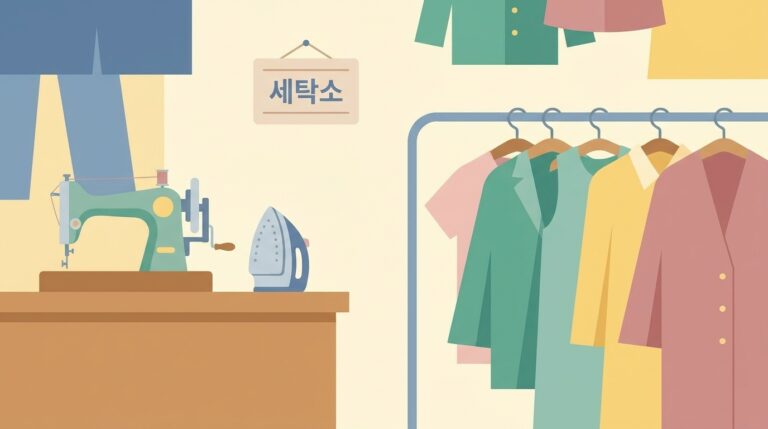
안녕하세요! I’m your Daily Hangul editor and your personal Korean culture guide. Imagine this: you just landed in Seoul, unpacked your suitcase at your Hongdae Airbnb, and found your favorite K-fashion jacket has a loose button or the pants you just bought in Myeongdong are two inches too long! You spot a cozy local Korean dry cleaner (세탁소 – setakso) nearby with steam puffing from the window. But panic sets in—how do you ask someone to alter clothes without sounding like a robotic translation app? Don’t worry! Altering clothes in Korea is quick, affordable, and surprisingly easy once you know a few magic phrases. Based on real feedback from beginner learners, this friendly A1 survival guide will have you tailoring clothes like a true local.
Phase 2: Top 3 Core Expressions
1. 이거 줄여 주세요 (Igeo julyeo juseyo)
- Pronunciation: [ee-guh jool-yeo joo-seh-yo] (Sounds like ‘ego’ + ‘July’ with an ‘uh’ at the end + ‘juseyo’)
- Meaning: Literal: “Please shorten this.” / Real Nuance: “Could you hem/shorten this for me?”
- K-Culture Moment: When shopping for pants in Dongdaemun, shoppers often immediately take their pants to an alley tailor shouting, “사장님, 바지 기장 좀 줄여 주세요!” (Boss, please hem these pants!)
- Editor’s Insight: Use this whenever you want pants, skirts, or sleeves made shorter. It’s the #1 most useful tailoring verb!
- Situation Spectrum: Casual ⚠️ | Semi-formal ✅ | Formal ✅
- 🤔 Think About It: In English, we say “alter” or “take in”, but Korean specifies the action directly: 줄이다 (to reduce/shorten).
2. 수선해 주세요 (Suseonhae juseyo)
- Pronunciation: [soo-sun-hae joo-seh-yo] (Sounds like ‘soo’ + ‘sun’ shining + ‘hae’ + ‘juseyo’)
- Meaning: Literal: “Please repair/alter this.” / Real Nuance: “I’d like to get this altered / fixed.”
- K-Culture Moment: In K-dramas, whenever someone tears a vintage outfit before an important date, they rush into a neighborhood shop asking for urgent “수선” (repair/mending).
- Editor’s Insight: 수선 (suseon) is the general umbrella noun for clothing alterations and repairs. If you aren’t sure how to explain the exact technique, point to the problem spot and say this!
- Situation Spectrum: Casual ⚠️ | Semi-formal ✅ | Formal ✅
- 🤔 Think About It: Koreans love fast, precise craftsmanship. “수선” covers everything from replacing a broken zipper to reshaping an entire coat.
3. 언제 찾으러 올까요? (Eonje chajeureo olkkayo?)
- Pronunciation: [uhn-jeh chah-jeu-ruh ohl-kkah-yoh] (Sounds like ‘on’ + ‘J’ + ‘charge’ without the ‘ge’ + ‘all-caw-yo’)
- Meaning: Literal: “When shall I come to find it?” / Real Nuance: “When can I pick it up?”
- K-Culture Moment: Every dry cleaner counter interaction in Korea wraps up with this exact phrase as the owner writes a paper ticket.
- Editor’s Insight: Koreans use the verb 찾다 (to find/retrieve) instead of “pick up” for laundry, packages, and dry cleaning.
- Situation Spectrum: Casual 🚫 | Semi-formal ✅ | Formal ✅
- 🤔 Think About It: Notice the humble question ending ‘-ㄹ까요?’ which politely leaves the scheduling decision entirely to the shop owner.
Phase 3: Textbook Korean vs. Real Native Korean
Situation 1: Asking to fix a torn seam or button
- 📖 교과서 한국어: 옷을 고쳐 주실 수 있습니까? (Oseul gochyeo jusil su itseumnikka? – Could you possibly repair the clothing?)
- 🗣️ 진짜 한국어: 여기 수선돼요? (Yeogi suseondwaeyo? – Can you fix/alter this here?)
- 💡 왜 다를까?: Native speakers keep it concise and natural. Instead of overly rigid grammar, simply pointing at the tear and asking if alteration is possible (수선돼요?) sounds much more natural.
Situation 2: Asking for the pickup day
- 📖 교과서 한국어: 세탁물이 언제 준비됩니까? (Setangmuri eonje junbidoemnikka? – When will the laundry be prepared?)
- 🗣️ 진짜 한국어: 내일 찾을 수 있어요? (Naeil chajeul su isseoyo? – Can I pick it up tomorrow?)
- 💡 왜 다를까?: In everyday spoken Korean, asking directly if pickup is possible on a specific day is friendly and saves time for busy shop owners.
Phase 4: K-Culture Deep Dive & Non-Verbal Manners
4-1. Nunchi (눈치) & Gestures at the Tailor
When entering a Korean setakso, the owner (usually a master tailor with decades of experience called 사장님 Sajangnim) will look at where you’re holding the garment.
* The Pinch Test: Put on the pants or jacket in their mini fitting curtain, look in the mirror, and pinch the excess fabric with two fingers.
* Two-Handed Handover: When handing clothes or your credit card, hold it with both hands or support your right wrist with your left hand. It shows respect and instant friendliness!
4-2. The Cozy Culture of Neighborhood ‘Setakso’
In Korea, dry cleaners aren’t sterile chain stores—they are the warm heartbeat of residential neighborhoods (dongne). You’ll often hear a small TV playing daytime soap operas, smell the steam of an industrial iron, and see cats napping by the door. Tailoring fees for pants hemming are remarkably cheap (often around 4,000 ~ 6,000 KRW) and can be done within an hour!
Phase 5: Real-Life Roleplay Scenario
- Setting: A warm, steam-filled corner dry cleaner in Yeonnam-dong. The friendly owner, Kim Sajangnim, is pressing a shirt.
-
Turn 1 (Learner): 안녕하세요! 사장님, 바지 수선돼요? (Annyeonghaseyo! Sajangnim, baji suseondwaeyo? – Hello boss, can I get these pants altered?)
🎭 Bows politely and shows new slacks. - Turn 2 (Owner): 네, 어서 와요! 어디 고칠 건데? 입어 봐요. (Ne, eoseo wayo! Eodi gochil geonde? Ibeo bwayo. – Yes, welcome! What do you want fixed? Try them on.)
🎭 Points to the fitting curtain. - Turn 3 (Learner): 기장 좀 줄여 주세요. 이만큼이요. (Gijang jom julyeo juseyo. Imankeumiyo. – Please shorten the length. Just this much.)
🎭 Pinches 2 inches of hem at the ankle. - Turn 4 (Owner): 알겠어요. 딱 예쁘게 잡아줄게. (Algesseoyo. Ttak yeppeuge jabajulge. – Got it. I’ll pin it just right for you.)
🎭 Places tailor chalk marks on the hem. - Turn 5 (Learner): 언제 찾으러 올까요? (Eonje chajeureo olkkayo? – When should I come pick them up?)
🎭 Smiles expectantly. - Turn 6 (Owner): 오늘 저녁 6시에 와요. (Oneul jeonyeok yeoseot-sie wayo. – Come by at 6 PM this evening.)
🎭 Writes down a paper receipt. - Turn 7 (Learner): 얼마예요? (Eolmayeyo? – How much is it?)
🎭 Prepares payment card. - Turn 8 (Owner): 5,000원이에요. (Ocheonwon-ieyo. – It’s 5,000 won.)
🎭 Takes the garment to the sewing table.
🔀 Interactive Choice Point
The owner asks: “허리도 줄여 줄까?” (Shall I take in the waist too?) How do you respond?
* Option A: “네, 허리도 조금 줄여 주세요!” -> 🌟 Best! Clear, polite, and solves the exact fit problem.
* Option B: “아니요, 괜찮아요. 기장만 해 주세요.” -> 🌟 Best alternative! Politely declines extra tailoring and keeps just the length.
* Option C: “몰라요.” (I don’t know) -> ⚠️ Risk! Sounds blunt and confusing in a customer service context. Instead, say “잘 모르겠어요” (I’m not sure) if hesitant.
Phase 6: 10-Second Emotion Shadowing Drill
[😊 Friendly & Confident]안녕하세요! / 바지 기장 좀 / 줄여 주세요.
(Annyeonghaseyo! / Baji gijang jom / julyeo juseyo.)[🤔 Inquiring & Polite]이거 수선 / 언제 끝나요?
(Igeo suseon / eonje kkeunnayo?)[🙏 Grateful & Bright]감사합니다! / 저녁에 / 찾으러 올게요.
(Gamsahamnida! / Jeonyeoge / chajeureo olgeyo.)
Phase 7: K-Culture Mini Dictionary
- 수선 (Suseon): Alteration / Mending. Used for repairing or customizing clothing fit.
- 기장 (Gijang): Garment length (pants hem, dress length, coat length).
- 세탁소 (Setakso): Neighborhood dry cleaner / laundry & tailoring shop.
- 사장님 (Sajangnim): Literal “Company President”, used affectionately for small business owners and shopkeepers.
Phase 8: Traveler’s Survival Kit
Top 3 Survival Phrases
- 지퍼 고쳐 주세요. (Jipeo gochyeo juseyo. – Please fix the zipper.)
Pro Tip: Tap the zipper handle while saying this! - 내일까지 돼요? (Nae-il-kkaji dwaeyo? – Can this be done by tomorrow?)
Pro Tip: Great when you have an urgent flight or photoshoot. - 카드 돼요? (Kadeu dwaeyo? – Do you take credit card?)
Pro Tip: Most shops do, but small repairs under 5,000 KRW appreciate cash/transfer!
Editor’s Travel Note
- Navigation: Search for “세탁소” or “옷수선” on the Naver Map app download for Korea navigation to find tailor shops within 3 minutes of any subway station.
- Payment: International Visa/Mastercard works in 95% of Seoul shops, but keeping a 5,000 won bill handy makes neighborhood masters smile!
Phase 9: Stepping Deeper (Cultural Thought)
In modern Korea’s fast-paced trend culture, the neighborhood setakso remains a sanctuary of sustainable living and human warmth. Instead of throwing away fast-fashion pieces, Koreans take pride in personalizing clothes to fit their silhouette perfectly. It reflects Jeong (정)—caring for items and relationships with patience and skill.
💬 Your Turn: Have you ever altered clothes in your home country? How does the tailoring culture compare to Korea? Let me know in the comments below!
Phase 10: FAQ & Common Mistakes
Q: Can I get my clothes altered on the spot in Korea?
A: Yes! For simple pants hemming (기장 줄이기), many neighborhood shops will finish it in 15 to 30 minutes if you tell them it’s urgent (조금 급해요).
Q: What is the difference between 세탁 (Setak) and 수선 (Suseon)?
A: 세탁 means washing/dry cleaning, while 수선 specifically means alteration, sewing, or mending.
Q: How do I address the dry cleaner shop owner?
A: Always call them 사장님 (Sajangnim – boss/owner) or 이모님 (Imonim – auntie) for friendly older female owners.
🚨 Common Mistakes Alert!
- ❌ Saying “이거 작게 만들어 주세요” (Make this small). ➡️ Correct: “이거 줄여 주세요” (Please shorten/take this in).
- ❌ Leaving without a pickup receipt or photo. ➡️ Correct: Take a quick photo of the shop’s phone number or ask for a ticket (영수증 주세요).
- ❌ Forgetting to try the garment on in front of the tailor. ➡️ Correct: Step behind the curtain and let the master chalk the exact hemline!
Phase 11: Action Missions
- 🥉 Bronze Mission (Solo Practice): Hold up a pair of pants and say aloud 3 times: “사장님, 기장 줄여 주세요!”
- 🥈 Silver Mission (Social Media): Post a photo of your favorite Korean outfit on Instagram or Threads with the caption: “오늘 세탁소에서 수선했어요! #DailyHangul”
- 🥇 Gold Mission (Real Life): Visit a local Setakso on your next trip to Korea, alter a thrifted item, and pick it up saying “찾으러 왔어요!”
- 🎮 K-Culture Mission: Watch a modern K-drama episode and spot the yellow dry-cleaner steam irons or neighborhood laundry signs!
Phase 12: Interactive Quiz Challenge
Question 1: You bought long jeans in Seoul and want them hemmed shorter. What do you say?
* A) 이거 늘려 주세요 (Make this longer)
* B) 이거 줄여 주세요 (Shorten this, please)
* C) 이거 버려 주세요 (Throw this away)
Question 2 (True/False): In Korea, ‘찾으러 왔어요’ means you came to search for a lost item only, not to pick up laundry.
🔍 Click here for Answers & Explanations!
Q1 Answer: B) 이거 줄여 주세요!
Explanation: 줄이다 means to shorten or reduce. (늘리다 means to lengthen/expand).
Q2 Answer: False!
Explanation: 찾으러 왔어요 (I came to retrieve it) is the standard, natural phrase for picking up finished dry cleaning or altered garments!






