

Mastering Gimjang Season and the Cabbage Inflation Crisis: A C2 Guide to Advanced Korean Socio-Economic Banter
Phase 1: Empathy (Immersive Story Opening)
안녕하세요! 매일한글 에디터입니다. (Hello! This is your Daily Hangul Editor.)
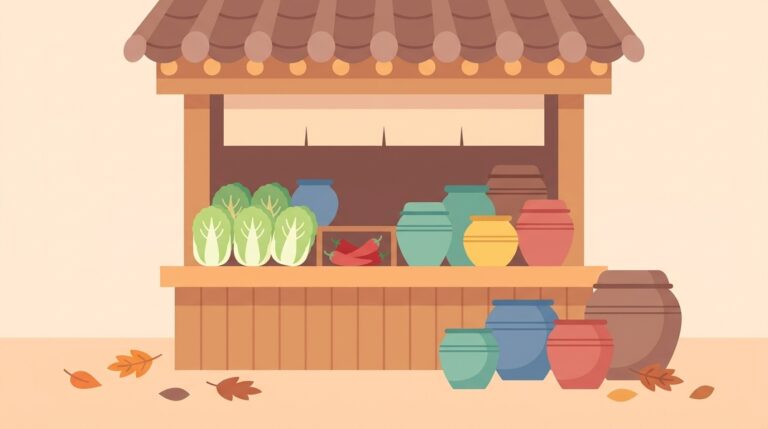
Picture this: It’s late November in Seoul. A brisk autumn wind sweeps through the vibrant alleys of Gyeongdong Market. Towering mountains of fresh Napa cabbages line every stall, their crisp green leaves glistening under the market lights. You are prepared to immerse yourself in Gimjang (김장)—Korea’s UNESCO-recognized communal kimchi-making tradition. But as you listen in on the murmurs of veteran homemakers and market vendors, the atmosphere is tense.
Instead of cheerful bargaining, you hear sighs: “배춧값이 천정부지로 치솟아서 손이 떨리네…” (Cabbage prices have skyrocketed through the roof; my hands are trembling…) Unseasonable typhoons and extreme weather have turned humble Napa cabbage into Geumbae-chu (금배추, “gold cabbage”). When preparing 50 to 100 heads of cabbage for an entire winter’s supply, a threefold price surge becomes a national socio-economic event.
Navigating this cultural moment requires far more than basic shopping vocabulary. At a C2 mastery level, you need the idiomatic agility to discuss macro-economic fluctuations, empathize with local vendors using culturally resonant idioms, and navigate the delicate social nuances of Gimjang economics. Based on real feedback from advanced learners living in Seoul, this guide will empower you to speak with the wit, depth, and cultural fluency of a true insider.
Phase 2: Deep Dive into 3 Core Expressions
1. 배춧값이 금값이라 올해 김장은 엄두도 못 내겠어요.
- Pronunciation: Baechut-gapsi geum-gapsira olhae gimjang-eun eomdudo mot naegesseoyo. (Sound analogy: Think of baechut-gap like “bae-choot-gahp” with a crisp, clipped ending, flowing into geum-gap like “geum-gahp”.)
- Meaning: Literal: “Because cabbage prices are gold prices, I can’t even dare to do Gimjang this year.” | Nuance: Emphasizes that skyrocketing grocery inflation makes a major traditional undertaking financially daunting.
- K-Culture Moment: Seen in documentary programs like KBS Docu Insight or family weekend dramas where in-laws debate scaling down annual winter preparations.
- Editor’s Insight: The phrase 엄두를 못 내다 (eomdureul mot naeda) expresses psychological inhibition in the face of an overwhelming task or expense. Pairing it with 금값 (geum-gap, gold price) instantly marks your speech as native-level natural.
- Situation Spectrum: Casual: ✅ | Semi-formal: ✅ | Formal: ✅
- 🤔 Think About It: In your culture, is there a staple food whose price spike instantly becomes a national headline and metaphor for general inflation?
2. 물가 급등 때문에 김장을 포기하는 ‘김포족’이 늘고 있대요.
- Pronunciation: Mulga geupdeung ttaemune gimjang-eul pogihaneun ‘gimpojok’-i neulgo itdaeyo. (Sound analogy: Gim-po-jok rhymes with “team-po-joke”.)
- Meaning: Literal: “They say the number of ‘Gimpo-jok’—people abandoning Gimjang due to sudden inflation—is increasing.” | Nuance: A trendy socio-economic neologism blending Gimjang and Pogi (abandonment/giving up, which is also a pun on pogi, the counter for heads of cabbage).
- K-Culture Moment: Frequently featured on 8 PM prime-time news segments analyzing shifts in consumer behavior toward commercial packaged kimchi (포장김치).
- Editor’s Insight: Notice the cultural wit: 포기 (pogi) means both “giving up” and the counting unit for cabbage. Wordplay like this reflects Korean society’s dark humor when tackling economic hardships.
- Situation Spectrum: Casual: ✅ | Semi-formal: ✅ | Formal: ⚠️ (Use formal demographic terms in academic writing)
- 🤔 Think About It: How does your native language create satirical portmanteaus to describe consumer trends during an economic crunch?
3. 금배추 파동 속에서도 이웃끼리 품앗이하며 부담을 덜어요.
- Pronunciation: Geumbae-chu padong sog-eseodo i-utkkiri pum-asihamyeo budam-eul deoreoyo. (Sound analogy: Pum-asi sounds like “poom-ah-shee” with balanced stress.)
- Meaning: Literal: “Even amidst the gold cabbage crisis, neighbors lighten the burden through cooperative labor (pumasi).” | Nuance: Highlights traditional communal mutual aid overcoming high prices and heavy labor.
- K-Culture Moment: A quintessential scene in slice-of-life dramas like Reply 1988 or Our Blues, where the community gathers on plastic stools to process hundreds of cabbages together.
- Editor’s Insight: 품앗이 (pumasi) is an ancient agrarian concept of exchanging labor. In contemporary contexts, it represents collective resilience and the spirit of Jeong (정).
- Situation Spectrum: Casual: ✅ | Semi-formal: ✅ | Formal: ✅
- 🤔 Think About It: Does your culture preserve historical forms of mutual labor exchange in modern communal practices?
Phase 3: Textbook Korean vs. Real Korean
Situation A: Explaining why you’re buying packaged kimchi instead of making it
- 📖 Textbook Korean: “올해는 배추 가격이 매우 비싸서 집에서 김치를 담그지 않고 마트에서 사 먹겠습니다.”
- 🗣️ Real Korean (C2): “올해 배춧값이 워낙 미쳐서요, 집에서 고생하며 담그느니 시판 김치로 갈아타는 게 훨씬 남는 장사예요.”
- 💡 Why the Difference? Native speakers use colorful expressions like “배춧값이 미쳤다” (cabbage prices are crazy) and business metaphors like “남는 장사” (a profitable/sensible deal) rather than flat declarative statements.
Situation B: Downsizing the scale of Gimjang with relatives
- 📖 Textbook Korean: “배추 가격이 올랐으니 김장의 양을 줄여서 조금만 만듭시다.”
- 🗣️ Real Korean (C2): “요새 물가가 장난 아니잖아요. 이번 김장은 판 벌리지 말고 겉절이 수준으로 조촐하게 퉁쳐요.”
- 💡 Why the Difference? “판을 벌리다” (to set up a massive operation) and “퉁치다” (to settle/substitute casually) convey realistic household pragmatic compromises.
Phase 4: K-Culture Deep Dive & Non-Verbal Manners
4-1. 눈치 (Nunchi) & Gestures in the Market
When inspecting Napa cabbage during a price shock, handling produce requires refined etiquette. Never aggressively squeeze (주무르다) the cabbage; vendors are on high alert. Instead, gently support the base with both hands to evaluate weight and density. If the vendor quotes an exorbitant price, do not argue bluntly. Offer a sympathetic tongue-click (쯧쯧) and a subtle head tilt, saying: “아이고, 산지 작황이 안 좋아서 사장님도 마진 남기기 힘드시겠어요.” (Oh dear, with poor harvest conditions at the farms, it must be tough for you to make a margin too.) This validates their struggle and builds instant rapport.
4-2. Cultural Code: The Socio-Economics of Gimjang
Gimjang is not just meal prep; it is an annual socio-economic barometer. In Korea, the “Gimjang Index” (김장지수) measures consumer sentiment. When cabbage, radish, red pepper powder (고춧가루), and fermented salted seafood (젓갈) spike simultaneously, it triggers national discussions on welfare safety nets and government reserve releases (정부 비축 물량 방출). Understanding Gimjang means understanding the core of Korean domestic economy and communal solidarity.
Phase 5: Real-World Roleplay Scenario
Setting: A chilly morning at Seoul Yangnyeongsi Market. You are consulting with Auntie Soon-ok (순옥 이모), a veteran vendor of 30 years.
- 순옥 이모: 🎭 (배추를 다듬으며 깊은 한숨을 내쉬며) 어서 와요, 총각/아가씨! 근데 어쩌나, 올해는 비가 워낙 잦아서 실한 배추 구하기가 하늘의 별 따기야. 한 망에 삼만 원은 줘야 해.
(Eoseo wayo! Geunde eojjeona, olhaeneun biga wonak jajasseo silhan baechu guhagiga haneurui byeol ttagiya. Han mang-e samman-won-eun jwoya hae.)
“Welcome! But what to do… it rained so much this year that finding solid cabbages is like plucking stars from the sky. It’s thirty thousand won per net bundle.” -
You: 🎭 (배추 밑동을 정중히 살피며 공감하는 표정으로) 아이고, 이모님. 산지 작황이 폭망이라더니 소문이 진짜였네요. 도매가부터 이렇게 뛰었으니 이모님도 남는 게 없으시겠어요.
(Aigo, imonim. Sanji jak-hwang-i pokmang-iradeoni somuni jinjjayeon-neyo. Domaegabuteo ireoke ttwieosseumyeon imonimdo namneun ge eopseusigesseoyo.)
“Oh goodness, Auntie. Rumors said farm yields collapsed, and it’s truly real. Since wholesale prices jumped so much, you must barely make a margin either.” -
순옥 이모: 🎭 (손뼉을 치며 반색하며) 아이고, 내 속을 어쩌면 그렇게 잘 알아줘! 손님들마다 비싸다고 타박만 해서 속상해 죽을 뻔했잖아.
(Aigo, nae sog-eul eojjeomyeon geureoke jal arajwo! Sonnimdeulmada bissadago tabangman haeseo soksanghae jukeul ppeonhaetjanha.)
“Oh my, how do you understand my heart so well! Every customer just scolds me for being expensive; it was breaking my heart.” -
You: 🎭 (미소를 지으며 넌스레를 떨듯) 그러니까요. 그렇다고 1년 먹을 김장을 아예 제낄 수도 없고… 혹시 속이 덜 찼어도 실속 있는 파치 배추는 좀 덜할까요?
(Geureonikkayo. Geureotdago il-nyeon meogeul gimjang-eul aye jekkil sudo eopgo… Hoksi sog-i deol chasseodo silsok inneun pachi baechuneun jom deolhalkkayo?)
“Exactly. But then again, I can’t completely skip the Gimjang we rely on all year… By any chance, are slightly imperfect, budget-friendly cabbages a bit cheaper?” -
순옥 이모: 🎭 (주변을 슬쩍 둘러보고 목소리를 낮추며) 사실 뒤쪽에 겉잎만 살짝 마르고 속은 꽉 찬 놈들 따로 빼뒀어. 그거 가져가면 내가 무 한 짝도 서비스로 얹어줄게.
(Sasil dwitchog-e geonnimman saljjak mareugo sog-eun kkwak chan nomdeul ttaro ppaedwosseo. Geugeo gajyeogamyeon naega mu han jjakdo seobiseuro eonjeojulge.)
“Honestly, in the back, I set aside ones with slightly dry outer leaves but dense hearts. If you take those, I’ll toss in a bundle of radishes as a free bonus.” -
You: 🎭 (두 손을 모아 감사를 표하며) 역시 이모님 인심 최고네요! 그럼 그 알짜배기로 세 망 챙겨주세요. 갓이랑 쪽파도 이모님네서 다 맞출게요.
(Yeoksi imonim insim choegoneyo! Geureom geu aljjabaegiro se mang chaenggyeojuseyo. Gat-irang jjokpado imonimneseo da matchulgeyo.)
“Auntie’s generous hospitality is truly the best! Please pack three nets of those prize picks. I’ll get all my mustard greens and scallions from you too.” -
순옥 이모: 🎭 (환하게 웃으며 배추를 묶는다) 고마워요! 양념 버무릴 때 힘들면 언제든 지나가다 들러서 믹스커피 한잔하고 가!
(Gomawoyo! Yangnyeom beomuril ttae himdeulmyeon eonjedeun jinagada deulleoseo mikseukeopi hanjanhago ga!)
“Thank you! When your arms get tired mixing the seasoning, drop by anytime for a warm instant mix coffee!” -
You: 🎭 (지갑을 열며 깍듯하게 인사한다) 네, 이모님! 올겨울 배추 파동도 같이 잘 버텨봐요. 계좌이체 바로 쏴드릴게요!
(Ne, imonim! Olgyeoul baechu padongdo gachi jal beotyeobwayo. Gyejwa-iche baro ssawadeurilgeyo!)
“Yes, Auntie! Let’s weather this winter’s cabbage crisis together. I’ll transfer the payment right to your account now!”
🔀 Interactive Decision Point
How would you respond if a vendor quotes a price that is double your planned budget?
- Option A: “너무 비싸요! 마트 가면 포장김치가 훨씬 싼데 왜 이렇게 바가지를 씌우세요?” (Too expensive! Packaged kimchi at the supermarket is way cheaper, why are you ripping me off?)
- ❌ Feedback (Bad): Accusing a vendor of 바가지 (price-gouging) during a natural agricultural crisis ruins rapport instantly and alienates local merchants.
- Option B: “물가가 무섭긴 하네요. 그래도 이모님 물건이 제일 실해 보이니, 다른 부재료랑 같이 사면 에누리 조금 가능할까요?” (Inflation is truly scary. Still, your produce looks the freshest; if I buy the other ingredients together, could we negotiate a small discount?)
- 🏆 Feedback (Best): Acknowledges the macroeconomic situation, compliments product quality, offers a bundle purchase, and politely uses 에누리 (courtesy discount).
- Option C: “네, 알겠습니다. 그냥 안 살게요.” (Okay, I understand. I just won’t buy it.)
- ⚠️ Feedback (Risk): While grammatically correct, it abruptly cuts the interaction without exploring alternatives like budget-grade produce (파치/알짜배기).
Phase 6: 10-Second Emotional Shadowing Drill
- [😮 Shocked & Empathetic]
배춧값이 / 자고 일어나면 뛰니까 / 장보기가 겁나요.
(Baechut-gapsi / jago ireonamyeon ttwinikka / jangbogiga geomnayo.)
“Since cabbage prices jump every time I wake up, I’m scared to even go grocery shopping.” -
[🤝 Cooperative & Determined]
재료비가 부담돼도 / 온 가족이 품앗이로 뭉치면 / 어떻게든 해결되겠죠.
(Jaeryobiga budam-dwaedo / on gajog-i pum-asiro mungchimyeon / eotteokedeun haegyeoldwoegetjyo.)
“Even if ingredients are costly, if the whole family unites in cooperative labor, we will pull through somehow.” -
[😏 Witty & Realistic]
올해는 금배추라 / 김치 한 조각도 / 금쪽처럼 아껴 먹어야겠어요.
(Olhaeneun geumbae-chura / gimchi han jogakdo / geumjjokcheoreom akkyeo meogeoyagetseoyo.)
“Since it’s gold cabbage this year, we must cherish every single bite of kimchi like precious treasure.”
Phase 7: K-Culture Mini Dictionary
- 금배추 (Geumbae-chu): Noun. “Gold Napa Cabbage.” A socio-economic buzzword applied to Napa cabbage when extreme weather spikes wholesale prices to luxury levels.
- 김포족 (Gimpo-jok): Noun. “The Gimjang-abandoning tribe.” Modern consumers who opt out of labor-intensive home kimchi making due to exorbitant ingredient costs and busy urban lifestyles.
- 품앗이 (Pumasi): Noun. Traditional collective labor exchange. In modern cooking, it refers to relatives or neighbors gathering to divide prep work and share the final batches.
- 겉절이 (Geotjeori): Noun. Fresh, unfermented quick kimchi dressed in spicy seasonings. Frequently used as a metaphor for downsizing a massive Gimjang project into a lightweight, one-day meal prep.
Phase 8: Traveler & Expat Survival Kit
Top 3 Survival Expressions
- 한글: “배추 절임용 소금이랑 고춧가루 원산지가 어디예요?”
- Romanization: Baechu jeorimyong sogeum-irang gochutgaru wonsanjiga eodiyeyo?
- Pro Tip: In Gimjang, the purity of coarse sea salt (천일염) and sun-dried red pepper flakes (태양초 고춧가루) dictates flavor longevity. Asking for origin (원산지) earns immediate respect from vendors.
- 한글: “절임배추 예약 물량은 이미 다 마감됐나요?”
- Romanization: Jeorim-baechu yeyak mullyang-eun imi da magamdwaennayo?
- Pro Tip: Modern Koreans widely buy pre-salted cabbage (절임배추) to skip the 12-hour salting ordeal. In high-inflation seasons, bookings sell out weeks ahead.
- 한글: “소량으로 겉절이만 담그려는데 부재료를 묶음으로 살 수 있을까요?”
- Romanization: Soryang-euro geotjeoriman damgeuryeoneunde bujaeryoreul mukkeum-euro sal su isseulkkayo?
- Pro Tip: Perfect when you live in a single-person household and want to experience seasonal kimchi making without buying commercial bulk crates.
Editor’s Travel Note
Track daily wholesale produce price indices before visiting major wholesale food markets by checking the KAMIS Agricultural Product Distribution Information portal. If you plan to tour agricultural markets like Garak Market or Gyeongdong Market, remember that while major credit cards are universally accepted, direct account transfers (계좌이체) via your Korean banking app or cash are preferred by elderly stallholders when asking for minor discounts or bonus items (덤).
Phase 9: Think Deeper (Cultural Perspective)
Gimjang is far more than food preservation; it is the ultimate expression of Korean communal reciprocity. When an economic shock transforms everyday cabbage into Geumbae-chu, the cultural response is not merely individual frugality, but structural collective resilience. Families combine purchasing power, share specialized fermentation fridges (김치냉장고), and distribute seasoned kimchi to elderly neighbors. Language during this season reflects this duality: acute market awareness tempered by deep mutual compassion.
💬 Your Turn: How does your home country handle seasonal food price volatility, and what communal traditions emerge to cushion the economic impact? Share your thoughts below!
Phase 10: FAQ & Common Mistakes
Q: Why do Koreans worry so much about cabbage prices if they can buy pre-made kimchi?
A: While commercial packaged kimchi is convenient, making Gimjang at home allows families to customize sodium levels, fermented seafood choices (멸치액젓, 새우젓, 황석어젓), and regional flavor profiles meant to sustain the household through the entire year. Moreover, the act of gathering across generations carries profound emotional and symbolic value that factory kimchi cannot replace.
Q: What does ‘절임배추’ (Jeorim-baechu) mean and why is it crucial during Gimjang?
A: Jeorim-baechu refers to Napa cabbage that has already been split, salted in brine for 10–14 hours, rinsed, and drained. Salting is the most physically grueling part of Gimjang. Buying pre-salted cabbage drastically reduces labor, making it the most sought-after item when fresh cabbage prices fluctuate.
Q: Is it rude to negotiate prices at traditional agricultural markets during a supply shortage?
A: Hard bargaining that demands deep discounts is considered insensitive during natural crop failures. However, polite negotiation—such as asking for free bonus aromatics (덤), rounding down loose change, or requesting cosmetic discount produce (파치)—is entirely acceptable and part of warm market banter (정).
🚨 Common Mistakes Warning Board
- Mistake: Using 김치를 요리하다 (to cook kimchi).
- Correct Action: Use 김치를 담그다 (to steep/make kimchi) or 김장을 하다 (to conduct winter kimchi making).
- Mistake: Confusing counting units and saying 배추 세 개 (three items of cabbage).
- Correct Action: Use the dedicated counter 포기 (배추 세 포기 for three heads, or 배추 한 망 for a net bundle containing three heads).
- Mistake: Asking vendors for 할인 (discount) like you would in a department store.
- Correct Action: Use natural market phrasing like “이모님, 조금만 에누리해 주실 수 있나요?” or ask for bonus scallions with “덤 좀 챙겨주세요~”.
Phase 11: Action Missions
- 🥉 Bronze Mission (Solo Mastery): Practice saying the Phase 6 shadowing sentences aloud 5 times, focusing on switching your tone from exasperation (물가 급등) to warmth (품앗이).
- 🥈 Silver Mission (Social Connection): Leave a comment on a Korean recipe vlog or cooking post mentioning: “배춧값이 금값이라던데 정말 맛깔나게 담그셨네요!” (Cabbage is like gold right now, but you made it look so appetizing!)
- 🥇 Gold Mission (Real-world Execution): Visit a local mart or traditional market in Korea, locate the Napa cabbage section, and ask the merchant about this year’s harvest quality using: “올해 배추 작황이랑 시세는 좀 어때요?”
- 🎮 K-Culture Mission: Watch an episode of a Korean variety show (e.g., I Live Alone or Omniscient Interfering View) filmed during November/December. Spot instances where cast members receive kimchi care packages (김치통) from their mothers and note the vocabulary used.
Phase 12: Interactive Quiz Challenge
Question 1: Contextual Judgment
Which sentence is the most natural, sophisticated way to explain that you are skipping Gimjang due to high cabbage prices?
* (A) 배추가 너무 비싸서 밥을 안 먹겠습니다.
* (B) 배춧값이 천정부지로 치솟아서 올해는 김포족 대열에 합류하기로 했어요.
* (C) 김장 가격이 나쁘니까 김치를 만들지 말아라.
Question 2: Fill-in-the-Blank
“비록 배춧값은 금값이지만, 온 동네 이웃들이 서로 ( )을/를 하며 김장을 도왔다.”
* (A) 품앗이
* (B) 바가지
* (C) 타박
Question 3: True or False Cultural Trivia
“The term 금배추 is an ancient Joseon Dynasty royal term reserved exclusively for cabbages served to the King.”
* True / False
🔍 Click here to view Answer Key & Explanations
- Q1 Answer: (B) — Uses the advanced idiom 천정부지로 치솟다 (skyrocket through the ceiling) and the contemporary socio-economic term 김포족 대열에 합류하다 (join the ranks of those abandoning Gimjang).
- Q2 Answer: (A) 품앗이 — Refers to the traditional mutual labor exchange ideal for lightening collective tasks.
- Q3 Answer: False — 금배추 (Gold Cabbage) is a modern satirical neologism coined by the media and public to highlight severe inflationary spikes in agricultural produce.







