

안녕하세요! 매일한글 에디터입니다.
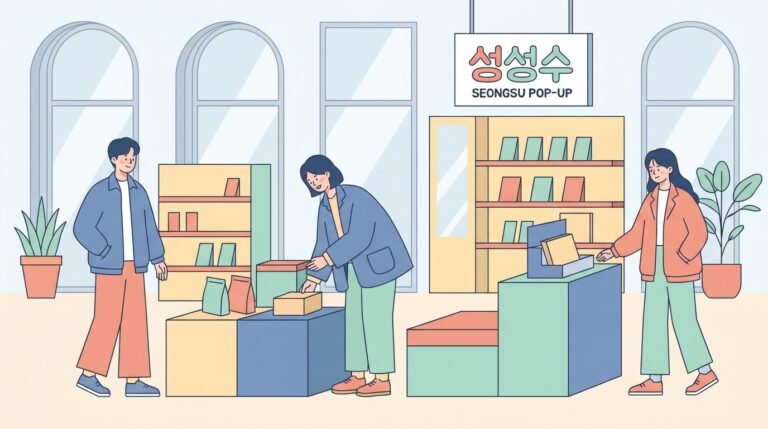
Picture this: You are sitting in a high-stakes brand strategy meeting in a sleek glass conference room in Seongsu-dong, Seoul’s epicenter of youth culture and pop-up store phenomena. Your CMO turns to you and asks how your brand will capture Korean Gen Z (Z세대) consumers who seem to abandon traditional advertising entirely. You understand the dry textbook vocabulary of ‘소비자 분석’ (consumer analysis), yet you find yourself struggling to articulate subtle modern marketing phenomena like Dopamine Farming, De-influencing, or hyper-personalized Gamification. In Korean boardroom culture, especially at the C2 executive level, blending nuanced native idioms with sharp sociological marketing terms is the hallmark of true cross-cultural leadership. Today’s guide demystifies the exact linguistic frameworks top-tier Korean strategists use to dissect Gen Z consumption patterns.
1. 취향 파편화 (Chwi-hyang Pa-pyeon-hwa)
- Pronunciation: [Chwi-hyang Pa-pyeon-hwa] (Sounds like chwee-hyahng pah-pyun-hwah)
- Meaning: Fragmentation of tastes / Hyper-individualized micro-interests.
- K-Culture Moment: Used frequently in YouTube strategy breakdowns for niche K-Pop fan subcultures and customized lifestyle brands in Yeonnam-dong.
- Editor’s Insight: Unlike general segmentation (‘세분화’), ‘파편화’ evokes explosive scattering like glass shards, stressing that mass-market appeals no longer convert modern digital natives.
- Situation Spectrum: Casual ⚠️ | Semi-formal ✅ | Formal ✅
- 🤔 Think About It: How does your native language describe the collapse of mainstream pop culture into algorithm-driven micro-communities?
2. 디깅 모멘텀 (Di-ging Mo-men-teom)
- Pronunciation: [Di-ging Mo-men-teom] (Sounds like dee-geeng moh-men-tum)
- Meaning: Digging momentum / Passion-driven obsession leading to heavy consumption.
- K-Culture Moment: Discussing how K-Pop fans buy album variants and official lightsticks exclusively to support their hyper-focused hobby.
- Editor’s Insight: Borrowed from English ‘digging’, this native Korean marketing term refers to consumers who dive excessively deep into one specific passion and spend without hesitation.
- Situation Spectrum: Casual ✅ | Semi-formal ✅ | Formal ✅
- 🤔 Think About It: Is passion-based buying in your country viewed as financially reckless or as an authentic expression of self-identity?
3. 가성비에서 시성비로 (Ga-seong-bi-e-seo Si-seong-bi-ro)
- Pronunciation: [Ga-seong-bi-e-seo Si-seong-bi-ro] (Sounds like gah-sung-bee-eh-suh shee-sung-bee-roh)
- Meaning: Shifting from cost-effectiveness (Price-to-Performance) to time-effectiveness (Time-to-Performance).
- K-Culture Moment: Explaining why YouTube Shorts, 1.5x speed viewing, and grab-and-go convenience stores thrive among Korean Gen Z.
- Editor’s Insight: ‘시성비’ (Time Cost-Effectiveness) is the ultimate metric for Gen Z; saving mental bandwidth and time outweighs saving small amounts of money.
- Situation Spectrum: Casual ⚠️ | Semi-formal ✅ | Formal ✅
- 🤔 Think About It: Does modern digital culture value saving time more than saving money in your home market?
Phase 3: 교과서 한국어 vs 진짜 한국어
Situation 1: Describing a viral product trend
- 📖 교과서 한국어: “이 제품은 젊은 소비자들 사이에서 큰 인기를 얻고 있습니다.”
(This product is gaining significant popularity among young consumers.) - 🗣️ 진짜 한국어: “이 아이템, 요즘 Z세대 사이에서 완전 숏폼 바이럴 타면서 품절 대란 났어요.”
(This item went completely viral on short-form video among Gen Z and triggered a nationwide sellout crisis.) - 💡 왜 다를까? Professional modern Korean conversations integrate loan words like ‘바이럴’ (viral) and visceral cultural expressions like ‘품절 대란’ (out-of-stock uproar) rather than static verbs like ‘인기를 얻다’.
Situation 2: Proposing a community-led marketing initiative
- 📖 교과서 한국어: “소비자들의 참여를 유도하는 마케팅 활동을 진행해야 합니다.”
(We must conduct marketing activities that induce consumer participation.) - 🗣️ 진짜 한국어: “단순 일방향 광고보다는, 소비자가 직접 판을 깔고 노는 팝업스토어 챌린지로 인게이지먼트를 끌어올려야 합니다.”
(Rather than simple one-way ads, we need to boost engagement through pop-up challenges where consumers themselves take the stage and play.) - 💡 왜 다를까? ‘판을 깔다’ (to set the stage/ground for play) communicates an empowered, user-generated culture that resonates with senior brand leaders.
Phase 4: K-Culture 딥다이브 & 비언어적 매너
4-1. 눈치(Nunchi) & Non-Verbal Protocol in High-Level Korean Strategy
When presenting Gen Z consumer trends to Korean executives, avoid talking down to older demographics. Maintain steady, respectful eye contact while nodding slightly. When introducing new slang or youth trends, frame them with humility: “시장 데이터에 따르면…” (According to market data…) rather than asserting dogmatic generational assumptions.
4-2. Cultural Code: The Seongsu Pop-up Phenomenon (팝업스토어 성지)
Seongsu-dong and Dosan Park have become living testbeds for Gen Z branding. Brands no longer prioritize immediate on-site sales; instead, they construct immersive sensorial installations known as ‘공간 경험’ (spatial experience) engineered specifically for Instagram Stories and TikTok check-ins. If your marketing pitch in Korea ignores spatial storytelling, it is considered incomplete.
Phase 5: 실전 롤플레이 시나리오
Setting: A modern conference room in Gangnam. You are meeting with Director Park (박 부장), a veteran brand lead evaluating your Q3 launch proposal.
- Turn 1 (Director Park): “이번 신제품 타깃을 Z세대로 잡았는데, 기존의 TVC나 인플루언서 협찬만으로는 도달률이 안 나올 것 같아 걱정입니다.”
(You targeted Gen Z for this new release, but I’m worried traditional TVCs and paid influencer promos won’t deliver reach.) - Turn 2 (You): “🎭 (Confident smile and posture) 부장님 말씀이 맞습니다. 요즘 타깃층은 광고 냄새가 나면 바로 스킵하거든요.”
(You are absolutely right, Director. Modern target audiences skip content the moment it feels like an obvious ad.) - Turn 3 (Director Park): “그렇다면 대안이 있습니까? 예산도 한정적인데요.”
(Then what is our alternative? Our budget is also limited.) - Turn 4 (You): “디깅 모멘텀을 공략해서, 소수 코어 팬덤이 스스로 2차 창작물을 만들게 유도하는 UGC 챌린지를 제안합니다.”
(We propose a UGC challenge targeting digging momentum, encouraging hardcore niche fandoms to generate their own derivative content.) - Turn 5 (Director Park): “UGC라… 소비자들이 자발적으로 움직여 줄까요?”
(UGC… will consumers actually participate voluntarily?) - Turn 6 (You): “성수동 팝업스토어와 연계해 포토제닉한 굿즈를 리워드로 제공하면 인게이지먼트는 확실히 잡을 수 있습니다.”
(If we tie this with a Seongsu pop-up store offering photogenic merch as rewards, we can secure decisive engagement.) - Turn 7 (Director Park): “시성비를 따지는 타깃이라 방문 동선과 대기 시간 관리도 중요하겠군요.”
(Since they value time-efficiency, managing foot-traffic flow and queue wait times will be crucial.) - Turn 8 (You): “🎭 (Nodding and opening the next slide) 네, 모바일 예약 시스템을 도입해 대기 피로도를 제로화하는 플랜을 마련했습니다.”
(Yes, we have prepared a plan utilizing mobile reservations to completely eliminate wait-time fatigue.)
🔀 인터랙티브 분기점 (Interactive Choice Point)
How would you conclude your proposal to Director Park?
- Choice A: “요즘 애들은 유행에 민감하니까 그냥 귀여운 캐릭터 컬래버레이션 하나 넣죠.”
Feedback (Bad): Dismissive toward youth demographics and lacks strategic analytical rigor for a C2 executive. - Choice B: “취향 파편화 시대에 맞춰, 3가지 마이크로 세그먼트별 맞춤형 인터랙티브 콘텐츠로 A/B 테스트를 즉시 집행하겠습니다.”
Feedback (Best): Demonstrates mastery of sophisticated terminology, data-driven methodology, and contemporary consumer psychology. - Choice C: “다른 대기업들이 다 하는 방식대로 인플루언서 100명에게 무작위 시딩을 돌리겠습니다.”
Feedback (Risk): High budget risk, low conversion in modern Korean Gen Z markets prone to ad fatigue.
Phase 6: 10초 감정 섀도잉 드릴
[🧐 분석적이고 논리적으로]“단순한 제품 노출보다는 / 소비자가 직접 참여하는 인터랙티브 경험이 / 브랜딩의 핵심입니다.”
(Dan-sun-han je-pum no-chul-bo-da-neun / so-bi-ja-ga jik-jeop cham-yeo-ha-neun in-teo-raek-ti-beu gyeong-heom-i / beu-raen-ding-ui haek-sim-im-ni-da.)-
[🔥 열정적이고 확신에 차서]“지금 Z세대는 / 가성비보다 시성비를 추구하기 때문에 / 직관적인 숏폼 콘텐츠로 승부해야 합니다!”
(Ji-geum Z-se-dae-neun / ga-seong-bi-bo-da si-seong-bi-reul chu-gu-ha-gi ttae-mun-e / jik-gwan-jeok-in syot-pom kon-ten-cheu-ro seung-bu-hae-ya ham-ni-da!) -
[🤝 정중하면서도 전략적인 어조로]“취향 파편화 현상을 고려하여 / 타깃 페르소나를 더욱 정교하게 재정의해 보겠습니다.”
(Chwi-hyang pa-pyeon-hwa hyeon-sang-eul go-ryeo-ha-yeo / ta-git pe-reu-so-na-reul deo-uk jeong-gyo-ha-ge jae-jeong-ui-hae bo-get-seum-ni-da.)
Phase 7: K-Culture 미니 사전
- 도파민 파밍 (Dopamine Farming) | Chasing instant psychological gratification through short-form reels, gacha mechanics, or surprise limited-edition drops.
- 디토 소비 (Ditto Consumption) | Blindly purchasing what trusted curators or beloved idols consume without lengthy personal price comparison.
- 스몰 럭셔리 (Small Luxury) | Spending on high-end luxury hand creams, designer keyrings, or boutique desserts during periods of macroeconomic recession.
- 자만추 마케팅 (Ja-man-chu Marketing) | Marketing that naturally immerses the product into everyday lifestyle settings rather than overt banner ads (from 자연스러운 만남 추구).
Phase 8: 여행자를 위한 생존 키트
- Top 1: “이 팝업스토어 현장 예약 가능한가요?” (I pop-eop-seu-to-eo hyeon-jang ye-yak ga-neung-han-ga-yo? – Can I make an on-site reservation for this pop-up?) | Pro Tip: Most Seongsu pop-ups use CatchTable tablets near the entrance.
- Top 2: “한정판 굿즈 재고 남아있나요?” (Han-jeong-pan gut-jeu jae-go nam-a-it-na-yo? – Are limited edition goods still in stock?)
-
Top 3: “이거 인스타 태그 이벤트 참여하면 샘플 주나요?” (I-geo in-seu-ta tae-geu i-ben-teu cham-yeo-ha-myeon saem-peul ju-na-yo? – Do I get a sample if I join the Instagram tag event?)
-
Editor’s Travel Note: To witness high-velocity Korean consumer trends, download 네이버 지도 앱 다운로드 to save curated Seongsu and Hannam-dong pop-up lists, and register on 캐치테이블 앱 다운로드 to secure instant remote queueing.
Phase 9: “한 발 더 깊이” (생각 질문)
Korean Gen Z consumption is deeply intertwined with hyper-connectivity and collectivist validation. While Western consumer culture often frames individualism as absolute independence, Korean Gen Z practices ‘연대된 개성’ (connected individuality)—seeking distinct personal tastes while concurrently confirming belonging within micro-communities on Instagram and X (formerly Twitter). Marketing here is never just about selling an item; it is about providing the vocabulary and aesthetic for someone’s social identity.
💬 Your Turn: In your home culture, do young consumers buy products to stand completely apart from the crowd, or to signal belonging to a specific niche tribe? Share your thoughts below in Korean!
Phase 10: FAQ & 오해 방지
Q: Does Gen Z in Korea completely ignore legacy platforms like Naver search?
A: Not entirely. While search initiation often happens on Instagram and YouTube, final purchase validation and blog review cross-checks still heavily rely on Naver search and SmartStore reviews.
Q: Is the term ‘MZ세대’ still acceptable in brand strategy meetings?
A: While common in corporate news, marketing practitioners avoid it because it broadens two distinct generations (Millennials and Gen Z) into an overly generic 30-year span.
Q: What is the single biggest turnoff for Korean Gen Z consumers?
A: Inauthenticity (뒷광고 or hidden paid promotions) and clumsy cultural appropriation without real community respect.
🚨 흔한 실수 (Common Mistakes) 경고판
- Mistake: Confusing ‘가심비’ (psychological satisfaction over price) with ‘시성비’ (time cost-effectiveness). Action: Use ‘시성비’ specifically when discussing convenience and brevity.
- Mistake: Translating ‘Target Audience’ directly as ‘과녁 대중’ in professional settings. Action: Use standard marketing Korean like ‘타깃 오디언스’ or ‘핵심 타깃층’.
- Mistake: Overusing outdated internet slang from 2018 in present-day brand decks. Action: Stick to established sociological marketing terms rather than fleeting teen internet memes.
Phase 11: 액션 미션 & 참여 유도
- 🥉 Bronze: Practice saying the 3 shadowing sentences in Phase 6 with accurate intonation using your voice memo app.
- 🥈 Silver: Leave a 2-sentence marketing insight in Korean using the term ‘시성비’ or ‘디깅 모멘텀’ in the comments below.
- 🥇 Gold: Research a trending Korean brand (e.g., Tamburins, Gentle Monster, or Musinsa) and write a 4-sentence analysis in Korean on their Z-generation spatial strategy.
- 🎮 K-Culture Mission: Visit YouTube, search for ‘성수동 팝업 브이로그’ (Seongsu pop-up vlog), and note down three sensory adjectives young visitors use to describe spaces.
Phase 12: 인터랙티브 퀴즈 챌린지
Q1. Fill in the blank:
현대 Z세대 마케팅에서는 비용 대비 효율을 뜻하는 ‘가성비’보다, 투입한 시간 대비 효용을 뜻하는 (________)가 핵심 지표로 떠올랐습니다.
Q2. True / False:
Korean Gen Z favors long-form text explanations on landing pages over short-form video previews because they value comprehensive data.
👉 정답 및 해설 확인하기 (Click for Answers & Explanations)
A1 Answer: 시성비 (Si-seong-bi)
Explanation: ‘시성비’ describes time-efficiency, which is decisive for short-form consumers.
A2 Answer: False
Explanation: Gen Z Korean consumers prioritize rapid sensory cues, concise visuals, and short-form video over dense text copy.







