

Master Korean Legal Korean: Navigating Product Liability (PL) & Risk Management Like a Corporate Pro
Phase 1: Empathy (Story-Immersive Opening)
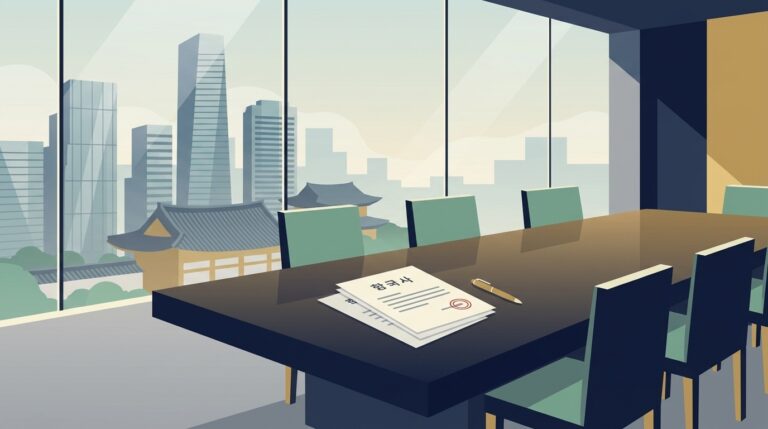
안녕하세요! (Hello!) It is your trusted Daily Hangul editor and cultural navigator here. Picture this scene straight out of a sharp K-drama boardroom like Vincenzo or Agency: The boardroom tension is palpable. The legal team is huddled over a newly drafted warranty agreement for a high-tech smart device launch across Seoul and Incheon. Suddenly, an overseas executive casually suggests adding a generic disclaimer: “We are not responsible for unintended side effects.” The senior Korean legal director immediately blanches, setting down his fountain pen. Why? Because under Korea’s stringent Product Liability Act (제조물 책임법 – PL법), vague disclaimers cannot shield a corporation against statutory strict liability for design, manufacturing, or warning defects (표시상의 결함).
If you operate at the C2 executive or legal consulting tier in Korea, navigating product safety and contractual indemnity requires vastly more than dictionary translations. You need nuanced legal terminology that balances regulatory rigor with strategic corporate diplomacy. Based on years of mentoring bilingual attorneys, corporate counsels, and cross-border project leaders, this guide will equip you with flawless, elite-level legal Korean to mitigate risk, negotiate dispute settlements, and manage corporate liability with absolute authority.
Phase 2: Deep Dive into Top 3 Core Legal Expressions
1. 제조물 책임법상 결함에 따른 손해배상 책임을 면책하다
- Pronunciation: [Jejomul chaegimbop-sang gyeolham-e ttareun sonhaebaesang chaegim-eul myeonchaekhada] (Pronunciation clue: Say ‘Jae-jo-mool chae-gim-bop-sang gyul-ham-eh tta-reun son-hae-bae-sang chae-gim-eul myun-chaek-ha-da’)
- Meaning: Literal: To exempt liability for damages due to defects under the Product Liability Act | Nuance: To legally disclaim, waive, or carve out statutory compensation liability arising from product defects.
- K-Culture Moment: Heard in corporate legal thrillers when in-house counsel explains to an aggressive CEO why a contractual clause will be struck down as void under the Korean Fair Transactions in Subcontracting Act or Consumer Basic Act.
- Editor’s Insight: The term 면책 (Exemption/Indemnity/Discharge) is extremely weighted. In Korean commercial contracts, attempting an overarching 면책 for intentional misconduct or gross negligence (고의 또는 중대한 과실) is legally invalid under Article 391 of the Civil Code.
- Situation Spectrum: Casual 🚫 | Semi-formal ⚠️ | Formal Legal ✅
- 🤔 Think About It: In common law jurisdictions, “limitation of liability” clauses are routinely negotiated. How does Korea’s civil law tradition—prioritizing statutory consumer protection over absolute contractual freedom—alter your drafting approach?
2. 징벌적 손해배상 청구 리스크를 선제적으로 차단하다
- Pronunciation: [Jingbeoljeok sonhaebaesang cheong-gu riseukeureul seonjejeog-euro chadanhada] (Pronunciation clue: ‘Jing-bul-jeok son-hae-bae-sang chung-goo risk-eul sun-je-jeog-eu-ro cha-dan-ha-da’)
- Meaning: Literal: Preemptively block the risk of punitive damage claims | Nuance: To proactively implement compliance protocols and clear hazard warnings to prevent treble/punitive damages under amended Korean PL laws.
- K-Culture Moment: Used by crisis management PR specialists and general counsel when preparing defense dossiers for regulatory investigations.
- Editor’s Insight: Korea adopted a punitive damages scheme (up to 3 to 5 times actual damages for knowing concealment of critical defects causing life or bodily harm). Using 선제적으로 차단하다 demonstrates forward-thinking risk governance.
- Situation Spectrum: Casual 🚫 | Semi-formal ⚠️ | Formal Legal ✅
- 🤔 Think About It: Contrast the Korean term 징벌적 손해배상 with standard compensatory damages (전보배상). How does the threat of punitive damages change corporate communication with the public?
3. 제조 공정상의 결함 및 표시상의 하자에 대한 입증책임
- Pronunciation: [Jejo gongjeong-sang-ui gyeolham mit pyosisang-ui hajaye daehan ipjeungchaegim] (Pronunciation clue: ‘Jae-jo gong-jung-sang-eui gyul-ham meet pyo-si-sang-eui ha-ja-yeh dae-han ip-jeung-chae-gim’)
- Meaning: Literal: Burden of proof regarding manufacturing process defects and warning/labeling flaws.
- K-Culture Moment: A pivotal line delivered in high-stakes courtroom dramas during an expert witness cross-examination.
- Editor’s Insight: Notice the pairing of 결함 (Defect – technical/statutory) and 하자 (Flaw/Defect – contractual/civil) along with 입증책임 (Burden of proof). Under modern Korean precedent, the burden of proof is often effectively shifted or mitigated for consumer plaintiffs if a product malfunctioned during normal use.
- Situation Spectrum: Casual 🚫 | Semi-formal ⚠️ | Formal Legal ✅
- 🤔 Think About It: How does shifting the evidentiary burden (입증책임 전환/완화) reflect the Korean legal system’s commitment to social equity between large conglomerates (재벌) and individual consumers?
Phase 3: Textbook Korean vs. Real Corporate Korean
Situation A: Warning against an unworkable blanket liability disclaimer
- 📖 Textbook Korean: “이 계약서 문구는 법적으로 문제가 될 수 있으니 지우는 것이 좋습니다.”
(It is good to delete this contract phrase because it could be legally problematic.) - 🗣️ Real Corporate Korean: “해당 면책 조항은 제조물 책임법상 강행규정 위반으로 무효화될 소지가 다분하므로, 보증 한도 및 구상권 행사 조항으로 전면 수정해야 합니다.”
(This disclaimer clause has a high probability of being rendered null and void as a violation of mandatory statutes under the PL Act; thus, we must overhaul it into warranty limitation and indemnity recourse clauses.) - 💡 Why the difference? C2 legal communication demands precise statutory terminology (강행규정, 무효화, 구상권) rather than vague warnings like 문제.
Situation B: Proposing an early product recall to minimize damages
- 📖 Textbook Korean: “문제가 커지기 전에 제품을 빨리 바꿔줍시다.”
(Let’s replace the product quickly before the problem gets bigger.) - 🗣️ Real Corporate Korean: “사태의 확산 방지 및 징벌적 배상 청구의 빌미를 차단하기 위해, 선제적 자진 리콜 및 피해 구제 가이드라인을 즉각 공표하는 편이 실익이 큽니다.”
(To prevent escalation and eliminate grounds for punitive damage claims, immediately announcing a proactive voluntary recall and consumer restitution guidelines offers far greater strategic benefit.) - 💡 Why the difference? Executives use terms like 빌미 차단 (preempting pretexts) and 실익 (substantive benefit/strategic utility) to persuade C-suite decision-makers.
Phase 4: K-Culture Deep Dive & Non-Verbal Protocol
4-1. Nunchi & Boardroom Body Language
When delivering adverse legal opinions regarding product liability in a Korean boardroom:
* The Angle of Critique: Never say “You made a mistake drafting this.” Instead, frame the statutory constraint as an external regulatory reality: “관련 법령 및 최신 대법원 판례의 경향에 비추어 볼 때…” (In light of relevant statutes and recent Supreme Court precedent trends…).
* Eye Contact & Demeanor: Maintain steady, respectful eye contact without staring down executive seniors. Present executive summaries with both hands on the folder and a slight forward tilt of the upper torso to show diligence and gravity (신중함).
4-2. Cultural Analysis: Corporate Accountability in Modern Korea
In modern Korea, product safety controversies quickly transcend courtroom walls into viral social movements on Naver, YouTube, and community forums. Following landmark events such as the humidifier disinfectant tragedy, Korean society and the judiciary demand uncompromising ethical responsibility (기업의 사회적 책임) and transparency. A legal strategy that relies solely on technical loopholes without demonstrating sincere consumer protection (피해자 중심의 구제) will inevitably trigger severe reputational backlash and regulatory penalties from the Fair Trade Commission (공정거래위원회).
Phase 5: Live Roleplay Simulation
Setting: Legal & Compliance Strategy Room at a top-tier tech conglomerate in Yeouido, Seoul.
Characters:
* 정 이사 (Director Jung): Senior Legal Managing Director, meticulous and sharp.
* You (Foreign Legal Counsel / Senior Compliance Specialist): Strategic, articulate, and bilingual.
Dialogue:
1. 정 이사: “변호사님, 이번 신형 배터리 팩 공급 계약서 초안 검토하셨습니까? 상대측이 PL 책임 전부를 당사에 전가하려 하더군요.”
(Jeong Isa: Byeonhosanim, ibeon sinhyeong baeteori paek gong-geup gyeyakseo choan geomtohasyeossseumnikka? Sangdaecheug-i PL chaegim jeonbureul dangsa-e jeongaharyeo hadeogunyo.)
“Counsel, have you reviewed the draft supply agreement for the new battery pack? The counterparty is attempting to shift all PL liability onto our company.”
🎭 (Frowning while pointing with a red pen at Section 14)
- You: “네, 확인했습니다. 완제품 결함으로 인한 손해까지 당사가 무조건 배상하도록 규정한 독소조항이 포함되어 있습니다.”
(Ne, hwaginhaesseumnida. Wanjepum gyeolham-euro inhan sonhae-kkaji dangsa-ga mujogeon baesanghadorok gyujeonghan doksojohang-i pohamdoeeo isseumnida.)
“Yes, I have reviewed it. It contains a toxic clause stipulating that our company unconditionally indemnify even damages resulting from defects in the finished product.”
🎭 (Adjusting your glasses and laying down the highlighted comparison chart) -
정 이사: “그렇다면 당사 제조 공정상의 하자가 명백히 입증된 경우로만 책임을 한정해야겠군요?”
(Geureotamyeon dangsa jejo gongjeong-sang-ui hajag-a myeongbaekhi ipjeungdoen gyeong-uroman chaegim-eul hanjeonghaeyagessgunyo?)
“Then we should restrict our liability solely to cases where a defect in our manufacturing process is explicitly proven, correct?”
🎭 (Looking up intently for your strategic counter-proposal) -
You: “정확합니다. 나아가 설계 결함이나 조립 결함은 상대방의 귀책사유임을 명시하고, 구상권 행사의 요건과 범위를 구체적으로 특정해야 합니다.”
(Jeonghwakhamnida. Na-aga seolgye gyeolham-ina jorip gyeolham-eun sangdaebang-ui gwicheok-sayu-im-eul myeongsihago, gusang-gwon haengsa-ui yogwon-gwa beomwihreul guchejeog-euro teukjeonghaeya hamnida.)
“Precisely. Furthermore, we must state that design or assembly defects are attributable to the counterparty, and clearly define the conditions and scope for exercising indemnity recourse rights.”
🎭 (Speaking with firm, composed cadence) -
정 이사: “상대측이 이를 수용하지 않고 계약 파기를 검토하겠다고 압박해오면 어떻게 대응하시겠습니까?”
(Sangdaecheug-i ireul suyonghaji anko gyeyak pagi-reul geomtohagessdago apbakhaeomyeon eotteoke dae-eunghasigessseumnikka?)
“How will you respond if the other party refuses to accept this and threatens contract termination?”
🎭 (Leaning back with arms crossed to test your negotiation resolve) -
You: “공정거래법상 부당한 특약 금지 조항 및 제조물 책임 판례를 제시하며, 균형 잡힌 상호 면책 및 책임 한도(Cap) 설정을 역제안하겠습니다.”
(Gongjeong-georaebeopsang budanghan teug-yak geumji johang mit jejomul chaegim panrye-reul jesihamyeo, gyunhyeong jap-hin sangho myeonchaek mit chaegim hando seoljeong-eul yeokje-anhagessseumnida.)
“I will counter-propose balanced mutual indemnities and a liability cap by citing Fair Trade Act provisions prohibiting unfair special terms alongside relevant PL precedents.”
🎭 (Maintaining calm, unshakeable professionalism) -
정 이사: “탁월하군요. 배상 한도액(Liability Cap)은 통상적인 보험 커버리지 한도 내로 묶는 것이 안전하겠지요?”
(Takwolhagunyo. Baesang hando-aek-eun tongsangjeog-in boheom keobeoriji hando naero mukneun geos-i anjeonhagessjiyo?)
“Excellent. It would be safest to tie the liability cap within the limits of our standard insurance coverage, wouldn’t it?”
🎭 (Nodding approvingly and making notes) -
You: “맞습니다. 생산물배상책임보험(PLI) 가입을 상호 의무화하는 조항을 병기하여 잠재적 재무 리스크를 완전히 헤지(Hedge)하겠습니다.”
(Matseumnida. Saengsanmul baesang chaegim boheom ga-ip-eul sangho uimuwhahaneun johang-eul byeong-gihayeo jamjaejeok jaemu riseukeureul wanjeonhi hejihagessseumnida.)
“Exactly. By concurrently stipulating mandatory mutual enrollment in Product Liability Insurance (PLI), we will completely hedge potential financial exposure.”
🎭 (Handing over the revised clause markup with a confident smile)
🔀 Interactive Decision Branch:
What would you do if the counterparty insists on an uncapped, absolute indemnity clause?
* Option A: Agree immediately to preserve the business relationship. → [Bad: Exposes your company to catastrophic financial ruin under joint-and-several liability.]
* Option B: Refuse to negotiate and file a lawsuit right away. → [Risk: Destroys the commercial deal unnecessarily before commercial compromise is explored.]
* Option C (Best): Propose a tiered liability formula backed by mandatory PL insurance coverage and reciprocal indemnity indemnification. → [Best: Balances statutory risk mitigation with deal viability.]
Phase 6: 10-Second Emotional Shadowing Drill
[👔 Firm & Authoritative / 차분하고 단호하게]
“본 조항은 / 제조물 책임법상 강행규정에 위배되므로 / 전면 수정이 불가피합니다.”
(Bon johang-eun / jejomul chaegimbop-sang ganghaeng-gyujeong-e wibaedoemeuro / jeonmyeon sujeong-i bulgahpihamnida.)-
[💡 Persuasive & Strategic / 설득력 있고 자신만만하게]
“배상 한도액을 / 현행 보험 보장 범위 내로 설정함으로써 / 재무적 리스크를 선제 차단해야 합니다.”
(Baesang hando-aeg-eul / hyeonhaeng boheom bojang beomwi naero seoljeongham-eurosseo / jaemujeok riseukeureul seonje chadanhaeya hamnida.) -
[🤝 Diplomatic & Reassuring / 정중하면서도 논리적으로]
“상호 간의 귀책사유를 명확히 분계하는 것이 / 향후 분쟁을 예방하는 최선의 방책입니다.”
(Sangho gan-ui gwicheok-sayureul myeonghwakhi bun-gyehanun geos-i / hyanghu bunjaeng-eul yebanghaneun choeseon-ui bangchaek-imnida.)
Phase 7: K-Culture Mini Dictionary (Corporate Legal Focus)
- 구상권 (Gusang-gwon | Right of Recourse / Indemnity): The right of a party who paid full compensation to claim reimbursement from the primarily liable party.
- 귀책사유 (Gwicheok-sayu | Attributable Reason / Fault): Culpable negligence or breach of duty causing legal liability.
- 강행규정 (Ganghaeng-gyujeong | Mandatory / Peremptory Statute): Statutory legal provisions that override private contractual stipulations; agreements violating them are legally void.
- 손해배상 한도 (Sonhaebaesang Hando | Limitation / Cap on Liability): Contractual ceiling establishing maximum monetary damages payable.
Phase 8: Corporate Traveler / Expat Legal Toolkit
- Survival Legal Phrase 1: “법무팀의 최종 법률 검토(Legal Review)를 거친 후 회신드리겠습니다.” (We will revert after completing final legal review with our legal department.)
- Survival Legal Phrase 2: “이 조항은 상호 귀책 비율에 따른 분담 원칙에 부합하지 않습니다.” (This clause is inconsistent with the principle of loss allocation according to mutual fault ratios.)
-
Survival Legal Phrase 3: “생산물배상책임보험(PLI) 증권 사본을 제출해 주시기 바랍니다.” (Please provide a copy of your Product Liability Insurance certificate.)
-
Editor’s Executive Travel Note: When handling cross-border corporate arbitration or administrative procedures in Seoul, rely on authentic verified channels. For legal precedents and statutes, consult the 국가법령정보센터 (National Law Information Center). For swift navigation across Seoul’s business districts (Teheran-ro, Yeouido, Gwanghwamun), install the 네이버 지도 (Naver Map) 공식 앱 to calculate reliable transit and taxi routes.
Phase 9: A Step Deeper (Reflection)
In Korean corporate jurisprudence, contractual language is deeply intertwined with concepts of good faith (신의성실의 원칙) and equitable burden (형평의 원칙). Unlike jurisdictions where the written text is viewed strictly in isolation, Korean courts readily examine the broader socio-commercial relationship and comparative negotiation leverage. Demonstrating mutual respect and proportional fairness in contractual provisions is not merely polite—it is the cornerstone of sustainable legal compliance in Korea.
💬 Your Turn: How does your home jurisdiction handle statutory product liability vs. contractual waivers? Share your perspective in the comments below!
Phase 10: FAQ & Common Mistakes
Q: Can an overseas manufacturer completely disclaim all product liability in a B2B contract governed by Korean law?
A: No. Under Article 6 of the Korean Product Liability Act, any agreement that excludes or limits liability under this Act in advance to the detriment of victims is null and void. In purely B2B supply agreements, specific liability limits can be agreed upon only if they do not violate mandatory antitrust laws or general public policy.
Q: What is the key difference between 결함 (Defect) and 하자 (Flaw) in Korean legal practice?
A: 결함 (Gyeolham) is primarily used within statutory frameworks like the PL Act to signify an inherent safety deficiency that causes death, bodily injury, or collateral property damage. 하자 (Haja) refers to a defect, non-conformity, or quality shortcoming under standard contract and civil sales law (매도인의 하자담보책임).
Q: When is a Korean company subject to punitive damages (징벌적 손해배상)?
A: When a supplier or manufacturer knows that a product defect poses a severe hazard to life or bodily safety but fails to take necessary corrective measures, causing severe injury or death, the court may award damages up to 3 to 5 times the actual damages.
🚨 Common Mistakes Warning Board
- Mistake: Using “우리는 책임이 없다” (We have no responsibility) in commercial warranty cards.
- Correct Action: Draft precise warning labels (표시상의 결함 예방) and explicit statutory warranty guidelines.
- Mistake: Confusing 보상 (Bosang – Compensation for lawful loss) with 배상 (Baesang – Damages for unlawful harm/breach).
- Correct Action: Always use 손해배상 when addressing breach of contract or tort liability.
- Mistake: Assuming translated English boilerplates will protect against local regulatory audits.
- Correct Action: Adapt indemnity clauses to align with Korean mandatory statutory norms (강행규정 부합 여부 검토).
Phase 11: Action Mission & Community Challenge
- 🥉 Bronze Mission: Practice saying the 3 shadowing drill sentences out loud with correct legal cadence.
- 🥈 Silver Mission: Write a 2-sentence legal rebuttal in Korean regarding product defect risk and post it in the comment section.
- 🥇 Gold Mission: In your next bilingual contract review or team simulation, replace casual phrasing with 강행규정, 구상권, and 귀책사유.
- 🎮 K-Culture Mission: Watch an episode of a Korean legal/corporate drama (e.g., Hyena, Vincenzo, or Queen of Tears) and spot how corporate counsels negotiate liability terms during executive briefings.
Phase 12: Interactive Quiz Challenge
Question 1: Situational Judgment
Your counterparty insists on a clause stating: “The buyer waives all claims under the Product Liability Act unconditionally.” What is the legally sound evaluation of this clause under Korean Law?
* A) It is 100% enforceable because parties have freedom of contract.
* B) It is null and void as an impermissible advance waiver violating mandatory consumer protection rules.
* C) It only applies if notarized by a Korean notary.
Question 2: Fill in the Blank
“상대방의 과실로 인해 당사가 제3자에게 배상한 경우, 당사는 상대방에게 ( )을(를) 행사할 수 있습니다.”
(If our company compensates a third party due to the other party’s negligence, our company can exercise the right of reimbursement against the other party.)
Question 3: True or False
Under modern Korean product liability law, punitive damages can never be awarded regardless of gross negligence.
🔍 Click here to reveal Answers & Explanations
- Answer: B — Under the Korean Product Liability Act, blanket clauses waiving statutory liability in advance are legally invalid.
- Answer: 구상권 (Right of Recourse / Indemnity) — When one party settles a third-party claim caused by another’s fault, they exercise 구상권.
- Answer: False — Korean law incorporates punitive damages (징벌적 손해배상) for intentional or reckless concealment of critical product hazards causing serious bodily injury or death.







