

How to Admit You’re Lazy in Korean Like a Native: ‘게을러요’
Phase 1: 공감 (Story-Driven Opening)
안녕하세요! 매일한글 에디터입니다. (Hello! I’m your Daily Hangul editor.)
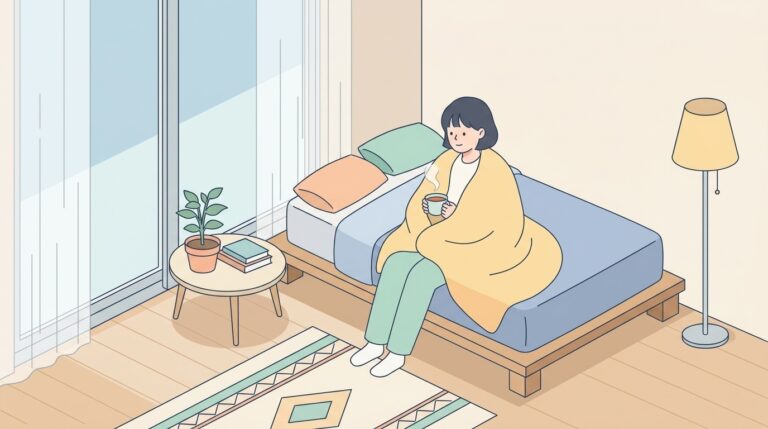
Picture this: It is 2:00 PM on a chilly Sunday afternoon in Seoul. You are warmly tucked under a thick duvet, surrounded by an empty cup of iced Americano and half a bag of Honey Butter Chips, with your favorite K-Drama playing on loop. Your Korean friend sends you a KakaoTalk message: “오늘 뭐 해? 밖에 나갈래?” (What are you doing today? Wanna go out?)
You want to say, “I’m too lazy to move today,” but your textbook brain frantically searches for vocabulary and finds nothing but stiff dictionary words. You end up typing “저는 오늘 활동적이지 않습니다” (I am not active today), making you sound like an emotionless AI robot!
Admitting you are feeling lazy, cozy, or just plain unmotivated is one of the most natural, human bonding experiences in Korea. In a fast-paced society obsessed with hustle culture, sharing your lazy side makes you instantly relatable. Based on feedback from hundreds of beginner learners at Daily Hangul, mastering the word 게을러요 (I’m lazy) and its playful cousin 귀찮아요 (It’s a hassle) unlocks genuine friendships faster than any formal greeting.
Let’s dive into how you can talk about your lazy personality in natural, everyday Korean—painlessly and with lots of laughs!
Phase 2: 핵심 표현 3선 심층 분석 (Top 3 Core Expressions)
1. 게을러요 (Gae-ul-reo-yo)
- Pronunciation: Gae-ul-reo-yo (Think: “Gay-wool-raw-yo” said smoothly)
- Meaning: Literal: “I am / someone is lazy” | Real Nuance: A lighthearted, honest admission of being sluggish or procrastinating.
- K-Culture Moment: Seen in variety shows when an idol confesses they haven’t cleaned their dorm room for three weeks.
- Editor’s Insight: 게으르다 is the base adjective. In casual conversation, adding 좀 (a little) makes it softer: “저 좀 게을러요” (I’m a bit lazy).
- Situation Spectrum: Casual (✅) / Semi-formal (✅) / Formal Job Interview (🚫)
- 🤔 Think About It: In English, “lazy” can sound quite harsh. In Korean daily chats, is calling yourself 게을러요 self-deprecation or humility?
2. 귀찮아요 (Gwi-chan-a-yo)
- Pronunciation: Gwi-chan-a-yo (Sounds like “Gwee-chahn-ah-yo”)
- Meaning: Literal: “It is bothersome” | Real Nuance: “I can’t be bothered / It’s such a chore / I don’t feel like it.”
- K-Culture Moment: Whenever a character in a drama is asked to cook ramen and groans from the couch.
- Editor’s Insight: This is the #1 expression used by Koreans aged 10 to 80. It describes the emotional resistance before starting any task.
- Situation Spectrum: Casual (✅) / Semi-formal (⚠️ – only with close colleagues) / Formal (🚫)
- 🤔 Think About It: Why does Korean have a single magic word for “I don’t have the mental energy to do this”?
3. 집순이 / 집돌이 (Jip-sun-i / Jip-dol-i)
- Pronunciation: Jip-sun-i (Female) / Jip-dol-i (Male) (Sounds like “Jeep-soon-ee” / “Jeep-dohl-ee”)
- Meaning: Literal: “House girl / House boy” | Real Nuance: “Homebody / Cozy couch potato”
- K-Culture Moment: YouTube vlogs titled “집순이의 주말 브이로그” (Homebody’s Weekend Vlog) featuring cooking, gaming, and relaxing.
- Editor’s Insight: This is never an insult! It is proudly claimed by people whose battery recharges strictly inside their bedroom.
- Situation Spectrum: Casual (✅) / Semi-formal (✅) / Formal (⚠️)
- 🤔 Think About It: How does your native language describe someone who loves staying home compared to the cute Korean suffix -순이 / -돌이?
Phase 3: 교과서 한국어 vs 진짜 한국어 (Textbook vs. Real-Life Korean)
Situation 1: Explaining your personality during a casual weekend chat
- 📖 교과서 한국어: 저는 나태한 성격을 가지고 있습니다. (Jeoneun nataehan seong-gyeogeul gajigo itseumnida – I possess an indolent personality.)
- 🗣️ 진짜 한국어: 저 사실 완전 게을러요! (Jeo sasil wanjeon gae-ul-reo-yo! – Honestly, I’m super lazy!)
- 💡 왜 다를까? “나태하다” is a Sino-Korean legal or essayistic term for extreme negligence. Real humans say 완전 게을러요 with a friendly grin!
Situation 2: Declining an invitation because stepping out of bed is too difficult
- 📖 교과서 한국어: 외출하는 행위가 번거롭습니다. (Oechulhaneun haeng-wiga beon-georopseumnida – The act of going outside is cumbersome.)
- 🗣️ 진짜 한국어: 나가기 귀찮아서 그냥 누워 있어요. (Nagagi gwichanaseo geunyang nuwo isseoyo. – It’s too much hassle to go out, so I’m just lying down.)
- 💡 왜 다를까? Spoken Korean prefers expressing direct physical states (누워 있어요 – lying down) rather than abstract nouns.
Phase 4: K-Culture 딥다이브 & 비언어적 매너 (Culture Deep Dive & Non-Verbal Manners)
4-1. 눈치 (Nunchi) & Body Language: How to admit laziness politely
When you say “저 좀 게을러요” (I’m a bit lazy), pair it with a slight shy head scratch and a soft smile. This non-verbal cue signals humility and prevents you from sounding dismissive or irresponsible. Never say 귀찮아요! with a frown directly to elders or your boss—it implies they are bothering you!
4-2. 문화 코드 (Cultural Code): The Art of ‘집콕’ (Jip-kok) and ‘방콕’ (Bang-kok)
In Korea, being a couch potato has evolved into a celebrated subculture known as 집콕 (Jip-kok)—staying home (“stuck at home”) like a cozy cocoon. During cold winter months, Koreans love peeling mini mandarins (귤) under electric heated blankets (전기장판) while reading webtoons. Confessing that you love 집콕 shows cultural fluency and makes Korean friends smile with recognition.
Phase 5: 실전 롤플레이 시나리오 (Interactive Roleplay Scenario)
Setting: It’s Saturday noon. You and your Korean college buddy, Minji (민지), are texting about weekend plans.
- Turn 1 (Minji): 주말인데 뭐 해? 오늘 날씨 진짜 좋다! (Jumal-inde mwo hae? Oneul nalssi jinjja jota!) 🎭 [Excited, holding phone with coffee in hand]
- Turn 2 (You): 나 아직 침대야. 저 완전 게을러요… (Na ajik chimdaeya. Jeo wanjeon gae-ul-reo-yo…) 🎭 [Yawning, typing with one eye open]
- Turn 3 (Minji): ㅋㅋㅋ 역시 집순이네! 밥은 먹었어? (Kkk yeoksi jipsun-ine! Babeun meogeosseo?) 🎭 [Giggling warmly]
- Turn 4 (You): 요리하기 너무 귀찮아요. 배달 시킬래. (Yorihagi neomu gwichan-a-yo. Baedal sikillae.) 🎭 [Scrolling delivery app lazily]
- Turn 5 (Minji): 치킨 먹을래? 내가 너희 집으로 갈까? (Chikin meogeullae? Naega neohui jibeuro galkka?) 🎭 [Suggesting eagerly]
- Turn 6 (You): 좋아! 와서 문 좀 열어줘. 움직이기 귀찮아. (Joa! Waseo mun jom yeoreojwo. Umjig-igi gwichana.) 🎭 [Laughing jokingly]
- Turn 7 (Minji): 진짜 못 말린다! 내가 맛있는 거 사 갈게! (Jinjja mot mallinda! Naega masinneun geo sa galge!) 🎭 [Shaking head with an affectionate smile]
- Turn 8 (You): 고마워! 넷플릭스 켜 놓을게! (Gomawo! Netpeullikseu kyeo no-eulge!) 🎭 [Tapping TV remote happily]
🔀 인터랙티브 분기점 (Your Decision Point!)
Minji asks: “너 주말마다 운동은 안 해?” (Don’t you ever work out on weekends?) How do you respond?
- Option A: “네, 저는 운동하기 귀찮아서 주말에는 숨쉬기 운동만 해요!” (Yeah, working out is such a hassle, I only do breathing exercises on weekends!)
- 👉 Feedback [BEST]: Perfect self-deprecating humor! 숨쉬기 운동 (breathing exercise) is a classic Korean joke for doing nothing.
- Option B: “저는 나태한 인간입니다.” (I am an indolent human being.)
- 👉 Feedback [BAD]: Way too stiff and dramatically serious. Minji might wonder if you’re experiencing an existential crisis.
- Option C: “귀찮아. 말 걸지 마.” (It’s a hassle. Don’t talk to me.)
- 👉 Feedback [RISK]: Dangerously blunt banmal (informal speech)! This can genuinely hurt feelings unless you are childhood best friends.
Phase 6: 10초 감정 섀도잉 드릴 (10-Second Emotion Shadowing Drill)
Practice matching these rhythm breaks (/) and emotional nuances:
[😴 몽롱하고 솔직하게 - Sleepy & Candid]- 저 / 사실 / 완전 / 게을러요. (Jeo / sasil / wanjeon / gae-ul-reo-yo.)
[😩 온몸에 힘을 빼고 징징거리듯 - Whiny & Sluggish]- 아, / 청소하기 / 너무 / 귀찮아요! (Ah, / cheongsohagi / neomu / gwi-chan-a-yo!)
[🥰 자랑스럽고 편안하게 - Proud & Cozy]- 저는 / 주말에 / 집콕하는 게 / 제일 좋아요. (Jeoneun / jumare / jip-kok-haneun ge / je-il jo-a-yo.)
Phase 7: K-Culture 미니 사전 (Mini Dictionary)
- 게으름뱅이 (Gae-eu-reum-baeng-i) | Noun: Lazybones / Sluggard | Used playfully among family or close friends: “우리 집 게으름뱅이 일어나라!” (Wake up, our family lazybones!)
- 귀차니즘 (Gwi-cha-ni-jeum) | Noun: Chronic couch potato syndrome | A blend of 귀찮다 and the English suffix -ism. Refers to the lifestyle philosophy of avoiding effort.
- 방콕 (Bang-kok) | Noun / Slang: Staying locked in one’s room | A pun on Bangkok, Thailand: “이번 연휴에 방콕 여행 가요” (My holiday trip is staying in my bedroom).
- 꿀잠 (Kkul-jam) | Noun: Sweet, deep sleep | Literal: “Honey sleep”. The ultimate reward after a lazy afternoon: “꿀잠 잤어요!” (I slept like a baby!).
Phase 8: 여행자를 위한 생존 키트 (Traveler’s Survival Kit)
Top 3 Travel Survival Phrases for Low-Energy Days
- 오늘은 호텔에서 쉴래요. (Oneureun hoter-eseo swillaeyo.) — “I will just rest at the hotel today.” (Pro Tip: Use this when group tours get overwhelming.)
- 배달 시켜 먹을까요? (Baedal sikyeo meogeulkkayo?) — “Shall we order delivery food?” (Pro Tip: Save your legs after 20,000 steps around Gyeongbokgung palace.)
- 움직이기 싫어요. (Umjig-igi sireoyo.) — “I don’t want to move.” (Pro Tip: Say this with a cute whine to your travel buddy.)
🧳 Editor’s Travel Note: How to Survive a Lazy Day in Seoul
Don’t force yourself to climb Namsan Mountain every single day. If you are feeling lazy, explore local Korean food delivery through the Baedal Minjok app guide for foreigners or catch a quick rest at a premium Jjimjilbang (Korean Spa) near Gangnam station where heated salt rooms and warm floors let you nap for hours.
Phase 9: “한 발 더 깊이” (Cultural Reflection)
Korean society is internationally renowned for its Ppal-li Ppal-li (빨리빨리 – fast, fast) work ethic. Yet, precisely because everyday life runs at hyper-speed, leisure time has become sacred. Admitting “저 게을러요” is not seen as a moral failure; rather, it is a healthy emotional release valve. It acknowledges that beneath the high-tech, stylish exterior, everyone just wants to put on sweatpants and eat warm ramen on the sofa.
💬 Your Turn: On a scale from 1 to 10, how much of a 집순이 / 집돌이 (homebody) are you on weekends? Leave your comment below in Korean using 게을러요 or 귀찮아요!
Phase 10: FAQ & 오해 방지 (FAQ Schema)
Q: Can I use ‘게을러요’ to describe my coworkers?
A: Be careful! Calling someone else 게을러요 directly can be perceived as an offensive criticism. It is safest to use it when describing yourself (저 게을러요) or laughing with very close friends.
Q: What is the exact difference between ‘게을러요’ and ‘귀찮아요’?
A: 게을러요 describes a habitual personality trait (I am generally lazy/sluggish). 귀찮아요 describes a temporary feeling toward a specific task (I don’t feel like washing the dishes right now).
Q: How do I say ‘I’m tired’ instead of ‘I’m lazy’?
A: If you lack physical energy due to exhaustion, say 피곤해요 (Pigonhaeyo). If your body is fine but you lack motivation, say 귀찮아요 (Gwichana-yo).
🚨 Common Mistakes (흔한 실수 TOP 3)
| Mistake | Why it’s wrong | Correct Action |
|---|---|---|
| 선생님, 귀찮아요! to your teacher | Sounds like you are saying “Teacher, you are annoying me!” | Say “선생님, 조금 쉬고 싶어요” (Teacher, I’d like to rest a bit). |
| 저는 게으른 사람입니다 to your boss | Sounds like a formal confession of incompetence during work. | Say “더 꼼꼼히 챙기겠습니다” (I will manage it more thoroughly). |
| Saying 귀차나 without the -요 ending to strangers | Drops politeness (banmal), making you sound rude. | Always attach -요 (귀찮아요) with people you don’t know well. |
Phase 11: 액션 미션 & 참여 유도 (Action Missions)
- 🥉 Bronze Mission (Solo Practice): Stand in front of your mirror, drop your shoulders, and say: “저 사실… 완전 게을러요!” 3 times with a dramatic sigh.
- 🥈 Silver Mission (Social Media): Post a photo of your cozy bed or favorite weekend snack on Instagram/X and caption it: #집순이 #귀차니즘 모드!.
- 🥇 Gold Mission (Real Life): Next time someone asks you to go out when you’d rather nap, text them: “오늘은 집콕할래요. 귀찮아요~ 😴”.
- 🎮 K-Culture Mission: Watch an episode of a Korean reality show (like I Live Alone / 나 혼자 산다) and spot how many times the celebrity says 귀찮아 or lies down on the living room rug!
Phase 12: 인터랙티브 퀴즈 챌린지 (Interactive Quiz Challenge)
Q1. You want to tell your Korean language exchange partner that you love staying at home watching movies all weekend. Which term fits you best?
* A) 외향인 (Extrovert)
* B) 집순이 / 집돌이 (Homebody)
* C) 부지런쟁이 (Hard worker)
👉 Click to reveal Answer & Explanation
Correct Answer: B) 집순이 / 집돌이
Explanation: 집 (house) + -순이 / -돌이 creates the affectionate word for a homebody. A refers to extroverts, and C refers to diligent people!
Q2. Fill in the blank:
“설거지하기 너무 _________! 내일 할래요.” (Doing the dishes is such a hassle! I will do it tomorrow.)
👉 Click to reveal Answer & Explanation
Correct Answer: 귀찮아요 (Gwi-chan-a-yo)
Explanation: When a specific task feels like a bothersome chore, 귀찮아요 is the natural choice!
Q3. [True or False] It is culturally polite to tell your elderly Korean boss “귀찮아요!” when given a project.
👉 Click to reveal Answer & Explanation
Correct Answer: False (F)
Explanation: 귀찮아요 should never be said to bosses or superiors as it expresses direct annoyance toward their request. Use polite formal excuses instead!







