

The Art of Chungcheong Metaphor: How to Read Between the Lines in Korea
Phase 1: 공감 (The Subtle Charm of Chungcheong Dialect)
안녕하세요! 매일한글 에디터입니다. Have you ever watched a K-drama set in the Korean countryside—like the hit comedy drama Boyhood (소년시대)—and noticed how people speak with a slow, gentle drawl, yet somehow land the most savage, hilarious punchlines?
Imagine this: You take your Korean friend out for a spicy stew you spent two hours cooking. Instead of saying “This is way too spicy,” they calmly take a sip, look out the window, and softly say, “이러다 내일 해 뜨는 거 볼 수 있겄나?” (“I wonder if I’ll live to see the sun rise tomorrow?”). You think they’re poetic, but in reality, their tongue is on fire!
Chungcheong dialect (Chungcheong-do saturi) is famous across Korea for its high-context, metaphorical, and humorous indirectness. At the B2 intermediate level, mastering direct grammar is only half the battle. Learning Chungcheong-style speech will transform you from a robotic textbook speaker into someone who deeply understands Korean humor, nunchi, and cultural nuance. This guide is crafted from over a decade of real classroom feedback to help you decipher what Chungcheong locals really mean behind their relaxed smiles!
Phase 2: 핵심 표현 3선 심층 분석 (Top 3 Chungcheong Metaphorical Expressions)
1. 차라리 걸어가겄슈 (Charari georeogageshyu)
- Pronunciation: [cha-ra-ri geol-eo-ga-geot-syu] (Sounds like “cha-ra-ri girl-uh-ga-got-shoe”)
- Meaning: Literal: “I might as well just walk.” | Actual Nuance: “You are driving/moving excruciatingly slowly. Hurry up!”
- K-Culture Moment: When a taxi driver is stuck behind an indecisive car or an elder is teasing a slow walker in provincial towns like Buyeo or Cheonan.
- Editor’s Insight: Chungcheong speakers rarely yell “빨리 가!” (Go faster!). Instead, they deploy an exaggerated, deadpan alternative to point out your sluggish pace.
- Situation Spectrum: Casual: ✅ | Semi-formal: ⚠️ | Formal: 🚫
- 🤔 Think About It: Why do you think indirect sarcasm feels more polite or humorous in close-knit agrarian communities compared to direct complaints?
2. 어여 딴 데 가서 알아봐유 (Eoyeo ttan de gaseo arabwayu)
- Pronunciation: [eo-yeo ttan de ga-seo a-ra-bwa-yu] (Sounds like “uh-yeo tan day gah-seo ah-rah-bwah-you”)
- Meaning: Literal: “Quickly go check somewhere else.” | Actual Nuance: “I am politely refusing your unreasonable offer/bargain, so please stop haggling.”
- K-Culture Moment: In traditional markets when a tourist or customer asks for an impossible 50% discount on fresh apples.
- Editor’s Insight: Rather than an abrasive “안 돼요” (No), they warmly tell you to try your luck elsewhere—knowing full well nobody else will accept that price either!
- Situation Spectrum: Casual: ✅ | Semi-formal: ✅ | Formal: ⚠️
- 🤔 Think About It: How does your native language express a polite “No way” without saying the word “No”?
3. 그려, 내일 오지 그랬슈 (Geuryeo, naeil oji geuraessyu)
- Pronunciation: [geu-ryeo, nae-il o-ji geu-raet-syu] (Sounds like “goo-ryuh, nay-eel oh-jee goo-ret-shoe”)
- Meaning: Literal: “Sure, why didn’t you just arrive tomorrow?” | Actual Nuance: “You are terribly late, but I’ll make a joke out of it instead of screaming at you.”
- K-Culture Moment: A friend shows up 45 minutes late to a lunch meet-up at a Daejeon kalguksu spot.
- Editor’s Insight: The beauty of geuryeo (그려) is that it sounds agreeable and calm, but the following rhetorical jab delivers the punch.
- Situation Spectrum: Casual: ✅ | Semi-formal: ⚠️ | Formal: 🚫
- 🤔 Think About It: In fast-paced Seoul, tardiness brings sharp rebukes; why do Chungcheong speakers wrap frustration in relaxed satire?
Phase 3: 교과서 한국어 vs 진짜 한국어 (Textbook vs. Real Chungcheong)
Situation A: Asking someone to speed up or hurry
- 📖 교과서 한국어: 시간이 없으니 빨리 서둘러 주세요. (Sigani eopseuni ppalli seodulleo juseyo. – “We have no time, so please hurry.”)
- 🗣️ 진짜 한국어: 아주 세월 네월 다 가겄네유. 날 새겄슈! (Aju sewol newol da gageonne-yu. Nal saegeotsyu! – “All the years and months will pass by! Dawn will break at this rate!”)
- 💡 왜 다를까?: Instead of commanding someone with imperative verbs, Chungcheong locals poke fun at time itself moving faster than the person.
Situation B: Softly rejecting unwanted extra food
- 📖 교과서 한국어: 배가 불러서 더 이상 못 먹겠습니다. (Baega bulleoseo deo isang mot meokgetseumnida. – “I am full, so I cannot eat any more.”)
- 🗣️ 진짜 한국어: 됐슈, 이러다 배 터져서 뉴스 나오겄슈. (Dwaessyu, ireoda bae teojyeoseo nyuseu na-o-geotsyu. – “No thanks, my stomach is going to burst and make the evening news.”)
- 💡 왜 다를까?: Self-deprecating hyperbolic humor protects the host’s feelings while firmly stopping the food refill.
Phase 4: K-Culture 딥다이브 & 비언어적 매너 (Nunchi & Cultural Codes)
4-1. 눈치(Nunchi) & Non-Verbal Mannerisms
- The Elongated Vowel Tone (~유 / ~유-): Chungcheong intonation glides downward and stretches at sentence ends. Never rush your reply. When delivering a jab, maintain a gentle, innocent facial expression.
- The Relaxed Chuckle (허허): Preceding your metaphorical phrase with a slight soft chuckle (Heo-heo) signals affection, letting the listener know it is lighthearted banter rather than malice.
- Avoiding Direct Eye Staring: Unlike Gyeongsang dialect where eye contact is intense and fiery, Chungcheong humor is delivered looking slightly adjacent to the person with an easygoing posture.
4-2. Cultural Code: The Philosophy of Yangban Wit
Historically, the Chungcheong region was the heartland of Joseon scholars (Yangban). Direct emotional outbursts or loud conflicts were considered uncouth. Thus, generations refined an art form: expressing dissatisfaction, refusal, or urgency through clever literary hyperbole and rhetorical wit.
Phase 5: 실전 롤플레이 시나리오 (Interactive Roleplay)
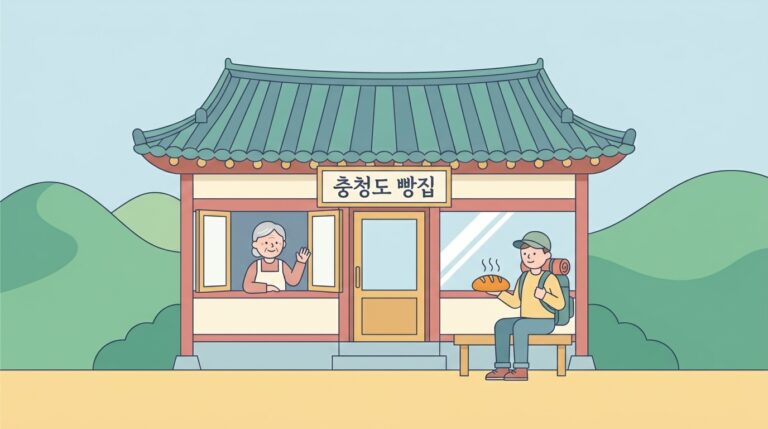
- Setting: A warm, nostalgic bakery in Gongju, Chungcheongnam-do.
- Character: Mr. Park (박 사장님), a 60-year-old chestnut bread baker with a trademark slow smile and sharp wit.
Dialogue:
1. You: 사장님, 밤빵 방금 나온 거 맞아요? 아직 조금 식은 것 같은데요?
(Sajangnim, bambbang banggeum naon geo majayo? Ajik jogeum sigeun geot gateundeyo?)
🎭 [Checking the bread with a curious tilt of the head]
“Boss, did this chestnut bread just come out? It feels a bit cool?”
2. Mr. Park: 아유, 방금 화덕에서 탈출한 놈인디유?
(Ayu, banggeum hwadeogeseo talchulhan nomin-diyu?)
🎭 [Wiping his flour-covered apron with a calm chuckle]
“Oh my, that fellow literally just escaped the furnace though?”
3. You: 아, 진짜요? 그럼 다섯 개만 5,000원에 깎아주시면 안 돼요?
(A, jinjjayo? Geureom daseot gaeman ocheon-wone kkakka-jusimyeon an dwaeyo?)
🎭 [Smiling brightly with high hopes]
“Oh really? Then could you give me a discount—5 pieces for 5,000 won?”
4. Mr. Park: 그려유, 내일모레 오믄 그냥 공짜로 드리겄슈.
(Geuryeoyu, naeil-more o-meun geunyang gongjjarro deuri-geotsyu.)
🎭 [Softly shaking head with a mischievous grin]
“Sure thing, if you come back the day after tomorrow, I’ll just give them away for free.”
5. You: 앗, 죄송해요! 원래 가격인 만 원에 세트로 살게요.
(At, joesonghaeyo! Wonrae gagyeogin man wone seteuro salgeyo.)
🎭 [Embarrassed smile, taking out your wallet]
“Oops, sorry! I’ll buy the set at the regular 10,000 won price.”
6. Mr. Park: 됐슈, 외국인 손님이 능청스럽게 말도 잘항게 두 개 더 얹었슈.
(Dwaessyu, oegukin sonnimi neungcheongseureopge maldo jal-hange du gae deo eonjeot-syu.)
🎭 [Casually tossing two extra warm pastries into the bag]
“Never mind that; since our foreign guest speaks with such smooth wit, I tossed in two bonus ones.”
7. You: 우와, 인심이 대단하세요! 정말 감사합니다!
(Uwa, insimi daedanhaseyo! Jeongmal gamsahamnida!)
🎭 [Bowing politely with hands together]
“Wow, your generosity is amazing! Thank you so much!”
8. Mr. Park: 맛나게 먹고 가유. 체할라, 천천히 씹어 삼키고!
(Mannage meokgo gayu. Chehalla, cheoncheonhi ssibeo samkigo!)
🎭 [Waving hand gently as you head to the door]
“Eat well on your way. Don’t get indigestion; chew slowly before swallowing!”
🔀 Interactive Branch Point:
When Mr. Park sarcastically offered the bread for free the day after tomorrow, how would you respond?
* Option A: “진짜요? 그럼 모레 다시 올게요!” (Really? I’ll come back in two days!)
👉 Feedback [BAD]: You missed the sarcasm completely! Mr. Park will be baffled by your ultra-literal mindset.
* Option B: “아유 사장님, 농담도 참 구수하시네유! 정가대로 주세요!” (Oh boss, your jokes are so delightfully witty! Please give it to me at regular price!)
👉 Feedback [BEST]: Perfect! You acknowledged the regional humor with the dialect ending (~네유) and showed respect.
* Option C: “안 깎아주시면 그냥 갈래요.” (If you don’t discount it, I’ll just leave.)
👉 Feedback [RISK]: Too confrontational! It breaks the polite social harmony (nunchi failure).
Phase 6: 10초 감정 섀도잉 드릴 (Emotional Shadowing Drill)
Practice reading these out loud with rhythm and the exact emotional milestone!
[😏 은근하고 능청스러운 농담조 / Subtly cheeky and relaxed]
그려… / 날 새겄슈… / 내일 아침에 / 출발할 거유?
(Geuryeo… / nal sae-geotsyu… / naeil achime / chulbal-hal geoyu?)-
[😮💨 여유롭지만 단호한 거절 / Laid-back yet clear refusal]
됐슈… / 그거 다 먹다가는 / 바지 단추가 / 먼저 날아가겄네유.
(Dwaessyu… / geugeo da meokdaganeun / baji danchuga / meonjeo naragageon-neyu.) -
[😊 정 많고 따뜻한 츤데레 톤 / Warm, caring Tsundere tone]
가져가유… / 버리기 아까워서 / 주는 거니께 / 부담 갖지 말고.
(Gajyeogayu… / beorigi akkawaoseo / juneun geonikke / budam gatji malgo.)
Phase 7: K-Culture 미니 사전 (Chungcheong Keyword Dictionary)
- 능청 (Neungcheong) | Playful nonchalance / Smooth wit
The ability to pretend you don’t know something or make bold jokes while staying completely calm and relaxed. - 됐슈 (Dwaessyu) | “It’s fine / No thanks”
The ultimate multipurpose Chungcheong phrase. Depending on intonation, it can mean polite refusal, contentment, or gentle annoyance. - 느긋함 (Neugeut-ham) | Leisureliness / Unhurried mindset
The cultural soul of Chungcheong life where speed is secondary to social comfort and peace. - 반어법 (Baneobeop) | Irony / Metaphorical understatement
Expressing the opposite of literal words to diffuse tension and soften sharp social interactions.
Phase 8: 여행자를 위한 생존 키트 (Traveler’s Survival Kit)
Top 3 Survival Expressions
- “얼마유?” (Eolmayu?) — How much is it? (Soft and friendly in traditional markets).
- “됐슈, 괜찮아유.” (Dwaessyu, gwaenchana-yu.) — No thank you, I’m alright. (Effortless polite rejection for street vendors).
- “천천히 혀유~” (Cheoncheonhi hyeoyu~) — Take your time! (Calming phrase when someone is rushing around you).
Editor’s Travel Note
When heading down to explore Daejeon’s famous bakeries or the historical heritage sites in Buyeo and Gongju, skip confusing generic web maps. Make sure to download the Naver Map official application which accurately displays rural bus routes and local taxi dispatch locations. On regional trains (ITX-Saemaeul and KTX), listen carefully to announcements—conductors in this area often speak with that charming, melodic local warmth!
Phase 9: “한 발 더 깊이” (Cultural Reflection)
Korean communication is deeply rooted in high-context collectivism. While Seoul Korean has grown increasingly rapid, efficient, and direct due to modern urban stress, the Chungcheong dialect preserves an ancient social buffer: metaphorical humor. By wrapping a critique inside a witty picture, the speaker protects the listener’s self-esteem while maintaining personal boundaries. It proves that being polite doesn’t mean being plain—it can be an art form.
💬 Your Turn: Have you ever encountered a situation in Korea where someone said something that meant the complete opposite of its literal translation? Share your story in the comments below!
Phase 10: FAQ & 오해 방지 (FAQ Schema)
Q: Is Chungcheong metaphorical speech considered rude in professional business?
A: Yes, in formal corporate business meetings with clients, standard honorific Seoul Korean (Gyeong-eo) is expected. Chungcheong dialect and metaphorical irony are meant for social warmth, everyday dining, taxi conversations, and friendships.
Q: Why do Chungcheong endings always sound like ‘~유’ (~yu)?
A: The standard polite ending ‘~요’ (-yo) naturally shifts to a relaxed, elongated ‘~유’ (-yu) in Chungcheong phonetics. It reduces facial muscle tension and produces a soft, approachable cadence.
Q: Does “됐슈” (Dwaessyu) always mean the speaker is angry?
A: Not at all! Most of the time, it simply means “No worries, I’m okay” or “Don’t trouble yourself.” Only context, tone, and body language reveal if there is mild sulkiness involved.
🚨 Common Mistakes Warning Board
- Mistake 1: Taking metaphors literally. If someone says “Why don’t you come tomorrow?” do not apologize for coming on the wrong calendar date; apologize for being late today!
- Mistake 2: Forcing the dialect with elders you just met. Using clumsy dialect endings without matching the humble attitude can sound like mockery. Keep it natural.
- Mistake 3: Speaking too rapidly while attempting dialect. Chungcheong speech lives and dies by its pause (tempo). If you rush through it, the comedic timing evaporates.
Phase 11: 액션 미션 & 참여 유도 (Action Missions)
- 🥉 Bronze Mission (Solo): Stand in front of a mirror and practice saying “차라리 걸어가겄슈” with an easy smile and slow head shake 5 times.
- 🥈 Silver Mission (Social): Write a sentence using ~네유 or ~유 under our Daily Hangul Instagram post about regional dialects.
- 🥇 Gold Mission (Real Life): Next time you visit a restaurant in Daejeon or Chungnam, greet the owner with “안녕하세요 사장님, 오늘 날씨가 참 좋네유~” and watch their face light up!
- 🎮 K-Culture Mission: Watch an episode of the drama Boyhood (소년시대) on Coupang Play or clips on YouTube, and identify at least two metaphorical one-liners!
Phase 12: 인터랙티브 퀴즈 챌린지 (Interactive Quiz)
Q1. Situation Judgment: Your friend serves you an enormous bowl of noodles and you want to playfully decline more in Chungcheong style. What is the most natural sentence?
1. 더 주면 경찰에 신고할 겁니다.
2. 됐슈, 이거 다 먹으면 배 터져서 뉴스 나와유.
3. 저는 절대로 먹지 않겠습니다.
🔍 Check Answer & Explanation
Correct Answer: 2
Explanation: Option 2 captures the quintessential Chungcheong self-deprecating hyperbolic humor. Options 1 and 3 are overly aggressive and unnatural.
Q2. Fill in the Blank:
“약속 시간에 1시간 늦게 오다니, ____________?” (You’re an hour late, did you come by foot from Busan?)
* Hint: Think about rhetorical exaggeration for tardiness.
🔍 Check Answer & Explanation
Correct Answer: 그려, 아주 내일 오지 그랬슈 / 날 새겄네유
Explanation: Either phrase perfectly reflects Chungcheong’s relaxed sarcasm toward extreme lateness.
Q3. True or False: Chungcheong dialect speakers use sarcasm to directly attack and insult people in public.
🔍 Check Answer & Explanation
Correct Answer: False (F)
Explanation: Chungcheong metaphorical banter is designed to soften confrontations and ease social tension through shared laughter, not malice!







