

Eco-Chic in Seongsu: The Art of Shopping Upcycled Goods in Fluent Korean
Phase 1: Empathy (Story Immersion Opening)
안녕하세요! 매일한글 에디터입니다.
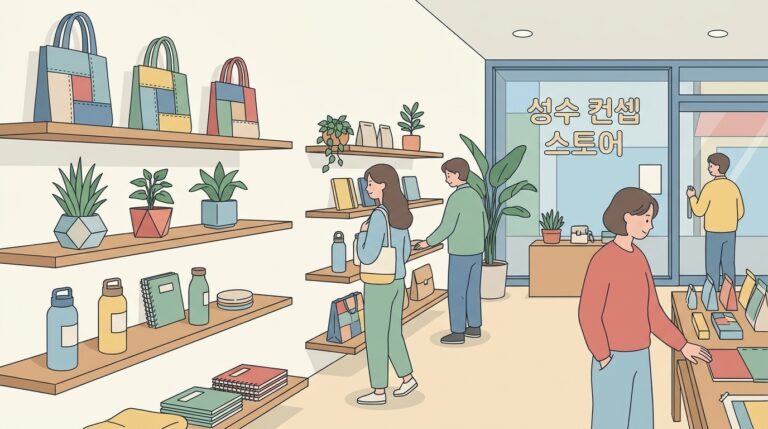
Picture this: You are strolling down the industrial-chic alleys of Seongsu-dong, often called the Brooklyn of Seoul. You step into a dimly lit, minimalist boutique showcasing bespoke backpacks, textured pouches, and sleek stationery. You pick up an eye-catching tote bag with a striking patina. The clerk smiles and mentions something about “폐현수막” (discarded vinyl banners) and “새활용” (upcycling).
At a C1 proficiency level, you know basic conversational Korean, but discussing eco-design concepts, understanding the provenance of repurposed materials, or asking about ethical craftsmanship requires an entirely different register of nuanced vocabulary. Stumbling over words like “Is this reused material?” often leads clerks to default to simplified tourist English, abruptly ending an opportunity for deep cultural exchange. Over 300 advanced learners surveyed at Daily Hangul shared this exact frustration: wanting to engage in values-driven, intellectual conversations about sustainability in Korea without sounding like an elementary textbook. This guide bridges that exact gap.
Phase 2: Deep Dive into 3 Core Expressions
1. 이 제품은 어떤 소재를 새활용해서 만든 건가요?
- Pronunciation: I je-pum-eun eo-tteon so-jae-reul sae-hwal-yong-hae-seo man-deun geon-ga-yo? (Think: ee je-poom-un uh-ttun so-jae-rul say-hwal-yong-hae-suh man-dun gun-ga-yo)
- Meaning: Literal: “What material was upcycled to make this product?” / Real Nuance: “Could you tell me the story behind the repurposed materials in this piece?”
- K-Culture Moment: Seen on sustainable lifestyle vlogs and indie design fairs when tastemakers interview eco-conscious artisans about their craft.
- Editor’s Insight: While “재활용” (recycling) is universally known, “새활용” is the refined native Korean term specifically designated for upcycling (value-added repurposing). Using it instantly signals elevated linguistic taste.
- Situation Spectrum: Casual ⚠️ / Semi-formal ✅ / Formal ✅
- 🤔 Think About It: Why does Korean distinguish 재활용 (downcycling/reprocessing) from 새활용 (creative upcycling)? How does your native language reflect value addition in sustainability?
2. 자투리 원단이라 개체마다 패턴이나 질감이 다 다른 거군요.
- Pronunciation: Ja-ttu-ri won-dan-i-ra gae-che-ma-da pae-teon-i-na jil-gam-i da da-reun geo-gun-yo.
- Meaning: Literal: “Because it’s scrap fabric, each individual piece has a different pattern and texture.”
- Real Nuance: An appreciative observation acknowledging the one-of-a-kind uniqueness of handcrafted upcycled goods.
- K-Culture Moment: Used by sophisticated shoppers in vintage leather or banner-reworking ateliers when admiring the bespoke nature of an item.
- Editor’s Insight: “자투리” (scrap/leftover material) paired with “개체” (individual specimen/piece) elevates the sentence from casual shopping talk to an articulate appreciation of design.
- Situation Spectrum: Casual ⚠️ / Semi-formal ✅ / Formal ✅
- 🤔 Think About It: In many Western contexts, imperfections might be viewed as flaws. In Korean contemporary craft culture, how is this distinctiveness celebrated as “희소성” (rarity)?
3. 가치소비 트렌드에 딱 맞는 취지의 브랜드네요.
- Pronunciation: Ga-chi-so-bi teu-ren-deu-e ttak man-neun chwi-ji-ui beu-raen-deu-ne-yo.
- Meaning: Literal: “This brand’s objective fits right into the value-driven consumption trend.”
- Real Nuance: “I really resonate with your brand’s ethical philosophy and sustainable mission.”
- K-Culture Moment: Frequently discussed on K-trend podcasts, modern documentary segments, and MZ generation lifestyle columns analyzing mindful spending.
- Editor’s Insight: “가치소비” (value-driven/ethical consumption) is a dominant socio-cultural buzzword among Korean millennials and Gen Z who prioritize eco-friendly and ethical alignment over mere brand names.
- Situation Spectrum: Casual 🚫 / Semi-formal ✅ / Formal ✅
- 🤔 Think About It: How has the definition of luxury shifted from high price tags to philosophical value in both Korea and your home country?
Phase 3: Textbook Korean vs. Real Korean
Situation A: Asking if the item is one-of-a-kind
- 📖 Textbook Korean: 이것은 하나밖에 없는 물건입니까? (Is this an item of which there is only one? — Stiff and textbook-rigid)
- 🗣️ Real Korean: 이거 원단 패턴이 다 달라서 세상에 딱 하나뿐인 셈이네요? (So because the fabric pattern varies, this is essentially one-of-a-kind in the whole world, right?)
- 💡 Why the difference? Natural C1 speech employs subtle rhetorical ending particles like -ㄴ 셈이네요 (it amounts to / essentially) to express polite realization without interrogating the staff.
Situation B: Inquiring about durability and maintenance
- 📖 Textbook Korean: 이 재활용 가방은 오래 쓸 수 있습니까? (Can this recycled bag be used for a long time?)
- 🗣️ Real Korean: 업사이클링 소재라 내구성이랑 방수 처리가 어떻게 되어 있는지 궁금해요. (Since it’s an upcycled material, I was wondering about its durability and waterproof treatment.)
- 💡 Why the difference? Advanced speakers frame inquiries around specific functional attributes (내구성, 방수 처리) rather than blunt binary questions about lifespan.
Phase 4: K-Culture Deep Dive & Non-Verbal Manners
4-1. Nunchi & Tactful Gestures in Concept Stores
When visiting high-end upcycling concept stores in trendy districts like Seongsu or Hannam-dong, items are often curated like gallery art pieces. Avoid aggressively pulling or tugging products from display hooks. Instead, maintain gentle two-handed handling when inspecting texture, and make soft eye contact with the curator or attendant with a slight 15-degree nod before picking up raw-edge samples. It signals respect for the artisan’s labor.
4-2. Cultural Code: The Rise of “Mean-ing Out” (미닝아웃)
In Korea, the phenomenon of Meaning Out (expressing one’s political, social, and environmental beliefs through purchasing habits) has transformed waste disposal and upcycling from mere civic duty into a trendy lifestyle statement. Brands collaborating with national parks to turn discarded marine plastic into trendy parkas or transforming retired firefighter gear into commemorative bags are celebrated as cultural icons.
Phase 5: Real-World Roleplay Scenario
- Setting: An aesthetic eco-atelier located in an alley near Seoul Forest.
- Characters:
- 민우 (Min-woo): The thoughtful atelier curator and upcycling designer.
- 유진 (You / Eugene): A culturally fluent eco-shopper looking for a gift.
- 민우: (다정한 미소로 목례하며) 어서 오세요! 편하게 둘러보세요. 질문 있으시면 언제든 말씀해 주시고요.
(Eoseo oseyo! Pyeon-ha-ge dul-leo-bo-se-yo. Jil-mun iss-eu-si-myeon eon-je-deun mal-sseum-hae ju-si-go-yo.)
“Welcome! Please feel free to look around. Let me know anytime if you have questions.” -
유진: (전시된 메신저 백의 라벨을 보며 흥미로운 눈빛으로) 감사합니다. 이 가방 라인이 독특한데, 혹시 어떤 소재를 새활용하신 건가요?
(Gamsahamnida. I gabang rain-i dokteuk-hande, hoksi eotteon sojaereul saehwalyonghasin geongayo?)
“Thank you. This bag line is really unique—could you tell me what material was upcycled here?” -
민우: (가방의 원단을 부드럽게 가리키며) 아, 알아보셨네요! 실제 소방관분들이 사용하셨던 폐방화복과 불용 처리된 낙하산 원단을 해체해서 만든 제품입니다.
(A, ar-a-bo-syeon-ne-yo! Sil-je so-bang-gwan-bun-deul-i sa-yong-ha-syeot-deon pye-bang-hwa-bok-gwa bul-yong cheo-ri-doen nak-ha-san won-dan-eul hae-che-hae-seo man-deun je-pum-im-ni-da.)
“Ah, you noticed! We disassembled decommissioned firefighter suits and discarded parachute fabrics to create this piece.” -
유진: (고개를 끄덕이며 감탄하는 표정으로) 방화복이라니 의미도 깊고, 방수나 내구성 면에서도 정말 탁월하겠어요.
(Banghwabog-irani uimido gipgo, bangsu-na naeguseong myeon-eseodo jeongmal takwolhagesseoyo.)
“Firefighter suits! That carries so much meaning, and it must be exceptional in terms of waterproofing and durability.” -
민우: (자부심 있는 톤으로) 맞습니다. 열과 마모에 워낙 강하니까요. 게다가 원단 세척 후 남은 자연스러운 그을림 자국이 각 제품마다 고유한 무늬를 만들어냅니다.
(Matseumnida. Yeol-gwa ma-mo-e won-ak gang-ha-ni-kka-yo. Ge-da-ga won-dan se-cheok hu nam-eun ja-yeon-seu-reo-un geu-eul-lim ja-guk-i gak je-pum-ma-da go-yu-han mu-nui-reul man-deul-eo-naem-ni-da.)
“Exactly. It’s remarkably resistant to heat and wear. Plus, the subtle soot marks left after washing give each piece a one-of-a-kind texture.” -
유진: (제품을 조심스럽게 만져보며) 폐자원에 새 생명을 불어넣는 취지가 참 멋집니다. 선물용으로 보고 있는데, 패키징도 친환경으로 제공되나요?
(Pye-ja-won-e sae saeng-myeong-eul bul-eo-neoneun chwi-ji-ga cham meot-jim-ni-da. Seon-mul-yong-eu-ro bo-go inn-neun-de, pae-ki-jing-do chin-hwan-gyeong-eu-ro je-gong-doe-na-yo?)
“Breathing new life into discarded resources is truly wonderful. I’m looking at this as a gift—is the packaging eco-friendly as well?” -
민우: (생분해성 크래프트 박스를 보여주며) 네! 100% 생분해성 사탕수수 종이와 콩기름 잉크로 제작된 패키지에 브랜드 스토리 카드를 함께 동봉해 드립니다.
(Ne! Baek-peo-sen-teu saeng-bun-hae-seong sa-tang-su-su jong-i-wa kong-gi-reum ing-keu-ro je-jak-doen pae-ki-ji-e beu-raen-deu seu-to-ri ka-deu-reul ham-kke dong-bong-hae deu-rim-ni-da.)
“Yes! We enclose our brand story card in packaging made from 100% biodegradable sugarcane paper and soy ink.” -
유진: (확신에 찬 미소를 지으며) 섬세한 부분까지 신경 쓰셨네요. 이 모델로 하나 포장 부탁드립니다.
(Seom-se-han bu-bun-kka-ji sing-gyeong sseu-syeon-ne-yo. I mo-del-ro ha-na po-jang bu-tak-deu-rim-ni-da.)
“You’ve paid attention to the finest details. I’d like to get this model wrapped, please.”
🔀 Interactive Branching Decision
Imagine the curator asks: “혹시 원단마다 스크래치나 색바램이 조금씩 다른데, 직접 골라보시겠어요?” (The scratches and fading differ per fabric, would you like to select one in person?)
- Option A: “아무거나 상관없으니 제일 새것처럼 깨끗한 걸로 골라주세요.”
- Feedback [Bad]: Defeats the essence of upcycling appreciation. Demanding “factory-new perfection” ignores the narrative value of repurposed materials.
- Option B: “시간 없으니까 그냥 앞에 있는 거 바로 결제해 주세요.”
- Feedback [Risk]: While not grammatically incorrect, it cuts the interactive rapport curtly and misses the tactile pleasure of curating your unique piece.
- Option C: “네! 자투리 원단 특유의 에이징이 잘 드러난 걸로 직접 비교해 보고 고르고 싶어요.”
- Feedback [Best]: Flawless C1 Korean! Acknowledges the “aging” patina (에이징) and scrap character (자투리 원단) while showing genuine enthusiasm.
Phase 6: 10-Second Emotion Shadowing Drill
[😊 감탄과 호기심을 담아]
폐자원에 / 새 생명을 불어넣는 취지가 / 참 인상 깊어요.
(Pye-ja-won-e / sae saeng-myeong-eul bul-eo-neo-neun chwi-ji-ga / cham in-sang gip-eo-yo.)-
[🌿 진지하고 세련되게]
단순한 재활용을 넘어서 / 디자인적 가치까지 / 확실히 살린 제품이네요.
(Dan-sun-han jae-hwal-yong-eul neo-meo-seo / di-ja-in-jeok ga-chi-kka-ji / hwak-sil-hi sal-lin je-pum-i-ne-yo.) -
[🎁 배려와 섬세함을 담아]
선물 받는 사람도 / 친환경적인 의미를 / 깊이 공감할 것 같아요.
(Seon-mul bat-neun sa-ram-do / chin-hwan-gyeong-jeok-in ui-mi-reul / gip-i gong-gam-hal geot ga-ta-yo.)
Phase 7: K-Culture Mini Dictionary
- 새활용 (Sae-hwal-yong) | Upcycling
- Usage: Unlike downcycling, this refers to adding artistic or functional value to discarded items. Used in municipal green hubs (e.g., 서울새활용플라자) and boutique studios.
- 가치소비 (Ga-chi-so-bi) | Values-driven / Ethical Consumption
- Usage: Purchasing decisions guided by personal values (eco-friendliness, animal rights, fair trade) rather than just price or brand prestige.
- 자투리 (Ja-ttu-ri) | Leftover scrap / Remnant
- Usage: Refers to remaining bits of leather, fabric, wood, or paper that are too small for standard manufacturing but ideal for bespoke upcycling.
- 미닝아웃 (Mi-ning-a-ut) | Meaning Out
- Usage: A Korean-English portmanteau representing consumers proactively signaling their socio-environmental beliefs through the items they buy and wear.
Phase 8: Traveler’s Survival Kit
Top 3 Survival Phrases
- 소재 세척 및 소독은 어떤 과정으로 진행되나요? (So-jae se-cheok mit so-dok-eun eo-tteon gwa-jeong-eu-ro jin-haeng-doe-na-yo?)
- Pro Tip: Perfect for asking about the hygiene/disinfection process of upcycled fabrics without sounding skeptical.
- 혹시 사용하다가 원단이 뜯어지면 A/S(수선)가 가능한가요? (Hok-si sa-yong-ha-da-ga won-dan-i tteud-eo-ji-myeon e-i-e-seu-ga ga-neung-han-ga-yo?)
- Pro Tip: Ethical Korean ateliers pride themselves on circular repair programs; asking about A/S shows you intend to keep the product long-term.
- 이 브랜드만의 시그니처 리사이클링 라인이 무엇인가요? (I beu-raen-deu-man-ui si-geu-ni-cheo ri-sa-i-keul-ling ra-in-i mu-eot-in-ga-yo?)
- Pro Tip: Instantly prompts the shopkeeper to present their most celebrated, story-rich piece.
Editor’s Travel Note
When hunting for upcycling pop-up stores in Seoul, avoid generic search terms. Use the 네이버 지도 앱 다운로드 to search for keywords like 제로웨이스트 샵 (Zero-waste shop), 성수동 업사이클링 편집숍 (Seongsu upcycling concept store), or 새활용 플라자 (Upcycling Plaza). Most independent boutiques accept domestic transit T-Money cards, Apple Pay (Hyundai Card only), and international credit cards without issue.
Phase 9: Going One Step Deeper (Reflection)
Korea’s rapid transition from a postwar impoverished society to an economic powerhouse fostered a deep cultural trauma regarding wastefulness, traditionally encapsulated in the phrase “아나바다” (아껴 쓰고, 나눠 쓰고, 바꿔 쓰고, 다시 쓰기 — Save, Share, Swap, Reuse). Today’s younger generation has elevated this survivalist frugality into an aesthetic, ethical philosophy. Upcycling is not viewed as a compromise on quality, but rather as the pinnacle of individual storytelling and ecological conscience.
💬 Your Turn: In your home culture, is repurposed fashion seen as a luxury or a budget alternative? Leave your thoughts in Korean below using the word 가치소비!
Phase 10: FAQ & Avoiding Misconceptions
Q: Can I use the word ‘재활용품’ (Jae-hwal-yong-pum) interchangeably with ‘새활용품’ (Sae-hwal-yong-pum)?
A: Not quite. 재활용품 strictly refers to raw recyclables (like empty plastic bottles or crushed cans intended for recycling bins). If you are referring to a designed commercial item made from repurposed materials, use 업사이클링 제품 or 새활용품 to show respect for the design work.
Q: Is bargaining acceptable at upcycling design markets in Seoul?
A: No. Independent eco-ateliers price their products based on intensive manual labor (disassembly, deep sanitization, bespoke cutting). Bargaining is considered bad manners in design concept stores.
Q: How do I ask if an item was made from cruelty-free or vegan materials?
A: You can elegantly say: “혹시 동물성 소재가 배제된 비건 업사이클링 라인도 있나요?” (Do you also carry a vegan upcycling line excluding animal-derived materials?).
🚨 Common Mistakes Warning Board
- Mistake: Calling upcycled bags 헌 가방 (old/worn-out bags).
- Correct Action: Refer to them as 새활용 가방 (upcycled bags) or 리사이클링 가방.
- Mistake: Assuming minor fabric patinas are defects (불량품).
- Correct Action: Acknowledge them as 고유한 흔적 (unique traces) or 자연스러운 에이징 (natural aging).
- Mistake: Using casual imperative forms when asking for gift boxing (상자에 넣어줘).
- Correct Action: Use polite honorific requests: “친환경 패키징으로 포장 부탁드려도 될까요?”
Phase 11: Action Missions & Cultural Immersion
- 🥉 Bronze Level (Solo Drill): Stand in front of a mirror and deliver Expression #1 smoothly within 4 seconds without checking the romanization.
- 🥈 Silver Level (Social Sharing): Post a photo of an eco-friendly item on Instagram or Threads and caption it in Korean: “지속 가능한 일상을 위한 나의 작은 가치소비! 🌿 #새활용 #업사이클링”.
- 🥇 Gold Level (Real-World Execution): Visit an eco-store in Seoul (or comment on a Korean upcycling brand’s social media page) inquiring about their materials using: “어떤 소재를 새활용해서 제작하셨는지 궁금해요!”
🎮 K-Culture Mission: Watch an episode of a modern Seoul lifestyle vlog or documentary on Seongsu-dong, and listen for when they introduce 자투리 가죽 (scrap leather) or 가치소비.
Phase 12: Interactive Quiz Challenge
1. Situation Judgment
You are looking at a stylish card wallet made from retired billboard banners. You want to praise the designer for making each wallet look distinct. Which phrase is the most natural and complimentary?
* (A) 다 낡아 보여서 신기하네요.
* (B) 자투리 소재 특유의 유니크한 무늬가 참 멋스럽네요.
* (C) 왜 규격이 일정하지 않고 제각각인가요?
2. Fill-in-the-Blank
“폐플라스틱을 단순히 재활용하는 것을 넘어, 새로운 디자인을 더해 가치를 높이는 활동을 한국어로 (________)이라고 부릅니다.”
3. True or False
Korean consumers under the MZ generation consider buying upcycled items as an expression of “미닝아웃” (Meaning Out). ( True / False )
🔍 Click here to reveal the answers and explanations!
- Answer: (B)
- Explanation: Option B praises the unique aesthetic (멋스럽다) and uniqueness (유니크한 무늬) of scrap materials without deprecating the craftsmanship.
- Answer: 새활용 (or 업사이클링)
- Explanation: 새활용 is the authentic Korean term for creative upcycling that adds qualitative value to waste resources.
- Answer: True
- Explanation: “미닝아웃” is a core cultural driver where personal ethical values are consciously manifested through eco-friendly purchases.
- Explanation: “미닝아웃” is a core cultural driver where personal ethical values are consciously manifested through eco-friendly purchases.







