

Master Korean Class Instructions: The Ultimate Guide to ‘써 보세요 (Please Write It)’
Phase 1: Empathy & Storytelling
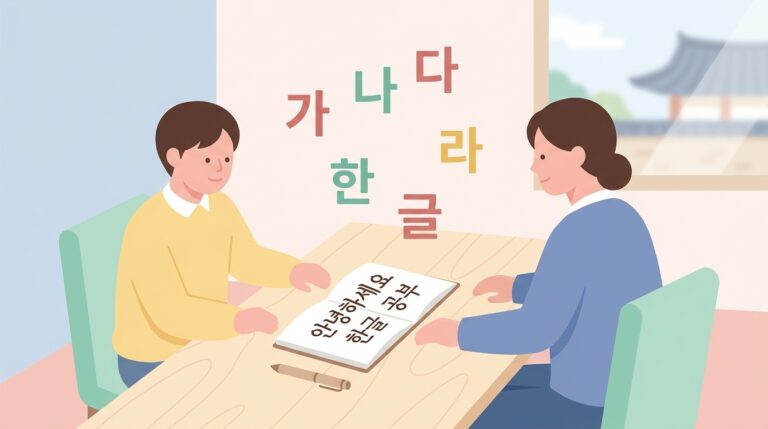
안녕하세요! Welcome back to Daily Hangul! I’m your friendly Korean culture navigator and your personal Korean bestie. Picture this: you’ve finally gathered the courage to sit down for your first real Korean language lesson—maybe online with a friendly tutor or in a cozy classroom right here in Seoul. Your heart is pounding with excitement. The teacher smiles, points gently at an empty workbook line, and says: “자, 여기에 써 보세요! (Ja, yeogie sseo boseyo!)”
Suddenly, your mind freezes. Your pencil hovers in mid-air. “Wait… ‘sseo’? Does that mean wear a hat? Does it mean bitter? Or does it mean write? And what does ‘boseyo’ have to do with looking?” If your brain has ever short-circuited hearing this classic classroom phrase, take a deep breath! You are definitely not alone. Every single Korean learner hits this exact bump.
In Korean, the verb 쓰다 (sseuda) is a famous chameleon, and combining it with the magic polite invitation pattern -아/어 보세요 (-a/eo boseyo) creates one of the most encouraging phrases you will ever hear in class. Today, we are breaking down this essential A1 classroom command so you’ll never freeze up again. Based on actual classroom feedback from hundreds of beginner students, this guide will transform your hesitation into smooth, confident action!
Phase 2: Top 3 Core Expressions Deep-Dive
1. 써 보세요 (Sseo bo-se-yo)
- Pronunciation: [Sseo bo-se-yo] (Sounds like: “Suh” as in summer + “bo-say-yo”)
- Meaning: Literal: “Write and see/try” | Real Nuance: “Please try writing this / Go ahead and write it down.”
- K-Culture Moment: Seen in variety shows like Run BTS or Korean school K-dramas when the teacher hands a marker to a student at the chalkboard and encourages them warmly.
- Editor’s Insight: In Korean, adding -아/어 보다 softens a direct command (“Write!”) into a supportive suggestion (“Give it a try!”). It removes the pressure of being perfect.
- Situation Spectrum: Casual: ⚠️ 써 봐 (Sseo bwa) | Semi-formal: ✅ 써 보세요 (Sseo boseyo) | Formal: ✅ 써 주십시오 (Sseo jusipsio)
- 🤔 Think About It: In English, we simply say “Write this down.” Why do you think Korean culture weaves the concept of “trying/seeing” into instructions instead of giving flat orders?
2. 다시 써 보세요 (Da-si sseo bo-se-yo)
- Pronunciation: [Da-si sseo bo-se-yo] (Sounds like: “Dah-she ssuh-bo-say-yo”)
- Meaning: Literal: “Again write and see” | Real Nuance: “Please try writing it once more.”
- K-Culture Moment: A patient calligraphy master in a K-drama gently guiding an apprentice after a slight ink smudge on Hanji paper.
- Editor’s Insight: 다시 (Dasi) means again. Teachers use this phrase with an uplifting, gentle tone to say, “Good try, let’s fix that stroke order together!”
- Situation Spectrum: Casual: ⚠️ 다시 써 봐 (Dasi sseo bwa) | Semi-formal: ✅ 다시 써 보세요 (Dasi sseo boseyo) | Formal: ✅ 다시 작성해 주세요 (Dasi jakseonghae juseyo)
- 🤔 Think About It: Does hearing “try again” feel intimidating or encouraging to you? Notice how Korean polite markers reduce performance anxiety.
3. 여기에 써 주세요 (Yeo-gi-e sseo ju-se-yo)
- Pronunciation: [Yeo-gi-e sseo ju-se-yo] (Sounds like: “Yuh-ghee-eh ssuh joo-say-yo”)
- Meaning: Literal: “Here write please give” | Real Nuance: “Please write it right here for me.”
- K-Culture Moment: When checking into a trendy boutique hotel in Hongdae or filling out a tax-free refund slip at Olive Young, the clerk points a pen toward the signature box.
- Editor’s Insight: While 써 보세요 is an educational invitation to practice, 써 주세요 is a practical, polite request when someone needs your signature or name.
- Situation Spectrum: Casual: 🚫 여기 써 (Yeogi sseo) | Semi-formal: ✅ 여기에 써 주세요 (Yeogie sseo juseyo) | Formal: ✅ 이곳에 기재해 주십시오 (I-gose gijaehae jusipsio)
- 🤔 Think About It: How does switching from “learning mode” (써 보세요) to “service/request mode” (써 주세요) shift the social relationship?
Phase 3: Textbook Korean vs. Real Korean
Situation 1: The Teacher Asks You to Write Your Name
- 📖 교과서 한국어 (Textbook): 성명을 기입하십시오. (Seongmyeong-eul gi-ip-hasipsio. – Enter your full name.)
- 🗣️ 진짜 한국어 (Real-life): 이름 한번 써 보세요~ (Ireum han-beon sseo boseyo~ – Why don’t you try writing your name?)
- 💡 왜 다를까? (Why the difference?): Formal official forms use Hanja-based terms like 성명 and 기입, but in any real classroom, teachers add 한번 (han-beon, just once/a try) to make the task feel welcoming and stress-free.
Situation 2: Asking Where to Write
- 📖 교과서 한국어 (Textbook): 어디에 기록해야 합니까? (Eodie girok-haeya hamnikka? – Where must I record this?)
- 🗣️ 진짜 한국어 (Real-life): 여기에 써요? (Yeogie sseoyo? – Do I write it here?)
- 💡 왜 다를까? (Why the difference?): Native beginners use the simple, friendly present tense ending -아요/어요 with rising intonation instead of stiff, archaic book grammar.
Phase 4: K-Culture Deep Dive & Non-Verbal Manners
4-1. 눈치 (Nunchi) & Classroom Etiquette
- Two-Handed Pen Handoff: If your teacher hands you a whiteboard marker or printed sheet, always accept it with both hands (or touch your left hand to your right forearm). This subtle gesture shows immense respect.
- The Nodding Pencil: When a teacher says “써 보세요”, giving a gentle nod with a bright “네! (Ne!)” before writing shows active listening and great Nunchi (social awareness).
4-2. Cultural Code: The Warmth of Korean “Cheering” Culture
In Korean culture, the marker ~보세요 reflects the broader communal attitude of Hwaiting (화이팅). Rather than imposing strict authority, a Korean instructor acts as a cheering coach. When you hear 써 보세요, it’s not a cold test—it’s an open invitation to play with the language!
Phase 5: Real-Life Roleplay Scenario
Setting: A sunlit Korean language academy in Sinchon. You are sitting across from your tutor, Minji-ssi.
- Turn 1 (Minji): 자, 오늘 배운 단어를 공책에 써 보세요! 🎭 (Smiling warmly while tapping the notebook)
- Ja, oneul baeun daneoreul gongchaege sseo boseyo!
- “Now, please try writing the words we learned today in your notebook!”
- Turn 2 (You): 네, 선생님! 연필로 써요? 🎭 (Picking up your pencil curiously)
- Ne, seonsaengnim! Yeonpillo sseoyo?
- “Yes, teacher! Do I write with a pencil?”
- Turn 3 (Minji): 네, 연필로 편하게 써 보세요. 🎭 (Nods reassuringly)
- Ne, yeonpillo pyeonhage sseo boseyo.
- “Yes, feel free to write with a pencil comfortably.”
- Turn 4 (You): 여기에 받침을 다시 써 보세요? 🎭 (Points at a tricky letter ‘한’)
- Yeogie batchimeul dasi sseo boseyo?
- “Do I try writing the final consonant here?”
- Turn 5 (Minji): 맞아요! ‘한글’을 천천히 써 보세요. 🎭 (Leans forward with keen interest)
- Majayo! ‘Hangeul’-eul cheoncheonhi sseo boseyo.
- “That’s right! Try writing ‘Hangeul’ slowly.”
- Turn 6 (You): 다 썼어요! 한번 봐 주세요. 🎭 (Hands notebook with both hands proudly)
- Da sseosseoyo! Hanbeon bwa juseyo.
- “I finished writing! Please take a look.”
- Turn 7 (Minji): 와, 정말 잘 썼어요! 글씨가 예뻐요. 🎭 (Claps lightly with sparkling eyes)
- Wa, jeongmal jal sseosseoyo! Geulssiga yeppeoyo.
- “Wow, you wrote it so well! Your handwriting is pretty.”
- Turn 8 (You): 감사합니다, 선생님! 🎭 (Bows head politely)
- Gamsahamnida, seonsaengnim!
- “Thank you, teacher!”
🔀 Interactive Choice Point
The teacher points at an empty line and says: “여기에 써 보세요!” How do you reply?
* Option A: “네, 써 볼게요!” (Ne, sseo bolgeyo! – Yes, I will try writing it!)
* Option B: “싫어요, 안 써요.” (Sireoyo, an sseoyo. – I hate it, not writing.)
* Option C: “너 써라.” (Neo sseora. – You write it.)
- Feedback:
- Option A (BEST): Perfect! Using ~ㄹ게요 shows enthusiastic willingness and respect.
- Option B (BAD): Ouch! Extremely blunt and disrespectful in a classroom.
- Option C (RISK): Danger! This uses rude informal speech (반말) toward someone in authority.
Phase 6: 10-Second Emotion Shadowing Drill
Practice reading these out loud with the exact vocal rhythm and pauses (/ marks a short breath pause):
[😊 Cheerful & Ready]- 자, / 여기에 / 써 보세요!
- Ja, / yeo-gi-e / sseo bo-se-yo!
[🤔 Curious & Gentle]- 제 이름을 / 한글로 / 써요?
- Je ireum-eul / han-geul-ro / sseo-yo?
[🥺 Polite & Hopeful]- 선생님, / 다시 한번 / 써 주세요.
- Seon-saeng-nim, / da-si han-beon / sseo ju-se-yo.
Phase 7: K-Culture Mini Dictionary
- 공책 (Gong-chaek) | Notebook | Used constantly in schools and stationery shops (like Artbox or Daiso).
- 연필 (Yeon-pil) | Pencil | Essential Korean classroom gear; pairing with an eraser (지우개, ji-u-gae) is a must!
- 받침 (Bat-chim) | Final Consonant (Bottom letter) | The heart of Hangul pronunciation and spelling challenges.
- 숙제 (Suk-je) | Homework | What your Korean tutor gives you at the end of class: “숙제 꼭 써 보세요!”
Phase 8: Traveler’s Survival Kit
Survival TOP 3 Phrases
- 1. 여기에 이름 써 주세요. (Yeogie ireum sseo juseyo.) – “Please write your name here.” (Great for forms, sim cards, rentals).
- 2. 한글로 써 주세요. (Hangeullo sseo juseyo.) – “Please write it in Hangul for me.”
- 3. 종이와 펜 있어요? (Jongi-wa pen isseoyo?) – “Do you have paper and a pen?”
🧳 Editor’s Travel Note
When traveling in South Korea, always keep the Naver Papago Translation App Download ready on your phone. You can use its handwriting recognition tool to write unfamiliar Korean characters on screen to discover their meanings instantly!
Phase 9: A Step Deeper
In Korean, the suffix -아/어 보다 literally incorporates the verb 보다 (to see). When combined with writing (써 보다), speaking (말해 보다), or eating (먹어 보다), language becomes an experimental journey. Korean culture values the shared experiential attempt over flawless initial perfection. When your teacher invites you with 써 보세요, they are welcoming you to explore without the fear of making mistakes.
💬 Your Turn: What Korean word or phrase do you find most fun—or most challenging—to write in Hangul? Share your favorite stroke below!
Phase 10: FAQ & Common Mistakes
Q: What is the difference between 써 보세요 and 쓰세요?
A: 쓰세요 (Sseuseyo) is a direct polite imperative (“Please write”), which can sound like a formal instruction. 써 보세요 (Sseo boseyo) means “Give writing a try,” which feels much softer, encouraging, and educational.
Q: Does 쓰다 also mean ‘bitter’ and ‘to wear’?
A: Yes! 쓰다 (sseuda) is a homonym. Context makes it clear: if coffee is involved, it means bitter; if hats or glasses are involved, it means wear; if pens or paper are involved, it means write!
Q: Can I say “써 보세요” to my teacher?
A: It’s better to avoid suggesting your teacher “try” something. Instead, ask them politely to write with: “선생님, 써 주세요 (Seonsaengnim, sseo juseyo – Teacher, please write it for me).”
🚨 Common Mistakes Alert
- Mistake 1: Pronouncing 써 as 쏘 (sso) or 서 (seo). -> Fix: Open your jaw slightly and keep your tongue neutral: Ssuh.
- Mistake 2: Confusing 써 보세요 (Try writing) with 보여 주세요 (Please show me). -> Fix: Remember that 써 comes from 쓰다 (to write).
- Mistake 3: Replying “네, 써 보세요” when your teacher tells you to write. -> Fix: Reply with “네, 써 볼게요! (Yes, I will try writing!)”.
Phase 11: Action Missions
- 🥉 Bronze Mission (Solo Practice): Grab a blank sheet of paper and write your name in Hangul 3 times while saying “이름을 써 보세요!” out loud.
- 🥈 Silver Mission (Social Connection): Post your handwritten Korean sentence on Instagram or X with the hashtag
#DailyHanguland tag your language study buddies. - 🥇 Gold Mission (Real-life Execution): In your next Korean lesson or chat with a Korean friend, use “한번 써 볼게요! (I’ll try writing it!)”.
- 🎮 K-Culture Mission: Watch an episode of a Korean variety show (like Knowing Bros) and spot how often cast members are instructed to write on mini whiteboards!
Phase 12: Interactive Quiz Challenge
Q1. What is the most natural, polite meaning of ‘써 보세요’?
* a) You must write this immediately.
* b) Please try writing it down.
* c) Do not write here.
Q2. Fill in the blank:
* “선생님, 여기에 이름을 ______.” (Teacher, please write your name here for me.)
* a) 써 봐
* b) 써 주세요
* c) 썼어요
Q3. True or False:
* It is polite to say “써 보세요” when commanding your boss or teacher to write.
* a) True
* b) False
🔍 Click here to reveal the answers and explanations!
- Q1 Answer: b) ‘써 보세요’ gently invites someone to give writing a try in a supportive tone.
- Q2 Answer: b) When requesting someone to do an action for your benefit, use ~어 주세요 (써 주세요).
- Q3 Answer: b (False)! To superiors or teachers, use humble requests like 써 주시겠어요? or 써 주세요, not trial suggestions.







