

안녕하세요! 매일한글 에디터입니다.
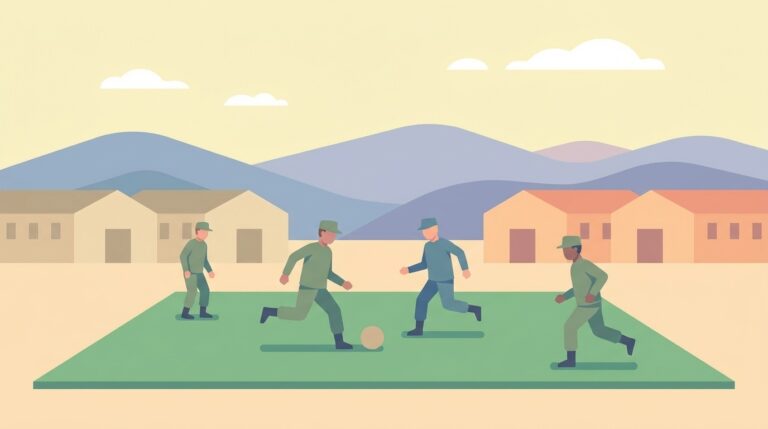
Picture this: You are having drinks with your Korean friends at a cozy pocha in Hongdae. The atmosphere is electric, the crispy fried chicken has just arrived, and out of nowhere, the conversation pivots into an intense, hyper-detailed story about playing soccer on a frozen gravel field in -15°C weather while wearing heavy combat boots. Eyes light up, hand gestures get dramatic, and suddenly, they are recounting the legendary “군대스리가” (Gundaesliga) match of 2021.
If you have ever felt completely lost or slightly overwhelmed when Korean guys start reminiscing about military service, you are not alone! In fact, according to a famous Korean meme, the three most dreaded topics on a blind date are: 1) Soccer stories, 2) Military service stories, and 3) Playing soccer in the military (군대에서 축구 한 이야기). However, mastering the vocabulary, social cues, and subtle humor around this cultural phenomenon will instantly transform you from a polite outsider into an honorary insider at any Korean social gathering. Let’s dive straight into the world of military soccer talk!
Phase 2: Top 3 Essential Expressions Deep Dive
1. 군대에서 축구 한 이야기 (Gundae-eseo chuk-gu han iyagi)
- Pronunciation: [Gun-dae-e-seo chuk-ku han i-ya-gi] (Sounds like “Goon-deh-eh-saw chook-goo hahn ee-yah-gee”)
- Meaning: Literal: “Stories about playing soccer in the military.” / Real Nuance: The quintessential clichéd, repetitive story that men boast about endlessly.
- K-Culture Moment: Frequently referenced in Korean variety shows like Running Man or Knowing Bros whenever a male guest starts bragging about their past athletic glory.
- Editor’s Insight: While often mocked as boring by people who didn’t serve, dropping this phrase humorously when someone starts bragging shows that you have peak cultural awareness.
- Situation Spectrum: Casual ✅ | Semi-formal ⚠️ | Formal 🚫
- 🤔 Think About It: Does your native culture have a specific collective experience (like high school football or college frats) that people love to retell for decades?
2. 짬에서 나오는 바이브 (Jjam-eseo naoneun ba-i-beu)
- Pronunciation: [Jjam-e-seo na-o-neun ba-i-beu] (Phonetic vibe: “Jjahm-eh-saw nah-oh-neun vibe”)
- Meaning: Literal: “Vibes coming from seasoned military seniority.” / Real Nuance: Effortless skill and calm confidence born from pure, veteran experience.
- K-Culture Moment: Coined in hip-hop reality TV (Show Me The Money) from military slang 짬 (jjam), used whenever an experienced person handles a crisis smoothly without breaking a sweat.
- Editor’s Insight: Jjam originally refers to military food rations, but metaphorically means “years of experience.” You can use this at work, in sports, or during video games.
- Situation Spectrum: Casual ✅ | Semi-formal ✅ | Formal 🚫
- 🤔 Think About It: Why do you think military terms in Korea so frequently evolve into mainstream slang for everyday competence?
3. 눈치껏 패스하다 (Nunchi-kkeot paeseu-hada)
- Pronunciation: [Nun-chi-kkeot pae-seu-ha-da] (Sounds like “Noon-chee-kkuht pass-hah-dah”)
- Meaning: Literal: “To pass the ball using quick situational sense.” / Real Nuance: Strategically yielding the spotlight (or the soccer ball) to higher-ranking officers to maintain workplace harmony.
- K-Culture Moment: Depicted hilariously in K-dramas like D.P. or office comedies like Gaus Electronics, where junior soldiers deliberately set up goals for their commanding officers.
- Editor’s Insight: In 군대스리가, athletic skill takes a back seat to social tact. Passing the ball to your boss or senior is essential survival strategy.
- Situation Spectrum: Casual ✅ | Semi-formal ✅ | Formal ⚠️
- 🤔 Think About It: How does social hierarchy influence sportsmanship in your home culture compared to Korea?
Phase 3: Textbook Korean vs. Real Korean
Situation 1: Telling someone to change the subject
- 📖 Textbook Korean: 그 이야기는 그만하고 다른 이야기를 합시다. (Let us stop that story and talk about something else.)
- 🗣️ Real Korean: 아, 또 군대스리가 썰 푼다! 이제 뇌절 그만하고 화제 좀 돌리자. (Ah, another military soccer tale! Stop overdoing it and let’s switch topics.)
- 💡 Why it differs: Textbook Korean is grammatically spotless but stiff. Native Korean peers use 썰 풀다 (to spin a yarn/story) and the slang 뇌절 (taking a joke way too far).
Situation 2: Praising someone’s stamina during sports
- 📖 Textbook Korean: 당신은 체력이 아주 좋고 축구를 잘하네요. (You have very good physical endurance and play soccer well.)
- 🗣️ Real Korean: 와, 체력 장난 아니다! 완전 현역 군인 폼인데? (Whoa, your stamina is no joke! You’re in active-duty soldier form!)
- 💡 Why it differs: Calling someone’s energy “active-duty form” (현역 폼) is the ultimate compliment for peak physical resilience in casual Korean.
Phase 4: K-Culture Deep Dive & Non-Verbal Manners
4-1. Nunchi & Body Language on the Field
When Korean men recount military soccer matches, observe their physical cues:
* The Double Hand Slap & Point: Clapping both hands together loudly and pointing fingers when shouting “나이스 패스!” (Nice pass!).
* The Empathetic Nod: When someone details how tough the gravel field was, nod with your mouth slightly open, saying “아, 인정 (Ah, I admit/totally agree).”
* Social Passing: In an actual friendly match with Korean coworkers or seniors, never tackle the highest-ranking person aggressively; instead, give them room to score.
4-2. The Cultural Code Behind “Gundaesliga”
Why is military soccer such a legendary topic? South Korea has universal conscription, meaning nearly every able-bodied Korean man shares this common rite of passage. Military soccer is not merely about athletics; it is about hierarchy, intense bonding, survival humor, and coping with strict confinement through sport. It serves as universal social currency across generations.
Phase 5: Real-Life Roleplay Scenario
Setting: A pocha table in Euljiro. Minho and Junho (both finished military service) are eating with Alex (an intermediate Korean learner).
- Minho: 🎭 (Animatedly kicking his legs under the table) 내가 병장 때 말이야, 영하 10도에 전투화 신고 해트트릭 했잖아!
- Minho: (Naega byeongjang ttae mariya, yeong-ha sip-doe jeontu-hwa sin-go hae-teu-teu-rik haet-jan-a! / Back when I was a sergeant, I scored a hat-trick in combat boots at -10°C!)
- Junho: 🎭 (Sighing with a playful grin) 아, 또 시작됐다. 민호의 군대스리가 썰…
- Junho: (Ah, tto si-jak-dwaet-da. Min-ho-ui gun-dae-seu-ri-ga sseol… / Ah, here he goes again. Minho’s military soccer stories…)
- Alex: 🎭 (Smirking with curiosity) 진짜요? 간부님한테 눈치껏 골 양보 안 했어요?
- Alex: (Jinjja-yo? Gan-bu-nim-hante nun-chi-kkeot gol yang-bo an haess-eo-yo? / Really? Didn’t you tactfully let your officers score the goal?)
- Minho: 🎭 (Bursting into laughter) 와, 알렉스 짬바이브 대박인데? 한국인 다 됐네!
- Minho: (Wa, Al-lek-seu jjam-ba-i-beu dae-bak-in-de? Han-guk-in da dwaen-ne! / Wow, Alex, your veteran vibe is amazing! You’re totally Korean now!)
- Junho: 🎭 (Tapping Alex’s shoulder) 맞아, 행정보급관님한테 패스 안 하면 다음 날 바로 작업 불려가거든.
- Junho: (Maj-a, haeng-jeong-bo-geup-gwan-nim-hante pae-seu an ha-myeon da-eum nal ba-ro jak-eop bul-lyeo-ga-geo-deun. / Exactly, if you don’t pass to the supply master sergeant, you get assigned hard labor the next day.)
- Alex: 🎭 (Raising his glass) 그럼 대한민국 예비군들의 청춘을 위해서 짠할까요?
- Alex: (Geu-reom dae-han-min-guk ye-bi-gun-deul-ui cheong-chun-eul wi-hae-seo jjan-hal-kka-yo? / Then shall we cheers to the youth of all Korean reservists?)
- Minho: 🎭 (Touching glasses enthusiastically) 크, 멘트 좋다! 건배!
- Minho: (Keu, men-teu jot-da! Geon-bae! / Ah, great words! Cheers!)
- Junho: 🎭 (Drinking cheerfully) 오늘 3차까지 가자!
- Junho: (O-neul sam-cha-kka-ji ga-ja! / Let’s go all the way to round 3 tonight!)
🔀 Interactive Choice Point
Minho asks you: “알렉스는 군대 이야기 지루하지 않아?” (Alex, aren’t military stories boring to you?)
- Choice A: “전혀요! 군대스리가 썰 완전 꿀잼이에요. 더 들려주세요!” (Not at all! Military soccer stories are so fun. Tell me more!)
- Choice B: “네, 한국 여자들이 제일 싫어하는 이야기라던데요?” (Yes, I heard it’s the number one story Korean women hate.)
- Choice C: “군대 축구 이야기 재미없으니까 우리 K-Pop 이야기해요.” (Military soccer is boring, let’s talk about K-Pop instead.)
Feedback:
* Choice A (Best): 🏆 Instant popularity! Validating their shared memory creates warm camaraderie.
* Choice B (Risk/Humor): 😂 High risk, high reward! Self-aware, witty banter if delivered with a teasing smile.
* Choice C (Bad): 🛑 Buzzkill. Cuts the conversational momentum too abruptly.
Phase 6: 10-Second Emotional Shadowing Drill
[😆 Over-the-top boasting & proud]- 한글: 내가 현역 때 / 눈 쌓인 연병장에서 / 골 넣었잖아!
- Pronunciation: [Nae-ga hyeon-yeok ttae / nun ssa-in yeon-byeong-jang-e-seo / gol neo-eot-jan-a!]
- Meaning: Back when I was active duty, I scored on the snow-covered field!
[😏 Playful teasing & eye-rolling]- 한글: 형, / 그 이야기만 / 이번 주에 세 번째예요.
- Pronunciation: [Hyeong, / geu i-ya-gi-man / i-beon ju-e se beon-jjae-ye-yo.]
- Meaning: Hyung, that’s literally the third time you’ve told that story this week.
[👏 Impressed & enthusiastic]- 한글: 와, / 그건 진짜 / 짬에서 나오는 바이브네요!
- Pronunciation: [Wa, / geu-geon jin-jja / jjam-e-seo na-o-neun ba-i-beu-ne-yo!]
- Meaning: Wow, that really is a vibe born from pure experience!
Phase 7: K-Culture Mini Dictionary
- 군대스리가 (Gundaesliga): A portmanteau of 군대 (Military) + 분데스리가 (Bundesliga). Refers to fiercely competitive, informal soccer matches played inside Korean military bases.
- PX (Post Exchange / 피엑스): The on-base military convenience store famous for cheap snacks (like Gandangmyeon and frozen dumplings) and affordable skincare cosmetics often gifted to girlfriends.
- 말년병장 (Malnyeon-byeongjang): A soldier in their final weeks before discharge. Culturally synonymous with someone relaxed, untouchable, moving at a glacial pace, and doing whatever they want.
- 썰풀기 (Sseol-pulgi): Slang for unrolling an engaging, dramatic anecdote or real-life story among close companions.
Phase 8: Survival Kit for Travelers
Top 3 Survival Phrases
- 군대 이야기 재미있어요! (Gun-dae i-ya-gi jae-mi-iss-eo-yo!) – “Your military stories are interesting!” (Pro tip: Say this to instantly flatter any Korean male host).
- 축구 좋아하세요? (Chuk-gu jo-a-ha-se-yo?) – “Do you like soccer?” (Pro tip: Safe opener to ignite small talk).
- 체력 진짜 대단하세요. (Che-ryeok jin-jja dae-dan-ha-se-yo.) – “Your stamina is truly incredible.” (Pro tip: Best compliment after physical activities).
Editor’s Travel Note
When traveling in South Korea, you may notice groups of young men in neat digital camouflage uniforms around major train hubs like Seoul Station or Dongdaehuwon. These are soldiers on vacation (휴가). For smooth travel while exploring local base-adjacent cities like Paju or Chuncheon, make sure to check the Naver Map navigation app download to find local foodie hotspots famous for military comfort food like Budae-jjigae (Army Base Stew).
Phase 9: “One Step Deeper” (Cultural Reflection)
In South Korea, compulsory military service is a shared crucible where young men from vastly different socio-economic backgrounds live, eat, and endure rigorous drills together. When they recall “Gundaesliga,” they are rarely bragging about technical soccer skills. Instead, they are nostalgically recalling the deep solidarity, shared hardship, and youthful resilience forged during a time when simple pleasures—like an afternoon kickabout on gravel—meant the world. Understanding this context unlocks deep emotional empathy with Korean men.
💬 Your Turn: Does your country have a unique shared rite of passage that bonds people together across generations? Tell us in the comments below!
Phase 10: FAQ & Common Mistakes
Q: Can women or international learners participate in military conversations?
A: Absolutely! You don’t need military experience to join the banter. Asking lighthearted questions like “PX 냉동식품 뭐가 제일 맛있어요?” (Which PX frozen food is best?) shows great cultural interest and is always warmly welcomed.
Q: Is 군대스리가 played with official soccer rules?
A: Not quite! It’s infamous for flexible rules where the commanding officer is rarely called for offside, and games continue regardless of blizzard or monsoon conditions.
Q: Is it rude to ask Korean friends about their military rank or branch?
A: Among close friends and casual acquaintances, asking “육군 다녀오셨어요?” (Did you serve in the Army?) or “몇 군번이세요?” (Which enlistment class year are you?) is normal friendly curiosity.
🚨 Common Mistakes Warning Board
- Mistake: Using aggressive military-style formal endings (~지 말입니다) with civilians in casual cafes.
- Correct Action: Keep ~지 말입니다 strictly for joking roleplay; use standard ~해요 or ~했어.
- Mistake: Assuming every male friend loved their military days.
- Correct Action: Read the room; while funny anecdotes are popular, military service was strenuous and difficult for many.
- Mistake: Confusing 군대스리가 with professional K-League soccer.
- Correct Action: Remember that Gundaesliga is exclusively an affectionate parody term for on-base amateur games.
Phase 11: Action Missions
- 🥉 Bronze Mission: Record yourself saying “그건 짬에서 나오는 바이브네요!” with confident intonation in front of a mirror.
- 🥈 Silver Mission: Write a 1-sentence comment under a Korean YouTube variety show or military drama clip using the keyword 군대스리가.
- 🥇 Gold Mission: The next time your Korean friends discuss sports or past memories, playfully ask: “군대에서 축구 한 이야기 해주세요!”
- 🎮 K-Culture Mission: Watch an episode of the comedy sketch show Psick Univ (피식대학) or the drama D.P. on Netflix and spot at least two military slang terms explained in this guide!
Phase 12: Interactive Quiz Challenge
1. Situation Judgment: Your Korean colleague effortlessly resolves a complex system crash at work without panicking. What is the most natural, witty praise?
* A) 짬에서 나오는 바이브 장난 아니네요!
* B) 군대스리가 뇌절하지 마세요.
* C) 눈치껏 패스해 주세요.
🔍 Click to reveal the Answer & Explanation
Correct Answer: A
Explanation: 짬에서 나오는 바이브 praises smooth competency gained from veteran experience. B is rude, and C is used for yielding sport plays/credit tactfully.
2. Fill-in-the-Blank: Complete the sentence meaning “military soccer stories”:
* 한국 남자들은 회식 때 ( [ ? ] ) 썰 푸는 것을 좋아합니다.
🔍 Click to reveal the Answer & Explanation
Correct Answer: 군대스리가 (or 군대 축구)
Explanation: Both terms fit perfectly to describe the classic Korean pastime of telling military soccer tales during gatherings.
3. True or False: In 군대스리가 games, passing the ball to higher-ranking officers is considered good nunchi.
* [ True / False ]
🔍 Click to reveal the Answer & Explanation
Correct Answer: True
Explanation: Tactfully passing (눈치껏 패스) to allow commanding officers to shine is a famous cultural running joke in Korean military life!







