

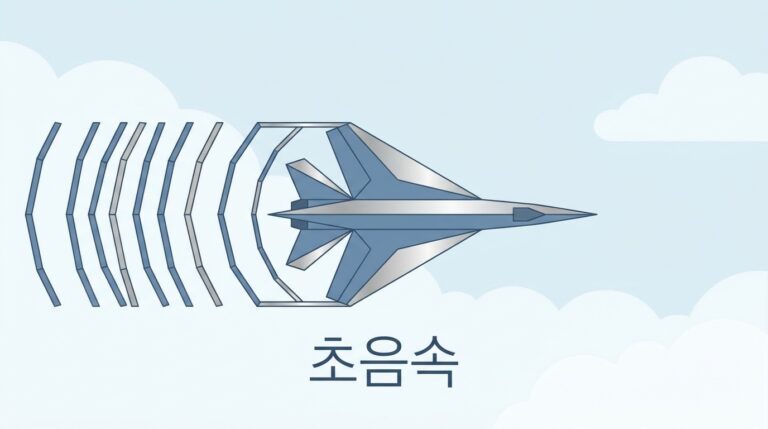
Breaking the Sound Barrier: Master Advanced Korean Aerospace Terminology & Sonic Boom Reduction Tech
Phase 1: Empathy (Story-Immersive Opening)
안녕하세요! 매일한글 에디터입니다. (Hello! I’m your Daily Hangul Editor.)
Imagine walking into an executive boardroom in Songdo or an aerospace symposium in Daejeon. The screen flashes complex fluid dynamics graphs, shockwave dissipation models, and next-generation supersonic transport (SST) designs. While you might follow the math, the conversation among Korean senior researchers and ministry delegates shifts into high-gear technical discourse: “소닉붐 저감 기술 없이는 상용화의 문턱을 넘기 힘듭니다.” (Without sonic boom mitigation technology, commercialization is nearly impossible.)
Many advanced Korean learners hit a linguistic glass ceiling when transitioning from fluent everyday conversation to specialized, high-stakes domains like aerospace engineering and technology policy. You understand the grammar, but the sophisticated Sino-Korean idioms, nuanced technical jargon, and socio-professional register leave you searching for words. Our advanced learners frequently tell us: “I know how to discuss aircraft in English, but debating supersonic noise mitigation in Korean feels like a different universe.”
This guide is crafted specifically for C2-level proficiency learners. We will break down high-level technical vocabulary, cultural boardroom dynamics, and professional rhetorical strategies so you can articulate complex aerospace concepts in Korean with absolute precision and authoritative elegance.
Phase 2: Key Expressions In-Depth Analysis
1. 음속 장벽을 돌파하다 (Eumsok jangbyeogeul dolpahada)
- Pronunciation: [Eum-sok jang-byeok-eul dol-pa-ha-da] (Think: Oom-soak jahng-byuk-ool dohl-pah-ha-dah)
- Meaning: Literal: “Break through the sound barrier” | Nuance: Conquering an insurmountable technological or societal threshold.
- K-Culture Moment: In high-stakes sci-fi K-dramas or news features highlighting the KF-21 Boramae’s supersonic milestones, commentators proclaim: “대한민국 항공 기술이 마침내 음속 장벽을 돌파했습니다!”
- Editor’s Insight: Beyond aerodynamics, 돌파하다 (to break through/surmount) is an evocative executive term used in quarterly reports and R&D presentations to signify unprecedented innovation.
- Situation Spectrum: Casual ⚠️ | Semi-formal ✅ | Formal ✅
- 🤔 Think About It: In English, we often say ‘pushing the envelope,’ but Korean utilizes 돌파 (forceful breakthrough). How does this reflect Korea’s hyper-compressed industrial development mindset?
2. 소닉붐 저감 형상 설계 (Sonikbum jeogam hyeongsang seolgye)
- Pronunciation: [So-nik-bum jeo-gam hyeong-sang seol-gye] (Think: So-neek-boom juh-gahm hyung-sahng sul-gyeh)
- Meaning: Literal: “Sonic boom mitigation aerodynamic shaping design” | Nuance: Sophisticated low-boom airframe shaping techniques designed to reduce ground-level overpressure.
- K-Culture Moment: Featured heavily in industry panel discussions comparing legacy Concorde noise footprints with modern quiet supersonic technology projects.
- Editor’s Insight: 저감 (低減, mitigation/reduction) is far more formal and technically precise than 줄임 or 감소. In formal white papers, always pair 저감 with physical phenomena like noise, emissions, or vibration.
- Situation Spectrum: Casual 🚫 | Semi-formal ✅ | Formal ✅
- 🤔 Think About It: Why do Korean engineering spaces prefer pure Sino-Korean compounds over native Korean descriptors when publishing research patents?
3. 상용화의 물꼬를 트다 (Sang-yong-hwa-ui mul-kko-reul teu-da)
- Pronunciation: [Sang-yong-hwa-ui mul-kko-reul teu-da] (Think: Sahng-yong-hwah-wee mool-kkoh-rool teuh-dah)
- Meaning: Literal: “To open the irrigation sluice gate for commercialization” | Nuance: Paving the way or triggering the transition from experimental R&D to viable market deployment.
- K-Culture Moment: Often heard in business reports regarding overland supersonic flight regulation reforms: “소음 기준 충족이 차세대 여객기 상용화의 물꼬를 텄습니다.”
- Editor’s Insight: 물꼬를 트다 draws from agricultural water management metaphors. Using this idiom instantly marks you as an articulate, native-level strategist.
- Situation Spectrum: Casual ⚠️ | Semi-formal ✅ | Formal ✅
- 🤔 Think About It: How do traditional agricultural metaphors survive and thrive inside hyper-modern Korean aerospace strategy discussions?
Phase 3: Textbook Korean vs. Real Native Korean
Situation 1: Explaining sonic boom overland flight bans
- 📖 Textbook Korean: “소닉붐 소음 때문에 비행기가 육지 위를 날 수 없습니다.” (Because of sonic boom noise, planes cannot fly over land.)
- 🗣️ Real Native Korean: “충격파로 인한 소닉붐 규제 탓에 내륙 초음속 운항이 원천적으로 봉쇄되어 왔습니다.” (Due to shockwave-induced sonic boom regulations, overland supersonic operations have been fundamentally blocked.)
- 💡 Why is it different? Advanced corporate and academic settings demand precise causality (~탓에, 원천적으로 봉쇄) over elementary conjunctions.
Situation 2: Emphasizing the competitive edge of quiet supersonic aircraft
- 📖 Textbook Korean: “소음을 줄인 여객기를 만들면 인기가 많을 것입니다.” (If we make planes with reduced noise, they will be very popular.)
- 🗣️ Real Native Korean: “저소음 음속 비행 기술을 선점하는 기업이 차세대 항공 시장의 패권을 쥐게 될 것입니다.” (The enterprise that preempts quiet supersonic flight technology will hold hegemony over the next-generation aerospace market.)
- 💡 Why is it different? Elite business Korean leverages power verbs like 선점하다 (preempt) and 패권을 쥐다 (seize hegemony) to frame strategic market positioning.
Phase 4: K-Culture Deep Dive & Non-Verbal Manners
4-1. Executive Room Nunchi & Presentation Etiquette
In Korean aerospace symposiums (e.g., KAI or KARI industry forums), hierarchy and consensus reign supreme. When disagreeing with a senior researcher’s shockwave simulation data, never use blunt refutations like “그 분석은 틀렸습니다” (That analysis is wrong). Instead, deploy respectful mitigation: “박사님의 고견에 전적으로 공감하며, 다만 소닉붐 저감 모델링의 변수와 관련하여 한 가지 제언을 덧붙이고자 합니다.” Maintain composed eye contact, angle your hands open when gesturing toward slide decks, and nod subtly to signal active listening before countering.
4-2. Cultural Code: The Space & Aviation Pride Wave
Korea’s aerospace narrative is defined by 극복 (overcoming barriers) and 자립 (technological sovereignty). The success of domestic aerospace achievements like the Nuri rocket and KF-21 fighter jet has transformed supersonic technology from abstract physics into a symbol of national technological pride. Framing supersonic travel in terms of future eco-friendly mobility resonates deeply with Korean policymakers.
Phase 5: Live Role-Play Scenario
Setting: A high-level bilateral aerospace R&D summit in Seoul. You are discussing joint development strategies for a low-boom supersonic transport prototype with Dr. Park (박 박사), Chief Aerospace Engineer.
- 박 박사: “초음속 여객기 개발 재개 소식은 고무적입니다만, 결국 핵심은 도심 상공을 비행할 때 발생하는 소닉붐 저감 기술의 완성도 아니겠습니까?”
(Bak bak-sa: “The resumption of supersonic airliner development is encouraging, but isn’t the crux ultimately the maturity of sonic boom mitigation technology during overland urban flights?”)
🎭 Leans forward, adjusting glasses while pointing at the acoustic simulation telemetry. -
You: “전적으로 동의합니다. 기체 전두부의 압축파를 분산시키는 세장비 설계와 저소음 흡입구 기술이 뒷받침되어야 합니다.”
(Jeon-jeok-eu-ro dong-ui-ham-ni-da. Gi-che jeon-du-bu-ui ap-chuk-pwa-reul bun-san-si-ki-neun se-jang-bi seol-gye-wa jeo-so-eum heup-ip-gu gi-sul-i dwit-bat-chim-doe-eo-ya ham-ni-da.)
“I fully agree. A high fineness ratio airframe design that disperses nose compression shockwaves must be supported by low-noise inlet technologies.”
🎭 Nodding politely while displaying the aerodynamic cross-section slide. -
박 박사: “그렇다면 현재 개발 중인 저소음 형상 설계가 국제민간항공기구(ICAO)의 소음 기준을 충족할 수 있다고 보십니까?”
(Bak bak-sa: “Then do you believe the low-boom shaping design currently under development can satisfy ICAO noise standards?”)
🎭 Raising an eyebrow with serious professional scrutiny. -
You: “네, 풍동 시험 결과 지상 도달 과압을 75PLdB 수준까지 낮출 수 있는 것으로 확인되어, 규제 혁신의 물꼬를 틀 것으로 기대합니다.”
(Ne, pung-dong si-heom gyeol-gwa ji-sang do-dal gwa-ap-eul chil-sip-o-PLdB su-jun-kka-ji nat-chul su it-neun geos-eu-ro hwak-in-doe-eo, gyu-je hyeok-sin-ui mul-kko-reul teul geos-eu-ro gi-dae-ham-ni-da.)
“Yes, wind tunnel test results confirm ground overpressure can be suppressed to 75 PLdB, which we expect will pave the way for regulatory breakthrough.”
🎭 Gesturing with both hands open toward the test dataset.
🔀 Interactive Decision Point
How would you conclude your proposal to secure Dr. Park’s R&D partnership commitment?
- Option A: “이제 기술적 난제는 해결되었으니, 다음 주 안으로 공동 특허 계약서에 서명해 주시기 바랍니다.”
- Option B: “이번 실증 연구를 토대로 저소음 초음속 비행의 패러다임을 선도할 한미 공동 연구 TF 구성을 정식으로 제안드리고자 합니다.”
- Option C: “소닉붐 줄이는 거 별로 안 어려우니까 그냥 우리 팀이 다 만들어서 드릴게요.”
Option Analysis:
* Option A (Risk): Too abrupt and legally pushy for high-context Korean executive culture. Skipping consensus-building steps triggers resistance.
* Option B (Best): Flawless C2 executive phrasing. Uses prestigious strategic vocabulary (실증 연구, 패러다임 선도, 공동 연구 TF) tailored to institutional protocol.
* Option C (Bad): Disrespectfully informal (별로 안 어려우니까), unprofessional, and dismissive of complex engineering realities.
Phase 6: 10-Second Emotional Shadowing Drill
[💼 Confident & Authoritative]
“지상 도달 소닉붐을 / 획기적으로 감쇄시키는 형상 설계가 / 상용화의 핵심 열쇠입니다.”
(Ji-sang do-dal so-nik-bum-eul / hoek-gi-jeok-eu-ro gam-swae-si-ki-neun hyeong-sang seol-gye-ga / sang-yong-hwa-ui hae-sim yeol-soe-im-ni-da.)-
[🧐 Analytical & Persuasive]
“단순한 속도 경쟁을 넘어, / 친환경 저소음 기술을 선점하는 국가가 / 항공 우주 산업을 주도할 것입니다.”
(Dan-sun-han sok-do gyeong-jaeng-eul neo-meo, / chin-hwan-gyeong jeo-so-eum gi-sul-eul seon-jeom-ha-neun guk-ga-ga / hang-gong u-ju san-eob-eul ju-do-hal geos-im-ni-da.)
Phase 7: K-Culture Mini Dictionary
- 과압 (Gwa-ap / Overpressure): Physical pressure spike caused by supersonic shockwaves. Used in aerospace safety compliance.
- 풍동 시험 (Pung-dong si-heom / Wind Tunnel Test): Aerodynamic experimental validation. Essential for R&D grant proposals.
- 패러다임 전환 (Pae-reo-da-im jeon-hwan / Paradigm Shift): Fundamental structural transformation in industry standards or technologies.
- 규제 샌드박스 (Gyu-je saen-deu-bak-seu / Regulatory Sandbox): Korea’s policy framework allowing real-world testing of emerging technologies without legacy legal restrictions.
Phase 8: Traveler’s Survival Kit (Aerospace Conference Edition)
- TOP 1: “학술 심포지엄 등록 데스크가 어디에 마련되어 있습니까?”
(Hak-sul sim-po-ji-eom deung-rok de-seu-keu-ga eo-di-e ma-ryeon-doe-eo it-seum-ni-kka?)
Pro Tip: Formal navigation inquiry for convention centers like COEX or BEXCO. - TOP 2: “초음속 추진 시스템 세션 발표 자료집을 받아볼 수 있을까요?”
(Cho-eum-sok chu-jin si-seu-tem se-syeon bal-pyo ja-ryo-jib-eul ba-da-bol su it-eul-kka-yo?)
Pro Tip: Polite request for symposium proceedings and technical white papers. -
TOP 3: “명함 한 장 교환할 수 있겠습니까? 추후 서면으로 연구 협력을 논의하고 싶습니다.”
(Myeong-ham han jang gyo-hwan-hal su it-get-seum-ni-kka? Chu-hu seo-myeon-eu-ro yeon-gu hyeop-ryeok-eul non-ui-ha-go sip-seum-ni-da.)
Pro Tip: Flawless executive networking closure. -
Editor’s Travel Note: When attending aviation expos at KINTEX or Songdo Convensia, install the Kakao T Taxi App Download for punctual arrivals and use Naver Map Navigation Download to navigate vast convention facilities.
Phase 9: A Step Deeper: Philosophy & Linguistic Nuance
In the Korean engineering domain, technological evolution is frequently characterized by the conceptual dichotomy between 추격자 (fast follower) and 선도자 (first mover). For decades, Korea’s industrial terminology centered on benchmarked reverse engineering. However, in contemporary aerospace and supersonic noise mitigation debates, discourse has shifted drastically toward 초격차 (super-gap technology) and 원천 기술 확보 (securing foundational IP). Mastering this philosophical shift transforms your Korean from passive bilingualism into proactive thought leadership.
💬 Your Turn: How does your native language describe disruptive breakthrough technologies? Share your favorite idioms in the comments below!
Phase 10: Structured FAQ & Common Mistakes
Q: What is the exact difference between 감쇄하다 and 저감하다?
A: 감쇄하다 (attenuate/dampen) describes the physical dissipation of energy waves (like shockwave strength), whereas 저감하다 (mitigate/reduce) is broader and applied to quantified values such as overall noise levels, carbon emissions, or operational costs.
Q: Can I use the English loanword ‘소닉붐’ (Sonic Boom) in formal Korean research papers?
A: Yes! ‘소닉붐’ is standard in Korean academia and official civil aviation guidelines. However, pairing it with pure Korean descriptors like 음파 폭음 (acoustic explosive noise) or 충격파 기인 과압 demonstrates superior lexical depth.
Q: How do I politely challenge a Korean senior researcher’s technical claims?
A: Always cushion your counter-argument with 쿠션어 (cushion words). Begin with “말씀해 주신 관점도 매우 타당합니다만, [alternative view] 측면도 함께 검토해 볼 필요가 있다고 사료됩니다.”
🚨 Common Mistakes Warning Board
- Mistake: Using everyday 시끄러움 instead of 소음도 or 과압 (Overpressure) in technical meetings. -> Fix: Always employ 음향 과압 or 소음 기준치.
- Mistake: Saying “소닉붐을 없애다” -> Fix: Physicists know you cannot eliminate shockwaves entirely; say “소닉붐을 지상 수용 가능 수준으로 저감하다” (mitigate to ground-acceptable levels).
- Mistake: Forgetting institutional honorifics when addressing senior Korean researchers (박사님, 실장님, 단장님). -> Fix: Always append formal titles to surnames.
Phase 11: Action Mission & Community Engagement
- 🥉 Bronze Mission: Record yourself shadowing the Phase 6 sentences, focusing on crisp final consonant delivery on 감쇄시키는 and 선점하는.
- 🥈 Silver Mission: Write a 3-sentence summary on social media about quiet supersonic flight using the phrase 상용화의 물꼬를 트다 and tag #DailyHangulAerospace.
- 🥇 Gold Mission: Formulate an answer to Phase 5’s decision point using your own technical vocabulary and post it in the comment section for editorial review.
- 🎮 K-Culture Mission: Watch a documentary clip on Korean aerospace developments and transcribe 3 technical Sino-Korean terms you recognize.
Phase 12: Interactive Quiz Challenge
1. Situation Judgment Quiz: Which response is most appropriate when presenting low-boom research to government stakeholders?
* (A) “이 비행기 엄청 조용해서 아무도 모릅니다.”
* (B) “본 설계는 충격파 분산 구조를 적용하여 도심 상공 저소음 운항 기준을 충족합니다.”
* (C) “빨리 돈 투자 안 하시면 미국한테 다 뺏깁니다.”
2. Fill-in-the-Blank:
“차세대 초음속 여객기의 성공은 지상 도달 소닉붐을 획기적으로 (______ )하는 기술력에 달려 있다.”
* Hint: Sino-Korean verb meaning ‘mitigate/reduce’.
3. True or False Cultural Quiz:
In Korean corporate R&D discussions, directly telling a senior engineer that their mathematical simulation is completely invalid is considered respectful and assertive.
* [True / False]
🔍 Click here to reveal Answers & Detailed Explanations!
- Answer: (B) – (A) is overly colloquial and unscientific; (C) uses aggressive, informal pressure tactics inappropriate for Korean institutional summits.
- Answer: 저감(低減) – Complete word: 저감하는.
- Answer: False – Direct confrontations cause loss of face (체면). High-level Korean professionals use diplomatic hedging and cushion phrases to introduce alternative data.






