

안녕하세요! 매일한글 에디터입니다.
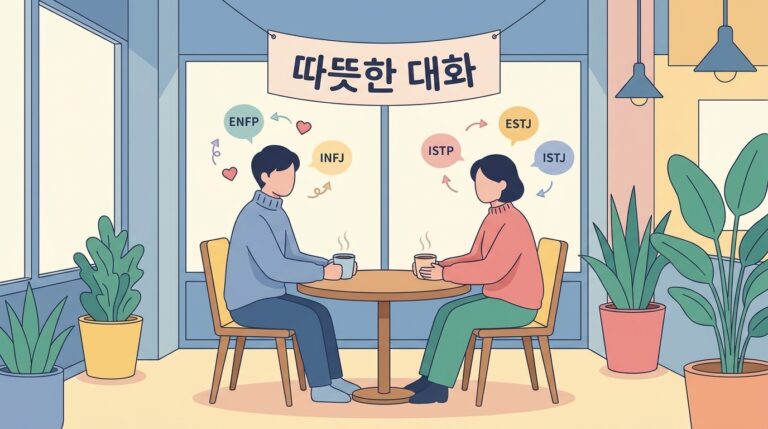
Have you ever been sitting at a trendy aesthetic cafe in Seongsu-dong, sipping a black sesame latte, while your Korean friends enthusiastically debate whether an ‘INFJ’ or an ‘ENFP’ handles a breakup better? Then, the conversation suddenly turns deeper: “요즘 따라 자존감이 좀 떨어진 것 같아…” (I feel like my self-esteem has dropped lately…). You want to offer genuine comfort and share your own philosophy on self-worth, but you freeze. Textbook phrases like “당신은 소중합니다” feel a bit too stiff, while slang like “근자감” pops up in your mind without you knowing how to use it appropriately at a B2 level.
Navigating conversations about confidence and self-esteem in Korean requires an understanding of nuanced emotional boundaries. In Korea, where modesty (겸손) and harmony are traditionally valued alongside the modern MBTI craze, expressing self-confidence without sounding arrogant—or acknowledging low self-esteem without sounding too dramatic—is an art form. This guide is crafted directly from real learner experiences and feedback from our Daily Hangul community. By the end of this post, you’ll be able to express your inner strength, discuss personality traits fluently, and build deeper connections with your Korean peers.
Phase 2: 핵심 표현 3선 심층 분석 (Deep Dive into 3 Key Expressions)
1. 자존감이 높다 / 낮다
- Pronunciation: [Jajongami nopda / natda] (Sounds like ‘Jah-jon-gah-mee nop-dah’)—Notice the smooth liaison from 자존감 (self-esteem) to 이 (subject marker).
- Meaning: Literal: “Self-esteem is high / low.” | Nuance: Used to describe a person’s inner sense of self-worth and resilience, distinct from situational confidence (자신감).
- K-Culture Moment: Frequently heard in healing K-Dramas like Our Unwritten Story or relatable interview clips on YouTube where celebrities talk about mental wellness.
- Editor’s Insight: In Korean, 자존감 (self-esteem) is internal self-worth, whereas 자신감 (confidence) is external faith in one’s abilities. Saying “자존감이 높아 보여요” is one of the highest compliments about someone’s emotional maturity.
- Situation Spectrum: Casual ✅ | Semi-formal ✅ | Formal ✅
- 🤔 Think About It: How does your culture distinguish between self-worth and confidence compared to the Korean focus on inner resilience?
2. 나답게 살다
- Pronunciation: [Nadabge salda] (Sounds like ‘Nah-dahp-geh sahl-dah’)—The ‘ㅂ’ at the end of 답 blends naturally into the ‘게’.
- Meaning: Literal: “To live like oneself.” | Nuance: Living authentically according to one’s own values rather than succumbing to societal pressure.
- K-Culture Moment: A central theme in modern K-Pop anthems (like ITZY’s tracks) and self-help bestsellers in Korean bookstores.
- Editor’s Insight: Living ‘authentically’ (나답게) is a powerful phrase among young Koreans navigating high social expectations. It balances individuality with personal peace.
- Situation Spectrum: Casual ✅ | Semi-formal ✅ | Formal ⚠️ (Use 나답게 in personal essays or informal speeches, use 제 모습 그대로 in formal settings)
- 🤔 Think About It: Is living authentic to yourself viewed as an individual journey or a collective balance in your home country?
3. 근거 없는 자신감 (근자감)
- Pronunciation: [Geungeo eobsneun jasingam / Geunjagam] (Sounds like ‘Geun-ja-gam’ for short).
- Meaning: Literal: “Unfounded confidence.” | Nuance: Unshakable, humorous confidence even when there is no logical reason for it.
- K-Culture Moment: Used affectionately on variety shows like Running Man when a member boasts about a task they have never tried before.
- Editor’s Insight: While it can sound slightly sarcastic, among close friends it is a cute and endearing way to call out someone’s harmless bravado.
- Situation Spectrum: Casual ✅ | Semi-formal ⚠️ | Formal 🚫
- 🤔 Think About It: Do you prefer humble self-deprecation or playful 근자감 when breaking the ice with friends?
Phase 3: 교과서 한국어 vs 진짜 한국어 (Textbook vs Real Korean)
Situation 1: Encouraging a friend who feels insecure about a presentation
- 📖 교과서 한국어: “자신감을 가지세요. 당신은 잘할 수 있습니다.”
- 🗣️ 진짜 한국어: “너무 부담 갖지 마. 너 평소대로만 하면 충분히 잘해!”
- 💡 왜 다를까? Koreans rarely use dramatic dictionary statements like “당신은 잘할 수 있습니다” in daily speech. Telling someone “평소대로만 해” (Just do as you usually do) alleviates social pressure and shows genuine trust in their consistent character.
Situation 2: Expressing your MBTI and how it affects your self-esteem
- 📖 교과서 한국어: “저는 내향적인 성격이라서 자존감이 낮습니다.”
- 🗣️ 진짜 한국어: “제가 I 성향이라 처음에 좀 수줍어하는데, 그렇다고 자존감이 낮은 건 아니에요!”
- 💡 왜 다를까? Modern intermediate speakers distinguish between being quiet (I 성향/내향적) and having low self-esteem (자존감이 낮다). Using I 성향 (I-type preference) sounds far more trendy and accurate than making a blunt textbook generalization.
Phase 4: K-Culture 딥다이브 & 비언어적 매너 (K-Culture Deep Dive & Non-Verbal Manners)
4-1. 눈치 (Nunchi) & Non-Verbal Gestures
When discussing sensitive topics like self-esteem in Korea, pay attention to posture and eye contact. Maintaining soft, respectful eye contact while slightly nodding shows deep empathy (공감). Avoid overly loud gestures or pointing, which might feel aggressive. When accepting a compliment about your confidence, a slight head tilt and a modest smile with hand gestures waving off the praise slightly (“아니예요, 아직 부족해요”) demonstrates desirable modesty before owning your achievement.
4-2. Cultural Code Analysis: The MBTI & Self-Growth Phenomenon
In contemporary Korea, MBTI is more than a personality test; it is an icebreaker and a tool for empathy. Showing self-awareness through your MBTI type while emphasizing inner growth (“I지만 노력하고 있어”) resonates deeply with young Koreans who value continuous personal development (갓생살기 – living a diligent, wholesome life).
Phase 5: 실전 롤플레이 시나리오 (Interactive Roleplay Scenario)
Setting: A quiet aesthetic café in Hongdae. You are chatting with your Korean friend, Minji (민지), who seems down after a job interview.
- Turn 1 (Minji): “오늘 면접 보고 왔는데, 다른 지원자들은 다 자신감이 넘쳐 보이더라고…” (I came back from the job interview today, and all the other candidates looked so confident…)
- Turn 2 (You): 🎭 (Handing her a warm drink) “많이 긴장했지? 민지야, 남들이랑 비교하지 마.”
- Turn 3 (Minji): “맞아, 근데 난 왜 이렇게 자존감이 떨어지는지 모르겠어. MBTI도 I라서 발표할 때 떨려.”
- Turn 4 (You): 🎭 (Nodding warmly) “I 성향이라서 떨리는 건 자연스러운 거야. 그건 자존감이랑 달라.”
- Turn 5 (Minji): “정말 그렇게 생각해? 넌 항상 스스로에 대해 확신이 있어 보여서 부러워.”
- Turn 6 (You): 🎭 (Smiling modestly) “나도 사실 근자감일 때 많아! 그냥 나답게 하려고 노력하는 거지.”
- Turn 7 (Minji): “고마워… 듣고 보니까 마음이 좀 편해진다. 너랑 얘기하길 잘했어.”
- Turn 8 (You): 🎭 (Gently clapping) “당연하지! 너 충분히 매력 있는 사람이니까 기죽지 마!”
🔀 인터랙티브 분기점 (Interactive Branching Point)
Minji asks: “너는 마음이 흔들릴 때 자존감을 어떻게 회복해?” (How do you regain your self-esteem when feeling shaken?)
- Option A: “그냥 맛있는 거 먹고 아무 생각 안 하고 자.”
- Feedback (Best): Extremely natural, friendly, and relatable! It shows warm Korean humor and pragmatic self-care.
- Option B: “인간은 누구나 소중하므로 제 자신을 사랑하려고 노력합니다.”
- Feedback (Bad): Too robotic and formal. Sounds like reading a textbook aloud.
- Option C: “자존감 문제는 스스로 해결해야지 누구한테 물어봐?”
- Feedback (Risk): Too cold and defensive! It might alienate your friend who opened up to you.
Phase 6: 10초 감정 섀도잉 드릴 (10-Second Emotion Shadowing Drill)
- [😊 따뜻하고 진심 어린 어조]
“남들과 / 비교하지 말고, / 너답게만 해! / 너는 충분히 잘하고 있어.” -
[🥺 공감하며 달래는 어조]
“자존감이 떨어진 게 아니라, / 지금 잠시 / 지친 것뿐이야.” -
[😆 장난스럽고 활기찬 어조]
“이건 순전히 / 나의 근자감인데, / 우리 오늘 완전 잘 해낼 걸?”
Phase 7: K-Culture 미니 사전 (K-Culture Mini Dictionary)
- 근자감 (Geunjagam) | Unfounded confidence | Used playfully when someone acts overly confident without concrete backing.
- 갓생 (Gat-saeng) | Living a model, productive life | A compound of ‘God’ and ‘Life’, referring to self-improvement routines.
- 멘탈 (Mental) | Psychological strength/resilience | Expressed as “멘탈이 강하다” (strong mindset) or “멘탈 터지다” (mental breakdown).
- 기죽다 (Gi-jukda) | To lose one’s confidence/spirit | Often used in encouraging phrases like “기죽지 마!” (Keep your head up!).
Phase 8: 여행자를 위한 생존 키트 (Traveler’s Survival Kit)
Survival Expressions Top 3
- “기죽지 마세요!” [Gi-juk-ji ma-se-yo!] — Pro Tip: Use this to cheer up someone who feels intimidated.
- “너답게 해!” [Neo-dab-ge hae!] — Pro Tip: Perfect for encouraging friends before a big step.
- “제 성격이랑 잘 맞아요.” [Je seong-gyeok-i-rang jal ma-ja-yo.] — Pro Tip: Handy when explaining your personality preferences during chats.
Editor’s Travel Note
When traveling in Korea, building self-confidence includes navigating the city seamlessly! Make sure to install the 네이버 지도 앱 다운로드 to find cozy personal-development cafes or quiet bookstores in Seoul without getting lost. Knowing your way around like a local builds instant travel confidence!
Phase 9: 한 발 더 깊이 (One Step Deeper)
In modern Korean culture, the shift from collective harmony to individual self-care (자존감) represents a monumental cultural evolution. While older generations prioritized modest conformity, younger Koreans embrace MBTI and self-identity conversations to validate their feelings while remaining connected to their social circle. True confidence in Korea isn’t about standing out loudly; it’s about having a resilient inner core (내면의 단단함) while showing kindness to those around you.
💬 Your Turn: What is your MBTI type, and how do you express your self-esteem in Korean? Leave a comment below and practice your Korean with us!
Phase 10: FAQ & 오해 방지 (FAQ & Common Mistakes)
Q: What is the exact difference between 자신감 and 자존감?
A: 자신감 (Confidence) is belief in your performance or skills in specific tasks. 자존감 (Self-esteem) is your deep-seated belief in your fundamental worth as a person, regardless of success or failure.
Q: Can I use ‘근자감’ in a business setting?
A: No! 근자감 is informal slang. In a workplace, express your confidence using phrases like “목표를 달성할 자신감이 있습니다” (I am confident in achieving the goal).
Q: How can I humbly accept a compliment without sounding low in self-esteem?
A: Say “감사합니다, 아직 배울 게 많지만 열심히 하고 있어요” (Thank you, I still have much to learn but I’m working hard). This balances high self-worth with traditional Korean modesty.
🚨 Common Mistakes Warning Board
- Mistake: Saying “저는 자존감이 높아서 남 말을 안 들어요” (I have high self-esteem so I don’t listen to others).
- Correct Action: High self-esteem in Korea means listening calmly without feeling attacked. Say: “저는 제 자신을 믿기 때문에 다양한 의견을 들을 수 있어요.”
- Mistake: Confusing 내향적 (introverted) with having low confidence.
- Correct Action: Introversion is just a personality trait. Use: “저는 차분한 성격이지만 제 일에는 자신감이 있어요.”
- Mistake: Overusing dictionary phrases like “당신을 사랑하세요” in real conversations.
- Correct Action: Use natural expressions like “나 자신을 좀 더 챙기려고 해” (I’m trying to take better care of myself).
Phase 11: 액션 미션 & 참여 유도 (Action Mission)
- Bronze Mission: Read the 3 shadowing sentences in Phase 6 aloud 3 times each.
- Silver Mission: Post your MBTI and one Korean sentence about your personality in the comments below!
- Gold Mission: Use “기죽지 마” or “너답게 해” in a real Korean message or conversation with a Korean friend this week.
🎮 K-Culture Mission: Watch a clip of your favorite Korean drama and spot a scene where characters encourage each other’s self-esteem. Write down the expression they used!
Phase 12: 인터랙티브 퀴즈 챌린지 (Interactive Quiz Challenge)
**Q1. What is the correct Korean term for







