

Phase 1: Empathy (Story-Driven Opening)
안녕하세요! 매일한글 에디터입니다.
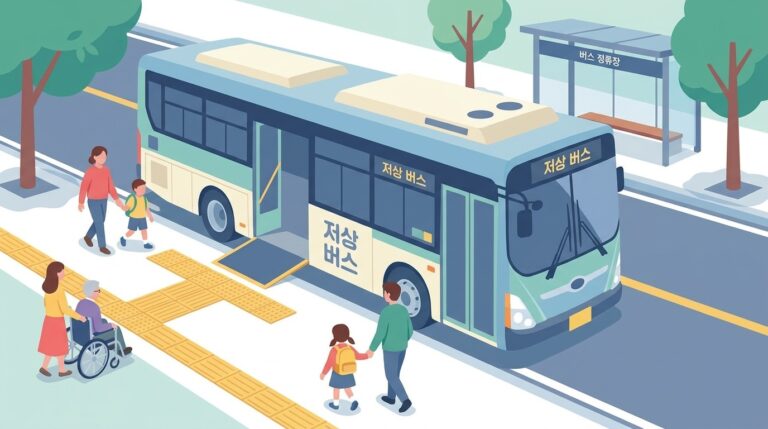
Imagine walking through the bustling center of Seoul—say, near Gwanghwamun or Hongdae. As you look around, you notice yellow tactile paving blocks on the pavement, smooth ramps alongside stairs, and modern low-floor buses pulling up to the curb. Suddenly, you encounter a lively public rally where advocates are passionately calling for better subway elevator access and expanded transit routes. You want to engage in this nuanced conversation, understand the social dynamics behind Korea’s civil advocacy movements, and express your thoughts with sophisticated, respectful language. However, textbook phrases like “장애인을 도웁시다” (Let’s help disabled people) feel overly simplistic and patronizing for a C1-level communicator.
Navigating discussion on social inequality, welfare, and disability mobility rights (장애인 이동권) requires native-level sensitivity, cultural awareness, and precise vocabulary. By mastering higher-level civic terms and expressions, you transition from a passive foreigner to an insightful, empathetic participant in contemporary Korean discourse. Today’s guide—crafted from real-world conversations and socio-cultural feedback—will empower you to articulate complex arguments about non-discrimination (차별 금지) and public welfare with confidence and nuance.
Phase 2: Deep Dive into 3 Key Expressions
1. 이동권을 보장하다 (Idong-gwoneul bojang-hada)
- Pronunciation: [ee-dong-gwone-eul bo-jang-ha-da] (Sounds like “ee-dong” + “gwon” as in ‘kwon’ + “bo-jang-ha-da”)
- Meaning: Literally “To guarantee mobility rights.” In practice, it refers to legally, structurally, and socially ensuring that every citizen—regardless of physical ability—can move freely using public transit and infrastructure.
- K-Culture Moment: You will frequently hear this phrase in Korean news broadcasts covering public welfare reforms, documentary series highlighting urban accessibility, or debates on local governance.
- Editor’s Insight: At the C1 level, replacing basic verbs like “이동하다” (to move) with “이동권을 보장하다” elevates your rhetoric from simple description to systemic advocacy. It highlights rights (권리), not merely convenience.
- Situation Spectrum: Casual 🚫 | Semi-formal ⚠️ | Formal ✅
- 🤔 Think About It: How does phrasing mobility as a fundamental right (권리) rather than a benefit change the public obligation of municipal transit systems in your country?
2. 턱을 낮추다 (Teog-eul natchuda)
- Pronunciation: [teog-eul nat-chu-da] (Sounds like “tog” + “eul” + “not-choo-da”)
- Meaning: Literally “To lower the physical threshold/curb.” Idiomatically, it means to break down social barriers, eliminate systemic entry obstacles, or make services and places accessible to all.
- K-Culture Moment: Used broadly in Korean media, from social campaigns advocating for ramp installations in cafes to policy discussions on lowering socio-economic hurdles for public programs.
- Editor’s Insight: This is a versatile metaphor. You can use it literally when discussing wheelchair ramps, or figuratively when discussing making higher education or legal aid accessible.
- Situation Spectrum: Casual ✅ | Semi-formal ✅ | Formal ✅
- 🤔 Think About It: Is there an equivalent physical metaphor in your native language used to describe institutional accessibility?
3. 차별 없는 사회를 만들다 (Chabyeol eobsneun sahaereul mandeulda)
- Pronunciation: [cha-byeol eobs-neun sa-hoe-reul man-deul-da] (Sounds like “cha-byol” + “up-neun” + “sah-hoe-reul”)
- Meaning: To construct/create a discrimination-free society.
- K-Culture Moment: A core slogan seen in Korean non-profit initiatives, human rights charters, and inclusive K-Drama story arcs that champion minority rights.
- Editor’s Insight: Notice the active verb 만들다 (to make/build). It conveys collective social responsibility and conscious civil effort rather than a passive wish.
- Situation Spectrum: Casual ⚠️ | Semi-formal ✅ | Formal ✅
- 🤔 Think About It: What specific legislative measures come to mind in your culture when you hear the phrase “a discrimination-free society”?
Phase 3: Textbook Korean vs. Real Korean
Situation 1: Discussing Physical Accessibility in Urban Areas
- 📖 Textbook Korean: 장애인을 위해 계단 대신 경사로를 만들어야 합니다. (We must build ramps instead of stairs for disabled people.)
- 🗣️ Real Korean: 물리적 턱을 낮추고 배리어 프리 환경을 구축하는 것이 시급해요. (Lowering physical barriers and establishing a barrier-free environment is an urgent priority.)
- 💡 Why is it different? While the textbook sentence is grammatically correct, real C1 Korean utilizes precise socio-political terms like 배리어 프리 (Barrier-Free) and 구축하다 (to establish/build) to express systemic urgency.
Situation 2: Commenting on Public Transport Infrastructure
- 📖 Textbook Korean: 버스가 불편해서 장애인이 타기 힘들어요. (Buses are uncomfortable, so disabled people have a hard time riding them.)
- 🗣️ Real Korean: 저상버스 도입률을 높여서 교통약자의 이동권을 실질적으로 보장해야 합니다. (We need to increase the adoption rate of low-floor buses to substantially guarantee mobility rights for vulnerable commuters.)
- 💡 Why is it different? Educated native speakers use terms like 교통약자 (transportation vulnerable) and 저상버스 (low-floor bus) to address systemic public transit discussions comprehensively.
Phase 4: K-Culture Deep Dive & Non-Verbal Manners
4-1. Nunchi & Gestures: Respectful Assistance Protocol
When offering assistance to someone with a mobility impairment in Korea, 눈치 (cultural sense and tact) plays a crucial role. Avoid rushing in or grabbing someone’s wheelchair or guiding cane without permission, as this can be perceived as patronizing. Instead, maintain respectful eye contact at their level, place your hands gently together, and ask politely:
* “혹시 제가 도움을 드려도 괜찮을까요?” (May I offer you some assistance?)
Wait for explicit consent before taking action. Respect personal space and independence.
4-2. Culture Code: Representation in K-Media
Korean media has increasingly engaged with accessibility and neurodiversity. Shows like Our Blues (우리들의 블루스) featured actors with Down syndrome and deaf actors, opening nationwide dialogues on inclusion. Similarly, public debates surrounding subway elevator installations by disability rights groups (such as SADD/전장연) have sparked discussions across social media, pushing local governments to accelerate universal design initiatives in public transit.
Phase 5: Interactive Roleplay Scenario
Setting: A public community forum on urban policy in Seoul. You (Min-jun) are talking with Soo-jin, a civic advocate for accessible public infrastructure.
- Turn 1 (Soo-jin): 🎭 (pointing to a city transit map with a serious expression)
수진: 아직도 수도권 지하철역 중 엘리베이터가 설치되지 않은 곳이 많아요.
(Ajik-do sudogwon jiNodeul-yeok jung ellibeiteoga seolchidoeji aneun gosi man-ayo.)
“There are still many subway stations in the capital region lacking elevators.” -
Turn 2 (Min-jun): 🎭 (nodding thoughtfully with empathy)
민준: 맞습니다. 교통약자의 이동권 보장은 기본권의 문제인데요.
(Mat-seumnida. Gyotong-yakja-ui idong-gwon bojang-eun gibongwon-ui munjende-yo.)
“That’s right. Guaranteeing mobility rights for transportation vulnerable citizens is a fundamental human right.” -
Turn 3 (Soo-jin): 🎭 (leaning forward intently)
수진: 그렇죠. 단순한 편의 제공이 아니라 차별 없는 사회를 위한 필수 조건이죠.
(Geureochjo. Dansunhan pyeoni jegong-i anira chabyeol eobsneun sahaereul wi-han pilsu jogeon-ijyo.)
“Exactly. It’s not a mere convenience; it’s an essential condition for a discrimination-free society.” -
Turn 4 (Min-jun): 🎭 (gesturing toward a policy proposal draft)
민준: 저상버스 확대와 예산 확보가 시급하다고 생각합니다.
(Jeosang-beoseu hwagdae-wa yesan hwagboga sigeub-hadago saeng-gak-hamnida.)
“I believe expanding low-floor buses and securing budget allocations are urgent priorities.” -
Turn 5 (Soo-jin): 🎭 (smiling softly, appreciating your understanding)
수진: 민준 씨처럼 인식을 개선하려고 노력하는 분들이 많아져서 다행이에요.
(Min-jun ssicheoreom insig-eul gaisenharyeogo noreok-haneun bunduri man-ajyeoseo dahaeng-ieyo.)
“I’m glad there are more people like you, Min-jun, striving to improve public awareness.” -
Turn 6 (Min-jun): 🎭 (speaking with conviction)
민준: 우리 모두가 보이지 않는 턱을 낮추는 데 동참해야죠.
(Uri moduga bo-iji aneun teog-eul natchuneun de dongcham-haeya-jyo.)
“We must all participate in lowering these invisible hurdles.” -
Turn 7 (Soo-jin): 🎭 (handing you a campaign flyer)
수진: 다음 주 시민 연대 서명 운동에도 함께해 주실 수 있나요?
(Daeum ju simin yeondae seomyeong undong-edo hamkke-hae jusil su innayo?)
“Could you also join our civic alliance petition campaign next week?” -
Turn 8 (Min-jun): 🎭 (accepting the flyer firmly)
민준: 물론입니다! 적극적으로 참여하고 주변에도 알리겠습니다.
(Mullon-imnida! Jeokgeuk-jeog-euro cham-yeohago jubyeon-edo alligessumnida.)
“Of course! I will actively participate and spread the word to others.”
🔀 Interactive Branching Choice
How should Min-jun respond when asked to sign the civic petition?
- Option A: “바빠서 좀 어렵지만, 나중에 생각해 볼게요.” (Bad choice: Sounds dismissive and indifferent.)
- Option B: “물론입니다! 교통약자의 이동권 보장에 힘을 보태겠습니다.” (BEST CHOICE: Highly articulate, empathetic, and C1 appropriate.)
- Option C: “장애인만 위한 정책은 불공평하지 않나요?” (RISK: Highly controversial and lacks understanding of systemic rights.)
Feedback:
* Option A (Bad): Fails to maintain the constructive dialogue built during the conversation.
* Option B (Best): Uses formal advocacy terms (교통약자, 이동권 보장, 힘을 보태다) smoothly.
* Option C (Risk): Ignores public welfare principles and risks alienating your conversation partner.
Phase 6: 10-Second Emotion Shadowing Drill
Practice these lines aloud to capture natural Korean intonation and emotional weight:
[😊 굳은 의지를 담아]
교통약자의 / 이동권 보장은 / 선택이 아니라 / 필수입니다!
(Gyotong-yakja-ui / idong-gwon bojang-eun / seontaeg-i anira / pilsu-imnida!)-
[🥺 공감하며 따뜻하게]
우리 사회가 / 함께 턱을 낮추면 / 모두가 편해집니다.
(Uri sahaega / hamkke teog-eul natchumyeon / moduga pyeon-haejimnida.) -
[✊ 진정성 있게]
차별 없는 사회를 만드는 일에 / 저도 적극 동참하겠습니다!
(Chabyeol eobsneun sahaereul mandeuneun ire / jeodo jeokgeuk dongcham-hagessumnida!)
Phase 7: K-Culture Mini Dictionary
-
저상버스 (Jeosang-beoseu) | Low-floor bus
- Definition: Buses with low floor height and no entry steps, fitted with ramps for wheelchair access.
- Usage: Standard in municipal public transit policy announcements.
- 점자블록 (Jeomja-beullok) | Tactile paving / Braille blocks
- Definition: Textured ground surface indicators to assist visually impaired pedestrians.
- Usage: Commonly mentioned when auditing sidewalk accessibility.
- 교통약자 (Gyotong-yakja) | Transportation vulnerable commuters
- Definition: Umbrella legal and social term encompassing people with disabilities, seniors, pregnant women, and children.
- Usage: Key vocabulary in transit laws and city planning.
- 배리어 프리 (Baerieo Peurii) | Barrier-Free
- Definition: Loanword used widely in Korea to signify products, facilities, and environments designed without accessibility obstacles.
- Usage: Seen on venue certifications, public cinema screenings with subtitles/audio descriptions, and architectural plans.
Phase 8: Survival Kit for Travelers
TOP 3 Accessibility Expressions
- 여기 휠체어 경사로가 있나요? (Yeogi hwilche-eo gyeongsaroga innayo?)
- Pro Tip: Use this at cafes, museums, or station entrances to inquire about ramp access.
- 엘리베이터 위치를 알려주시겠어요? (Ellibeiteo wichireul allyeojusigesseoyo?)
- Pro Tip: Essential when navigating multi-level Korean subway hubs.
- 도움이 필요하시면 말씀해 주세요. (Doum-i pil-yohasimyeon malssumhae juseyo.)
- Pro Tip: The standard, highly polite phrase to offer help to anyone in need.
Editor’s Travel Note
When exploring Seoul, planning accessible routes ahead of time makes all the difference. You can check station elevator statuses and accessible exit routes directly through the 네이버 지도 앱 지하철 편의시설 정보. Additionally, major subway lines feature voice-guided arrival announcements and tactile floor layouts.
Phase 9: “One Step Deeper” (Cultural Reflection)
Language reflects societal priority. In modern Korea, the shift from viewing disability support as passive charity (시혜) to legal rights (권리) is visibly transforming both speech and infrastructure. When you use terms like 이동권 (mobility rights) and 장벽 허물기 (dismantling barriers), you demonstrate respect for the ongoing democratic and civil efforts shaping inclusive modern Korean society.
💬 Your Turn: What steps is your hometown taking to guarantee mobility rights for all citizens? Share your thoughts in Korean in the comments below!
Phase 10: FAQ & Common Mistakes
Q: Is the term ‘장애자’ (Jang-ae-ja) acceptable to use?
A: No. The term ‘장애자’ is outdated and carries insensitive connotations. Always use the respectful legal and social term 장애인 (Jang-ae-in).
Q: What is the official term for priority seating in public transport?
A: It is called 교통약자석 (Gyotong-yakja-seok) or 배려석 (Baeryeo-seok). These seats are reserved for seniors, pregnant women, and individuals with disabilities.
Q: How can I describe a movie with audio descriptions and subtitles?
A: You should call it a 배리어프리 영화 (Barrier-Free movie).
🚨 Common Mistakes Alert
- ❌ Mistake 1: Saying “불구자” or “장애자”.
- ✅ Correct Action: Always use 장애인 (Person with disabilities).
- ❌ Mistake 2: Saying “장애인을 도와줘야 해요” in formal debates.
- ✅ Correct Action: Say “장애인의 이동권과 접근성을 보장해야 합니다.”
- ❌ Mistake 3: Confusing “교통약자” with general passengers.
- ✅ Correct Action: Remember that 교통약자 specifically targets those requiring transit accessibility support.
Phase 11: Action Mission
- 🥉 Bronze Mission (Self Practice): Say the sentence “턱을 낮추고 배리어 프리 환경을 만들어요” three times out loud using correct shadowing emotions.
- 🥈 Silver Mission (Social Media): Post a short comment in Korean under a video about urban planning using the term 이동권 보장.
- 🥇 Gold Mission (Real Life Application): The next time you give transit directions, practice identifying and describing accessible exits and elevators in Korean.
- 🎮 K-Culture Mission: Watch a clip of Our Blues or a Korean documentary on urban transit, and listen for the words 저상버스 or 배리어 프리!
Phase 12: Interactive Quiz Challenge
Question 1 (Fill in the blank)
교통약자의 ( )을/를 보장하기 위해 저상버스를 늘려야 합니다.
Click for Answer & Explanation
Answer: 이동권 (Idong-gwon)
Explanation: 이동권 refers to mobility rights, completing the sentence: “To guarantee the mobility rights of transportation-vulnerable citizens, we must increase low-floor buses.”
Question 2 (True or False)
In Korea, it is acceptable to use the term ‘장애자’ in official news broadcasts.
Click for Answer & Explanation
Answer: False
Explanation: ‘장애자’ is outdated and inappropriate. The correct, respectful term is 장애인.
Question 3 (Scenario Judgment)
Which phrase metaphorically means to eliminate social obstacles and entry barriers?
- A) 목소리를 높이다
- B) 턱을 낮추다
- C) 발을 넓히다
Click for Answer & Explanation
Answer: B) 턱을 낮추다
Explanation: 턱을 낮추다 literally means lowering a curb/threshold, and metaphorically means breaking down social barriers and improving accessibility.







