

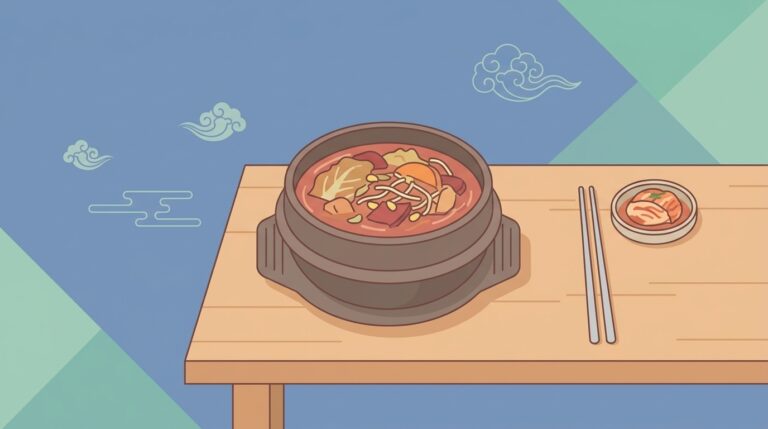
Phase 1: Empathy & K-Culture Scene
안녕하세요! 매일한글 에디터입니다.
Picture this: You spent an unforgettable night in Seoul, navigating a lively hoesik (company dinner) or hopping between vibrant pocha spots in Hongdae. You mastered pouring drinks with two hands, clinked glasses politely, and enjoyed the delicious pairing of Soju and Samgyeopsal. But then morning arrives. Your head feels like it’s throbbing, your stomach is doing backflips, and you realize you may have pushed your limits.
In Korea, alcohol is a deep social lubricant, but what comes after drinking is an entire cultural domain of its own. Foreign learners often struggle here—how do you gracefully express that you’ve reached your limit without offending your peers? How do you ask for an authentic Korean hangover cure like a local, using natural, sophisticated phrasing rather than dictionary-flat translations?
If you have ever felt embarrassed or lost trying to navigate post-drinking conversations in Korea, this guide is crafted specifically for you. Based on feedback from hundreds of advanced Korean language learners, we are going to dive into high-level, natural expressions that will elevate your conversational game. Mastering these expressions won’t just save your stomach—it will show your Korean friends and colleagues that you truly understand the heart of Korean social etiquette.
Phase 2: Core Expressions Deep Dive
1. 속을 풀어주다 (Sog-eul pureo-juda)
- Pronunciation: [Sog-eul pureo-juda] (Sounds like “sohk-eul poo-reh-joo-dah”)
- Meaning: Literal: “To untie/soothe the stomach.” Nuance: To eat warm, savory, or spicy food (like hangover soup) to relieve a hangover and calm an upset stomach.
- K-Culture Moment: Seen in almost every K-Drama when characters gather at 7 AM at a Haejangguk restaurant, steam rising from stone pots, slowly sipping broth to recover from the previous night’s drama.
- Editor’s Insight: This isn’t just about digestion; it’s a sensory expression of recovery. When you say “속을 풀어줘야 해요,” you are inviting someone into a shared ritual of healing.
- Situation Spectrum: Casual ✅ | Semi-formal ✅ | Formal ✅
- 🤔 Think About It: In your home culture, is recovering from alcohol a private, medical task, or a social, food-centered ritual like in Korea?
2. 제 량을 넘겼어요 (Je ryang-eul neom-gyeoss-eo-yo)
- Pronunciation: [Je-ryang-eul neom-gyeoss-eo-yo] (Sounds like “jeh-ryahng-eul neohm-gyeo-sseh-yo”)
- Meaning: Literal: “I exceeded my capacity/quantity.” Nuance: A refined, polite way to decline another drink or explain your current hangover state without sounding overly informal.
- K-Culture Moment: At a semi-formal dinner with senior colleagues where saying a blunt “No” or “I’m drunk” would disrupt the harmonious atmosphere (Nunchi).
- Editor’s Insight: C1-level speakers avoid crude terms for being wasted. Using “제 량을 넘겼습니다” shows high self-awareness and impeccable manners.
- Situation Spectrum: Casual ✅ | Semi-formal ✅ | Formal ✅
- 🤔 Think About It: How does taking personal responsibility for your limit help maintain social harmony in hierarchical settings?
3. 취기를 가라앉히다 (Chwi-gi-reul ga-ra-anj-hi-da)
- Pronunciation: [Chwi-gi-reul ga-ra-anj-hi-da] (Sounds like “chwee-gee-reul gah-rah-ahn-chee-dah”)
- Meaning: Literal: “To settle down the buzz of alcohol.” Nuance: To intentionally take steps to cool down, sober up, or regain composure during or after drinking.
- K-Culture Moment: Stepping out of a noisy Pocha for cold air, drinking an ice-cold hangover drink from a convenience store, or drinking warm tea before heading home.
- Editor’s Insight: Active drunkenness control is respected in Korea. This phrase highlights self-discipline even while participating in alcohol culture.
- Situation Spectrum: Casual ⚠️ | Semi-formal ✅ | Formal ✅
- 🤔 Think About It: Why is maintaining physical composure considered a key component of adult social etiquette in Korea?
Phase 3: Textbook Korean vs. Real Korean
Situation 1: Expressing a Severe Hangover
- 📖 Textbook Korean: 저는 숙취가 심합니다. (Jeoneun sukchwiga simhamnida. – “I have a severe hangover.”)
- 🗣️ Real Korean: 아, 오늘 머리 깨질 것 같고 속이 완전히 뒤집혔어요. (Ah, oneul meori kkaejil geot gatgo sogi wanjeonhi dwijiphyeosseoyo. – “Ah, my head feels like it’s going to split open and my stomach is completely upside down.”)
- 💡 Why the Difference? Native speakers describe specific physical sensations vividly. Expressing discomfort through imagery like “속이 뒤집히다” (stomach turned inside out) conveys genuine distress and invites empathetic responses like offering hangover drinks.
Situation 2: Declining Drinks Politely to Maintain Health
- 📖 Textbook Korean: 더 마시면 안 됩니다. (Deo masimyeon an doemnida. – “I must not drink more.”)
- 🗣️ Real Korean: 마음은 더 하고 싶은데, 오늘은 건강을 생각해서 딱 즐거울 정도로만 마무리할게요. (Maeumeun deo hago sip-eunde, oneureun geongangeul saenggakhaeseo ttak jeulgeoul jeongdoroman mamurihalgeyo. – “My heart wants to continue, but considering my health, I’ll wrap up right at the pleasant limit today.”)
- 💡 Why the Difference? Direct refusals can feel abrupt. C1 speakers validate the social connection first (“I’d love to stay”) before setting a healthy boundary.
Phase 4: K-Culture Deep Dive & Non-Verbal Manners
4-1. Nunchi & Body Language
- The Gentle Hand Touch: When stating that your stomach is upset or that you’ve reached your limit, lightly place your right hand over your upper abdomen or stomach while slightly tilting your head. It visually reinforces your physical state with humility.
- Polite Refusal Gesture: Never push a glass away abruptly. Instead, hold the glass lightly with both hands, lower it slightly below your senior’s eye level, and say your polite refusal.
4-2. Cultural Code: The Ritual of Haejang (해장)
In Korea, recovery is not an afterthought; it is an institution. Convenience stores display anti-hangover drinks (Sukchwi-haesoje) right next to the entrance cash register. The morning after drinking, friends or coworkers often text each other not to ask “How are you?” but “해장 하셨어요?” (Did you have your hangover meal?). Joining someone for hangover soup (Haejangguk) is considered the ultimate sign of solidarity.
Phase 5: Practical Roleplay Scenario
Setting: Morning after a major company event. You and your Korean senior colleague (Sunbae) meet at a legendary Haejangguk restaurant near the office.
Characters:
* 선배 (Sunbae): Caring but observant senior.
* 유진 (You): C1 Korean learner navigating post-drinking health and courtesy.
Dialogue
- 선배: 🎭 (걱정스러운 눈빛으로 당신을 바라보며) 유진 씨, 어제 술 좀 많이 마셨죠? 얼굴이 아직 좀 해쓱해요.
(Yujin, you drank quite a bit yesterday, right? Your face still looks a bit pale.) - 유진: 🎭 (손을 배에 대고 민망한 듯 웃으며) 네, 선배님. 어제 분위기가 좋아서 제 량을 좀 넘겼나 봐요.
(Ne, seonbaenim. Eoje bunwigiga joahaseo je ryangeul jom neomgyeonna bwayo.)
(Yes, Sunbae. The atmosphere was so great yesterday that I think I exceeded my limit.) - 선배: 🎭 (주문판을 가리키며) 역시 그랬군요! 빨리 속을 풀어줘야 해요. 여기 콩나물해장국이 전문인데 어때요?
(I knew it! We need to soothe your stomach right away. They specialize in bean sprout hangover soup here, how about that?) - 유진: 🎭 (고개를 끄덕이며 반가워하는 표정) 와, 좋아요! 따뜻한 국물로 취기를 확실히 가라앉혀야겠어요.
(Wa, joayo! Ttatteutan gungmullo chwigireul hwaksilhi garaanthyeoyagess-eoyo.)
(Wow, sounds great! I definitely need to settle the remaining buzz with warm broth.) - 선배: 🎭 (미소를 지으며) 그래요. 음주도 건강하게 해야 오래 즐겁게 마시는 법이죠.
(Indeed. Drinking healthily is how you enjoy it for a long time.) - 유진: 🎭 (진지하고 예의 바르게) 맞아요. 앞으로는 제 체력에 맞게 조절하면서 마시려고요.
(Maj-ayo. Ap-euroneun je chaeryeog-e matge jojeolhamyeonseo masiryeogoyo.)
(That’s right. From now on, I plan to pace myself according to my physical stamina.) - 선배: 🎭 (해장국이 나오자 숟가락을 챙겨주며) 자, 국물 먼저 한 입 떠먹어 봐요. 속이 좀 풀릴 거예요.
(Here, try a spoonful of broth first. It will soothe your stomach.) - 유진: 🎭 (두 손으로 국밥 그릇 근처를 받치며) 잘 먹겠습니다! 진짜 속이 확 풀리는 기분이에요.
(Jal meokgeosseumnida! Jinjja sog-i hwak pullineun gibun-ieyo.)
(Thank you for the food! I really feel my stomach untying completely.)
🔀 Interactive Choice Point
After eating, your Sunbae offers: “이따 점심때 숙취해소 음료 하나 더 사줄까요?” (Shall I buy you another hangover drink at lunchtime?)
- Option A: “아니요, 됐습니다. 이미 다 나았습니다.” (Direct refusal)
- Option B: “와, 선배님! 챙겨주셔서 감사합니다. 덕분에 속이 완전히 살 것 같아요!” (Warm gratitude & agreement)
- Option C: “약 먹었으니까 안 사주셔도 돼요.” (Informal/dry statement)
Feedback:
* Option A (Risk): Too blunt. It shuts down the colleague’s caring gesture abruptly.
* Option B (Best): Perfect! Expresses enthusiasm, deep gratitude, and uses high-level emotional phrasing (“속이 살 것 같다”).
* Option C (Bad): Overly transactional and lacks proper C1 politeness registers.
Phase 6: 10-Second Emotion Shadowing Drill
Practice these lines with rhythm and authentic emotional cadence! (/ indicates a natural breathing pause)
[🥴 헛웃음을 지으며 민망하게]
어제 분위기가 좋아서 / 제 량을 / 좀 넘겼나 봐요.
(Eoje bunwigiga joahaseo / je ryangeul / jom neomgyeonna bwayo.)-
[😌 안도하며 기대감을 담아]
따뜻한 국물로 / 취기를 확실히 / 가라앉혀야겠어요.
(Ttatteutan gungmullo / chwigireul hwaksilhi / garaanthyeoyagess-eoyo.) -
[😊 감격하고 시원해하며]
와, 국물 한 입 먹으니까 / 속이 확 / 풀리는 기분이에요!
(Wa, gungmul han ip meogeunikka / sog-i hwak / pullineun gibun-ieyo!)
Phase 7: K-Culture Mini Dictionary
- 해장 (Haejang) | Hangover recovery | The cultural practice of relieving alcohol distress through warm soups, teas, or hydration.
- 숙취해소제 (Sukchwi-haesoje) | Hangover remedy product | Functional drinks, pills, or jellies sold in Korean convenience stores specially formulated to process acetaldehyde.
- 차수 (Cha-su: 1차, 2차, 3차) | Drinking rounds | The multi-stage structure of Korean nights out (Round 1: Dinner/Soju, Round 2: Beer/Pub, Round 3: Karaoke/Noraebang).
- 흑기사 / 흑장미 (Heuk-gisa / Heuk-jangmi) | Black Knight / Black Rose | Someone who drinks a glass on your behalf to save you from a penalty; in return, you owe them a wish.
Phase 8: Traveler’s Survival Kit
Top 3 Survival Expressions
- “여기에 해장으로 가장 잘 나가는 메뉴가 뭐예요?”
(Yeogie haejang-euro gajang jal naganeun menyuga mwo-yeyo?)
Pro Tip: Use this at any soup restaurant to get the chef’s best hangover remedy broth. - “숙취해소제 하나만 추천해 주세요.”
(Sukchwi-haesoje hanaman chucheonhae juseyo.)
Pro Tip: Say this to a clerk at any local convenience store when you feel overwhelmed by the beverage options. - “죄송하지만 오늘은 더 마시면 속이 탈 날 것 같아요.”
(Joesonghajiman oneureun deo masimyeon sog-i tal nal geot gat-ayo.)
Pro Tip: A polite, foolproof excuse explaining that more alcohol will cause genuine illness.
Editor’s Travel Note
When navigating Korean night life and morning-after recovery, download the Naver Map App to locate 24-hour Haejangguk (해장국) spots near your lodging. For late-night transport when feeling unwell, use local ride-hailing services directly to ensure a safe journey back.
Phase 9: One Step Deeper (Reflection)
Korean alcohol culture is undergoing a dramatic generational transformation. Historically centered around group bonding and energetic multi-round dinners, modern Korean society increasingly values personal boundaries, wellness, and “건강한 음주 문화” (healthy drinking culture). Today, declining a drink due to health or choosing non-alcoholic alternatives is respected when communicated with grace. Understanding hangover care in Korea isn’t just about surviving alcohol—it reflects a culture that balances intense social connection with mutual care and bodily recovery.
💬 Your Turn: How does your culture handle post-celebration recovery and setting personal drinking boundaries? Share your thoughts in the comments below!
Phase 10: FAQ & Common Mistakes
Q: Is it rude to drink hangover remedies during a drinking gathering?
A: Not at all! In fact, buying Sukchwi-haesoje for your drinking companions before starting the night is considered an incredibly thoughtful and charming gesture that earns major social points.
Q: What is the most polite way to stop drinking at a company dinner?
A: Acknowledge the fun mood first, express your current physical boundary gently using high-level phrasing like “제 량을 넘겼습니다” or “건강을 생각해 조절하겠습니다”, and switch your glass to water or carbonated drinks.
Q: Does hangover soup always have to be spicy?
A: No! While red soups like 뼈해장국 (Ppyeo-haejangguk) are popular, non-spicy clear broths like 콩나물국밥 (bean sprout soup) or 북엇국 (dried pollack soup) are scientifically considered even better for soothing an upset stomach.
🚨 Common Mistakes TOP 3
- Mistake: Saying “저는 술을 싫어합니다” (I hate alcohol) abruptly when offered a drink.
- Correct Action: Use soft boundaries: “마음은 함께하고 싶은데, 건강상 술을 잘 못 마십니다” (I’d love to join in spirit, but due to health I can’t drink well).
- Mistake: Pouring your own hangover water while sitting at a table with seniors without pouring theirs first.
- Correct Action: Always pour water for elders or seniors at the table first before filling your own glass.
- Mistake: Using overly casual slang like “떡이 됐다” (got totally smashed) in professional or semi-formal settings.
- Correct Action: Stick to refined expressions like “과음을 해서 속을 정리하고 있습니다”.
Phase 11: Action Mission
- 🥉 Bronze Mission: Read the Phase 6 Emotion Shadowing sentences aloud 3 times with realistic facial expressions.
- 🥈 Silver Mission: Post a comment below using the core phrase “속을 풀어주다” in a complete sentence.
- 🥇 Gold Mission: Next time you visit a Korean convenience store or restaurant, ask the clerk/staff for a recommendation using: “숙취해소에 가장 좋은 것이 뭐예요?”
🎮 K-Culture Mission: Watch a contemporary K-Drama office scene and spot when characters step out for a hangover drink or eat warm soup together the morning after a dinner!
Phase 12: Interactive Quiz Challenge
Q1. Situation Judgment
When you want to explain politely to a Korean senior that you drank too much yesterday and reached your limit, which phrase is the most sophisticated and appropriate?
* A) 어제 완전 떡이 되었어요.
* B) 어제 분위기가 좋아서 제 량을 좀 넘겼습니다.
* C) 어제 술이 맛없어서 그만 마셨어요.
🔍 Click to reveal Answer & Explanation
Correct Answer: B
Explanation: “제 량을 넘겼습니다” is a polished, C1-level expression that takes responsibility while maintaining refined etiquette. Option A is overly informal slang, and Option C sounds blunt and rude.
Q2. Fill-in-the-Blank
Fill in the missing phrase: “따뜻한 콩나물국을 먹으니까 비로소 _____ 느낌이에요.” (Because I ate warm bean sprout soup, I finally feel like my stomach is untied/soothed.)
* A) 머리가 아픈
* B) 속이 풀리는
* C) 취기가 오르는
🔍 Click to reveal Answer & Explanation
Correct Answer: B
Explanation: “속이 풀리다” means to have one’s upset stomach relieved or untied by warm soup or recovery food.
Q3. True/False Culture Quiz
In Korea, buying hangover drinks (Sukchwi-haesoje) for your drinking companions before starting a night out is considered impolite because it assumes they will overdrink. (True / False)
🔍 Click to reveal Answer & Explanation
Correct Answer: False
Explanation: It is actually seen as a highly considerate and caring gesture that builds camaraderie and shows strong Nunchi.







