

Phase 1: Empathy & Warm Welcome
안녕하세요! This is your Lead Editor from Daily Hangul (매일한글), your trusted local culture navigator!
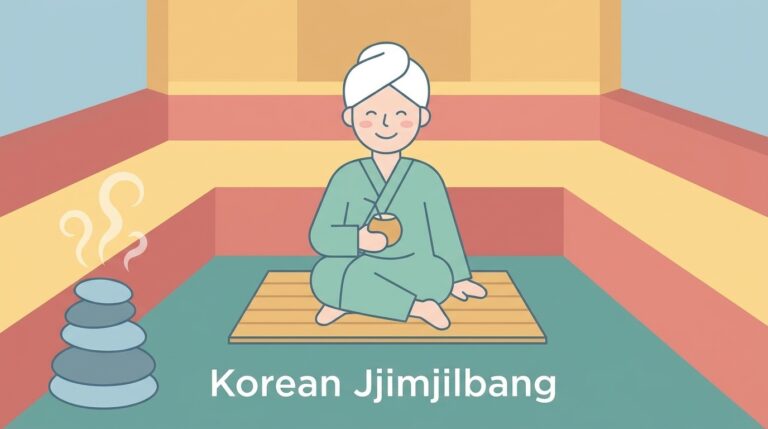
Have you ever watched a classic K-Drama scene where characters relax in a cozy sauna, wearing those adorable towel hats shaped like cute little sheep heads, sipping cold sweet rice juice (sikhye), and cracking hard-boiled eggs against their foreheads? If you’ve ever stepped into a traditional Korean bathhouse (Jjimjilbang, 찜질방) for the first time, you might have felt a mix of excitement and confusion. “How on earth do they roll that bath towel into a sheep head shape?” or “What if I accidentally use the wrong phrase when ordering snacks in my sauna clothes?”
Don’t worry at all! Making a sheep head towel (yang-meori, 양머리) isn’t just a quirky fashion statement—it’s a beloved cultural rite of passage that instantly transforms you from an outsider to a seasoned local insider. Today, based on feedback from hundreds of our adult learners, we are unlocking the exact step-by-step techniques, essential bathhouse vocabulary, and non-verbal etiquette so you can confidently walk into any Korean Jjimjilbang like a native!
Phase 2: Top 3 Key Expressions Deep Dive
1. 양머리 만드는 법 좀 알려주세요! (Yang-meori man-deu-neun beop jom al-ryeo-ju-se-yo!)
- Pronunciation: [Yang-mush-ree man-doo-neun beop jom al-ryuh-joo-seh-yo] (Sounds like “Yang-mush-ree” with a soft ‘r’)
- Meaning: “Could you please show me how to make a sheep head towel?”
- K-Culture Moment: Asking a friendly sauna regular or worker when your towel keeps unrolling.
- Editor’s Insight: Adding ‘좀’ (jom – please/kindly) softens the request naturally. Without it, the phrase might sound a bit too direct!
- Situation Spectrum: Casual ⚠️ | Semi-formal ✅ | Formal ✅
- 🤔 Think About It: In Korean culture, asking for small favors in a public space like a sauna creates a warm sense of community (jeong, 정). How does asking strangers for help differ in your home culture?
2. 식혜 하나랑 구운 계란 주세요. (Sikhye ha-na-rang gu-un gye-ran ju-se-yo.)
- Pronunciation: [Seek-hyeh ha-na-rang goo-oon gyeh-ran joo-seh-yo]
- Meaning: “One sweet rice drink and baked eggs, please.”
- K-Culture Moment: Walking up to the snack counter (majeom) drenched in sweat and ordering the ultimate Jjimjilbang fuel.
- Editor’s Insight: ‘랑’ (rang) means “and” in conversational speech. It’s much more natural than the formal textbook word ‘그리고’ (geuri-go) when ordering food!
- Situation Spectrum: Casual ✅ | Semi-formal ✅ | Formal ⚠️
- 🤔 Think About It: Why are cold drinks and warm protein snacks paired together in Korean saunas? It reflects the traditional Korean wellness principle of balancing hot and cold energies (Eum-Yang, 음양)!
3. 피로가 싹 풀려요! (Piro-ga ssak pul-ryeo-yo!)
- Pronunciation: [Pee-ro-ga ssak pool-ryuh-yo]
- Meaning: “My fatigue is completely melting away!”
- K-Culture Moment: Exclaiming with satisfaction while soaking in a hot herbal tub or lying on a heated onyx floor.
- Editor’s Insight: ‘싹’ (ssak) is an expressive sound-symbolic word meaning “completely” or “swept away clean.” Using it makes you sound exceptionally fluent!
- Situation Spectrum: Casual ✅ | Semi-formal ✅ | Formal ✅
- 🤔 Think About It: Korean stress relief vocabulary often focuses on physical release (풀다 – to untie/unwind). How does your language express relieving mental or physical fatigue?
Phase 3: Textbook Korean vs. Real Native Korean
Situation 1: Asking how to roll the towel
- 📖 Textbook Korean: 타월을 어떻게 접어야 합니까? (Ta-wol-eul eo-tteoh-ge jeob-eo-ya hap-ni-ka?) – “How should I fold the towel?”
- 🗣️ Real Native Korean: 양머리 어떻게 접어요? (Yang-meori eo-tteoh-ge jeob-eo-yo?) – “How do I fold the sheep head?”
- 💡 Why the difference? Locals don’t say “towel” (tawol) when talking about the iconic shape; they directly refer to it as ‘양머리’ (sheep head). Using polite informal ending ‘-아/어-요’ is friendly yet respectful.
Situation 2: Asking if a sauna room is too hot
- 📖 Textbook Korean: 이 방은 매우 뜨겁습니까? (I bang-eun mae-u tteu-geop-seum-ni-ka?) – “Is this room very hot?”
- 🗣️ Real Native Korean: 여기 많이 뜨거워요? (Yeo-gi man-i tteu-geo-weo-yo?) – “Is it super hot in here?”
- 💡 Why the difference? Native speakers prefer ‘여기’ (here) and ‘많이’ (a lot/super) over stiff textbook terms like ‘매우’.
Phase 4: K-Culture Deep Dive & Non-verbal Manners
4-1. Nunchi (눈치) & Body Language Tips
- Towel Etiquette: Never drop your towel into the communal hot bath water! Place it on top of your head or on the side ledge. Dropping it in the bath is a major etiquette slip-up.
- Making the Sheep Head: Fold the small bath towel horizontally into thirds longwise. Then, roll both ends outward tightly like rolling up sleeve cuffs until it fits snugly onto your head.
- The Egg Crack: When cracking a roasted egg, don’t bang it loudly on the wooden tables! The classic K-Drama head-crack is just for comedy—tap it gently on your palm or a tray.
4-2. Cultural Code Analysis: The Jjimjilbang Unwind
In Korea, a Jjimjilbang is not just a place to wash up; it’s a social community hub. Entire families, couples on dates, and friends gather in matching sauna clothing (Jjimjil-bok) to watch TV, play board games, and chill on heated floors. Putting on the 양머리 (sheep head towel) creates an informal sense of fun and equality where everyone looks equally cute and relaxed!
Phase 5: Real-Life Roleplay Scenario
Setting: A bustling Jjimjilbang snack bar. You are wearing your comfy sauna clothes and trying to roll your towel, but it keeps falling apart.
Characters: You & Minji (a helpful Korean visitor resting nearby).
- You: 저기요… 양머리 어떻게 만드는지 보여줄 수 있으세요?
(Jeo-gi-yo… yang-meori eo-tteoh-ge man-deu-neun-ji bo-yeo-jul su is-seu-se-yo?)
“Excuse me… could you show me how to make a sheep head towel?”
🎭 [Action: Holding a flat towel with a hesitant smile] -
Minji: 아, 양머리요? 쉽고 간단해요! 타월을 먼저 3등분으로 접으세요.
(A, yang-meori-yo? Swip-go gan-dan-hae-yo! Ta-wol-eul meon-jeo sam-deung-bun-eu-ro jeob-eu-se-yo.)
“Oh, the sheep head towel? It’s easy and simple! First fold the towel into thirds longwise.”
🎭 [Action: Demonstrating enthusiastically with her own towel] -
You: 이렇게 3등분으로 길게 접으면 되나요?
(I-reoh-ge sam-deung-bun-eu-ro gil-ge jeob-eu-myeon doe-na-yo?)
“Like this, folding it into thirds longwise?”
🎭 [Action: Carefully folding the towel on your lap] -
Minji: 맞아요! 그리고 양쪽 끝을 소매 말듯이 밖으로 짱짱하게 말아주세요.
(Ma-ja-yo! Geu-ri-go yang-jjok kkeut-eul so-mae mal-deus-i bak-geu-ro jjang-jjang-ha-ge mal-a-ju-se-yo.)
“That’s right! Then tightly roll both ends outward like folding up sleeves.”
🎭 [Action: Rolling the ends tightly to show the shape] -
You: 와, 되네요! 머리에 쓰니까 정말 귀여워요.
(Wa, doe-nae-yo! Meo-ri-e sseu-ni-kka jeong-mal gwi-yeo-weo-yo.)
“Wow, it works! Put it on my head and it looks so cute.”
🎭 [Action: Putting the towel on head and snapping a picture] -
Minji: 엄청 잘 어울려요! 이제 식혜랑 구운 계란 드셔야죠?
(Eom-cheong jal eo-ul-ryeo-yo! I-je sik-hye-rang gu-un gye-ran deu-syeo-ya-jo?)
“It suits you so well! Now you should get sweet rice drink and roasted eggs, right?”
🎭 [Action: Pointing toward the snack kiosk] -
You: 네! 식혜 하나랑 구운 계란 주세요 해야겠어요.
(Ne! Sik-hye ha-na-rang gu-un gye-ran ju-se-yo hae-ya-ges-seo-yo.)
“Yes! I’ll go say ‘One sikhye and baked eggs, please.'”
🎭 [Action: Nodding proudly with newfound confidence] -
Minji: 완벽해요! 맛있는 시간 보내세요!
(Wan-byeok-hae-yo! Mas-in-neun si-gan bo-nae-se-yo!)
“Perfect! Have a delicious time!”
🎭 [Action: Giving a friendly double thumbs-up]
🔀 Interactive Choice Point
What will you say to the snack bar cashier after getting your snack?
* Choice A: “감사합니다! 피로가 싹 풀려요!” (Thank you! My fatigue is completely melting away!)
* Choice B: “이거 너무 매워요!” (This is too spicy!)
* Choice C: “안녕! 잘 가!” (Bye! See ya! – Unpolite casual language)
Feedback:
* Choice A (BEST): 🌟 Perfect! Expressing satisfaction warmly will bring a huge smile to the worker’s face.
* Choice B (BAD): 😅 Sikhye and eggs are sweet and savory, not spicy at all!
* Choice C (RISK): 🚨 Casual informal speech (반말) to an adult stranger sounds rude. Stick to formal courtesy like “감사합니다!”.
Phase 6: 10-Second Emotion Shadowing Drill
Practicing native rhythm with emotional tags:
- [😊 Excited & Proud]
양머리 성공했어요! / 너무 귀엽죠?
(Yang-meori seong-gong-hae-sseo-yo! / Neo-mu gwi-yeop-jjo?)
[Yang-meori / seong-gong-hae-sseo-yo! // Neo-mu / gwi-yeop-jjo?] -
[😋 Refreshing & Satisfied]
시원한 식혜 마시니까 / 피로가 싹 풀려요!
(Si-weon-han sik-hye ma-si-ni-kka / pi-ro-ga ssak pul-ryeo-yo!)
[Si-weon-han sik-hye / ma-si-ni-kka // pi-ro-ga / ssak pul-ryeo-yo!]
Phase 7: K-Culture Mini Dictionary
- 양머리 (Yang-meori): Lit. “Sheep head.” A towel folded to resemble sheep ears, worn in saunas to keep hair neat and hold sweat.
- 식혜 (Sikhye): Traditional cold Korean sweet rice beverage served with rice grains, famous for aiding digestion after a warm bath.
- 찜질복 (Jjimjil-bok): Loose-fitting cotton T-shirt and shorts provided by the bathhouse for wearing in unisex relaxation areas.
- 세신사 (Sesinsa): Professional body scrubbers at Korean public baths who deliver deep-cleansing exfoliations.
Phase 8: Traveler’s Survival Kit
TOP 3 Survival Phrases
- 수건 하나 더 주실 수 있나요? (Su-geon ha-na deo ju-sil su in-na-yo?) – “Could I get one more towel, please?”
- 열쇠 번호로 계산할게요. (Yeol-쇠 beon-ho-ro gye-san-hal-ge-yo.) – “I’ll pay using my key locker wristband number.”
- 소금방 어디예요? (So-geum-bang eo-di-yeo-yo?) – “Where is the Salt Room?”
Editor’s Travel Note
Before heading to iconic bathhouses like Aquafield or Dragon Hill, download the Naver Map Navigation App for real-time subway directions and local reviews. Inside most modern Jjimjilbangs, you don’t carry physical cash; your electronic key wristband tracks purchases for food, massage chairs, and scrubs, which you pay at the front exit counter upon leaving!
Phase 9: A Step Deeper (Cultural Reflection)
In western wellness culture, saunas are often quiet, solitary spaces for individual meditation. However, the Korean Jjimjilbang is fundamentally communal. Wearing matching clothes and rolling silly towel hats breaks down social hierarchies and brings people together in shared warmth and relaxation.
💬 Your Turn: Have you ever visited a public bathhouse in Korea or another country? What was the most surprising custom you noticed? Share your experience in the comments below!
Phase 10: FAQ & Common Mistakes
Q: Can I wear my outdoor clothes inside the Jjimjilbang relaxation hall?
- A: No! After undressing in the gender-segregated locker room, you must change into the provided 찜질복 (Jjimjil-bok) sauna clothing before entering communal areas.
Q: Do I need to bring my own shampoo and soap?
- A: Most Jjimjilbangs provide basic soap bars, but you should bring or buy mini travel packets of shampoo, conditioner, and body wash at the reception.
Q: Is the sheep towel hat mandatory?
- A: It is completely optional! However, it protects your hair from high heat in intense sauna rooms and adds tons of fun to your photos.
🚨 Top 3 Common Mistakes
- Mistake: Wearing shoes or socks inside the locker rooms.
- Correct Action: Take off shoes at the main entrance shoe locker immediately.
- Mistake: Wearing swimsuit in gender-segregated wet baths.
- Correct Action: Wet bath areas require total nudity for hygiene. Swimbasuits are prohibited unless in outdoor waterparks.
- Mistake: Banging hard-boiled eggs loudly on wooden furniture.
- Correct Action: Lightly crack the shell against your tray or palm.
Phase 11: Action Mission & Engagement
- 🥉 Bronze Mission: Practice rolling a regular bath towel into a sheep head at home today!
- 🥈 Silver Mission: Take a selfie wearing your towel sheep head and tag
@DailyHangulon Instagram! - 🥇 Gold Mission: Order Sikhye and Roasted Eggs using fluent Korean on your next trip to Korea!
🎮 K-Culture Mission: Watch an episode of a popular K-Drama (like Reply 1988 or Business Proposal) and spot a Jjimjilbang scene. Did they wear the sheep head towel?
Phase 12: Interactive Quiz Challenge
Question 1 (Fill in the blank):
When asking for sweet rice drink and eggs, you say: “식혜 하나____ 구운 계란 주세요.”
* A) 랑 (rang)
* B) 은 (eun)
* C) 도 (do)
🔍 Click to view Answer & Explanation
Answer: A) 랑 (rang)
Explanation: ‘랑’ means “and” in friendly conversational Korean when connecting nouns!
Question 2 (True / False):
True or False: You should submerge your sheep head towel into the hot tub water while soaking.
🔍 Click to view Answer & Explanation
Answer: False!
Explanation: Putting towels into the bath water is considered unhygienic in Korean bathhouses. Keep towels on your head or on the side ledge!







