

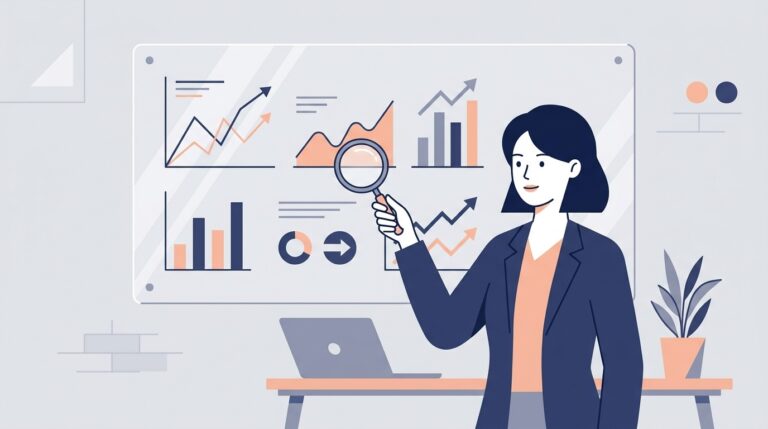
Unmasking Statistical Deception: How High-Level Korean Logic Keeps You Ahead in Debates
Phase 1: 공감 (Story-driven Opening)
안녕하세요! 매일한글 에디터입니다. Have you ever sat through a intense K-Drama boardroom scene—think Agency or Stranger—where a slick executive presents a glossy pie chart, boasting a 90% satisfaction rate, only for a sharp prosecutor or strategist to tear it apart in two seconds flat?
As a C2-level learner, your goal is no longer just understanding words; it is mastering nuance, tone, and strategic debate. The biggest hurdle at this level isn’t vocabulary size—it’s reading between the numbers and exposing logical fallacies without sounding rude. When stats are manipulated to hide the truth, how do you call it out with surgeon-like precision in Korean? Based on feedback from hundreds of advanced business professionals and native debaters, this guide will arm you with high-level phrasing and tactical nuance to spot statistical blind spots seamlessly.
Phase 2: 핵심 표현 3선 심층 분석 (3 Core Expressions)
1. 통계를 비틀다
- Pronunciation: [Tong-gye-reul bi-teul-da] (Sounds like: Tong-gyay-reul bee-teul-da, twisting yarn or pulling a twist knob)
- Meaning: Direct: “To twist statistics” | Nuance: Manipulating, cherry-picking, or misrepresenting data to support a biased narrative.
- K-Culture Moment: Often heard in Korean news commentary or thrillers when a politician selectively quotes poll results.
- Editor’s Insight: Unlike simply ‘오류가 있다’ (there is an error), ‘비틀다’ implies an intentional, crafty distortion.
- Situation Spectrum: Casual: ⚠️ | Semi-formal: ✅ | Formal: ✅
- 🤔 Think About It: Why does Korean culture value revealing ‘hidden motives’ behind numbers rather than just pointing out raw mathematical errors?
2. 착시 효과에 불과하다
- Pronunciation: [Chak-si hyo-gwa-e bul-gwa-ha-da] (Sounds like: Chak-see hyo-gwa-eh bool-gwa-ha-da)
- Meaning: Direct: “Nothing more than an optical illusion” | Nuance: Explaining that a sharp rise or positive metric is misleading due to baseline effects or bad metrics.
- K-Culture Moment: Used by corporate analysts on Korean economic broadcasts when analyzing sudden sales spikes.
- Editor’s Insight: Using ‘불과하다’ adds a definitive, persuasive edge, instantly diminishing the opponent’s claim.
- Situation Spectrum: Casual: 🚫 | Semi-formal: ✅ | Formal: ✅
- 🤔 Think About It: How does comparing logic to physical visual tricks (‘착시’) change the tone of a critique from aggressive to intellectually precise?
3. 표본의 편향성을 지적하다
- Pronunciation: [Pyo-bon-ui pyeon-hyang-seong-eul ji-jeok-ha-da] (Sounds like: Pyoh-bon-ee pyohn-hyang-seung-eul jee-jeok-ha-da)
- Meaning: Direct: “To point out sample bias” | Nuance: Calling out that the surveyed group is non-representative, rendering the conclusion invalid.
- K-Culture Moment: Classic phrase used in university debates and high-level corporate planning meetings in Seoul.
- Editor’s Insight: It targets methodology rather than personal intent, keeping the debate highly professional.
- Situation Spectrum: Casual: 🚫 | Semi-formal: ✅ | Formal: ✅
- 🤔 Think About It: Is calling out ‘bias’ in your native language considered personal or structural? How does Korean isolate the structure using formal jargon?
Phase 3: 교과서 한국어 vs 진짜 한국어
- Pointing out deceptive growth
* 📖 교과서 한국어: 이 그래프는 거짓말입니다. 상승률이 작습니다. (This graph is a lie. The growth rate is small.)
* 🗣️ 진짜 한국어: 기저효과 때문에 생긴 착시 현상일 뿐이에요. (It’s merely an optical illusion caused by the base effect.)
* 💡 왜 다를까?: Native C2 speakers use economic framing (기저효과, 착시 현상) to debunk data objectively rather than using emotional words like ‘거짓말’ (lie).
- Questioning sample representativeness
* 📖 교과서 한국어: 조사한 사람들이 너무 적거나 이상합니다. (The surveyed people are too few or strange.)
* 🗣️ 진짜 한국어: 모수 자체가 편향돼서 대표성을 잃은 데이터입니다. (The population itself is biased, so the data lacks representativeness.)
* 💡 왜 다를까?: Advanced debates rely on precise concepts like ‘모수’ (sample population) and ‘대표성’ (representativeness) to maintain authoritative tone.
Phase 4: K-Culture 딥다이브 & 비언어적 매너
4-1. 눈치(Nunchi) & Gestures
When debunking data in a Korean meeting, aggressive pointing or shouting ruins your authority. Maintain eye contact, slightly tilt your head, and tap the specific page with the back of your pen while speaking in a calm, lowered voice. This conveys cool confidence and intellectual superiority.
4-2. 문화 코드 분석 (Corporate Logic & Debate)
In Korean corporate hierarchy, directly telling a senior executive “You are wrong” causes loss of face (체면). However, critiquing the data collection method or pointing out blind spots (맹점) allows you to invalidate the premise while technically remaining respectful to the person.
Phase 5: 실전 롤플레이 시나리오
Setting: Boardroom at a tech company in Gangnam. Senior Manager Park presents a 95% user satisfaction rate for a new app feature.
NPC Character: Senior Manager Park (보수적인 박 부장님) – Defensive, relies heavily on headline numbers.
- 박 부장: 만족도가 95%나 나왔으니 이번 신기능 개발은 대성공입니다. (Satisfaction is 95%, so this feature is a huge success.)
- Learner (You): 🎭 (Squinting slightly at the slide) 부장님, 해당 조사의 응답자 모수가 어떻게 되나요? (Manager Park, what was the total sample size for this survey?)
- 박 부장: 기존 헤비 유저 50명을 대상으로 조사했지요. (We surveyed 50 existing heavy users.)
- Learner (You): 🎭 (Tapping the report gently) 아, 표본의 편향성이 명확해 보입니다. (Ah, there seems to be a clear sample bias.)
- 박 부장: 하지만 95%라는 숫자는 변하지 않잖아요? (But the 95% number doesn’t change, does it?)
- Learner (You): 🎭 (Calm smile) 헤비 유저만 뽑은 건 착시 효과에 불과합니다. 신규 유저 탈퇴율은 반영되지 않았어요. (Selecting only heavy users is merely an optical illusion. New user churn rate wasn’t reflected.)
- 박 부장: 음… 그렇다면 데이터의 맹점을 놓친 건가요? (Hmm… so did we miss a blind spot in the data?)
- Learner (You): 🎭 (Nodding politely) 네, 전체 유저를 반영한 다시 검증된 데이터가 필요합니다. (Yes, we need re-verified data that reflects the total user base.)
🔀 인터랙티브 분기점
- Option A: “부장님이 통계를 비틀어서 거짓말을 하신 겁니다.” (You twisted stats to lie.) -> 🚫 Risk: Destroys professional rapport and causes severe loss of face.
- Option B: “모수의 편향성 때문에 착시 효과가 발생한 것 같습니다.” (It seems an optical illusion occurred due to sample bias.) -> ✅ Best: Polished, objective, and intellectually commanding.
- Option C: “그냥 숫자가 안 맞아 보여요.” (The numbers just look wrong.) -> ⚠️ Bad: Sounds imprecise and unprofessional for C2.
Phase 6: 10초 감정 섀도잉 드릴
- [🧐 냉철하고 논리적으로]
이 그래프는 / 기저효과로 인한 / 착시 현상에 불과합니다. - [🤨 날카롭지만 예의 바르게]
표본 추출 과정에서 / 편향성이 개입된 것은 아닌지 / 짚고 넘어갈 필요가 있습니다. - [💼 확신에 찬 목소리로]
통계의 맹점을 보완하지 않으면 / 잘못된 의사결정을 내릴 수 있습니다.
Phase 7: K-Culture 미니 사전
- 모수 (Mo-su) | Population N-number | The underlying total group being sampled. Crucial for assessing statistical validity.
- 착시 현상 (Chak-si hyeon-sang) | Data Illusion | When metric choices make bad performance look visually impressive.
- 평균의 함정 (Pyeong-gyun-ui ham-jeong) | Flaw of Averages | Extreme outliers skewing the mean performance.
- 체리피킹 (Che-ri-pi-king) | Cherry-picking | Selecting only favorable data points while suppressing negative metrics.
Phase 8: 여행자를 위한 생존 키트 (Resident & Professional Survival Kit)
Top 3 Advanced Phrases:
- 데이터 재검증이 필요합니다. (Data re-verification is required.)
- 교차 검증을 거쳤나요? (Has this been cross-validated?)
- 자료의 출처와 기준을 밝혀주세요. (Please clarify the source and criteria of the data.)
Editor’s Travel & Business Note:
Navigating business meetings in Seoul requires fast access to reliable data sources. Use 네이버 지도 앱 다운로드 for navigating to tech hubs like Pangyo, and check official public statistics via KOSIS when preparing Korean market reports.
Phase 9: 한 발 더 깊이 (Thought Probe)
Korean corporate culture places great emphasis on fast-paced decision making, which sometimes causes teams to rely on surface-level headline numbers. However, the modern Korean business scene respects a junior or peer who can respectfully identify 통계의 맹점 (blind spots of statistics) using clear logical frameworks.
💬 Your Turn: Have you ever caught a statistical fallacy in a presentation? How would you express that critique in Korean without causing conflict?
Phase 10: FAQ & 오해 방지
Q: Can I use ‘통계를 비틀다’ directly to my boss?
A: No. Pointing out that someone ‘twisted’ data implies bad faith. Use passive or analytical terms like “통계 해석에 착시가 있을 수 있습니다” (There may be an illusion in data interpretation).
Q: What is the difference between 모수 and 표본?
A: ‘모수’ is the entire target population (Population size), while ‘표본’ is the sampled subset (Sample).
Q: Is ‘체리피킹’ recognized in Korean business?
A: Yes, it is widely used in corporate and political jargon in Korea.
🚨 흔한 실수 (Common Mistakes) TOP 3
- Saying “이 숫자는 가짜입니다” (This number is fake). -> Correct Action: Say “데이터의 대표성에 의문이 있습니다” (There are doubts about data representativeness).
- Confusing ‘평균’ (Average) with ‘중앙값’ (Median) when addressing skewed income/sales data.
- Accusing people instead of methodology. Always target the 표본 (sample), not the 사람 (person).
Phase 11: 액션 미션 & 참여 유도
- Bronze: Write 1 sentence explaining ‘착시 현상’ in Korean in the comments.
- Silver: Watch a Korean news debate and spot one usage of ‘지적하다’ or ‘편향성’.
- Gold: Analyze a statistic in your field and write a 3-sentence critique in Korean using C2 terms.
🎮 K-Culture Mission: Watch a scene from Stranger (비밀의 숲) and notice how prosecutors dissect flawed reports without raising their voices!
Phase 12: 인터랙티브 퀴즈 챌린지
-
What does ‘기저효과로 인한 착시’ mean?
정답 보기 (Click to expand)
An illusion caused by base effect skewing percentage growth rates.
-
Fill in the blank: 표본의 _____ 때문에 이 조사는 신뢰할 수 없습니다. (Bias)
정답 보기 (Click to expand)
편향성 (Pyeon-hyang-seong)
-
True/False: Saying ‘통계를 비틀다’ to your superior in a meeting is recommended.
정답 보기 (Click to expand)
False. It accuses them of intentional manipulation; use neutral logic terms instead.







