

안녕하세요! 매일한글 에디터입니다.
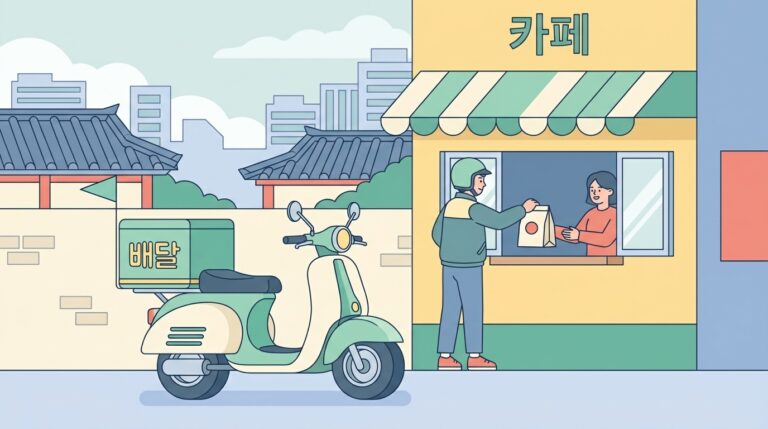
Have you ever stepped out of Incheon Airport, ordered a coffee at a cafe in Gangnam, and realized your iced Americano was handed to you before you even finished tapping your credit card? Welcome to the electrifying world of Korea’s “Pali-Pali” (빨리빨리) service culture!
When foreign travelers visit Seoul for the first time, one of the biggest culture shocks isn’t just the futuristic neon lights or delicious street food—it’s the hyper-efficient speed of everyday service. From same-day parcel deliveries to hot meals arriving at your table within five minutes, Koreans value speed, promptness, and seamless convenience above almost everything else.
However, navigating this ultra-fast environment as an intermediate Korean learner can feel overwhelming if you don’t know the right expressions. You might freeze up when a courier calls you, or feel anxious at a busy restaurant counter during lunch hour. Don’t worry! In today’s guide, based on real feedback from hundreds of intermediate learners, we’re going to unlock the essential Korean expressions you need to confidently navigate Korea’s fast-paced service environment like a true local.
Phase 2: Core Expressions Deep Dive
1. 얼른 주세요 (Eolleun juseyo)
- Pronunciation: [Eol-leun ju-se-yo] (Sounds like “All-learn” spoken quickly + “ju-say-yo”)
- Meaning: Literal: “Please give it to me quickly.” vs Real Nuance: A polite yet eager request to speed things up or get something right away without sounding demanding.
- K-Culture Moment: In modern K-dramas, when a hungry main character is waiting at a pojangmacha (street food stall) after a long work day, they cheerfully tell the street vendor “이모, 얼른 주세요!” (Auntie, please give it to me quickly!).
- Editor’s Insight: While “빠르게 주세요” is grammatically correct, native speakers prefer “얼른” in daily service contexts because it carries a warmer, friendlier tone of anticipation.
- Situation Spectrum: Casual (✅) / Semi-formal (✅) / Formal (⚠️)
- 🤔 Think About It: Why does Korean culture value speed in customer service so highly, and how does your home country’s service speed compare?
2. 금방 돼요? (Geumbang dwaeyo?)
- Pronunciation: [Geum-bang dwae-yo] (Sounds like “Ghoom-bang” + “dway-yo”)
- Meaning: Literal: “Does it become soon?” vs Real Nuance: “Will it be ready shortly?” or “Does this take long?”
- K-Culture Moment: You’re at a crowded cafe during lunch hour in Yeouido and need to grab an iced latte before a meeting. You ask the busy barista if your drink will take long.
- Editor’s Insight: Using this phrase shows you respect time and helps you decide whether to wait or order something faster like a pre-drip coffee.
- Situation Spectrum: Casual (✅) / Semi-formal (✅) / Formal (⚠️)
- 🤔 Think About It: In many Western cultures, asking how fast food will come might seem impatient, but in Korea, it’s considered smart time management!
3. 바로 처리해 드릴게요 (Baro cheorihae deurilgeyo)
- Pronunciation: [Ba-ro cheo-ri-hae deu-ril-ge-yo] (Sounds like “Bah-ro choh-ree-hae deu-reel-geh-yo”)
- Meaning: Literal: “I will handle it right away for you.” vs Real Nuance: “I’ll take care of this immediately!” (Standard service guarantee phrase).
- K-Culture Moment: You contact hotel staff or a delivery customer service representative regarding a missing item, and they reassure you instantly with this exact sentence.
- Editor’s Insight: Hearing this phrase brings instant relief! It is the hallmark phrase of Korean customer service excellence.
- Situation Spectrum: Casual (🚫) / Semi-formal (⚠️) / Formal (✅)
- 🤔 Think About It: What words does service staff in your country use to guarantee fast action?
Phase 3: Textbook Korean vs. Real Native Korean
Situation 1: Asking staff to handle a request quickly
- 📖 Textbook Korean: “빠르게 처리해 주십시오.” (Ppareuge cheorihae jusipsio. – Please process it quickly.)
- 🗣️ Real Korean: “금방 처리해 드릴게요!” (Geumbang cheorihae deurilgeyo! – We’ll get that taken care of in a jiffy!)
- 💡 Why is it different? Korean service culture emphasizes polite assistance (-해 드릴게요) rather than cold commands, blending speed with extreme friendliness.
Situation 2: Inquiring about wait time at a busy venue
- 📖 Textbook Korean: “얼마나 기다려야 합니까?” (Eolmana gidaryeoya hamnikka? – How long must I wait?)
- 🗣️ Real Korean: “얼마나 걸려요?” (Eolmana geollyeoyo? – How long does it take?)
- 💡 Why is it different? Real-life conversation favors active verbs like “걸리다” (to take time) over formal passive waiting constructions.
Phase 4: K-Culture Deep Dive & Non-verbal Manners
4-1. Nunchi (눈치) & Service Gestures
In Korea’s rapid service environment, non-verbal cues are critical. When calling a server in a busy restaurant, instead of shouting across the room, make quick eye contact and raise your hand slightly with a light head nod. When receiving your item or credit card, use both hands (or place one hand under your elbow) as a sign of respect, even during a 3-second fast-food transaction!
4-2. Culture Code Analysis
Korea’s fast culture is deeply rooted in modern history and urbanization. In K-Dramas, you often see characters ordering food via smartphone apps like Baemin and receiving hot fried chicken within 20 minutes at the Han River park! This efficiency is backed by world-class tech infrastructure, hyper-localized logistics, and a collective value placed on respecting other people’s time.
Phase 5: Real-Life Roleplay Scenario
Setting: Ordering takeout coffee at a busy Seoul cafe during morning rush hour.
Characters: Alex (Learner) & Barista (NPC)
- Barista: 어서 오세요! 주문하시겠어요?
(Eoseo oseyo! Jumunhasigesseoyo? / Welcome! Would you like to order? / 🎭 Smiling brightly while tapping the POS terminal) - Alex: 네, 아이스 아메리카노 한 잔 얼른 부탁드려요.
(Ne, aiseu amerikano han jan eolleun 부탁드려요. / Yes, one iced Americano quickly please. / 🎭 Pointing politely at the menu) - Barista: 네! 혹시 얼마나 걸리는지 궁금하신가요?
(Ne! Hoksi eolmana geollyeoneun-ji gunggeumhasingayo? / Sure! Are you wondering how long it will take? / 🎭 Checking the order queue) - Alex: 네, 제가 테이크아웃이라서요. 금방 돼요?
(Ne, jega teikeu-aus-iraseoyo. Geumbang dwaeyo? / Yes, I’m taking it out. Will it be ready soon? / 🎭 Checking wristwatch slightly) - Barista: 네, 바로 만들어 드릴게요! 1분만 기다려 주세요.
(Ne, baro mandeurae deurilgeyo! Il-bun-man gidaryeo ju-se-yo. / Yes, I’ll make it right away! Please wait just one minute. / 🎭 Pressing the espresso shot button quickly) - Alex: 와, 정말 빠르네요! 감사해요.
(Wa, jeongmal ppareuneyo! Gamsahaeyo. / Wow, that’s super fast! Thank you. / 🎭 Holding out payment card with both hands) - Barista: 결제 완료되셨습니다. 바로 나왔습니다!
(Gyeolje wanryeodoesyeossseumnida. Baro nawassseumnida! / Payment complete. Here it is right away! / 🎭 Handing drink over with both hands) - Alex: 수고하세요! 맛있게 마실게요.
(Sugohaseyo! Masitge masilgeyo. / Keep up the good work! I’ll enjoy it. / 🎭 Nodding head gratefully and taking drink)
🔀 Interactive Choice:
What would you say if the restaurant is taking longer than expected for your food?
* Option A: “여기요, 제 음식 금방 돼요?” (Excuse me, will my food be ready soon?)
* Option B: “왜 이렇게 늦게 나와요?” (Why is it coming out so late?)
* Option C: “그냥 취소해 주세요.” (Just cancel it.)
Feedback:
* Option A (Best): Polite, direct, and fits perfectly into standard Korean service expectations without sounding aggressive!
* Option B (Bad): Sounds overly accusatory and hostile for a B1 speaker in a casual interaction.
* Option C (Risk): Unnecessarily blunt; it’s better to check the status with Option A first before canceling.
Phase 6: 10-Second Emotion Shadowing Drill
- [😊 Expressing eager delight]
네 / 금방 해주셔서 / 정말 감사합니다!
(Ne / geumbang haejusyeoseo / jeongmal gamsahamnida!) -
[🥺 Asking politely with slight urgency]
저 / 혹시 / 얼마나 걸려요?
(Jeo / hoksi / eolmana geollyeoyo?) -
[⚡ Dynamic and confident]
바로 / 처리해 드릴게요!
(Baro / cheorihae deurilgeyo!)
Phase 7: K-Culture Mini Dictionary
- 빨리빨리 (Pali-pali) | Fast-fast / Hurry-hurry | The iconic cultural mindset prioritizing speed and efficiency in daily life.
- 당일배송 (Dang-il baesong) | Same-day delivery | A service standard in Korea where goods ordered in the morning arrive by evening.
- 포장 (Pojang) | Takeout / Packaging | Requesting your food or drink to be prepared quickly to go.
- 초스피드 (Cho-seupideu) | Super speed / Ultra fast | Slang used to describe unbelievably fast service or responses.
Phase 8: Traveler’s Survival Kit
Survival Expressions TOP 3:
- 포장해 주세요 (Pojang-hae juseyo) – Please pack it to go. (Pro Tip: Say this right when ordering at fast-food joints or street stalls to speed up prep).
- 금방 돼요? (Geumbang dwaeyo?) – Will it be ready soon? (Pro Tip: Great for checking wait times at busy station eateries before boarding a train).
- 영수증은 버려주세요 (Yeongsujeungeun beoryeojuseyo) – Please throw away the receipt. (Pro Tip: Speeds up the payment process immensely at convenience stores).
Editor’s Travel Note:
To truly experience Korea’s mind-blowing speed, use Naver Map App Download for real-time transit arrivals down to the second, and check out Catch Table Waitlist App for instant restaurant waitlists. When riding public buses, tap your transit card early before reaching your stop to keep up with the local flow!
Phase 9: One Step Deeper
Korea’s “Pali-Pali” culture is often perceived by visitors as stressful, but to locals, it represents a form of deep consideration (Jeong, 정) for others. By working efficiently and delivering fast service, service providers show respect for another person’s valuable time. Speed in Korea isn’t just about impatience—it’s about modern community courtesy.
💬 Your Turn: What was your fastest service experience in Korea or your home country? Share your story in the comments below!
Phase 10: FAQ & Misconceptions
Q: Is asking “금방 돼요?” considered impolite in Korea?
A: Not at all! As long as you use polite language (-요 ending) and a friendly tone, asking about wait time is seen as normal time management in Korea.
Q: Why do service staff hand back my credit card so fast?
A: Credit card transactions in Korea take less than two seconds! Staff hand it back quickly so you can comfortably move along without holding up the line.
Q: What if I need more time at a menu counter?
A: Simply say “천천히 볼게요” (Cheoncheonhi bolgeyo – I’ll look around slowly), and the staff will politely wait or return when you’re ready!
🚨 Common Mistakes TOP 3:
- Using “빠르게” (Ppareuge) instead of “금방” (Geumbang): Use “금방” when talking about short wait times in service contexts.
- Shouting “여기요!” loudly in high-end silent venues: Use table call buttons or gently make eye contact with a light hand nod instead.
- Leaving your credit card on the counter table: Hand it directly with both hands to maintain proper etiquette during fast transactions.
Phase 11: Action Mission & Engagement
- Bronze Level: Practice saying “금방 돼요?” out loud 3 times using the Emotion Shadowing Drill.
- Silver Level: Share a story or photo of a quick Korean meal on social media with #DailyHangulPaliPali.
- Gold Level: Order a drink to go at a local Korean cafe using only Korean within 30 seconds!
🎮 K-Culture Mission: Watch a clip of a Korean drama or vlog and spot 2 times where characters request fast service or mention speed!
Phase 12: Interactive Quiz Challenge
-
Situation Quiz: You have a bus leaving in 5 minutes and want to ask if your iced tea will be ready soon. What do you ask?
Click to view answer & explanation
Answer: “금방 돼요?” (Geumbang dwaeyo?)
Explanation: This politely asks if the drink will take only a short moment.
-
Fill-in-the-blank: “요청사항을 _____ 처리해 드릴게요.” (I will process your request right away.)
Click to view answer & explanation
Answer: 바로 (Baro)
Explanation: ‘바로’ means ‘immediately’ or ‘right away’ in standard service language.
-
True or False: In Korea, asking for takeout (포장) takes longer than eating inside.
Click to view answer & explanation
Answer: False!
Explanation: Takeout in Korea is streamlined for ultra-fast preparation so busy commuters can grab and go immediately.







