

Navigating Korea’s Frictionless Economy: Mobile Payments and Consumer Behavior
안녕하세요! I’m your lead editor at Daily Hangul. Welcome back to another deep dive into high-level Korean language and contemporary culture.
Phase 1: Empathy & Storytelling
Imagine this scenario: It’s 11:30 PM on a chilly Tuesday evening in Seoul. You’ve had an exhausting day at work. As you scroll casually through your smartphone feed, a notification pops up featuring a limited-edition cozy lounge set or a savory late-night delivery dish. In the past, you might have paused to pull out your physical wallet, locate your credit card, and type in a 16-digit card number alongside an expiration date and CVC code. That friction gave your rational mind a brief 30-second window to ask: “Do I really need this right now?”
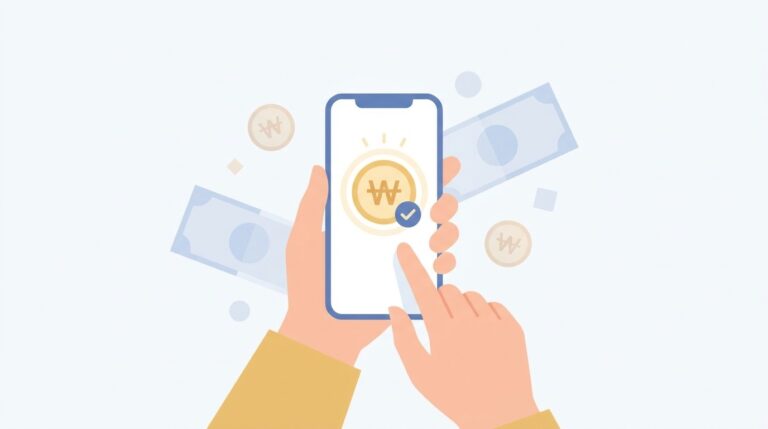
Today, however, Kakao Pay, Naver Pay, or Toss authentication takes less than two seconds. Biometric facial recognition scans your features instantly, a cheerful chime plays, and the payment is complete before your brain has even registered the financial transaction. The next morning, you wake up to a confirmation text and a sudden pang of buyer’s remorse.
If you have experienced this exact impulse loop while living in or engaging with modern Korea, you are participating in one of modern consumer psychology’s most prominent phenomena: the unintended cost of frictionless mobile payment systems. As an advanced (C2) Korean learner, analyzing this dynamic requires moving beyond simple shopping terminology like “얼마예요?” (How much is it?). You need nuanced vocabulary that captures behavioral economics, digital psychology, and contemporary sociolinguistic expressions used by native speakers to express regret, consumer habits, and financial self-awareness. This guide synthesizes actual learner feedback and field research to help you master elite-level Korean discourse around modern spending habits.
Phase 2: Deep Dive into 3 Core Advanced Expressions
1. 손가락 삐끗하다 (Song-ga-rak ppi-kkeut-ha-da)
- Pronunciation: [Son-ga-rak ppi-kkeut-ha-da] (Sounds like “son-gah-rak” with a sharp double-p pop “ppi-kkeut”)
- Meaning: Literally “to sprain/slip a finger,” but figuratively used in digital commerce to mean accidentally making an impulse purchase or clicking ‘Buy Now’ due to frictionless one-touch payment interfaces.
- K-Culture Moment: Seen frequently in lifestyle vlogs or tech forums when discussing flash sales on platforms like Coupang or Musinsa where single-click checkout causes unexpected orders.
- Editor’s Insight: While physical sprains require ice packs, a digital 손가락 삐끗 requires a refund request. It lightly deflects personal responsibility onto the seamless user interface (UI/UX) of Korean payment apps.
- Situation Spectrum: Casual ✅ | Semi-formal ⚠️ | Formal 🚫
- 🤔 Think About It: How does attributing an impulse purchase to a physical twitch (“my finger slipped”) reflect psychological defense mechanisms in digital consumer societies?
2. 홧김비용 (Hwat-gim-bi-yong)
- Pronunciation: [Hwat-gim-bi-yong] (Rhymes smoothly with soft rhythmic stress on “Hwat”)
- Meaning: Stress-induced spending / Spite spending. Money spent purely out of sudden anger, stress, or frustration to obtain an immediate dopamine hit.
- K-Culture Moment: Featured prominently in workplace K-Dramas where office workers order expensive rides home or luxurious desserts immediately after a difficult meeting with a demanding supervisor.
- Editor’s Insight: Unlike general impulse spending, 홧김비용 explicitly requires an emotional trigger—specifically workplace or relational stress—as its primary catalyst.
- Situation Spectrum: Casual ✅ | Semi-formal ✅ | Formal ⚠️
- 🤔 Think About It: Is there a dedicated term in your native language that explicitly links acute emotional stress to micro-transactions, or is spending categorized strictly by material value?
3. 텅장 (Teong-jang)
- Pronunciation: [Teong-jang] (Resonates with an open “eong” nasal sound)
- Meaning: A compound portmanteau of 텅 비다 (completely empty) and 통장 (bank account book). Refers to a bank account emptied by recurring, low-friction micro-payments.
- K-Culture Moment: Frequently used in meme culture, internet commentary, and podcasts discussing end-of-month salary management and automatic subscription deductions.
- Editor’s Insight: 텅장 highlights the paradox of modern digital banking: while your physical wallet remains full because cards are digitized, your actual bank account balance vanishes silently behind sleek app screens.
- Situation Spectrum: Casual ✅ | Semi-formal ⚠️ | Formal 🚫
- 🤔 Think About It: How does the shift from tangible paper currency to invisible biometric transfers alter our emotional perception of financial loss?
Phase 3: Textbook Korean vs. Real Korean
Scenario 1: Discussing Unplanned Mobile Purchases
- 📖 Textbook Korean: 간편 결제 시스템 때문에 예산을 초과하여 물건을 구매하게 되었습니다. (I ended up purchasing items over budget due to the simple payment system.)
- 🗣️ Real Korean: 간편 결제 버튼 몇 번 누르다 보니까 나도 모르게 손가락이 삐끗해서 텅장이 됐어요. (After tapping the quick-pay button a few times, my finger slipped before I knew it, and now my bank account is totally drained.)
- 💡 Why the Difference? C2 native speakers rarely use dry academic terms like “예산 초과” in casual conversations. They lean into vivid metaphorical portmanteaus (텅장) and idiomatic action descriptions (손가락이 삐끗하다) to express financial regret with self-deprecating humor.
Scenario 2: Explaining Stress Spending via Mobile Apps
- 📖 Textbook Korean: 스트레스를 해소하기 위해 과도한 소비를 하는 경향이 있습니다. (There is a tendency to engage in excessive consumption to relieve stress.)
- 🗣️ Real Korean: 오늘 야근하고 지쳐서 홧김비용으로 배달 앱에서 야식을 엄청 지렀지 뭐예요. (I was so exhausted after working overtime today that I ended up binge-ordering late-night food on a delivery app out of pure stress.)
- 💡 Why the Difference? Native speakers blend emotional slang (홧김비용) with conversational modal markers (~지 뭐예요) to invite empathy rather than sound like an economic report.
Phase 4: K-Culture Deep Dive & Non-verbal Etiquette
4-1. Nunchi & Digital Transaction Etiquette
In Korea’s hyper-connected payment environment, speed is paramount. When splitting a bill using transfer apps like Toss or Kakao Pay at a dinner gathering, executing the transfer immediately while still at the table is considered respectful. Taking more than a day to process a peer-to-peer mobile transfer violates unspoken social Nunchi (눈치). When discussing spending habits with colleagues, acknowledging one’s own occasional 홧김비용 builds rapport through vulnerability, whereas boasting about excessive spending crosses into tasteless self-aggrandizement.
4-2. Cultural Code Analysis: The Kakao Pay & Toss Ecosystem
Korea’s transition toward a cashless society is among the most complete in the world. Platforms like Kakao Pay and Toss eliminated psychological transaction friction by replacing traditional banking security certificates (공인인증서) with simple biometric scans or six-digit PINs. In popular culture, this seamlessness is depicted as a double-edged sword. While it exemplifies Korea’s world-class digital infrastructure (Ppal-li-ppal-li culture), behavioral psychologists note that removing transaction friction detaches the consumer from the immediate psychological pain of paying (결제 통증), accelerating micro-overspending among young adults.
Phase 5: Interactive Roleplay Scenario
Setting: A trendy cafe in Seongsu-dong. Min-ho (a tech-savvy financial analyst) and Ji-soo (a senior UX designer) are discussing consumer psychology and mobile payment apps.
- Turn 1 (Min-ho): 지수 씨, 요새 간편 결제 앱 다크 패턴(Dark Pattern) 디자인에 대해서 어떻게 생각해요? 결제 과정이 너무 단순해서 과소비를 유발한다는 지적이 많던데요.
(Ji-soo, what do you think about dark pattern designs in mobile payment apps these days? Many point out that the payment process is so simple it induces overspending.) - Turn 2 (Ji-soo): 🎭 [Taking a sip of coffee and nodding thoughtfully] 맞아 요. 결제 단계에서 마찰(Friction)을 완전히 제거하니까 소비자가 생각할 겨를이 없어지더라고요.
(That’s true. Because friction is completely removed during the payment stage, consumers have no time to pause and think.) - Turn 3 (Min-ho): 맞아요. 저도 어제 밤에 스트레스 받아서 손가락이 삐끗하는 바람에 불필요한 IT 가전을 결제해 버렸지 뭐예요.
(Exactly. Last night I was so stressed that my finger slipped and I paid for an unnecessary tech gadget.) - Turn 4 (Ji-soo): 🎭 [Smiling sympathetically] 전형적인 홧김비용이네요! 생체 인증 한 번으로 결제가 끝나버리니 통장이 텅장이 되는 건 순식간이죠.
(A classic case of stress spending! Since payment finishes with just one biometric scan, a bank account turns empty in an instant.) - Turn 5 (Min-ho): 시스템 차원에서 최소한의 ‘생각할 시간’을 주는 쿨링아웃(Cooling-out) 장치가 필요하지 않을까요?
(From a system design perspective, don’t you think we need a cooling-out mechanism that gives at least a minimum moment to rethink?) - Turn 6 (Ji-soo): 🎭 [Adjusting her posture earnestly] 기업 입장에서는 전환율(Conversion Rate)이 떨어지니까 주저하겠지만, 장기적인 소비자 보호를 위해서는 필수적이라고 봐요.
(From a corporate standpoint, they might hesitate because conversion rates drop, but I view it as essential for long-term consumer protection.) - Turn 7 (Min-ho): 사용자 경험과 소비자 심리 사이의 균형을 찾는 게 앞으로의 핵심 과제가 되겠네요.
(Striking a balance between user experience and consumer psychology will indeed be the key challenge moving forward.) - Turn 8 (Ji-soo): 맞아요. 기술이 편리해질수록 우리의 소비 철학도 더 선명해져야 하는 법이니까요.
(Indeed. As technology becomes more convenient, our spending philosophy must become clearer as well.)
🔀 Interactive Choice Point
How should Min-ho respond to Ji-soo’s point about balancing user convenience and overspending prevention?
- Option A: “맞아요. 그래서 저도 요즘은 간편 결제 수단을 일부로 해제하고 신용카드를 직접 입력해서 결제하고 있어요.”
- Option B: “에이, 소비자 보호보다는 기업의 매출 성장이 훨씬 더 중요한 거 아닌가요?”
- Option C: “결제 버튼을 누르기 전에 ‘정말 필요한가요?’라는 팝업창을 10번쯤 띄우게 법으로 강제해야 합니다.”
Scenario Feedback:
- Best Choice (Option A): Excellent C2 natural response. Demonstrates practical application of self-imposed transaction friction while maintaining a sophisticated tone.
- Bad Choice (Option B): Too blunt and dismisses consumer welfare, creating unnecessary conversational friction.
- Risk Choice (Option C): Overly radical and impractical in business contexts; lacks nuanced understanding of UX balance.
Phase 6: 10-Second Emotional Shadowing Drill
Practice these sentence rhythms and emotional nuances aloud:
[🥺 Regretful & Self-deprecating]
어제 밤에 / 스트레스 받아서 / 손가락이 삐끗하는 바람에 / 또 결제해 버렸지 뭐예요.
(Eo-je bam-e / seu-teu-rae-seubat-ah-seo / son-ga-rak-i ppi-kkeut-ha-neun ba-ram-e / tto gyeol-je-hae beo-ryeot-ji mwo-yea-yo.)-
[🤔 Analytical & Serious]
결제 마찰을 / 완전히 제거하면 / 소비자 심리상 / 과소비로 이어질 가능성이 / 매우 높습니다.
(Gyeol-je ma-chal-eul / wan-jeon-hi je-geo-ha-myeon / so-bi-ja sim-ri-sang / gwa-so-bi-ro i-eo-jil ga-neung-seong-i / mae-u nop-seum-ni-da.) -
[💡 Enlightened & Determined]
편리함에 속아서 / 텅장을 만들지 않으려면 / 나만의 소비 기준을 / 확실히 세워야 해요.
(Pyeon-ri-ham-e sok-ah-seo / teong-jang-eul man-deul-ji ahn-eu-ryeo-myeon / na-man-ui so-bi gi-jun-eul / hwak-sil-hi se-wo-ya hae-yo.)
Phase 7: K-Culture Mini Dictionary
- 간편결제 (Gan-pyeon-gyeol-je) | Simple/Mobile Payment
- Definition: Biometric or single-PIN payment services integrated into smartphones (e.g., Kakao Pay, Naver Pay, Apple Pay).
- 지름신 (Ji-reum-sin) | The Shopping God/Impulse Purchase Deity
- Definition: A playful personification of the sudden, uncontrollable urge to buy something instantly (“지름신이 오셨다”).
- 탕진잼 (Tang-jin-jaem) | The Thrill of Squandering
- Definition: The fun or satisfaction derived from spending small amounts of money on tiny luxuries or cute items.
- 무지출 챌린지 (Mu-ji-chul Chael-lin-ji) | No-Spend Challenge
- Definition: A popular financial trend among young Koreans attempting zero non-essential spending for designated days to combat impulse digital purchases.
Phase 8: Traveler’s Survival Kit
Survival Phrases TOP 3
- 카카오페이나 네이버페이로 결제 가능한가요?
(Ka-ka-o-pae-i-na Nae-i-beo-pae-i-ro gyeol-je ga-neung-han-ga-yo?)- Pro Tip: Use this when checking if small vendors, taxis, or popup stores accept quick QR payments.
- 영수증은 모바일 앱으로 발행해 주세요.
(Yeong-su-jeung-eun mo-ba-il aep-eu-ro bal-haeng-hae ju-se-yo.)- Pro Tip: Ideal for keeping eco-friendly track of your digital expenses in Korea.
- 자동 결제가 신청되어 있는지 확인해 주시겠어요?
(Ja-dong gyeol-je-ga sin-cheong-doe-eo in-neun-ji hwak-in-hae ju-si-get-eo-yo?)- Pro Tip: Essential when checking if a recurring service charge or mobile app subscription was activated.
Editor’s Travel Note
Before traveling across Seoul, set up your mobile ecosystem early. Check out the official process for Naver Pay app integration and registration to seamlessly pay at convenience stores, cafes, and ride-hailing services. Keep in mind that while digital payments are universally accepted in metropolitan areas, carrying a small amount of cash remains helpful for traditional outdoor markets like Mangwon or Gwangjang Market.
Phase 9: “One Step Deeper” (Thoughtful Mini-Essay)
The hyper-efficiency of Korean fintech reflects a society that deeply values speed, convenience, and technological integration. However, as payment friction vanishes, the burden of self-regulation shifts entirely onto individual consciousness. In Korean culture, where shared experiences and collective trends travel rapidly across social media, digital impulse buying often intersects with social proof. True language mastery at the C2 level involves recognizing how economic structures and technological UI shapes everyday vocabulary, transform personal spending habits, and give rise to creative linguistic self-defense mechanisms like 무지출 챌린지.
💬 Your Turn: Has frictionless mobile payment changed your spending behavior in your home country? Share your thoughts in Korean in the comments below using today’s terms like 홧김비용 or 손가락 삐끗!
Phase 10: FAQ & Common Mistakes
Q: Is the term 홧김비용 appropriate to use in a professional business meeting?
A: While 홧김비용 is widely understood across all age groups, it is considered casual sociolinguistic slang. In a formal corporate presentation, replace it with technical economic terminology such as “스트레스성 감정 소비” (stress-induced emotional consumption) or “충동 구매” (impulse buying).
Q: What is the exact difference between 홧김비용 and 시발비용?
A: Both refer to stress spending, but 시발비용 uses stronger profanity-derived nuance to denote money spent strictly out of intense anger or irritation caused by an external bad situation (e.g., taking an expensive taxi because your boss kept you late).
Q: How can I naturally explain that I want to reduce my digital spending in Korean?
A: You can say: “요즘 간편 결제 때문에 과소비가 심해져서, 지출을 줄이려고 무지출 챌린지를 시작했어요.” (Because simple payments led to overspending recently, I started a no-spend challenge to reduce expenses.)
🚨 Common Mistakes Alert
- Mistake 1: Using 통장 (bank account book) when you mean 텅장 (empty account meme).
- Correct Action: Use 텅장 specifically when making a lighthearted joke about having no money left due to purchases.
- Mistake 2: Translating “My finger slipped” literally as 내 손가락이 미끄러졌다.
- Correct Action: Use the natural idiomatic phrasing 손가락이 삐끗하다 or 손이 미끄러지다 when describing an accidental online order.
- Mistake 3: Assuming 간편결제 means credit card installment payments.
- Correct Action: 간편결제 refers specifically to mobile/fintech single-touch services (like Kakao Pay), while installment payments are called 할부.
Phase 11: Action Mission & Engagement
Action Mission (3 Steps)
- 🥉 Bronze Level: Write 1 sentence in your journal using 손가락 삐끗하다 to describe a past impulse buy.
- 🥈 Silver Level: Record yourself saying the Phase 6 Shadowing Drill sentences with realistic emotional tone and share it on your social media language log.
- 🥇 Gold Level: Discuss modern mobile payment habits with a native Korean speaker using terms like 홧김비용, 텅장, and 무지출 챌린지.
🎮 K-Culture Mission
Watch a recent Korean lifestyle vlog on YouTube or a slice-of-life K-Drama episode. Listen closely for instances where characters mention paying via Kakao Pay or complaining about their 텅장 after an online shopping spree!
Phase 12: Interactive Quiz Challenge
Test your mastery of C2 consumer behavior Korean:
Q1. (Scenario Judgment)
Min-su got extremely stressed at work and immediately ordered an expensive $50 sushi set using his Kakao Pay app. Which term best describes this payment?
* A) 무지출 챌린지
* B) 홧김비용
* C) 알뜰 소비
Click here to see Answer & Explanation
Correct Answer: B) 홧김비용
Explanation: Spending money triggered specifically by anger or stress to seek immediate emotional relief is called 홧김비용.
Q2. (Blank Fill)
간편 결제 시스템은 결제 __________(을/를) 제거하여 소비자의 구매 결정을 촉진합니다.
* A) 마찰 (Friction)
* B) 혜택 (Benefit)
* C) 보안 (Security)
Click here to see Answer & Explanation
Correct Answer: A) 마찰 (Friction)
Explanation: Mobile payment systems remove payment friction (결제 마찰), making transaction steps seamless and accelerating consumer decisions.
Q3. (True/False Cultural Quiz)
The term 텅장 is a formal economic term used in bank financial audits.
* True
* False
Click here to see Answer & Explanation
Correct Answer: False
Explanation: 텅장 is a humorous slang portmanteau (텅 비다 + 통장) used in casual conversation and social media, not in formal financial audits.







