

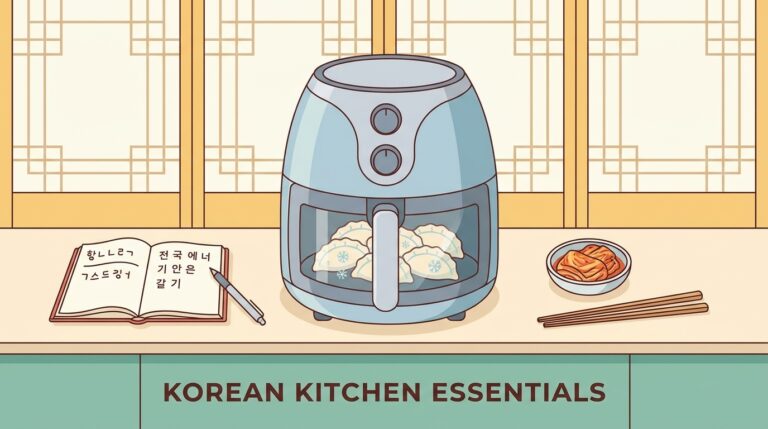
Master Korean Air Fryer Frozen Food Hacks Like a Native
Phase 1: Empathy & Storytelling Opening
안녕하세요! 매일한글 에디터입니다.
Living in Korea or immersing yourself in modern Korean lifestyle means encountering the ubiquitous air fryer (에어프라이어). Have you ever stood in front of your kitchen counter, staring at a bag of frozen mandu (냉동만두) or sweet & sour pork (탕수육), wondering how to express those exact culinary nuances in natural, fluent Korean? While beginners rely on basic textbook verbs like ‘요리하다’ (to cook) or ‘데우다’ (to heat up), true C2 speakers navigate the subtle world of modern home-culinary expressions.
When foreign learners attempt to discuss frozen food recipes in Korea, they often stumble into overly formal or mechanical phrasing that sounds pulled straight from a 1990s appliance manual. Real Korean food lovers talk about crispness, moisture retention, precise cooking hacks, and time-saving shortcuts using vivid slang and dynamic verbs. Based on real learner feedback and local cooking trends, this guide will transform your Korean culinary discourse from rigid translation to high-level native expression.
Phase 2: Core Expressions Deep Dive
1. 겉바속촉 (Geot-ba-sok-chok)
- Pronunciation: [Geot-ba-sok-chok] (Sounds like “Gutt-bah-sok-chok”, echoing a crisp crunch followed by a soft bite)
- Meaning: Direct: Outside crispy, inside moist / Actual: The absolute gold standard of air-fried food textures.
- K-Culture Moment: Frequently showcased on Korean mukbang shows and cooking broadcasts like “Pyeon-storang” (편스토랑) when testing frozen fried items.
- Editor’s Insight: This iconic portmanteau comes from “겉은 바삭하고 속은 촉촉하다”. At the C2 level, using this as a standalone noun or descriptive phrase instantly elevates your food commentary.
- Situation Spectrum: Casual (✅) / Semi-formal (✅) / Formal (⚠️)
- 🤔 Think About It: Why does contemporary Korean culinary discourse prioritize dual-texture contrast over single-dimensional taste descriptors?
2. 신의 한 수 (Sin-ui han su)
- Pronunciation: [Sin-ui han su] (Sounds like “Seen-ee-han-soo”, literally a divine stroke in the game of Go/Baduk)
- Meaning: Direct: A divine move / Actual: A brilliant, game-changing culinary trick or secret ingredient.
- K-Culture Moment: Used in recipe blogs and home cooking vlogs when adding a small oil spray before air-frying frozen food.
- Editor’s Insight: Borrowed from Baduk culture, this metaphor signifies a small action that completely transforms the final outcome. C2 speakers use it effortlessly in everyday contexts.
- Situation Spectrum: Casual (✅) / Semi-formal (✅) / Formal (✅)
- 🤔 Think About It: How do traditional strategic game concepts continue to shape modern colloquial Korean expressions?
3. 해동 없이 직행하다 (Haedong eops-i jik-haeng-hada)
- Pronunciation: [Hae-dong eop-si jik-haeng-ha-da] (Sounds like “Hae-dong up-si jeek-haeng-hah-dah”)Summary: Cook directly from frozen without thawing.
- Meaning: Direct: Go straight without defrosting / Actual: Putting frozen items straight into the air fryer to achieve maximum crispness.
- K-Culture Moment: Essential phrasing seen in social media infographics detailing frozen food hacks.
- Editor’s Insight: ‘직행하다’ (to go non-stop/direct) imparts a dynamic, decisive feel that aligns with modern Korean efficiency.
- Situation Spectrum: Casual (✅) / Semi-formal (✅) / Formal (✅)
- 🤔 Think About It: In what ways does time-efficient culinary language mirror the fast-paced ‘Pali-Pali’ lifestyle of urban Korea?
Phase 3: Textbook Korean vs. Real Native Korean
Situation 1: Explaining how to cook frozen food properly
- 📖 Textbook Korean: 냉동 식품을 조리하기 전에 해동하십시오. (Please defrost frozen food before cooking.)
- 🗣️ 진짜 한국어: 해동하지 말고 바로 에어프라이어에 돌려야 겉바속촉이 살아나요.
- 💡 왜 다를까? Native speakers prioritize the ideal textural outcome (‘겉바속촉’) and use ‘돌리다’ (to run/spin an appliance) rather than formal instructional verbs like ‘조리하십시오’.
Situation 2: Giving a specific cooking temperature pro-tip
- 📖 Textbook Korean: 온도를 높은 상태로 설정하세요. (Set the temperature to a high state.)
- 🗣️ 진짜 한국어: 180도에서 10분 돌리고 한 번 뒤집어주는 게 신의 한 수예요.
- 💡 왜 다를까? C2 speakers use concrete action verbs (‘뒤집다’ for flipping, ‘돌리다’ for operating) combined with metaphorical praises (‘신의 한 수’) instead of passive equipment settings.
Phase 4: K-Culture Deep Dive & Non-verbal Manners
4-1. Nunchi & Gestures
When discussing air-fryer tips with Korean friends, utilize subtle hand gestures to match your words. When saying “한 번 뒤집어주다” (flip it over once), make a slight wrist-flipping motion. When expressing praise for a crisp outcome (“겉바속촉”), give a crisp single nod and light snap of the fingers to convey satisfaction.
4-2. Culture Code Analysis
The explosion of ‘Zaechwi-saeng’ (자취생 – solo dwellers) in Korea has elevated the air fryer to essential household status. Modern Korean hypermarkets and convenience stores feature entire aisles dedicated solely to air-fryer-optimized frozen foods. Navigating this culture with natural slang shows you understand modern Korean living realities.
Phase 5: Real-world Roleplay Scenario
- Scene: Minjun and Sarah are in the kitchen preparing late-night snacks after work.
- Characters: Minjun (Korean foodie friend) & Sarah (C2 Korean learner).
- Minjun: 냉동 만두 그냥 전자레인지에 데워 먹어?
[Naeng-dong man-du geu-nyang jeon-ja-re-in-ji-e de-wo meok-eo?]
“Are you just heating up those frozen mandu in the microwave?”
🎭 Leaning against the counter with a playful smirk. -
Sarah: 응, 보통 그렇게 하는데 무슨 문제 있어?
[Eung, bo-tong geu-reoh-ke han-de mu-seun mun-je is-seo?]
“Yeah, I usually do that. Is there a problem with it?”
🎭 Tilting her head with curious eyebrows raised. -
Minjun: 에어프라이어에 식용유 살짝 붓고 돌려봐. 완전 겉바속촉이야.
[Ae-eo-peu-ra-i-eo-e sik-yong-yu sal-jjak bout-go dol-ryeo-bwa. Wan-jeon geot-ba-sok-chok-i-ya.]
“Pour a tiny bit of cooking oil and run it in the air fryer. It comes out totally crispy outside and juicy inside.”
🎭 Demonstrating oil pouring with animated hands. -
Sarah: 아, 해동 없이 바로 직행하는 거야?
[A, hae-dong eop-si ba-ro jik-haeng-ha-neun geo-ya?]
“Ah, so I go straight into it without defrosting?”
🎭 Eyes widening in quick understanding. -
Minjun: 맞아! 180도에서 10분 돌리고, 한 번 뒤집어주는 게 신의 한 수지.
[Ma-ja! 180-do-e-seo 10-bun dol-ri-go, han beon dwi-jib-eo-ju-neun ge sin-ui han su-ji.]
“Exactly! Running it at 180 degrees for 10 minutes and flipping it once is the game-changer.”
🎭 Giving a confident thumbs up. -
Sarah: 기름은 얼마나 둘러야 적당해?
[Gi-reum-eun el-ma-na dul-reo-ya jeok-dang-hae?]
“How much oil should I coat it with to be just right?”
🎭 Taking out a cooking brush intently. -
Minjun: 비닐봉지에 만두랑 기름 한 스푼 넣고 흔들면 골고루 묻어.
[Bi-nil-bong-ji-e man-du-rang gi-reum han seu-pun neo-go heun-deul-myeon gol-go-ru mu-deo.]
“Put the mandu and a spoonful of oil in a plastic bag and shake it; it coats evenly.”
🎭 Mimicking shaking a puffed bag enthusiastically. -
Sarah: 와, 그야말로 조리법의 혁명이자 신의 한 수네!
[Wa, geu-ya-mal-ro jo-ri-beob-ui hyeok-myeong-i-ja sin-ui han su-ne!]
“Wow, that truly is a culinary revolution and a total stroke of genius!”
🎭 Smiling brightly and turning on the air fryer timer.
🔀 Interactive Branching Choice:
How should Sarah respond after Minjun shares his secret bag-shaking trick?
* Option A: “그렇게 하면 설거지거리도 줄어들고 진짜 편하겠네요!”
* Option B: “전자레인지로 조리하는 것이 훨씬 정석적인 방법입니다.”
* Option C: “기름을 쓰면 건강에 해로우니 그냥 물에 삶겠습니다.”
Feedback:
* Option A (Best): Excellent! Demonstrates natural enthusiasm and highlights practical convenience using authentic C2 conversational flow.
* Option B (Bad): Sounds overly formal and dogmatic, breaking the casual friend-to-friend chemistry.
* Option C (Risk): Scientifically fine, but dampens the cooking mood and ignores the culinary tip offered.
Phase 6: 10-Second Emotion Shadowing Drill
- [😊 Exhilarated & Proud]
에어프라이어에 돌리니까 / 겉은 바삭하고 / 속은 완전 촉촉해!
[Ae-eo-peu-ra-i-eo-e dol-ri-ni-kka / geot-eun ba-sak-ha-go / sok-eun wan-jeon chok-chok-hae!] -
[💡 Insightful & Confident]
해동 없이 바로 넣는 게 / 맛을 살리는 / 신의 한 수예요.
[Hae-dong eop-si ba-ro neo-neun ge / mat-eul sal-li-neun / sin-ui han su-yeo-yo.] -
[😋 Craving & Delighted]
180도에서 / 10분만 돌리면 / 완벽한 간식이 완성돼요.
[180-do-e-seo / 10-bun-man dol-ri-myeon / wan-byeok-han gan-sik-i wan-seong-dwae-yo.]
Phase 7: K-Culture Mini Dictionary
- 돌리다 (Dol-li-da) | To operate/run an appliance | Universal verb used for air fryers, microwaves, and washing machines instead of mechanical verbs like ‘작동하다’.
- 겉바속촉 (Geot-ba-sok-chok) | Crispy outside, tender inside | Trendy gastronomic term essential for food blogging and reviews.
- 냉동식품 (Naeng-dong-sik-pum) | Frozen food items | Encompasses premium ready-to-cook Korean meals manufactured for modern home convenience.
- 조리 꿀팁 (Jo-ri kkul-tip) | Cooking hack / pro-tip | High-frequency term across Korean cooking blogs, forums, and YouTube shorts.
Phase 8: Traveler & Resident Survival Kit
TOP 3 Practical Culinary Expressions
-
에어프라이어 전용인가요?
[Ae-eo-peu-ra-i-eo jeon-yong-in-ga-yo?]
“Is this specifically made for air fryers?”
Pro Tip: Ask retail clerks at grocery stores when searching for pre-crisped frozen items. -
몇 도에서 몇 분 돌려야 해요?
[Myeot do-e-seo myeot bun dol-ryeo-ya hae-yo?]
“At what temperature and for how many minutes should I fry it?”
Pro Tip: Use when asking friends or checking package instructions. -
종이호일 깔고 돌리는 게 깔끔해요.
[Jong-i-ho-il kkal-go dol-ri-neun ge kkal-kkeum-hae-yo.]
“It’s cleaner if you line it with parchment paper before cooking.”
Pro Tip: ‘종이호일’ (parchment paper) is an essential kitchen staple in modern Korean homes.
Editor’s Travel Note
When shopping at Korean hypermarkets like E-Mart or Lotte Mart, locate nearby branches using the Naver Map App Download platform. Look out for packaging labeled ‘에어프라이어 전용’ (Air Fryer Exclusive) on frozen food shelves.
Phase 9: Deep Dive Humanities Essay
In modern Korean society, the concept of home cooking has undergone a quiet revolution. Efficiency is no longer viewed as a compromise on culinary quality; rather, maximizing flavor with minimal effort is celebrated as smart living. The air fryer phenomenon epitomizes this shift, where traditional comfort foods like dumplings, pork belly, and sweet potatoes are reinvented through clever hacks like ‘겉바속촉’. Masterful use of these practical idioms bridges the gap between formal language proficiency and authentic cultural belonging.
💬 Your Turn: What is your absolute favorite frozen food to prepare in an air fryer, and how would you describe its ideal texture using Korean slang? Share your thoughts in the comments below!
Phase 10: FAQ & Common Mistakes
Q: Can I use the general verb ‘요리하다’ when describing air-frying frozen meals?
A: While grammatically correct, native speakers rarely use ‘요리하다’ for instant frozen foods. Instead, use ‘에어프라이어에 돌리다’ or ‘데우다’ for natural C2 fluency.
Q: What is the semantic nuance between ‘해동하다’ and ‘녹이다’?
A: ‘해동하다’ is a technical term used specifically for thawing food products, whereas ‘녹이다’ refers to melting anything (such as ice, snow, or chocolate). In recipe instructions, ‘해동 없이’ is the standard phrase.
Q: Is ‘겉바속촉’ appropriate in formal dining settings?
A: ‘겉바속촉’ is colloquial slang widely used in broadcasts, food reviews, and daily conversations. For formal food criticism or fine dining, use descriptive phrasing like ‘겉은 바삭하면서 속은 부드럽습니다’.
🚨 Common Mistakes TOP 3:
1. Saying “에어프라이어로 구우세요” instead of “에어프라이어에 돌리세요”. Correct Action: Use ‘돌리다’ for timed appliances.
2. Translating “thaw first” as “물에 녹이세요”. Correct Action: Say “해동해서 사용하세요” or “해동 없이 바로 돌리세요”.
3. Overusing formal textbook phrasing in casual home cooking settings. Correct Action: Adopt dynamic terms like ‘겉바속촉’ and ‘조리 꿀팁’.
Phase 11: Action Mission & Engagement
Action Mission 3 Steps:
- Bronze: Practice saying “해동 없이 에어프라이어에 10분 돌려보세요” out loud 3 times with realistic pause points.
- Silver: Share a picture of your air-fried snack on social media captioned with “#겉바속촉 #에어프라이어꿀팁”.
- Gold: Explain your favorite air fryer frozen food hack to a Korean friend using the idiom ‘신의 한 수’.
🎮 K-Culture Mission: Watch a Korean cooking vlog or YouTube short about frozen food hacks and spot at least two instances where ‘돌리다’ or ‘겉바속촉’ are used in context.
Phase 12: Interactive Quiz Challenge
-
Which trendy portmanteau describes food that is crispy on the outside and tender/juicy on the inside?
See Answer & Explanation
겉바속촉 (Geot-ba-sok-chok). It stems from ‘겉은 바삭하고 속은 촉촉하다’.
-
Fill in the blank: “해동 없이 바로 에어프라이어에 ________가 맛의 비결이에요.”
See Answer & Explanation
돌리는 것 (or 돌리는 게). ‘돌리다’ is the authentic native verb used for running timed kitchen appliances.
-
True or False: In native Korean cooking contexts, you must always defrost frozen mandu in hot water before air-frying.
See Answer & Explanation
False! Most modern hacks recommend cooking directly from frozen (‘해동 없이 직행’) to preserve crispness.







