

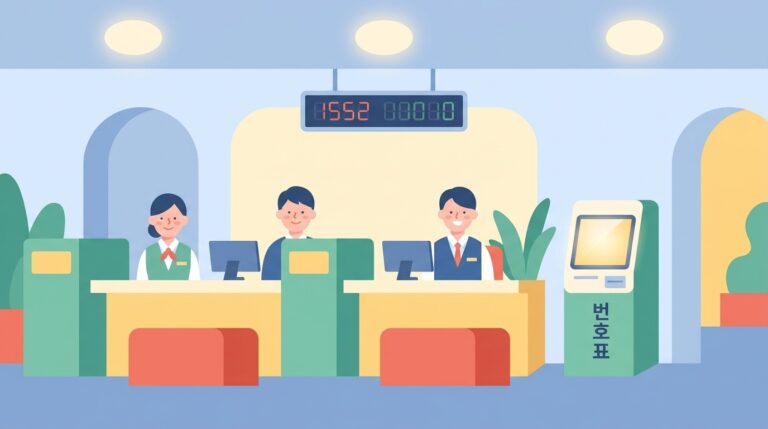
Navigating Korean Public Offices: How to Avoid Lunch Hour Delays
Phase 1: Empathy & Storytelling
안녕하세요! 매일한글 에디터입니다. Have you ever walked into a local Korean district office (동사무소 / 주민센터) around 12:15 PM, eager to get your residence document or ask a quick question, only to find dimmed lights and half-empty counters? You stand there feeling uncertain—can you approach the remaining staff, or should you wait outside?
In South Korea, government offices stay open through lunch, but staff rotate on shifts between 12:00 PM and 1:00 PM (or 1:00 PM to 2:00 PM). This means fewer counters are active, lines move slowly, and queue times multiply! Knowing how to check lunch hours and ask polite questions will save you time and awkward moments. This guide uses real learner experiences to help you handle public office visits with confidence.
Phase 2: Core Expressions Deep Dive
1. 점심시간이 몇 시부터예요? (Jeomsim-sigan-i myeot si-buteo-yeo?)
- Pronunciation: [Jeom-shim shi-gan-ee myeot shi-boo-teo-yeo?] (Sounds like “jump-shim she-gan”)
- Meaning: Direct: “From what time is lunch time?” | Nuance: “When is your lunch break?”
- K-Culture Moment: Frequently asked at local district offices before planning an afternoon errand.
- Editor’s Insight: Asking this shows foresight and respect for the staff’s schedule.
- Situation Spectrum: Casual 🚫 | Semi-formal ✅ | Formal ✅
- 🤔 Think About It: How do public services in your home country handle break times compared to Korea’s rotating shift system?
2. 지금 업무 처리 가능한가요? (Jigeum eommu cheori ganeung-hangayo?)
- Pronunciation: [Ji-geum eom-moo chuh-ree gah-neung-hahn-gah-yo?]
- Meaning: Direct: “Is work processing possible now?” | Nuance: “Can I be helped right now?”
- K-Culture Moment: Used when entering a service window during lunch shift hours when few staff are visible.
- Editor’s Insight: Using ‘업무 처리’ (work processing) sounds polite and professional.
- Situation Spectrum: Casual 🚫 | Semi-formal ✅ | Formal ✅
- 🤔 Think About It: In Korea, polite efficiency is appreciated. How does formal vocabulary change people’s helpfulness?
3. 교대 시간인가요? (Gyode sigan-ingayo?)
- Pronunciation: [Gyo-dae shi-gan-in-gah-yo?]
- Meaning: Direct: “Is it shift change time?” | Nuance: “Is the staff on a shift break?”
- K-Culture Moment: Heard when waiting at a counter and staff members swap seats.
- Editor’s Insight: Helps you understand why a line has temporarily paused.
- Situation Spectrum: Casual 🚫 | Semi-formal ✅ | Formal ✅
- 🤔 Think About It: Recognizing shift rotations helps you practice patience in public settings.
Phase 3: Textbook Korean vs. Real-Life Korean
Situation 1: Asking if they are open during lunch
* 📖 Textbook Korean: 점심시간에 문을 엽니까? (Do you open doors at lunch time?)
* 🗣️ Real-Life Korean: 점심시간에도 업무 보나요? (Do you handle service during lunch time?)
* 💡 Why the difference? Real native Korean uses ‘업무를 보다’ (to handle official work/service) rather than simply opening doors.
Situation 2: Asking how long the wait will be
* 📖 Textbook Korean: 얼마나 기다려야 합니까? (How long must I wait?)
* 🗣️ Real-Life Korean: 얼마나 걸릴까요? (About how long will it take?)
* 💡 Why the difference? ‘얼마나 걸릴까요?’ sounds much softer, natural, and friendly for A2 learners.
Phase 4: K-Culture Deep Dive & Non-Verbal Manners
4-1. Nunchi (눈치) & Gestures
When entering a public office during lunch hours (12:00–13:00):
* Observe the Light Level: Often, main hall lights are dimmed to save energy and indicate break time. Take a number ticket (번표) first.
* Two-Handed Courtesy: Hand over your ID or form using both hands or resting your left hand under your right forearm.
* Slight Bow: A gentle head nod (15 degrees) while asking questions instantly creates a warm connection.
4-2. Culture Code: The 12-to-1 Rotating System
Korean public offices do not close completely during lunch. Staff take turns eating in shifts. Because staff count drops by half, service slows down. Visiting between 10:00 AM – 11:30 AM or 2:00 PM – 4:00 PM ensures the fastest service!
Phase 5: Real-Life Roleplay Scenario
Location: District Office Counter (주민센터 창구)
NPC: Officer Min (친절한 민 주무관)
- Learner: 안녕하세요! 혹시 지금 업무 처리 가능한가요? (Annyeonghaseyo! Hoksi jigeum eommu cheori ganeung-hangayo?)
🎭 Action: Bows gently while holding document ticket. - Officer Min: 네, 가능합니다. 번호표 주시겠어요? (Ne, ganeung-hamnida. Beonhopyeo jusigesseoyo?)
🎭 Action: Smiles and accepts ticket with both hands. - Learner: 여기 있습니다. 점심시간이라 오래 걸릴까요? (Yeogi isseumnida. Jeomsim-sigan-ira orae geollilkkayo?)
🎭 Action: Hands ticket politely. - Officer Min: 지금 교대 시간이라 10분 정도 걸려요. (Jigeum gyode sigan-ira sip-bun jeongdo geollyeoyo.)
🎭 Action: Points to waiting area seating. - Learner: 아, 네! 여기서 기다리면 될까요? (A, ne! Yeogiseo gidarimyeon doelkkayo?)
🎭 Action: Looks toward chairs. - Officer Min: 네, 번호 부르면 오세요. (Ne, beonho bureumyeon oseyeo.)
🎭 Action: Nods warmly. - Learner: 감사드립니다. 천천히 해주세요! (Gamsadeureimnida. Cheoncheonhi hae-juseyo!)
🎭 Action: Takes a seat calmly. - Officer Min: 네, 잠시만 기다려 주세요! (Ne, jamsiman gidaryeojuseyo!)
🎭 Action: Begins typing on computer.
🔀 Interactive Choice Point
What would you say if the officer tells you the specific window is paused for lunch?
* Choice A: 아, 네. 몇 시에 다시 오면 될까요? (Ah, when should I come back?)
* Choice B: 왜 지금 안 돼요? 빨리 해주세요. (Why not now? Do it fast.)
* Choice C: 그냥 아무 말 없이 떠난다. (Walk away silently.)
Feedback:
* Best (Choice A): Perfect! Polite, constructive, and respects their break schedule.
* Bad (Choice B): Very rude! Demanding service during shift pauses causes friction.
* Risk (Choice C): Not incorrect, but asking when to return saves you another wasted trip!
Phase 6: 10-Second Emotion Shadowing Drill
[😊 Politely asking]안녕하세요 / 혹시 지금 / 업무 가능할까요?
(Annyeonghaseyo / hoksi jigeum / eommu ganeung-hal-kkayo?)[🥺 Worried & curious]점심시간인데 / 많이 기다려야 하나요?
(Jeomsim-sigan-inde / mani gidaryeoya hanayo?)[🙏 Thankful & patient]네, 알겠습니다! / 천천히 하셔도 돼요.
(Ne, algesseumnida! / Cheoncheonhi hasyeodo dwaeyo.)
Phase 7: K-Culture Mini Dictionary
- 번호표 (Beonhopyeo) | Number Ticket | Automatic paper ticket dispenser located near entrance counters.
- 교대 시간 (Gyode sigan) | Shift Change Time | Rotating break periods for public office employees.
- 주민센터 (Jumin-center) | Community Service Center | Local neighborhood government branch for everyday paperwork.
- 서류 (Seoryu) | Official Documents | Paperwork like residency certificates or official forms.
Phase 8: Traveler’s Survival Kit
Top 3 Survival Expressions
- 몇 시까지 해요? (Myeot si-kkaji haeyo?) – Until what time are you open?
- 번표 어디서 뽑아요? (Beonhopyeo eodiseo ppobayo?) – Where do I draw a number ticket?
- 조금 있다가 다시 올게요. (Jogeum itdata dasi olgeyo.) – I will come back in a short while.
Editor’s Travel Note
Before heading to a local district office, use the Naver Map app download to search for your nearest ‘주민센터’. Check customer reviews or office news notices to confirm specific business hours and busy peak times.
Phase 9: A Step Deeper (Culture Insight)
In South Korea, public services strive for maximum speed and efficiency (빨리빨리 문화). However, respecting worker break rights has become equally important. Understanding that staff take rotating lunch shifts helps visitors balance their desire for fast service with respect for public employees.
💬 Your Turn: Have you ever experienced break time differences at public services in another country? Share your stories in the comments!
Phase 10: FAQ & Common Mistakes
Q: Do public offices in Korea close completely during lunch?
A: No, most community centers (주민센터) remain open, but service speed decreases significantly because staff take lunch in rotating shifts between 12:00 PM and 2:00 PM.
Q: What should I do first when entering a Korean public office?
A: Always look for the number ticket machine (번호표 발행기) near the front entrance and press the button for your category of request before waiting.
Q: Can I pay document fees with an international credit card?
A: Most government counters accept regular credit cards, but keeping a small amount of cash (1,000–3,000 KRW) or T-money is recommended for quick fee payments.
🚨 Common Mistakes Board
- ❌ Mistake 1: Standing in line without drawing a number ticket (번호표).
- Correct Action: Draw a ticket immediately upon arrival!
- ❌ Mistake 2: Speaking directly to staff who are eating at their desks.
- Correct Action: Approach active counter windows where staff are logged into computers.
- ❌ Mistake 3: Arriving at 11:55 AM expecting quick complex paperwork.
- Correct Action: Give yourself at least 30 minutes before 12:00 PM for complex tasks.
Phase 11: Action Mission & Engagement
- Bronze: Practice saying “점심시간이 몇 시부터예요?” three times out loud.
- Silver: Post a comment using one core phrase from today’s lesson.
- Gold: Visit a local Korean public office or website and identify their operating hours.
🎮 K-Culture Mission: Watch a scene in a K-drama set in a government office or community center. Spot the number ticket machine (번호표)!
Phase 12: Interactive Quiz Challenge
1. What is the best phrase to ask if service is available right now?
A) 지금 밥 먹나요?
B) 지금 업무 처리 가능한가요?
C) 왜 일을 안 하나요?
Click to view answer
Answer: B
‘지금 업무 처리 가능한가요?’ is the most polite and natural way to ask if service is currently available.
2. True or False: Korean public offices close their doors completely from 12:00 to 1:00 PM.
Click to view answer
Answer: False
Offices stay open, but operate with reduced staff due to shift rotations.






