

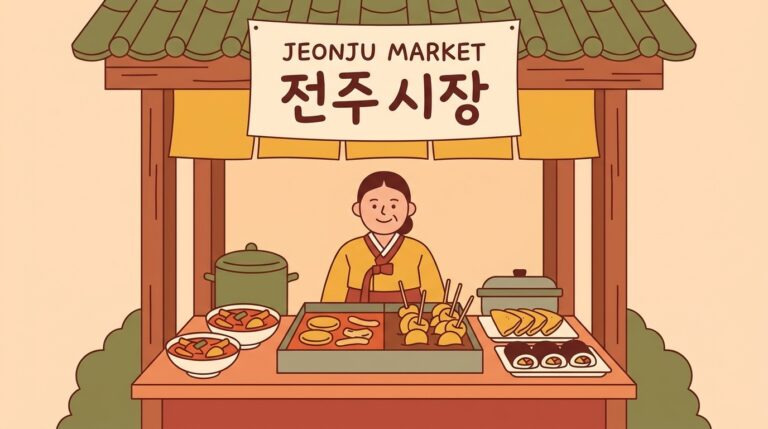
안녕하세요! 매일한글 에디터입니다. Have you ever watched a warm, nostalgic K-drama set in a seaside village or a bustling countryside market—like Reply 1994 or Our Blues—and wondered why the local characters sound so uniquely rhythmic, expressive, and full of soul? You might have heard speech that gently rolls off the tongue with endings like ‘~아부러’ (~abureo) or centered around the mysterious, all-purpose word ‘거시기’ (geosigi).
Standard Korean taught in official textbooks is ideal for navigating Seoul offices, but when you travel south into Jeolla Province, the language transforms into a vibrant art form filled with deep affection (jeong), humor, and rich history. Many B2 intermediate learners experience a sudden roadblock when interacting with locals in Gwangju or Jeonju because these colorful regional nuances rarely appear in standard grammar books. Based on real feedback from advanced Korean language learners, this guide is designed to unlock the savory flavor of Jeolla Satoori so you can sound natural, understand K-drama dialogue on a deeper level, and build genuine connections!
Phase 2: Core Expressions Deep Dive
1. 거시기 (Geosigi)
- Pronunciation: [Geo-si-gi] (Sounds like “go-see-ge”)
- Meaning: Direct: “That thing” / Actual: A universal context-based placeholder word used when a specific word slips your mind, to soften a sentence, or to reference shared unspoken knowledge (“you-know-what”).
- K-Culture Moment: Frequently used by town elders gathered around a market food stall, using “거시기” three times in a single sentence while understanding each other perfectly!
- Editor’s Insight: It relies heavily on Nunchi (reading the room). It highlights how Korean culture values implicit mutual understanding over explicit definitions.
- Situation Spectrum: Casual (✅), Semi-formal (⚠️), Formal (🚫)
- 🤔 Think About It: How does your native language handle placeholder words when two speakers share deep cultural context?
2. 허벌나게 (Heobeolnage)
- Pronunciation: [Heo-beol-na-ge] (Sounds like “her-ball-nah-geh”)
- Meaning: Direct: Exceedingly / Actual: “Super”, “Extremely”, or “Crazy good” (The Jeolla equivalent of standard ‘엄청’ or slang ‘대박’).
- K-Culture Moment: Food vloggers visiting Jeonju Hanok Village taking a bite of authentic bibimbap and exclaiming, “허벌나게 맛있어요!”
- Editor’s Insight: It carries an enthusiastic, flavorful punch that conveys emotional warmth far better than standard adverbs.
- Situation Spectrum: Casual (✅), Semi-formal (⚠️), Formal (🚫)
- 🤔 Think About It: Why do regional slang terms for intensity feel much warmer than formal textbook adverbs?
3. ~아부렀어 / ~버렸어 (~abureosseo)
- Pronunciation: [A-bu-reot-seo] (Sounds like “ah-boo-rot-seo”)
- Meaning: Direct: Did it completely / Actual: Expresses that an action is finished with a sense of finality, mild surprise, or playfulness (Standard: ~해 버렸어).
- K-Culture Moment: In K-dramas, when a character finishes a huge feast in record time and says with a satisfied smile: “다 먹어부렀어!”
- Editor’s Insight: The vocal transition to ‘-부렀어’ gives Jeolla dialect its signature musical cadence.
- Situation Spectrum: Casual (✅), Semi-formal (⚠️), Formal (🚫)
- 🤔 Think About It: Notice how Korean regional verb endings modify emotional tone more dramatically than the verb root itself.
Phase 3: Textbook Korean vs. Real Korean
Scenario 1: Complementing Delicious Food
- 📖 교과서 한국어: 진짜 맛있어요! (Jinjja masisseoyo! – It’s really delicious!)
- 🗣️ 진짜 한국어: 허벌나게 맛나부러요! (Heobeolnage mannabureoyo!)
- 💡 왜 다를까?: Standard Korean uses straightforward adverbs, whereas Jeolla speech blends regional intensity modifiers with savory verb endings to show heart-felt delight.
Scenario 2: Asking for Something Indirectly
- 📖 교과서 한국어: 그것 좀 주세요. (Geugeot jom juseyo. – Please give me that.)
- 🗣️ 진짜 한국어: 거시기 좀 줘봐요. (Geosigi jom jwobwayo.)
- 💡 왜 다를까?: In close-knit southern communities, speakers substitute specific nouns with shared-context placeholders like ‘거시기’ to create intimacy.
Phase 4: K-Culture Deep Dive & Non-verbal Manners
4-1. Nunchi & Gestures
When speaking Jeolla dialect, maintain a relaxed body posture and a warm, inviting smile. Hand gestures often involve broad, soft waving motions toward yourself when inviting someone to share food. Eye contact is warm and friendly rather than sharp.
4-2. Culture Code Analysis
Jeolla Province is celebrated across Korea as the undisputed home of culinary excellence (Namdo cuisine). The local dialect mirrors this rich food culture: generous, expressive, and unpretentious. The emotional depth of Jeolla Satoori connects closely to Jeong (affectionate bonding) and Han (resilient emotional depth), making it a favorite tool for K-drama writers creating beloved, relatable characters.
Phase 5: Real-life Roleplay Scenario
Setting: Ordering extra side dishes at a traditional restaurant in Jeonju.
Characters: You (Intermediate Learner) & Grandma Boss (Local Jeolla Restaurant Owner).
- Grandma: “어서 오시오! 뭐 먹고 싶어?” (Eoseo osio! Mwo meokgo sipeo? – Welcome! What would you like to eat? 🎭 Smiling warmly with hands on hips)
- You: “안녕하세요! 여기 비빔밥 두 개 주세요.” (Annyeonghaseyo! Yeogi bibimbap du gae juseyo. – Hello! Two bibimbaps please. 🎭 Politeness with a light bow)
- Grandma: “반찬 모자라면 거시기 해~” (Banchan mojaramyeon geosigi hae~ – If side dishes run low, just do the ‘you-know-what’~ 🎭 Winking and gesturing toward side dishes)
- You: “아, 거시기가 반찬 더 달라는 뜻이죠?” (A, geosigiga banchan deo dallaneun tteusijyo? – Ah, ‘geosigi’ means asking for more side dishes, right? 🎭 Grinning with light realization)
- Grandma: “아이구, 외국인이 허벌나게 잘 알아듣네!” (Aigu, woegugini heobeolnage jal aradeutne! – Oh my, a foreigner understands super well! 🎭 Clapping hands in joy)
- You: “할머니 손맛이 너무 맛나부러요!” (Halmeoni sonmasi neomu mannabureoyo! – Grandma’s cooking is so amazingly delicious! 🎭 Giving a double thumbs-up)
- Grandma: “에구 기뻐라, 더 퍼줄라니까 더 먹고 가!” (Egu gippeora, deo peojullanikka deo meokgo ga! – Oh I’m so happy, I’ll bring out extra food! 🎭 Bringing extra side dishes)
- You: “감사합니다! 진짜 정이 넘쳐요.” (Gamsahamnida! Jinjja jeongi neomcheoyo. – Thank you! Your hospitality is truly overflowing. 🎭 Bowing deeply)
🔀 Interactive Choice Point
How do you ask Grandma for extra Kimchi using authentic local flare?
* Choice A: “이모님, 김치 거시기 좀 더 주셔요!” (Imonim, kimchi geosigi jom deo jusyeoyo!)
* Choice B: “김치 더 주세요.” (Kimchi deo juseyo.)
* Choice C: “김치 허벌나게 버렸어요.” (Kimchi heobeolnage beoryeosseoyo.)
Feedback:
* Choice A (BEST): Outstanding! Using ‘거시기’ smoothly and politely shows deep understanding of Jeolla affection and culture.
* Choice B (BAD): Correct standard Korean, but misses a great chance to connect warmly with the local restaurant owner.
* Choice C (RISK): Danger! ‘버렸어요’ means “threw away/wasted”, which will confuse and upset the host!
Phase 6: 10-Second Emotion Shadowing Drill
[😊 Warmly & Energetically]허벌나게 / 맛나부러요! (Heobeolnage / mannabureoyo!)[🥺 Softly & Intimately]거시기 / 그거 / 좀 주셔요. (Geosigi / geugeo / jom jusyeoyo.)[😲 Surprised & Amused]벌써 / 다 먹어부렀어? (Beolsseo / da meogeobureosseo?)
Phase 7: K-Culture Mini Dictionary
- 정 (Jeong) | Deep Emotional Affection | The warm bond of unconditional generosity shared between people in Korean community life.
- 남도 음식 (Namdo Eumsik) | Southern Jeolla Cuisine | Korea’s premier culinary style famous for rich seasonings and endless side dishes.
- 거시기 (Geosigi) | Expressive Placeholder | A magic word used in casual settings when concrete words escape you.
- 구수하다 (Gusuhada) | Earthy Warmth / Savory | Used to describe rich flavor profiles or cozy, friendly regional speech.
Phase 8: Traveler’s Survival Kit
Survival Expressions TOP 3
- “맛나부러요!” (Mannabureoyo! – It’s so delicious! Pro Tip: Say this to local shop owners for instant free service dishes!)
- “거시기 있잖아요.” (Geosigi itjanayo. – You know, that thing… Pro Tip: Perfect icebreaker when looking for a forgotten Korean word.)
- “허벌나게 좋네요!” (Heobeolnage jonneoyo! – This is crazy good! Pro Tip: Great for expressing excitement at scenic travel spots.)
Editor’s Travel Note
When traveling around Jeonju Hanok Village or Yeosu, navigate transit effortlessly by using the official Naver Map App Download. Use local transportation options and practice these phrases with local drivers!
Phase 9: A Step Deeper (Culture Thought)
Dialects in Korea are far more than regional accents; they are living time capsules of communal identity and emotional history. Jeolla Satoori relies heavily on mutual empathy—where a single word like ‘거시기’ requires no explanation because both speaker and listener share the same emotional frequency.
💬 Your Turn: Does your native language have regional dialects that carry this kind of unique warmth? Share your stories in the comments below!
Phase 10: FAQ & Common Mistakes
Q: Is it disrespectful for foreigners to use Jeolla dialect?
A: Not at all! When used in friendly casual environments like traditional markets or neighborhood eateries, locals love it! However, keep standard Korean for formal business contexts.
Q: What is the exact translation of ‘거시기’?
A: It has no single translation! It adaptively fills in for nouns, verbs, or adjectives depending entirely on context.
Q: How can I tell Jeolla Satoori apart from Gyeongsang Satoori?
A: Jeolla speech features rhythmic sentence endings (‘~부러’, ‘~잉’), whereas Gyeongsang dialect is characterized by dynamic tonal accent shifts and sharp pitch changes.
🚨 Common Mistakes TOP 3
- Mistake: Using ‘허벌나게’ in job interviews. -> Correct Action: Stick to standard adverbs like ‘매우’ or ‘대단히’.
- Mistake: Confusing standard ‘버렸다’ (threw away) with dialect ‘~아부렀다’ (completed action). -> Correct Action: Listen carefully to the connecting vowel.
- Mistake: Overusing placeholder words with complete strangers in corporate offices. -> Correct Action: Save dialect expressions for casual social bonding.
Phase 11: Action Mission & Engagement
- Bronze: Practice saying “허벌나게 맛나부러요!” 5 times out loud.
- Silver: Record your pronunciation drill and share it on social media tagging #DailyHangul.
- Gold: Use one Jeolla dialect phrase next time you visit a local Korean restaurant!
- 🎮 K-Culture Mission: Watch an episode of Reply 1994 or Our Blues and spot at least 2 Jeolla dialect endings!
Phase 12: Interactive Quiz Challenge
Question 1 (Situation): You want to warmly compliment a street food chef in Jeonju. What do you say?
Click to reveal Answer & Explanation
Answer: “사장님, 허벌나게 맛나부러요!” Explanation: Combines regional intensity (‘허벌나게’) with the savory verb ending (‘~맛나부러요’).
Question 2 (Fill-in-the-blank): When you temporarily forget the name of a dish, you can say: “이거 ______ 좀 더 주셔요.”
Click to reveal Answer & Explanation
Answer: 거시기. Explanation: ‘거시기’ serves as the ultimate flexible placeholder word in Jeolla dialect.
Question 3 (True or False): You should use Jeolla Satoori in formal corporate email correspondence in Seoul.
Click to reveal Answer & Explanation
Answer: False! Dialects enrich casual social connections, but standard Korean (표준어) is mandatory for formal business communication.







