

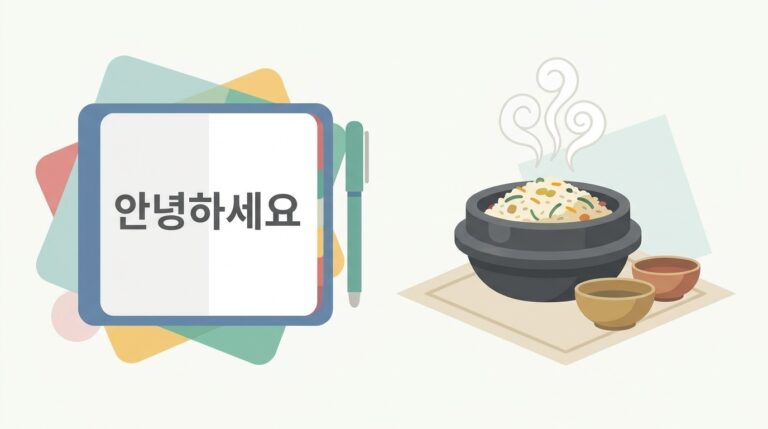
Discovering Korean Rice Culture: The Savory Warmth of Nurungji and Sungnyung
Phase 1: Empathy (Story-driven Opening)
안녕하세요! 매일한글 에디터입니다. (Hello! This is your Daily Hangul editor.)
Imagine sitting inside a cozy traditional Korean restaurant in Insadong on a chilly evening. You’ve just finished a steaming hot bowl of Dolsot Bibimbap (stone pot mixed rice). The main dish is gone, but the dining ritual isn’t over yet. The server brings over a kettle of warm water, pours it directly into your sizzling stone pot, and a delicate, earthy aroma rises into the air. This deep, comforting flavor isn’t sweet or salty—it’s gusuhada (구수하다), the unique savory warmth that Koreans have cherished for centuries.
Many intermediate Korean learners struggle to explain flavors that go beyond simple adjectives like ‘delicious’ (맛있어요) or ‘spicy’ (매워요). When you master expressions related to Nurungji (scorched rice) and Sungnyung (scorched rice tea), you don’t just speak fluent B2-level Korean—you unlock the subtle emotional heart of Korean food culture. Based on feedback from hundreds of our global learners at Daily Hangul, knowing these nuanced dining phrases makes native Koreans instantly welcome you like an insider. Let’s dive into the cozy world of Korean rice culture together!
Phase 2: Deep Dive into 3 Key Expressions
1. 구수한 맛이 나네요 (Gusuhan masi naneyo)
- Pronunciation: [Goo-soo-han ma-shi na-neh-yo] (Think of a warm, comforting ‘gooey-smooth’ roasted grain sensation)
- Meaning: “It has a deep, nutty, savory flavor.”
- K-Culture Moment: You hear this in popular K-Dramas when characters visit traditional markets or enjoy grain-based tea and stone pot rice dishes.
- Editor’s Insight: English translates gusuhada as savory or nutty, but it specifically describes roasted grains, brewed barley tea, or boiled scorched rice. It conveys comforting warmth rather than greasy or salty flavor.
- Situation Spectrum: Casual ✅ / Semi-formal ✅ / Formal ✅
- 🤔 Think About It: Does your native culture have a specific word for comforting, roasted flavor, or do you rely on broader terms like ‘savory’?
2. 누룽지까지 싹싹 긁어먹어야 제맛이죠 (Nurungjikaji ssak-ssak geulgeomeogeoya jemat-ijyo)
- Pronunciation: [Noo-roong-ji-kka-ji ssak-ssak geul-geo-meo-geo-ya je-mat-i-jyo]
- Meaning: “Scraping off every bit of scorched rice is the best part!”
- K-Culture Moment: On variety shows, hosts eagerly scrape the crispy rice bottom from a hot stone pot, calling it the ultimate grand finale of the meal.
- Editor’s Insight: Ssak-ssak (싹싹) is an expressively fun mimic word (의태어) representing a thorough scraping motion. Using 제맛이다 shows you understand authentic food enjoyment.
- Situation Spectrum: Casual ✅ / Semi-formal ✅ / Formal ⚠️
- 🤔 Think About It: In many Western cultures, scraping your dish can seem rude, but in Korea’s stone pot dining, it shows genuine appreciation for every grain!
3. 입가심으로 숭늉 한 잔 어때요? (Ipgasim-euro sungnyung han jan eottaeyo?)
- Pronunciation: [Ipgasim-euro sung-nyung han jan eot-tae-yo?]
- Meaning: “How about a cup of Sungnyung to cleanse our palate?”
- K-Culture Moment: After a heavy Korean BBQ dinner, friends suggest Sungnyung instead of sweet desserts to refresh their stomachs.
- Editor’s Insight: Ipgasim (입가심) refers to a palate cleanser that neutralizes greasy flavors after a meal. Sungnyung serves as Korea’s traditional digestion-friendly dessert.
- Situation Spectrum: Casual ✅ / Semi-formal ✅ / Formal ✅
- 🤔 Think About It: Why do you think traditional Korean meal ends with warm rice tea rather than cold ice cream?
Phase 3: Textbook Korean vs Real Native Korean
Situation 1: Expressing satisfaction after eating scorched rice
- 📖 Textbook Korean: 누룽지가 아주 맛있습니다. (Nurungjiga aju mas-issseumnida.) — “The scorched rice is very delicious.”
- 🗣️ Real Native Korean: 역시 돌솥밥 마지막은 구수한 누룽지가 진리네요! (Yeoksi dolsotbap majstageun gusuhan nurungjiga jillineyo!)
- 💡 Why it’s different: Natives rarely use stiff adjectives. Using 진리 (literally ‘truth’, meaning ‘the absolute best’) along with 구수하다 displays natural B2 fluency.
Situation 2: Suggesting Sungnyung after a meal
- 📖 Textbook Korean: 식사 후에 숭늉을 마십시다. (Siksa hue sungnyungeul masipsida.) — “Let’s drink Sungnyung after the meal.”
- 🗣️ Real Native Korean: 기름진 거 먹었으니까 숭늉으로 깔끔하게 입가심해요. (Gireumjin geo meogeosseunikka sungnyung-euro kkalkeumhage ipgasimhaeyo.)
- 💡 Why it’s different: Native Koreans connect food choices with digestion and feeling clean (깔끔하게), emphasizing shared health and comfort.
Phase 4: K-Culture Deep Dive & Non-Verbal Manners
4-1. Nunchi (눈치) & Gestures
- Pouring Hot Water: When hot water is brought for your dolsot, hold the kettle handle with your right hand while placing your left hand lightly under your wrist or forearm to show respect.
- Pot Etiquette: Don’t scrape metal spoons aggressively against stone pots to create harsh noise. Gently peel away the rice after it softens in hot water.
4-2. Cultural Code Analysis
In ancient Korea, zero food waste was a deeply ingrained value. Nurungji was invented to utilize every remnant of rice stuck to iron cauldrons (gamasot). Today, serving Sungnyung at the end of a meal reflects warm hospitality (Jeong / 정), providing a soothing finish that aids digestion after spicy or rich Korean dishes.
Phase 5: Practical Roleplay Scenario
Setting: A famous traditional pot rice restaurant in Insadong, Seoul.
NPC Character: Minjun (Korean friend showing you traditional dining).
- Minjun: 밥 다 덜어냈으니까 이제 돌솥에 둥굴레차나 따뜻한 물 부어 놓자.
(Bap da deoreonaesseunikka ije dolsote dunggullechana ttatteut-han mul bueo notja.)
“Now that we’ve scooped out the rice, let me pour warm tea into the stone pot.” - You (🎭 Nods attentively): 와, 김이 모락모락 나네요. 이게 누룽지가 되는 거죠?
(Wa, gimi morak-morak naneyo. Ige nurungjiga doeneun geojyo?)
“Wow, steam is rising! This turns into Nurungji, right?” - Minjun: 맞아! 뚜껑 닫아두고 밥 다 먹은 다음에 열면 구수한 숭늉이 되어 있을 거야.
(Maja! Ttukkkeong dada-dugo bap da meogeun da-eume yeolbyeon gusuhan sungnyungi doe-eo isseul geoya.)
“Exactly! Put the lid on, and after finishing our main rice, we’ll have warm Sungnyung ready.” - You (🎭 Takes a bite of main food): 밥도 정말 맛있는데, 벌써 마지막 숭늉 맛이 기대돼요.
(Bapdo jeongmal mas-issneunde, beolsseo majimak sungnyung masi gidaedwaeyo.)
“The rice is delicious, but I’m already looking forward to the Sungnyung at the end.” - Minjun (🎭 Smiles warmly): 한국 음식 문화 완전 적응했네! 입가심으로 이만한 게 없지.
(Hanguk eumsik munhwa wanjeon jeogeonghaenne! Ipgasim-euro imanhan ge eoptji.)
“You’ve totally adapted to Korean food culture! Nothing beats this for a palate cleanser.” - You (🎭 Opens the pot lid carefully): 이제 열어볼까요? 국물이 정말 구수해 보여요.
(Ije yeoreobolkkayo? Gungmuri jeongmal gusuhae boeoyo.)
“Shall we open it now? The broth looks incredibly savory.” - Minjun: 응, 바닥에 붙은 누룽지까지 싹싹 긁어서 마셔봐.
(Eung, badage beuteun nurungjikaji ssak-ssak geulgeoseo masyeobwa.)
“Yes, scrape up every bit of scorched rice at the bottom and taste it.” - You (🎭 Takes a sip with a satisfied sign): 진짜 속이 편안해지는 느낌이에요. 최고예요!
(Jinjja sogi pyeon-anhaejineun neokkim-ieyo. Choego-eyo!)
“It really makes my stomach feel comfortable. This is the best!”
🔀 Interactive Choice Point
What will you say when Minjun asks if you want dessert after Sungnyung?
* Option A: “아니요, 숭늉 마시니까 입가심이 깔끔하게 돼서 만족스러워요!” (Best Choice)
* Option B: “너무 배불러서 더 못 먹겠어요.” (Bad Choice – a bit dry)
* Option C: “숭늉은 별로니까 아이스크림 먹으러 가요.” (Risk Choice – dismisses the tradition)
Feedback:
* Option A (Best): Perfect! Complimenting Sungnyung as a natural palate cleanser highlights cultural insight.
* Option B (Bad): Correct grammatically, but misses an opportunity to express emotional warmth.
* Option C (Risk): Calling traditional Sungnyung unappealing might offend your host’s culinary effort!
Phase 6: 10-Second Emotion Shadowing Drill
- [😊 Warm & Satisfied] 역시 / 돌솥밥의 마무리 / 숭늉은 / 정말 구수하네요!
(Yeoksi / dolsotbapeui mamuri / sungnyungeun / jeongmal gusuhaneyo!) - [🤤 Eager & Excited] 누룽지까지 / 싹싹 긁어먹어야 / 진짜 제맛이죠!
(Nurungjikaji / ssak-ssak geulgeomeogeoya / jinmma jemat-ijyo!)
Phase 7: K-Culture Mini Dictionary
- 누룽지 (Nurungji): Crusty, scorched rice formed at the bottom of a pot. Used as snacks or boiled for soup.
- 숭늉 (Sungnyung): Traditional tea made by boiling water over scorched rice remaining in cooking pots.
- 돌솥밥 (Dolsotbap): Rice cooked and served in an individual sizzling hot stone pot.
- 입가심 (Ipgasim): A light food or beverage taken after a meal to refresh the mouth.
Phase 8: Traveler’s Survival Kit
Top 3 Survival Expressions
- 숭늉 물 좀 더 주시겠어요? (Sungnyung mul jom deo jusigesseoyo?) — Could I get a bit more Sungnyung water?
- 돌솥이 뜨거우니까 조심하세요. (Dolsoti tteugeounikka josimhasaeyo.) — Be careful because the stone pot is hot.
- 구수한 국물이 진짜 일품이에요. (Gusuhan gungmuri jinjja ilpum-ieyo.) — The savory broth is truly superb.
Editor’s Travel Note
When traveling in Korea, use the Naver Map app download to search for local 돌솥밥 맛집 (Dolsotbap restaurants). Most traditional eateries accept card payments easily, but remember that sizzling stone pots remain hot throughout the meal, so keep children at a safe distance!
Phase 9: A Step Deeper (Reflection Question)
In fast-paced modern life, waiting for rice to scorch into Nurungji teaches patience. Korean food philosophy values harmony between main dishes and digestive comfort. Finishing a meal together with warm Sungnyung reinforces communal bond and shared relaxation.
💬 Your Turn: Have you ever tried roasted rice tea or Nurungji in Korea? Share your favorite flavor experiences in the comments below!
Phase 10: FAQ & Common Mistakes
Q: What is the exact difference between ‘고소하다’ and ‘구수하다’?
A: Gosohada refers to rich, aromatic nuttiness like sesame oil, roasted almonds, or cheese. Gusuhada refers to earthy, deep, comforting roasted grain flavors like barley tea, soybean paste stew (doenjang-jjigae), and Sungnyung.
Q: Is Nurungji eaten dry or always boiled?
A: Both! Dry Nurungji is popular as a crunchy snack coated with sugar, while boiled Nurungji (called Nurungji-tang) is enjoyed as a soft breakfast or palate cleanser.
Q: Can I scrape the stone pot immediately when served?
A: No! First scoop out the main rice into a separate bowl, pour hot water into the pot immediately, and close the lid. Let it steam while eating your main meal so the scorched rice softens naturally.
🚨 Common Mistakes TOP 3
- ❌ Calling Sungnyung “Rice Soup” (밥국)
- 👉 Correct Action: Use the dedicated cultural term 숭늉 (Sungnyung).
- ❌ Using 매콤하다 (spicy) or 달콤하다 (sweet) for grain teas
- 👉 Correct Action: Always use 구수하다 (gusuhada).
- ❌ Pouring cold water into a sizzling hot stone pot
- 👉 Correct Action: Always use the warm water pitcher provided by the restaurant to prevent thermal shock to the pot.
Phase 11: Action Mission & Engagement
- 🥉 Bronze Mission: Practice saying “구수한 숭늉 맛있어요” aloud 3 times.
- 🥈 Silver Mission: Post a picture of your favorite warm comfort food on social media using the hashtag
#DailyHangul_RiceCulture. - 🥇 Gold Mission: Order Dolsotbap at an authentic Korean restaurant and successfully use the phrase “입가심으로 숭늉 마셔요”!
🎮 K-Culture Mission: Watch a food vlog or K-drama dining scene and spot characters pouring hot water into a pot to make Sungnyung!
Phase 12: Interactive Quiz Challenge
1. Fill in the blank: “식사 후에 깔끔하게 ( _____ )으로 숭늉을 마셨어요.”
- A) 후식
- B) 입가심
- C) 간식
2. True or False: ‘구수하다’ is used to describe sweet chocolate desserts.
- True / False
Click to reveal answers!
- Answer: B) 입가심 (Ipgasim specifically means palate cleanser after savory meals).
- Answer: False (‘구수하다’ is reserved for earthy, roasted grain, or traditional broth flavors).







