

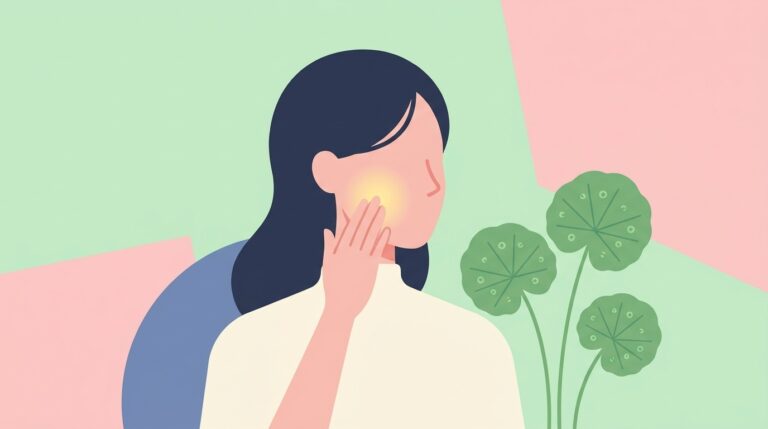
Phase 1: Empathy (Story-Driven Opening)
안녕하세요! 매일한글 에디터입니다.
Picture this: You just landed in Seoul, ready to explore the vibrant street markets of Myeongdong and sample mouthwatering spicy tteokbokki. But after hours of long-haul travel, fluctuating airplane humidity, and sudden weather changes, you wake up in your hotel room, look in the mirror, and freeze. Your skin is red, irritated, and suddenly throwing a massive breakout tantrum right before your aesthetic K-drama cafe tour!
Panicked, you step into a sprawling Olive Young store. Rows upon rows of green tubes and soothing creams stare back at you. You hear beauty advisors talking about “시카” (Cica) and “진정” (Soothing), but how do you actually explain your specific skin frustration in natural, fluent Korean without sounding like a translated textbook?
Navigating K-Beauty ingredient culture isn’t just about reading product labels; it’s about expressing your skin’s immediate needs with confidence. This guide was crafted directly from real feedback from intermediate learners who wanted to sound like a local when shopping for skincare solutions in Korea. By mastering these expressively natural B2-level phrases, you’ll transform an embarrassing beauty emergency into a seamless, authentic Korean shopping experience!
Phase 2: Deep Dive into Key Expressions
1. 피부가 뒤집어지다
- Pronunciation: [pibuga dwijib-eojida] (Sounds like pee-boo-gah dwee-jeeb-eo-jee-dah)
- Meaning: Literal: “My skin flipped upside down.” / Nuance: My skin is breaking out badly or reacting suddenly to something.
- K-Culture Moment: Commonly used in vlogs or beauty livestreams when creators explain sudden skin flare-ups due to stress, fine dust, or changing seasons.
- Editor’s Insight: This idiomatic verb (뒤집어지다) captures the dramatic nature of sudden breakouts far better than the literal medical term “트러블이 나다”.
- Situation Spectrum: Casual ✅ | Semi-formal ⚠️ | Formal 🚫
- Think About It: In English, we say “breaking out,” focusing on eruption. Why do you think Korean uses “flipping upside down” to describe skin trouble?
2. 붉은기를 잡다
- Pronunciation: [bulgeun-gireul japda] (Sounds like bool-geun-gee-reul jahp-dah)
- Meaning: Literal: “To catch the redness.” / Nuance: To effectively soothe, neutralize, or tone down skin flushing and inflammation.
- K-Culture Moment: Frequently featured on beauty shows like Get It Beauty when experts review soothing products like Cica pads or ampoules.
- Editor’s Insight: The verb ‘잡다’ (to catch/hold) is widely used in Korean to mean controlling or fixing a problematic state (e.g., 잡티를 잡다, 냄새를 잡다).
- Situation Spectrum: Casual ✅ | Semi-formal ✅ | Formal ⚠️
- Think About It: How does the active concept of “catching redness” differ from simply saying “reducing redness” in your native language?
3. 자극 없이 진정시키다
- Pronunciation: [jageuk eopsi jinjeongsik-ida] (Sounds like jah-geuk eop-shee jeen-jeong-shee-kee-dah)
- Meaning: Literal: “To soothe without irritation.” / Nuance: To gently calm reactive skin without causing any harsh side effects.
- K-Culture Moment: Used by skincare counter staff when pitching hypoallergenic Cica formulations to customers with sensitive skin.
- Editor’s Insight: B2 learners should notice ‘진정’ (calming/soothing), a core term in Korean aesthetic skincare that applies to both physical skin and emotional calmness.
- Situation Spectrum: Casual ✅ | Semi-formal ✅ | Formal ✅
- Think About It: Korean beauty culture heavily emphasizes gentle, non-irritating care rather than harsh spot treatments. How does this reflect holistic health values?
Phase 3: Textbook Korean vs. Real Korean
Scenario 1: Describing a sudden skin breakout
- 📖 Textbook Korean: “얼굴에 트러블이 많이 발생했습니다.” (Severe trouble has occurred on my face.)
- 🗣️ Real Korean: “갑자기 먼지 때문인지 피부가 싹 뒤집어졌어요.” (My skin suddenly broke out completely, maybe due to fine dust.)
- 💡 Why the difference?: Textbook phrasing sounds like a medical report. Real native speakers use ‘싹’ (completely) and ‘뒤집어지다’ to emphasize sudden change with vivid feeling.
Scenario 2: Asking for a soothing skincare recommendation
- 📖 Textbook Korean: “진정 효과가 있는 화장품을 추천해 주십시오.” (Please recommend cosmetics with soothing effects.)
- 🗣️ Real Korean: “붉은기 싹 잡아주는 시카 크림 좀 추천해 주시겠어요?” (Could you recommend a cica cream that really catches redness?)
- 💡 Why the difference?: Adding specific ingredient terms like ‘시카’ alongside descriptive benefits like ‘붉은기 잡아주는’ makes your query precise and naturally conversational.
Phase 4: K-Culture Deep Dive & Non-verbal Manners
4-1. Nunchi & Shopping Gestures
When shopping at popular cosmetic stores like Olive Young or Lalavla in Korea, staff often follow subtle non-verbal cues. If you want space to browse, holding a shopping basket with two hands and making soft eye contact with a gentle nod signals polite independence. When asking about soothing products, pointing lightly to your cheek while grimacing slightly conveys skin irritation intuitively before you even speak.
4-2. Culture Code: The Cica Craze in Korea
In Korean beauty culture, ‘시카’ (derived from Centella Asiatica or Gotu Kola) is considered the holy grail of calming skin ingredients. Korean consumers prioritize preventive barrier care (피부 장벽 케어) over heavy concealer cover-ups. Expressing interest in Cica shows shop staff that you understand modern Korean skincare philosophy, earning you richer recommendations and generous samples (덤).
Phase 5: Real Roleplay Scenario
Setting: Olive Young store in Hongdae. You are looking for a rapid skin-soothing solution.
NPC: Minji (Attentive K-Beauty Advisor)
- Minji: 안녕하세요! 찾으시는 화장품 있으세요?
(Annyeonghaseyo! Chajeusineun hwajangpum isseuseyo?)
“Hello! Is there any skincare product you’re looking for?”
🎭 (Smiles warmly and gestures toward the skincare section) -
Learner: 네, 제가 요며칠 여행하면서 피부가 완전히 뒤집어졌거든요.
(Ne, jega yomyeochil yeohaenghamyeonseo pibuga wanjeonhi dwijib-eojyeotgeodeunyo.)
“Yes, my skin broke out completely while traveling these past few days.”
🎭 (Touches cheek lightly with a concerned expression) -
Minji: 아, 정말 속상하시겠어요. 요새 날씨가 건조해서 더 그럴 수 있어요.
(A, jeongmal soksanghasigesseoyo. Yosae nalssiga geonjohaeseo deo geureol su isseoyo.)
“Oh, that must be so upsetting! The dry weather lately makes it worse.”
🎭 (Nods in empathy and inspects soothing displays) -
Learner: 맞아요. 그래서 붉은기 싹 잡아주는 시카 제품을 보고 있어요.
(Majayo. Geuraeseo bulgeun-gi ssak jaba-juneun sika jepum-eul bogo isseoyo.)
“Exactly. So I’m looking for a Cica product that calms redness quickly.”
🎭 (Points toward the green-capped Cica section) -
Minji: 이 시카 토너 패드가 자극 없이 진정시키기에 딱이에요. 인기 정말 많아요!
(I sika toneo paedeuga jageuk eopsi jinjeongsik-igie ttagieyo. Ingi jeongmal manhayo!)
“This Cica toner pad is perfect for soothing without irritation. It’s super popular!”
🎭 (Picks up a tester jar and shows the soaked pads) -
Learner: 민감성 피부에도 자극이 없을까요?
(Mingamseong pibuedo jageugi eopseulktayo?)
“Will it be non-irritating for sensitive skin as well?”
🎭 (Tilts head attentively) -
Minji: 네, 저자극 테스트 완료된 제품이라 안심하고 쓰셔도 돼요!
(Ne, jeojageuk teseuteu wanryodeon jepum-ira ansimhago sseusyeodo dwaeyo!)
“Yes, it’s dermatologist tested low-irritation, so you can use it worry-free!”
🎭 (Hands over a test pad for gentle application on hand) -
Learner: 좋네요! 이걸로 하나 주시고 샘플도 좀 챙겨주세요.
(Johneyo! Igeollo hana jusigo saempledo jom chaenggyeojuseyo.)
“Great! I’ll take one of these, and please include some samples too.”
🎭 (Smiles enthusiastically and leads to checkout)
🔀 Interactive Branching Choice
If Minji asks if you want an ampoule or cream instead, how do you reply?
- Choice A: “크림보다는 끈적이지 않고 빠르게 진정되는 제형으로 주세요.”
- Feedback (Best): Perfect! You specified texture preference (non-sticky, quick calming) using natural intermediate vocabulary.
- Choice B: “그냥 아무거나 제일 싸고 좋은 거 주세요.”
- Feedback (Bad): Sounds dismissive and abrupt. It misses the opportunity to express specific skincare needs.
- Choice C: “저는 피부 약해요. 아무것도 바르기 싫어요.”
- Feedback (Risk): Sounds contradictory after asking for product help and may confuse the clerk.
Phase 6: 10-Second Emotion Shadowing Drill
Practice these lines out loud with expressive pitch and emotion!
[🥺 Worried & Frustrated]
갑자기 / 여행 와서 / 피부가 싹 / 뒤집어졌어요.
(Gapjagi / yeohaeng waseo / pibuga ssak / dwijib-eojyeotseoyo.)-
[😊 Hopeful & Direct]
붉은기 싹 잡아주는 / 시카 크림 / 추천해 주시겠어요?
(Bulgeun-gi ssak jaba-juneun / sika keurim / chucheonhae jusigesseoyo?) -
[😌 Relieved & Satisfied]
자극 없이 / 진정되는 느낌이라 / 정말 마음에 드네요!
(Jageuk eopsi / jinjeongdoeneun neukkim-ira / jeongmal maeume deuneyo!)
Phase 7: K-Culture Mini Dictionary
- 시카 (Sika) | Cica / Centella Asiatica | The most iconic Korean soothing skincare ingredient, known for repairing skin barriers.
- 진정 (Jinjeong) | Soothing / Calming | Crucial term used across masks, creams, and serums targeting redness and breakouts.
- 트러블 (Teureobeul) | Skin Breakout / Blemish | Loan word adapted in Korea specifically referring to acne, rashes, or sudden breakouts.
- 성분 (Seongbun) | Ingredient | Essential term when reading Korean beauty labels to check for active formulations.
Phase 8: Traveler’s Survival Kit
Survival Expressions TOP 3
- 민감성 피부용인가요? (Mingamseong pibuyong-ingayo?) – “Is this for sensitive skin?”
- Pro Tip: Use this when double-checking formulations.
- 테스터 사용해 봐도 돼요? (Teseuteo sayonghae bwado dwaeyo?) – “May I try the tester?”
- Pro Tip: Always test creams on your inner wrist first.
- 진정 패드 어디에 있어요? (Jinjeong paedeu eodie isseoyo?) – “Where are the soothing toner pads?”
- Pro Tip: Toner pads are located in dedicated skincare aisles.
Editor’s Travel Note
Before shopping in Korea, download essential local lifestyle applications. Use the NAVER Map App Download to find flagship cosmetic stores around popular areas like Seongsu or Myeongdong. Shopping duty-free is effortless if you keep your physical passport handy at the cashier desk!
Phase 9: One Step Deeper (Cultural Insight)
In Korean culture, maintaining clear skin (꿀피부 – honey skin) is viewed not as vanity, but as a core reflection of self-care and respect toward others. Rather than masking imperfections under heavy foundation, Korean skincare culture prioritizes calming irritation at its root through ingredients like Cica. This deep commitment to gentle nurture mirrors the broader Korean cultural value of harmony and considerate care in daily relationships.
💬 Your Turn: What skincare ingredient is most popular in your home country when your skin breaks out? Share your thoughts in the comments below!
Phase 10: FAQ & Misconception Prevention
Q: Can I use Cica products every single day?
A: Yes! Cica (Centella Asiatica) is non-comedogenic and mild, designed specifically for everyday daily skin recovery.
Q: Is ‘트러블’ considered a formal medical term in Korea?
A: No, ‘트러블’ is conversational shorthand for acne or flare-ups. Doctors use ‘여드름’ (acne) or ‘피부염’ (dermatitis).
Q: What does ‘저자극’ mean on cosmetic packaging?
A: ‘저자극’ means hypoallergenic or low-irritation, ideal for sensitive skin during climate changes.
🚨 Common Mistakes TOP 3
- Mistake: Saying “얼굴이 아파요” when skin breaks out.
- Correct Action: Use “피부가 뒤집어졌어요” for breakouts, as ‘아파요’ implies physical muscular or internal pain.
- Mistake: Translating “soothe skin” as “피부를 조용히 하세요”.
- Correct Action: Use the correct skincare term “피부를 진정시키다”.
- Mistake: Asking for “여드름 약” at a cosmetic retail shop.
- Correct Action: Ask for cosmetic care like “진정 케어 제품” or visit a pharmacy (약국) for medical acne ointment.
Phase 11: Action Mission & Engagement
- 🥉 Bronze Level: Say “피부가 뒤집어졌어요” 3 times out loud with natural emotional tone.
- 🥈 Silver Level: Check one of your skincare products at home and look up if it contains Centella (시카).
- 🥇 Gold Level: Visit a local K-Beauty store or website and ask/search in Korean using “붉은기 잡는 시카 크림”.
🎮 K-Culture Mission: Watch a K-beauty vlog on YouTube and comment when you spot the host saying “진정” or







