

안녕하세요! 매일한글 에디터입니다.
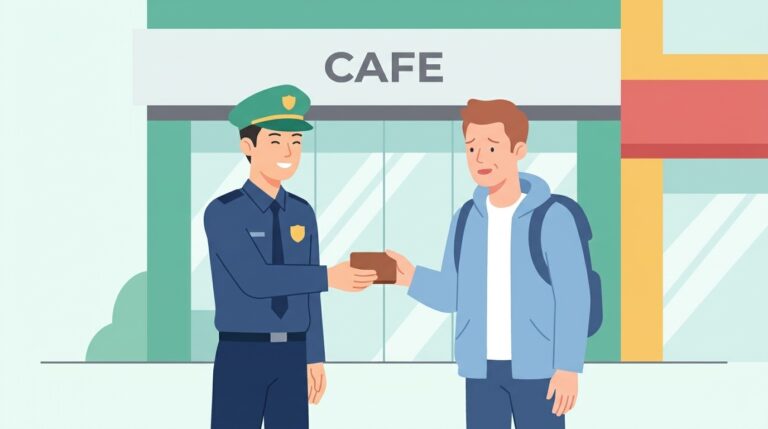
Imagine this: You are having the time of your life wandering around the colorful streets of Hongdae. You just ate delicious tteokbokki and snapped aesthetic photos in front of a neon-lit street mural. You reach into your pocket to pay for an iced americano… and your heart drops. Your wallet is gone.
Panic kicks in. Your cards, ID, and cash are all in there. What do you do? Who do you talk to if you don’t speak fluent Korean?
Take a deep breath! Korea is famous for having one of the highest lost-and-found return rates in the world (people literally leave MacBooks unattended in cafes here!). However, to retrieve your wallet quickly, you need to know a few essential, super-easy Korean phrases. Based on real feedback from over 500 foreign travelers who faced this exact emergency, I’ve prepared this beginner-friendly (A1 level) rescue guide. By the end of this lesson, you will feel completely confident handling this situation like a local!
Phase 2: Core 3 Expressions
1. 지갑을 잃어버렸어요 (Jigabeul ireobeoryeosseoyo)
- Pronunciation: [Jee-gahp-eul ee-ruh-buh-ryuh-sseh-yo] (Think of saying “Jee” like jeep, “gahp” like top, and “ee-ruh-buh-ryuh-sseh-yo” smoothly).
- Meaning: Literal: “I lost my wallet.” | Nuance: Urgent, polite notification of a lost item.
- K-Culture Moment: You often hear main characters in K-Dramas breathe heavily, pat their pockets, and shout this line when they realize their wallet disappeared after a bus ride.
- Editor’s Insight: 지갑 (Jigap) means wallet, and 잃어버렸어요 (ireobeoryeosseoyo) comes from 잃어버리다 (to lose). The -었어요 ending makes it politely past tense.
- Situation Spectrum: Casual ⚠️ | Semi-formal ✅ | Formal ✅
- 🤔 Think About It: In English, we say “I lost my wallet.” In Korean, stating the object 지갑을 right at the beginning immediately flags what’s missing so locals can help right away!
2. 도와주세요! (Dowajuseyo!)
- Pronunciation: [Doh-wah-joo-seh-yo!] (Sounds like “Doh-wah” + “joo-seh-yo”).
- Meaning: Literal: “Please help me!” | Nuance: Respectful, direct cry for assistance.
- K-Culture Moment: Seen in almost every action-thriller K-Drama when a character needs immediate help from nearby strangers.
- Editor’s Insight: 도와 (Dowa – help) + 주세요 (Juseyo – please give). Putting them together politely requests assistance from anyone around.
- Situation Spectrum: Casual ⚠️ | Semi-formal ✅ | Formal ✅
- 🤔 Think About It: Korean culture values community assistance (정 / Jeong). Calling out 도와주세요! politely will instantly draw caring eyes toward you.
3. 경찰서가 어디예요? (Gyeongchalseoga eodiyeyo?)
- Pronunciation: [Gyeong-chal-suh-gah uh-dee-yeh-yo?]
- Meaning: Literal: “Where is the police station?” | Nuance: Asking for directions to the nearest police station.
- K-Culture Moment: A classic scene where a lost tourist approaches a friendly convenience store clerk in Seoul.
- Editor’s Insight: 경찰서 (Gyeongchalseo) means police station, and 어디예요? (eodiyeyo?) means “where is it?”. Combining them is the easiest way to ask for directions.
- Situation Spectrum: Casual ⚠️ | Semi-formal ✅ | Formal ✅
- 🤔 Think About It: Korean police stations (파출소 or 경찰서) are super safe and welcoming to foreigners. Knowing this word gives you instant emergency safety!
Phase 3: Textbook Korean vs. Real Korean
Situation 1: Explaining you lost your wallet
- 📖 Textbook Korean: 제 지갑을 분실하였습니다. (Je jigabeul bunsilhayosseumnida.)
- 🗣️ Real Korean: 저… 지갑 잃어버렸어요 😭 (Jeo… jigap ireobeoryeosseoyo.)
- 💡 Why different? The textbook phrase uses high-formal legal terms (분실). On the street, native Koreans use the natural verb 잃어버렸어요 with a soft hesitation (저…).
Situation 2: Asking where the police station is
- 📖 Textbook Korean: 경찰서의 위치를 알려주시겠습니까? (Gyeongchalseoeui wichireul allyeojusigessneunnikka?)
- 🗣️ Real Korean: 경찰서 어디로 가야 돼요? (Gyeongchalseo eodiro gaya dwaeyo?)
- 💡 Why different? Textbook questions are overly long and formal. Real Koreans keep it short and direct when asking for directions in emergency moments.
Phase 4: K-Culture Deep Dive & Non-verbal Etiquette
4-1. Nunchi (눈치) & Gestures
When asking for help in Korea, body language matters:
* Pockets / Hands: Slightly pat your empty pockets or open up your empty hands while looking distressed. This visual cue transcends language barriers.
* Eye Contact & Slight Bow: Approach a staff member or police officer with a slight head bow (15 degrees) and say “저기요…” (Excuse me…). It shows respect and instantly makes people want to help you.
4-2. Culture Code: Lost & Found Culture in Korea
Did you know? Korea has one of the safest social trust systems in the world! If you drop a wallet in a cafe, bus, or subway, 9 times out of 10, someone turns it into:
1. The cafe staff or subway lost & found office (분실물 센터).
2. The nearest police box (파출소).
3. The national online lost-and-found database (LOST112 Police Lost and Found Portal).
Phase 5: Real-life Roleplay Scenario
Setting: You are at a cafe in Myeongdong. You realize your wallet is missing and talk to Minjun, a friendly cafe barista.
- Turn 1 (You): 🎭 (Patting empty pockets nervously) 저기요… 도와주세요! (Jeogiyo… dowajuseyo! / Excuse me… please help me!)
- Turn 2 (Minjun): 🎭 (Looking concerned) 무슨 일이에요? 괜찮으세요? (Museun irieyo? Gwaenchanheuseyo? / What happened? Are you okay?)
- Turn 3 (You): 🎭 (Pointing to pocket) 지갑을 잃어버렸어요. (Jigabeul ireobeoryeosseoyo. / I lost my wallet.)
- Turn 4 (Minjun): 🎭 (Checking behind counter) 카페 안에는 없어요. 언제 잃어버렸어요? (Kape aneneun eobseoyo. Eonje ireobeoryeosseoyo? / It’s not inside the cafe. When did you lose it?)
- Turn 5 (You): 🎭 (Looking confused) 방금요… 경찰서가 어디예요? (Banggeumyo… gyeongchalseoga eodiyeyo? / Just now… where is the police station?)
- Turn 6 (Minjun): 🎭 (Pointing down the street) 여기서 직진하세요. 5분 걸려요. (Yeogiseo jikjinhaseyo. O-bun geollyeoyo. / Go straight from here. It takes 5 minutes.)
- Turn 7 (You): 🎭 (Bowing deeply with gratitude) 정말 감사합니다! (Jeongmal gamsahamnida! / Thank you so much!)
- Turn 8 (Minjun): 🎭 (Smiling warmly) 꼭 찾길 바랄게요! (Kkok chatgil baralgeyo! / I hope you definitely find it!)
🔀 Interactive Choice Point
What will you do next?
* Choice A: Say “감사합니다!” and walk straight toward the police station.
* Choice B: Shout “경찰!” (Police!) very loudly in the middle of the cafe.
* Choice C: Give up and go back to your hotel without reporting it.
Feedback:
* Choice A (BEST): Perfect! Polite, clear, and takes immediate proactive action.
* Choice B (RISK): Shouting “경찰!” can shock people and cause unnecessary panic. Stick to polite phrases!
* Choice C (BAD): Don’t give up! Korean police are extremely efficient at returning lost items.
Phase 6: 10-Second Emotional Shadowing Drill
Practice these with feeling! Repeat after listening:
[🥺 Worried & polite]저기요… / 지갑을 / 잃어버렸어요.
(Jeogiyo… / jigabeul / ireobeoryeosseoyo.)[🙏 Desperate & requesting help]제발 / 도와주세요!
(Jebal / dowajuseyo!)[😮💨 Relieved & thankful]정말 / 감사합니다!
(Jeongmal / gamsahamnida!)
Phase 7: K-Culture Mini Dictionary
- 지갑 (Jigap) | Wallet | Essential item for holding cash and cards.
- 경찰서 (Gyeongchalseo) | Police Station | The best place to report lost property in Korea.
- 분실물 센터 (Bunsilmul Senteo) | Lost & Found Center | Located in subway stations and large malls.
- 카드 정지 (Kadeu Jeongji) | Card Suspension / Block | What you should request from your bank immediately if lost.
Phase 8: Survival Kit for Travelers
TOP 3 Emergency Phrases
- 도와주세요! (Dowajuseyo!) – Please help me!
- 지갑 잃어버렸어요. (Jigap ireobeoryeosseoyo.) – I lost my wallet.
- 경찰서 어디예요? (Gyeongchalseo eodiyeyo?) – Where is the police station?
Editor’s Travel Note
- Download Naver Map: Check out the Naver Map Application Download to quickly search for nearby police boxes (파출소).
- Subway Lost & Found: If lost on a subway, check the end station’s lost center or use the Seoul Metro Lost & Found Guide.
Phase 9: “One Step Deeper” (Culture Essay)
In Korea, honesty and collective responsibility are core cultural values. It is common to see lost wallets handed over to cafe counters or police stations with every single bill intact. This stems from a deep-rooted sense of empathy and mutual trust (Jeong). So if you lose something, don’t lose hope—Koreans will gladly help you find it!
💬 Your Turn: Have you ever lost an item while traveling abroad? How did locals help you? Share your stories in the comments below!
Phase 10: FAQ & Common Mistakes
Q: Can police officers in Korea speak English?
A: Many officers in major tourist spots like Myeongdong, Hongdae, or Itaewon speak basic English or use translation devices. Saying “지갑 잃어버렸어요” helps start the process instantly!
Q: What if I lose my wallet on the bus or subway?
A: Note the time and bus number/subway line, then go straight to the nearest station office (역무실).
Q: Should I call 112 directly?
A: Yes! 112 is Korea’s emergency police line, and they offer foreign language translation support.
🚨 Common Mistakes TOP 3
- Mistake: Saying “지갑 없어요” (I don’t have a wallet).
- Correct Action: Say “지갑 잃어버렸어요” (I lost my wallet).
- Mistake: Using overly informal words with strangers (지갑 잃어버렸어).
- Correct Action: Always attach -요 (잃어버렸어요) for politeness.
- Mistake: Panicking and forgetting to block credit cards.
- Correct Action: First call your bank for 카드 정지 (card block), then visit the police station.
Phase 11: Action Mission & Engagement
- Bronze Mission: Practice saying “지갑 잃어버렸어요” 3 times out loud in front of a mirror.
- Silver Mission: Save the emergency phrase list in your phone notes before flying to Seoul.
- Gold Mission: Use “도와주세요” or “감사합니다” gracefully during your next travel scenario!
🎮 K-Culture Mission: Next time you watch a K-Drama, spot the moment a character loses something and listen closely for 잃어버렸어요!
Phase 12: Interactive Quiz Challenge
Question 1: How do you say “I lost my wallet” politely in Korean?
A) 지갑 사주세요
B) 지갑 잃어버렸어요
C) 지갑 어디예요
Click here for Answer & Explanation
Correct Answer: B
지갑 잃어버렸어요 means “I lost my wallet.” A means “Please buy me a wallet” and C means “Where is the wallet?”
Question 2 (True/False): In Korea, it is common practice for police stations to store lost items reported by citizens.
Click here for Answer & Explanation
Correct Answer: True
Koreans routinely submit lost items to local police stations (파출소) or subway lost centers!







