

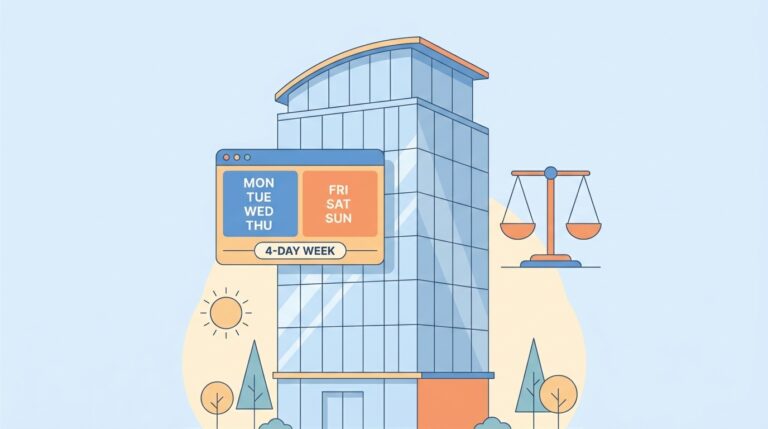
Navigating the 4-Day Workweek Debate in Korea: Master High-Level Labor & Productivity Nuances
Phase 1: Empathy & Story Opening
안녕하세요! I’m your lead editor at Daily Hangul. Imagine sitting in a sleek glass boardroom overlooking Teheran-ro in Gangnam. The atmosphere is charged with intellectual rigor as senior executives debate the feasibility of implementing a four-day workweek (주 4일 근무제). One executive argues that reducing hours will elevate worker motivation, while another cautions against reduced operational output in a fiercely competitive global market. As a high-level communicator, you want to jump into this nuanced discourse with confidence, articulating subtle economic trade-offs, organizational efficiency, and quality-of-life considerations without stuttering or relying on overly simplified textbook phrases.
Navigating advanced labor discussions in Korean requires more than just memorizing vocabulary; it demands a deep grasp of corporate discourse, societal values, and refined pragmatic nuance. Advanced learners frequently report feeling intimidated when transitioning from casual conversation to professional policy debates. This guide has been crafted based on empirical feedback from executive-level Korean language learners and industry professionals. By mastering the expressions, cultural codes, and debate strategies outlined below, you will gain the linguistic prestige necessary to hold your ground in any Korean corporate or academic discussion regarding labor reforms.
Phase 2: Core Expression Deep Dive
1. 주 4일 근무제 도입 (Ju sa-il geun-mu-je do-ip)
- Pronunciation: [Ju sa-il geun-mu-je do-ip] (Sounds like “Zoo sah-il geun-moo-jeh doh-ip”)
- Meaning: Introduction of the 4-day workweek. Literally: “Week 4-day work system introduction.”
- K-Culture Moment: Frequently featured on economic talk shows like KBS Myeonggyeonmansang and corporate board scenes in corporate K-dramas like Search: WWW or Agency.
- Editor’s Insight: At the C2 level, note the formal nominalization using ‘도입’ (introduction/adoption). Rather than saying “주 4일 동안 일해요” (working 4 days a week), using ‘주 4일 근무제 도입’ shifts your speech instantly into formal policy and management discourse.
- Situation Spectrum: Casual 🚫 | Semi-formal ⚠️ | Formal ✅
- 🤔 Think About It: How does your native language structure formal policy proposals compared to Korean’s preference for Sino-Korean noun stacking?
2. 생산성 제고와 삶의 질 향상 (Saeng-san-seong je-go-wa sam-ui jil hyang-sang)
- Pronunciation: [Saeng-san-seong je-go-wa sam-ui jil hyang-sang] (Sounds like “Saeng-sahn-seong jeh-go-wah sahm-uee jeel hyahng-sahng”)
- Meaning: Enhancing productivity and improving the quality of life.
- K-Culture Moment: Used by HR directors during town hall meetings when presenting new flexible work policies or hybrid work models.
- Editor’s Insight: Pay close attention to ‘제고’ (raising/enhancing), a sophisticated Sino-Korean term (
提高) preferred over the basic ‘높이기’. Pairing ‘제고’ with ‘생산성’ demonstrates high linguistic register. - Situation Spectrum: Casual 🚫 | Semi-formal ⚠️ | Formal ✅
- 🤔 Think About It: Is ‘quality of life’ viewed as an individual entitlement or an organizational benefit in your work culture?
3. 일과 삶의 균형 (Il-gwa sam-ui gyun-hyeong) / 워라밸 (Wo-ra-bael)
- Pronunciation: [Il-gwa sam-ui gyun-hyeong] (Sounds like “Eel-gwah sahm-uee gyun-hyeong”)
- Meaning: Work-life balance. (Abbreviated neologism: Work-Life Balance = 워라밸).
- K-Culture Moment: Seen across modern Korean workplace reality shows like No Prepared or workplace vlogs on YouTube where tech employees discuss modern office perks.
- Editor’s Insight: While ‘워라밸’ is widely accepted in casual office chatter, ‘일과 삶의 균형’ is required for formal presentations, white papers, and corporate policy debates.
- Situation Spectrum: Casual ✅ (워라밸) | Semi-formal ✅ | Formal ✅ (일과 삶의 균형)
- 🤔 Think About It: How has the perception of long working hours shifted across generations in your society?
Phase 3: Textbook Korean vs. Native Real-Talk
Scenario 1: Discussing productivity concerns
- 📖 Textbook Korean: “근무 시간이 줄어들면 회사 실적이 나빠질 수 있습니다.” (If working hours decrease, company performance might worsen.)
- 🗣️ Native Real-Talk: “근로 시간 단축이 자칫 업무 공백이나 생산성 저하로 이어지지 않도록 철저한 대비책 마련이 시급합니다.” (We urgently need thorough contingency measures so that reduced working hours do not lead to operational gaps or productivity loss.)
- 💡 Why the Difference? C2-level discourse replaces simple conditional clauses with precise compound noun phrases (‘업무 공백’, ‘생산성 저하’) and formal modal structures (‘이어지지 않도록… 시급합니다’).
Scenario 2: Expressing support for flexible work arrangements
- 📖 Textbook Korean: “주 4일제를 하면 직원들이 행복해져서 일을 더 잘할 것입니다.” (If we do the 4-day system, employees will become happier and work better.)
- 🗣️ Native Real-Talk: “주 4일제 도입은 임직원의 복지 증진뿐만 아니라 몰입도 높은 근무 환경을 조성하는 정량적 계기가 될 것입니다.” (Adopting a 4-day workweek will serve as a quantitative trigger to build a high-engagement work environment as well as improve employee welfare.)
- 💡 Why the Difference? Professional Korean relies on abstract Sino-Korean vocabulary (‘몰입도’, ‘정량적 계기’, ‘환경 조성’) to articulate strategic management benefits.
Phase 4: K-Culture Deep Dive & Non-Verbal Etiquette
4-1. Nunchi & Executive Demeanor
When debating sensitive topics like working hours or labor policy in a Korean corporate setting, tone and non-verbal cues are critical:
* Controlled Pitch: Avoid emotional spikes in voice pitch. Maintain a steady, resonant low tone.
* Two-Handed Gesture: When referencing documents or slides, extend your hand with palms facing slightly upward or flat, using both hands or supporting your right elbow with your left hand.
* Nodding & Acknowledgment: Use phrases like “말씀하신 취지에는 충분히 공감합니다만…” (I fully empathize with the intent of your point, however…) before raising counterarguments to maintain harmony (화, 和).
4-2. Cultural Code Analysis: The Shift from ‘Yageun’ Culture to Smart Work
Historically, South Korea’s economic expansion was fueled by intense dedication, exemplified by ‘야근’ (overtime work) and ‘회식’ (after-work dinner gatherings). However, the modern Korean corporate landscape—spearheaded by IT conglomerates in Pangyo and Gangnam—is undergoing a paradigm shift. Terms like ‘스마트 워크’ (Smart Work) and ‘시절약’ (Time-saving efficiency) are replacing sheer hours spent at desks. Understanding this cultural pivot helps you frame your arguments around value creation rather than merely working less.
Phase 5: Real-Life Roleplay Scenario
Setting: Boardroom at a tech strategy firm in Pangyo. Executive Director Kim (김 이사) and Senior Strategy Consultant Alex (학습자).
- Turn 1 (Kim): “알렉스 위원, 이번 주 4일 근무제 시범 도입건에 대해 경영진의 우려가 큽니다. 업무 효율이 정말 담보될 수 있습니까?”
(Mr. Alex, executive management has major concerns regarding the trial run of the 4-day workweek. Can operational efficiency truly be guaranteed?)
🎭 Demeanor: Leaning forward, folding hands with a serious expression. -
Turn 2 (Alex): “네, 김 이사님. 단순히 일하는 시간을 줄이는 것이 아니라, 불필요한 회의를 축소하고 업무 프로세스를 자동화하는 고도화 작업이 병행될 예정입니다.”
(Yes, Director Kim. It is not merely about cutting work hours; it will be accompanied by optimization work that reduces unnecessary meetings and automates workflows.)
🎭 Demeanor: Calm, opening tablet to show data charts with both hands. -
Turn 3 (Kim): “하지만 고객사 응대나 급작스러운 이슈 발생 시 대응에 공백이 생길 위험은 어떻게 관리할 생각입니까?”
(However, how do you plan to manage the risk of response coverage gaps during client inquiries or emergency issues?) -
Turn 4 (Alex): “그 점에 대해서는 부서별 교대 휴무제와 시프트 근무 방식을 적용하여 고객사 대응에 단 1초의 공백도 발생하지 않도록 조치했습니다.”
(To address that point, we applied departmental staggered day-offs and shift work methods to ensure not even a second of gap occurs in client coverage.) -
Turn 5 (Kim): “음, 듣고 보니 일리가 있군요. 그렇다면 임금 삭감 없는 주 4일제가 생산성 향상으로 연결된 해외 사례가 있습니까?”
(Hmm, hearing that, it makes sense. In that case, are there overseas cases where a 4-day workweek without wage cuts led to productivity gains?) -
Turn 6 (Alex): “영국과 유럽의 주요 IT 기업 사례를 보면, 근로자의 피로도 감소가 업무 집중도 향상으로 이어져 매출이 오히려 상향 안정화되었습니다.”
(Looking at cases of key IT firms in the UK and Europe, reduced worker fatigue led to increased focus, which actually stabilized revenue upward.) -
Turn 7 (Kim): “좋습니다. 이번 이사회 보고서에 해당 데이터를 정량적으로 보완해서 제출해 주시죠.”
(Good. Please supplement that data quantitatively in the upcoming board report and submit it.) -
Turn 8 (Alex): “네, 알겠습니다. 경영진께서 확신을 가지실 수 있도록 완벽히 준비하겠습니다.”
(Yes, understood. I will prepare it perfectly so that the executive board feels completely confident.)
🔀 Interactive Decision Branch
How would you respond if Director Kim asks: “임금 조정 없는 근로시간 단축이 과연 공평한가요?” (Is reducing working hours without wage adjustment really fair?)
- Choice A (Best): “단순 시간 노동이 아닌 성과 중심의 평가 제도를 정착시킴으로써 공정성 논란을 해소할 수 있습니다.”
Feedback: Exceptional! Reframes hours into output-based metrics using professional vocabulary.` - Choice B (Bad): “요즘 젊은 직원들은 돈보다 쉬는 것을 더 중요하게 생각합니다.”
Feedback: Too informal and emotional. Avoid generational generalizations in high-level policy discussions.` - Choice C (Risk): “다른 회사들도 다 그렇게 하니까 우리도 따라가야 합니다.”
Feedback: Weak strategic logic. High-level leadership requires evidence-based rationale, not peer pressure.`
Phase 6: 10-Second Emotion Shadowing Drill
Practice these sentence contours with precise professional emotional cadence:
- [😊 Confidence & Professional Reassurance]
“생산성 저하에 대한 우려는 / 업무 프로세스의 고도화를 통해 / 충분히 극복 가능합니다.”
(Saeng-san-seong jeo-ha-e dae-han u-ryeo-neun / eom-mu pro-se-seu-ui go-do-hwa-reul tong-hae / chung-bun-hi geuk-bok ga-neung-ham-ni-da.) -
[🤔 Strategic Deliberation & Diplomacy]
“말씀하신 취지에는 깊이 공감하며, / 실무적 리스크를 최소화하는 방향으로 / 보완책을 마련하겠습니다.”
(Mal-sseum-ha-sin chwi-ji-e-neun gip-i gong-gam-ha-myeo, / sil-mu-jeok ri-seu-keu-reul choe-so-hwa-ha-neun bang-hyang-eu-ro / bo-wan-chaek-eul ma-ryeon-ha-get-seum-ni-da.)
Phase 7: K-Culture Mini Dictionary
- 유연근무제 (Yu-yeon-geun-mu-je) | Flexible Work System | Policies allowing employees to customize work hours or location (remote work, compressed hours).
- 업무 몰입도 (Eom-mu mol-ip-do) | Work Engagement/Focus Level | The degree to which employees are psychologically focused and invested in their daily tasks.
- 정량적 성과 (Jeong-ryang-jeok seong-gwa) | Quantitative Results | Measurable output metrics used to evaluate efficiency post-policy implementation.
- 시범 운영 (Si-beom un-yeong) | Pilot Operation/Trial Run | Testing a policy in a controlled department before full company-wide rollout.
Phase 8: Professional & Traveler Survival Kit
Top 3 Executive Survival Phrases
- “시범 운영 결과 데이터를 바탕으로 논의하시죠.”
(Let’s discuss based on the pilot operation result data.)
Pro Tip: Use this to steering emotional arguments back to objective evidence during meetings. - “핵심 지표(KPI) 설정이 선행되어야 합니다.”
(Setting Key Performance Indicators must take precedence.) - “조직 내 공감대 형성이 우선입니다.”
(Building consensus within the organization is the priority.)
Editor’s Travel & Tech Note
When conducting business meetings or research in Seoul, install the Naver Map App for navigating corporate hubs like Pangyo Techno Valley or Digital Media City (DMC). For real-time news analysis on Korean labor policies, use the Naver News Portal and search for ‘주 4일제 시범사업’ (4-day week pilot projects).
Phase 9: One Step Deeper (Reflective Insight)
South Korea’s rapid economic development (the ‘Miracle on the Han River’) was historically built on collective endurance and sacrifice. However, modern Korean society is experiencing a profound transformation in its relationship with labor. As individual self-actualization and wellness become key priorities, the debate over the 4-day workweek represents more than just a schedule change—it is a critical evolution in how Koreans balance social solidarity with personal autonomy. Communicating at a C2 level means recognizing these socio-cultural shifts and speaking to them with nuance.
💬 Your Turn: What is the strongest counterargument against the 4-day workweek in your country’s industry? Share your thoughts in Korean below!
Phase 10: FAQ & Common Mistakes
Q: Is ‘워라밸’ appropriate in formal board presentations?
A: While widely understood, it is better to use formal expressions like ‘일과 삶의 균형’ or ‘근로자 삶의 질 향상’ during official executive presentations or written strategy reports.
Q: How do I express disagreement respectfully to a superior in Korean?
A: Start with partial agreement or acknowledgment: “이사님 의견에 동의합니다만, [Alternative] 측면도 함께 고려해 볼 수 있을 것 같습니다.”
Q: What is the difference between ‘근로’ (Geun-ro) and ‘노동’ (No-dong)?
A: ‘근로’ often emphasizes diligent work within an employment structure (frequently used in official legal/corporate contexts like ‘근로기준법’), whereas ‘노동’ carries a broader socio-economic or labor movement connotation (‘노동조합’).
🚨 Common Mistakes Warning Board
- Wrong: “주 4일제를 하면 일을 안 해요.” (Informal & crude)
Correct Action: Use “근로 시간 축소에 따른 생산성 유지 방안이 필요합니다.” - Wrong: “직원들이 좋아해요.” (Overly simplistic)
Correct Action: Use “임직원의 직무 만족도 및 사기 진작 효과가 큽니다.” - Wrong: “시간이 없어요.” (Unprofessional)
Correct Action: Use “리소스크 및 가용 시간의 한계가 있습니다.”
Phase 11: Action Mission
- Bronze Mission: Record yourself reading the 2 shadowing sentences in Phase 6 with professional pitch control.
- Silver Mission: Write a 3-sentence summary of your opinion on the 4-day workweek in Korean and post it in the comments.
- Gold Mission: Identify a news article on Korean labor reform, spot at least 3 vocabulary words from Phase 7, and outline a counter-argument in formal Korean.
🎮 K-Culture Search Mission: Watch an episode of a workplace Korean drama (e.g., Misaeng or Agency) and write down 2 Sino-Korean terms used during corporate strategy meetings!
Phase 12: Interactive Quiz Challenge
Test your executive Korean proficiency below!
Q1. Fill in the blank with the most appropriate high-level Sino-Korean noun:
“주 4일제 도입을 통해 업무 ______를 극대화할 수 있습니다.”
(A) 땡땡이 (B) 몰입도 (C) 놀이 (D) 야근
🔍 Click to reveal Answer & Explanation
Correct Answer: (B) 몰입도 (Mol-ip-do – Focus/Engagement)
Explanation: ‘업무 몰입도’ means ‘work engagement/focus level.’ (A) is slang for slacking off, (C) means play, and (D) means overtime work.
Q2. True or False:
In a formal presentation to Korean executives, using ‘워라밸’ is preferred over ‘일과 삶의 균형’.
🔍 Click to reveal Answer & Explanation
Correct Answer: False
Explanation: ‘워라밸’ is a colloquial neologism. In formal executive presentations, the full Sino-Korean phrasing ‘일과 삶의 균형’ is expected.







