

Phase 1: Empathy (Story-Immersive Opening)
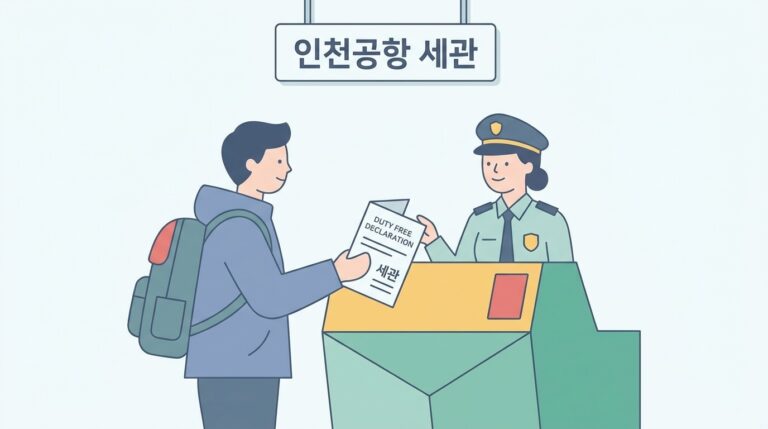
안녕하세요! 매일한글 에디터입니다. Have you ever stood in the bustling arrivals hall at Incheon International Airport, holding a luxury item box or premium Korean skincare set, feeling that sudden spike of anxiety as you approach the baggage customs inspection zone? Korea’s duty-free purchasing limit and personal duty-free exemption allowance (currently set at $800 USD) can feel daunting to navigate, especially when calculating whether you should voluntarily declare your purchases.
For advanced Korean language learners, handling customs regulations isn’t merely about understanding surface-level vocabulary—it is about demonstrating native-level fluency, institutional etiquette, and leveraging official fiscal benefits like voluntary declaration tax reductions (자진신고 감면 혜택) which offer up to a 30% discount on calculated tariffs (up to 200,000 KRW). Our learners often share that mastering these precise administrative expressions transformed their travel experience from anxious hesitation to absolute self-assurance. In this guide, we will unpack C2-level Korean terminology, administrative nuances, and social etiquette so you can handle airport customs like a seasoned local expert.
Phase 2: Core Expressions Deep Dive
1. 자진신고하다 (Jajinsinggohada)
- Pronunciation: [ja-jin-sing-go-ha-da] (Rhythmic analog: “jah-jin-sing-go-hah-dah”)
- Meaning: Direct: “To report voluntarily” | Nuance: Proactively declaring goods that exceed the duty-free allowance to customs authorities to receive statutory tax discounts.
- K-Culture Moment: Frequently highlighted in Korean travel vlogs where savvy jet-setters show off their tax deduction receipts after passing Incheon Airport customs.
- Editor’s Insight: Using ‘자진신고’ reflects high civic awareness. It transforms your interaction with customs officers from passive inspection to active legal cooperation.
- Situation Spectrum: Casual 🚫 / Semi-formal ⚠️ / Formal ✅
- 🤔 Think About It: How does your home country incentivize voluntary administrative reporting compared to Korea’s 30% tax discount model?
2. 면세 한도를 초과하다 (Myeonse handoreul chogwahada)
- Pronunciation: [myeon-se han-do-reul cho-gwa-ha-da] (Rhythmic analog: “myeon-seh han-doh-reul cho-gwah-hah-dah”)
- Meaning: Direct: “To exceed the tax-exemption limit” | Nuance: Crossing the legal $800 USD personal exemption threshold or standalone individual limits for alcohol, perfume, and tobacco.
- K-Culture Moment: Frequently heard during high-end duty-free shopping discussions among business travelers verifying item allowances.
- Editor’s Insight: At the C2 level, replace everyday verbs like ‘넘다’ (to pass) with formal administrative vocabulary such as ‘초과하다’ (to exceed).
- Situation Spectrum: Casual ⚠️ / Semi-formal ✅ / Formal ✅
- 🤔 Think About It: Why is precise quantitative language critical when communicating with government administrative authorities?
3. 감면 혜택을 받다 (Gammyeon hyeteageul batda)
- Pronunciation: [gam-myeon hye-tae-geul bat-da] (Rhythmic analog: “gahm-myeon hye-taeg-eul baht-dah”)
- Meaning: Direct: “To receive tax reduction benefits” | Nuance: Legally obtaining a reduced tariff rate by adhering strictly to voluntary disclosure laws.
- K-Culture Moment: Used in economic news broadcasts and airport policy updates explaining Korean customs regulation updates.
- Editor’s Insight: The compound noun ‘감면’ combines tax reduction (감세) and exemption (면세). Mastering these financial compounds validates your C2 proficiency.
- Situation Spectrum: Casual 🚫 / Semi-formal ✅ / Formal ✅
- 🤔 Think About It: How do administrative tax incentive terms reflect institutional trust between citizens and state departments?
Phase 3: Textbook Korean vs Real Korean
Situation 1: Explaining excess duty-free purchases
- 📖 교과서 한국어: 제가 면세 한도를 넘었으니 세금을 내겠습니다. (I passed the duty-free limit so I will pay tax.)
- 🗣️ 진짜 한국어: 면세 한도 초과분이 있어서 자진신고서 작성했습니다. (I have an excess over the duty-free limit, so I filled out a voluntary declaration form.)
- 💡 왜 다를까?: Native speakers use precise administrative nouns like ‘초과분’ (excess portion) and ‘자진신고서’ (voluntary declaration form) to express clarity and administrative intent.
Situation 2: Inquiring about tariff discount eligibility
- 📖 교과서 한국어: 자진신고를 하면 세금을 깎아줍니까? (If I declare voluntarily, do you cut the tax?)
- 🗣️ 진짜 한국어: 자진신고 시 적용되는 관세 감면율이 어떻게 되나요? (What is the customs duty reduction rate applied upon voluntary declaration?)
- 💡 왜 다를까?: Colloquial verbs like ‘깎아주다’ sound overly casual in administrative settings; ‘관세 감면율’ (customs duty reduction rate) demonstrates C2 legal literacy.
Phase 4: K-Culture Deep Dive & Non-verbal Manners
4-1. Nunchi & Gestures
When approaching the customs officer at Incheon Airport, present your passport and customs declaration form (자진신고서) using both hands (두 손으로 전달). Maintain polite eye contact and keep your receipts neatly arranged inside your passport. Avoid rustling hurriedly through bags at the counter; calm, prepared actions signal honesty and command immediate respect.
4-2. Culture Code Analysis
Korea’s tax administration system balances strict legal enforcement with digital convenience. Through mobile platforms (모바일 세관신고), travelers can generate QR declaration codes in seconds. Demonstrating familiarity with both digital systems and formal spoken phrasing reflects the core Korean values of speed (빨리빨리) combined with civic compliance (법규 준수).
Phase 5: Real Roleplay Scenario
- Setting: Incheon Airport Baggage Exit Customs Desk.
- NPC: Customs Inspector Kim (관세청 김 주사님 – Professional, observant, polite).
-
Turn 1 (Officer Kim): “안녕하세요. 입국 신고서와 세관 신고서 확인해 드리겠습니다.” (Annyeonghaseyo. Ipguk singgoseowa segwan singgoseo hwaginhae deurigeotseumnida.) – Hello. I will check your arrival and customs declaration forms. 🎭 Looking closely at scanner screen.
- Turn 2 (Learner): “네, 여기 있습니다. 면세 한도 초과 물품이 있어서 자진신고하려고 합니다.” (Ne, yeogi isseumnida. Myeonse hando chogwa mulpumi isseoseo jajinsinggoharyeogo hamnida.) – Yes, here you go. I have items exceeding the duty-free limit, so I would like to declare them voluntarily. 🎭 Handing documents neatly with two hands.
- Turn 3 (Officer Kim): “아, 자진신고 하셨군요. 초과된 품목과 구매 금액을 말씀해 주시겠습니까?” (A, jajinsinggo hasyeotgunyo. Chogwadoen pummokgwa gumae geumaegeul malsseumhae jusigessseumnikka?) – Ah, you are making a voluntary declaration. Could you state the exceeded items and purchase amounts? 🎭 Adjusting glasses and typing.
- Turn 4 (Learner): “위스키 한 병과 고급 가방 하나입니다. 총액은 미화 1,500달러 상당입니다.” (Wiseuki han byeonggwa gogeup gabang hanaimnida. Chongaegeun mihwa cheonoebaekdallaeosangdangimnida.) – It is one bottle of whiskey and one luxury bag. The total value is equivalent to 1,500 USD. 🎭 Presenting purchase receipts calmly.
- Turn 5 (Officer Kim): “영수증 확인했습니다. 기본 공제 800달러를 제외하고 과세 산정하겠습니다.” (Yeongsujeung hwaginhasseumnida. Gibon gongje palbaekdallareul jejoehago gwase sanjeonghasseumnida.) – Receipts verified. I will calculate taxes after deducting the standard allowance of 800 USD. 🎭 Checking values on system.
- Turn 6 (Learner): “자진신고에 따른 관세 감면 혜택도 함께 적용되는 것이 맞죠?” (Jajinsinggo-e ttareun gwanse gammyeon hyeteagdo hamkke jeokyongdoeneun geosi matjjo?) – The customs tax reduction benefit for voluntary declaration will also be applied, right? 🎭 Asking politely with respectful eye contact.
- Turn 7 (Officer Kim): “네, 맞습니다. 30% 감면 혜택이 적용되어 산정된 세액으로 안내해 드리겠습니다.” (Ne, matseumnida. Samsip-peosenteu gammyeon hyeteagi jeokyongdoeeo sanjeongdoen seaegeuro annaehae deurigeotseumnida.) – Yes, correct. A 30% discount will be applied to calculate your final tax amount. 🎭 Printing tax receipt.
- Turn 8 (Learner): “감사합니다. 모바일 가상계좌나 카드로 즉시 납부 가능한가요?” (Gamsahamnida. Mobail gasanggyejwana karadeuro jeuksi napbu gananghangayo?) – Thank you. Can I pay immediately via mobile virtual account or credit card? 🎭 Preparing payment card.
🔀 Interactive Branching Point
- Question: How would you respond if the officer asks if you have any additional undisclosed taxable items?
- Option A: “없습니다. 모두 자진신고서에 명시했습니다.” (Best Choice)
- Option B: “글쎄요, 싸구려 기념품도 다 적어야 하나요?” (Bad Choice)
- Option C: “잘 모르겠는데 그냥 넘어가 주시면 안 될까요?” (Risk Choice)
Branch Feedback
- Option A (Best): Clear, formal, fully cooperative. Instantly confirms your legal reliability.
- Option B (Bad): Sounds defensive and dismissive toward administrative procedure, risking mandatory manual baggage inspection.
- Option C (Risk): Highly improper; requesting personal leniency from an officer on duty violates official protocol.
Phase 6: 10-Second Emotion Shadowing Drill
- [😊 자신감 있고 정중하게] 면세 한도 초과분이 있어 / 자진신고하려고 합니다.
- [🧐 명확하고 또박또박] 자진신고 시 / 적용되는 감면 혜택을 / 확인하고 싶습니다.
- [🙏 침착하고 신뢰감 있게] 모든 영수증을 / 첨부하여 제출했습니다.
Phase 7: K-Culture Mini Dictionary
- 관세 (Gwanse) | Customs Duty | Import tax levied on foreign purchases exceeding statutory duty-free limits.
- 자진신고 (Jajinsinggo) | Voluntary Declaration | Proactive declaration of taxable imported goods at customs.
- 과세 표준 (Gwase Pyojun) | Taxable Base | The net valuation sum subject to taxation after applying base exemptions.
- 산정 (Sanjeong) | Tax Assessment/Calculation | Official legal or financial computation of applicable duties.
Phase 8: Traveler’s Survival Kit
Survival TOP 3 Expressions
- 자진신고서 서식이 어디에 있나요? (Jajinsinggoseo seosigi eodie itnayo?) – Pro Tip: Use this if you require physical paper declaration forms upon arrival.
- 모바일 세관신고 앱으로 처리 가능합니까? (Mobail segwansinggo aebeuro cheori gananghamnika?) – Pro Tip: Inquire to utilize fast-track QR exit lanes during peak arrival hours.
- 세금 납부 고지서를 발급해 주세요. (Segeum napbu gojiseoreul balgeupkae juseyo.) – Pro Tip: Request official tax payment notices for mobile or online banking transfer.
Editor’s Travel Note
Before landing at Incheon International Airport, streamline your arrival process by setting up your declaration via the official 인천공항 모바일 세관신고 앱 다운로드 service. Completing your declaration digitally grants you a QR code for fast-track clearance, saving valuable time!
Phase 9: A Step Deeper
In Korean society, administrative governance relies on high civic accountability coupled with advanced digital infrastructure. Voluntary declaration (‘자진신고’) is viewed not merely as tax compliance, but as a commitment to civic trust. The statutory 30% tariff reduction incentive reflects a legal structure where proactive transparency is systematically valued and rewarded.
💬 Your Turn: Have you ever declared duty-free items when traveling internationally? Share your experiences and questions in the comments below!
Phase 10: FAQ & Common Mistakes
Q: What is the current standard duty-free allowance in South Korea?
A: The personal duty-free exemption threshold is $800 USD per person. Separate independent allowances apply for alcohol (2 bottles under 2L total, up to $400 USD), perfume (up to 100ml), and tobacco (200 cigarettes).
Q: What exact discount do I receive for voluntary customs declaration?
A: When you voluntarily declare taxable items, you receive a 30% reduction on the calculated customs tax, capped at a maximum deduction of 200,000 KRW.
Q: What penalties apply if taxable items are caught undeclared?
A: Undeclared items discovered during baggage screening are subject to a 40% tax surcharge penalty (가산세), which increases to 60% for repeat violations within two years.
🚨 Common Mistakes TOP 3
- Mistake: Lumping alcohol or perfume limits into the standard $800 USD allowance.
Correct Action: Track alcohol, perfume, and tobacco as independent exemption categories distinct from the $800 USD general limit. - Mistake: Assuming opened personal items bought overseas do not require documentation.
Correct Action: Retain purchase receipts for high-value items acquired abroad regardless of whether packaging is opened. - Mistake: Using casual phrasing when speaking with customs inspectors.
Correct Action: Always use formal honorific style (~하십니까, ~했습니다) during official administrative procedures.
Phase 11: Action Mission
- Bronze Mission: Practice reading the Phase 6 Shadowing Drill sentences aloud three times with proper pauses.
- Silver Mission: Write a original sentence using ‘자진신고’ and ‘감면 혜택’ in the comment section below.
- Gold Mission: Practice setting up a sample declaration on the mobile customs app prior to your trip to Korea.
🎮 K-Culture Mission: Watch an Incheon Airport arrival vlog and spot how travelers present their tax receipts to customs officials!
Phase 12: Interactive Quiz Challenge
-
Situation Quiz: If your luxury handbag purchase totals $1,200 USD, how much exceeds the standard personal duty-free allowance?
See Answer & Explanation
The standard allowance is $800 USD, so the excess taxable amount is $400 USD.
-
Fill-in-the-Blank: “관세 ____ 혜택을 받기 위해 세관에 자진신고서를 제출했습니다.”
See Answer & Explanation
Answer: 감면 (Gammyeon – Tax reduction). Full phrase: 관세 감면 혜택 (Customs duty reduction benefit).
-
True/False Culture Quiz: Voluntary customs declaration in Korea offers a 30% tax discount capped at 200,000 KRW. (True / False)
See Answer & Explanation
Answer: True! Voluntary reporting grants up to a 30% reduction capped at 200,000 KRW.






