

Phase 1: Welcome & Empathy
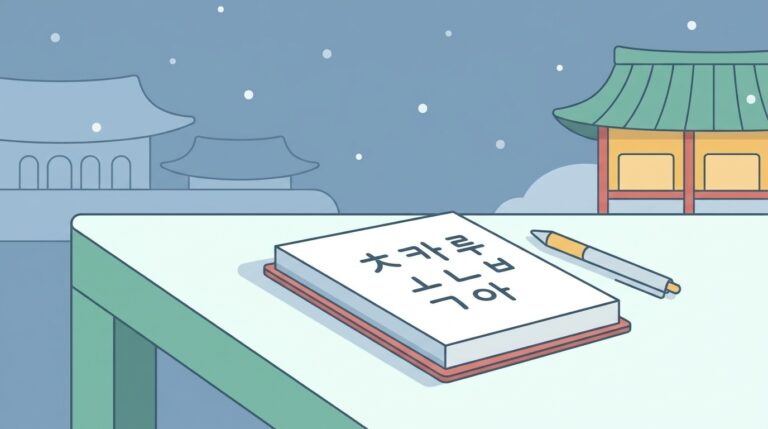
안녕하세요! I’m your Daily Hangul chief editor and your 10-year Korean culture navigator. Have you ever watched a K-Drama where soft, silent snow begins to fall, and the main characters stop in their tracks, look up at the romantic sky, and whisper something sweet? If you’ve ever wanted to capture that exact magical moment—whether texting your Korean bestie or posting an Instagram story during a winter trip to Seoul—you might have felt stuck between dictionary translations and what native Koreans actually say. Is it “눈이 와요”? Or “눈이 내려요”? Why do dictionary apps make it sound so rigid?
Based on years of real learner feedback, today you will master how to talk about falling snow like a true local. By the end of this guide, you’ll be able to express snow day excitement naturally, order cozy winter treats, and jump right into Korea’s romantic snow culture!
Phase 2: 3 Key Expressions Deep Dive
1. 눈이 와요 (Nun-i wa-yo)
- Pronunciation: [Noon-ee wa-yo] (Sounds like “noon” + “e” + “why-oh”)
- Meaning: Literal: “Snow is coming.” / Real Nunciance: “It’s snowing!” (The most natural, everyday way to say it)
- K-Culture Moment: Walking out of a convenience store in Hongdae, seeing white flakes, and instantly texting your friends.
- Editor’s Insight: In Korean, weather phenomena like rain and snow “come” (오다) rather than just “happen”.
- Situation Spectrum: Casual ✅ / Semi-formal ✅ / Formal ⚠️
- 🤔 Think About It: Why do you think Korean views natural events like snow as something arriving (오다) to visit us?
2. 눈이 내리고 있어요 (Nun-i nae-ri-go isseoyo)
- Pronunciation: [Noon-ee nae-ree-go ee-sseo-yo] (Sounds like “noon-ee” + “nay-ree-go” + “e-sseo-yo”)
- Meaning: Literal: “Snow is falling down right now.” / Real Nunciance: “It is currently snowing.”
- K-Culture Moment: Captioning a beautiful video of snowfall over Namsan Seoul Tower on your social media.
- Editor’s Insight: Adding “-고 있어요” emphasizes the live, ongoing action of falling snow.
- Situation Spectrum: Casual ✅ / Semi-formal ✅ / Formal ✅
- 🤔 Think About It: Notice how grammar creates a dynamic visual picture. How does your language express live weather?
3. 함박눈이 내려요! (Hambaknun-i naeryeoyo!)
- Pronunciation: [Ham-bang-noon-ee nae-ryeo-yo] (Sounds like “Ham-bahng-noon” + “nay-ryuh-yo”)
- Meaning: Literal: “Fluffy, large snow is falling.” / Real Nunciance: “Look at those giant, beautiful snowflakes!”
- K-Culture Moment: A cozy iconic scene in a Korean drama where huge snow blankets a traditional village street.
- Editor’s Insight: “함박” comes from the peony flower (함박꽃), symbolizing blooming, full flakes perfect for snowmen!
- Situation Spectrum: Casual ✅ / Semi-formal ✅ / Formal ⚠️
- 🤔 Think About It: Korean has poetic words for specific kinds of snow. What unique winter words exist in your culture?
Phase 3: Textbook Korean vs. Real Korean
Situation 1: Spontaneously texting a friend when snow starts
* 📖 Textbook Korean: “오늘 날씨가 눈이 옵니다.” (Today’s weather brings snow.)
* 🗣️ Real Korean: “대박, 눈 와요!” (Daebak, nun wa-yo! – Woah, it’s snowing!)
* 💡 Why? Native speakers drop stiff grammar and subject markers in real-time spontaneous chat.
Situation 2: Seeing heavy snow outside the cafe window
* 📖 Textbook Korean: “바깥에 강한 눈이 떨어집니다.” (Strong snow falls outside.)
* 🗣️ Real Korean: “와, 함박눈이다! 눈 엄청 오네!” (Wa, hambaknun-ida! Nun eomcheong one! – Wow, fluffy snow! It’s snowing so hard!)
* 💡 Why? Phrases like “강한 눈” sound mechanical; Koreans prefer expressive words like “함박눈” or “엄청 오다”.
Phase 4: K-Culture Deep Dive & Non-verbal Manners
- 4-1. Nunchi & Gestures: When snow begins in Korea, catch a snowflake on your coat sleeve and point upward with a happy smile! While shouting loudly in residential streets at night isn’t recommended, a quiet, joyful whisper of “눈 와요!” shows great warmth.
- 4-2. Culture Code Analysis: “첫눈” (First Snow) holds deep emotional romance in K-Culture. Legend says if you watch the season’s first snow with someone you like, true love will bloom! Pairing a snow day with hot tteokbokki or warm roasted sweet potatoes (군고구마) creates the ultimate winter vibe.
Phase 5: Real-life Roleplay Scenario
Setting: You are inside a warm Seoul cafe with your Korean friend, Minjun (민준). Outside, fluffy snow begins falling.
- Minjun: 밖을 봐! 눈 와! (Bak-eul bwa! Nun wa! – Look outside! It’s snowing! 🎭 Points out the window with wide eyes)
- You: 와, 진짜네! 눈이 내리고 있어요. (Wa, jin-jja-ne! Nun-i nae-ri-go isseoyo. – Wow, really! It’s snowing. 🎭 Smiles warmly and leans toward the glass)
- Minjun: 이번 겨울 첫눈인가? (I-beon gyeo-ul cheot-nun-in-ga? – Is this the first snow of this winter? 🎭 Taps chin thoughtfully)
- You: 네, 첫눈이에요! 완전 예뻐요. (Ne, cheot-nun-i-e-yo! Wan-jeon yeppeo-yo. – Yes, it’s the first snow! So pretty. 🎭 Claps hands together gently)
- Minjun: 우리 밖에 나가서 눈사람 만들까? (U-ri bak-e na-ga-seo nun-sa-ram man-deul-kka? – Shall we go outside and make a snowman? 🎭 Grins excitedly)
- You: 좋아요! 함박눈이 와서 잘 만들어질 것 같아요. (Jo-a-yo! Hambaknun-i wa-seo jal man-deu-reo-jil geot ga-ta-yo. – Sounds great! Since it’s fluffy snow, it’ll make a great snowman. 🎭 Puts on warm gloves)
- Minjun: 따뜻한 음료 하나 들고 나가자! (Tta-tteut-han eum-ryo ha-na deul-go na-ga-ja! – Let’s grab a warm drink and go! 🎭 Picks up coffee cups)
- You: 완벽해요! 같이 가요! (Wan-byeok-hae-yo! Ga-chi ga-yo! – Perfect! Let me go with you! 🎭 Gives a high-five)
🔀 Interactive Choice:
Minjun asks: “눈 오는데 뭐 먹을까?” (It’s snowing, what should we eat?)
* Option A: “따뜻한 어묵 국물 어때요?” (How about warm fishcake soup?) -> BEST! Shows incredible cultural warmth and seasonal savvy.
* Option B: “차거운 아이스크림 먹어요!” (Let’s eat cold ice cream!) -> RISK! Playful joke, but Minjun might freeze!
* Option C: “아무거나요.” (Whatever.) -> BAD! Kills the cheerful snow day excitement.
Phase 6: 10-Second Emotion Shadowing Drill
[😊 Excited]와! / 눈이 / 와요! (Wa! / Nun-i / wa-yo!)[🥺 Soft & Romantic]첫눈이다… / 진짜 / 예쁘다. (Cheot-nun-i-da… / Jin-jja / yeep-peu-da.)[🤩 Amazed]엄청 / 큰 / 함박눈이 / 내려요! (Eom-cheong / keun / ham-bang-noon-ee / nae-ryeo-yo!)
Phase 7: K-Culture Mini Dictionary
- 첫눈 (Cheot-nun) | First Snow | The iconic romantic weather moment celebrated across Korea.
- 함박눈 (Ham-bang-noon) | Large Fluffy Snowflakes | Big, soft snowflakes ideal for snowballs and building snowmen.
- 눈사람 (Nun-sa-ram) | Snowman | Literally “Snow Person”, built in neighborhood parks on snow days.
- 롱패딩 (Long-pae-ding) | Long Padded Bench Coat | Korea’s essential winter survival jacket.
Phase 8: Traveler’s Survival Kit
Survival Phrases TOP 3:
1. 오늘 눈 와요? (O-neul nun wa-yo? – Is it going to snow today?) -> Pro Tip: Ask hotel reception before planning outdoor walking tours.
2. 길이 미끄러워요. (Gi-ri mi-kkeu-reo-wo-yo. – The road is slippery.) -> Pro Tip: Crucial when walking up steep hills in Bukchon or Itaewon.
3. 우산 필요해요. (U-san pil-yo-hae-yo. – I need an umbrella.) -> Pro Tip: Use at convenience stores to catch cheap vinyl umbrellas.
Editor’s Travel Note:
When snow freezes in Seoul, historic alleyways get slippery. Check live transit updates via the Naver Map app download and grab disposable heating packs (핫팩) at convenience store counters!
Phase 9: “One Step Deeper”
In Korea, snow isn’t just a weather forecast—it is a shared community emotion. Using the verb “오다” (to come) reflects a cultural mindset where natural elements visit humans as welcome guests. Expressing delight over falling snow connects you directly with the hearts of local Koreans.
💬 Your Turn: Have you ever seen snowfall in Korea or dreamed of experiencing the first snow? Share your thoughts in the comments below!
Phase 10: FAQ & Common Mistakes
Q: What is the difference between “눈이 와요” and “눈이 내려요”?
A: Both mean “It’s snowing.” However, “눈이 와요” is far more frequent in everyday conversation, while “눈이 내려요” sounds slightly more descriptive or poetic.
Q: Can I say “눈이 있어요” for “It’s snowing”?
A: No! “눈이 있어요” means “There is snow lying on the ground.” To say snow is actively falling, always use “눈이 와요” or “눈이 내려요”.
Q: What should I say when snow falls really heavily?
A: You can say “눈이 많이 와요!” or describe it as “함박눈이 내려요!”
🚨 Common Mistakes TOP 3:
1. Wrong: 눈이 떨어져요 (Literal translation of ‘snow drops’)
-> Correct Action: Use 눈이 내려요 or 눈이 와요.
2. Wrong: 눈이 만들어요 (Saying ‘I make snow’)
-> Correct Action: Say 눈사람을 만들어요 (I make a snowman).
3. Wrong: 강한 눈 (Using ‘strong snow’)
-> Correct Action: Say 눈이 많이 와요 or 폭설 (heavy snowstorm).
Phase 11: Action Mission & Participation
- Bronze Mission: Say “눈이 와요!” out loud 3 times with genuine excitement.
- Silver Mission: Leave a comment below writing “첫눈이 와요!”.
- Gold Mission: Send a Korean text message to a friend during winter saying “오늘 눈이 내리고 있어요 ❄️”.
🎮 K-Culture Mission: Watch a winter scene in your favorite K-Drama and spot whether the actors say “눈 와요” or “첫눈”!
Phase 12: Interactive Quiz Challenge
- Situation Quiz: You step outside and see huge, fluffy snowflakes falling. What is the best word to describe this snow?
- A) 짓눈개비
- B) 함박눈
- C) 칼바람
Click for Answer & Explanation
Answer: B) 함박눈
Explanation: “함박눈” refers to large, fluffy, blooming snowflakes!
-
Fill in the Blank: 오늘 날씨가 추워서 ____(눈이 와요 / 눈을 먹어요).
Click for Answer & Explanation
Answer: 눈이 와요
Explanation: “눈이 와요” means “it’s snowing”.
-
True / False Culture Quiz: In Korea, watching the “첫눈” (first snow) together is associated with romantic luck. (T / F)
Click for Answer & Explanation
Answer: True!
Explanation: Watching the first snow together is a famous romantic tradition in Korea!







