

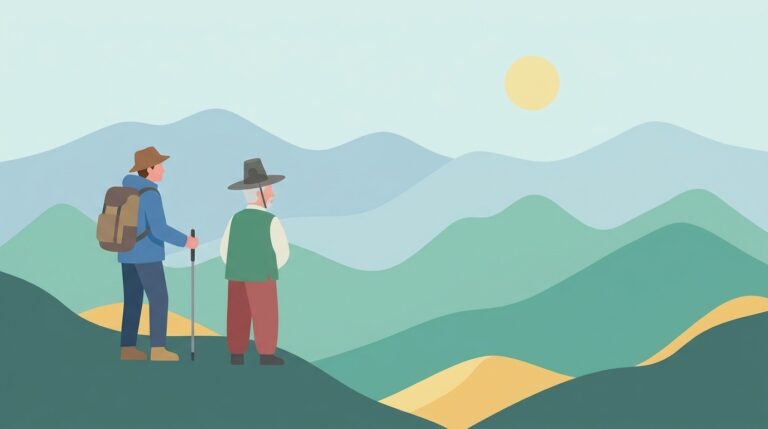
Conquering Baekdudaegan: Advanced Korean Expressions for Trail Blazers and Mountain Lovers
Phase 1: Empathy (스토리 몰입형 오프닝)
안녕하세요! 매일한글 에디터입니다.
Have you ever dreamed of conquering Baekdudaegan (백두대간)—the grand 700-kilometer mountain spine that stretches across the entire Korean Peninsula? Picture yourself standing high on a foggy ridge at dawn, looking down upon endless undulating peaks of Jirisan or Seoraksan. Trekking this iconic trail is the ultimate dream for serious outdoor enthusiasts.
However, as an advanced hiker, you quickly realize that textbook phrases like “등산이 재미있습니다” (Hiking is fun) sound woefully out of place when you are negotiating steep ridgelines alongside seasoned local hikers (등산아재 and 등산이모). When a veteran trail boss offers you a slice of chilled cucumber or invites you to share warm stew at a mountain shelter, how do you express your fatigue, camaraderie, and respect in natural, C1-level Korean?
Based on real experiences and feedback from international trekkers who tackled Korea’s demanding multi-day ridge traverses, this guide equips you with nuanced, natural expressions, deep cultural etiquette, and authentic trail jargon. By mastering these expressions, you will transform from a mere tourist into a respected trail companion on Baekdudaegan!
Phase 2: Key Expressions (핵심 표현 3선 심층 분석)
1. 발을 맞추어 가다 (Bal-eul mat-chueo ga-da)
- Pronunciation: [Bal-eul mat-chueo ga-da] (Think of keeping time to a steady drumbeat: “Bal-eul match-yur ga-dah”)
- Meaning: Literal: To walk matching steps / Nuance: To keep pace with each other, hike in harmony, or closely synchronize energy over a long trek.
- K-Culture Moment: Frequently featured in mountain documentaries (Documentary 3 Days) and trekking films when team members support an exhausted teammate across steep terrain.
- Editor’s Insight: Beyond physical steps, this idiom metaphorically describes deep mutual respect and cooperation in team efforts. Use this when discussing pace management during multi-day expeditions.
- Situation Spectrum: Casual ✅ | Semi-formal ✅ | Formal ✅
- 🤔 Think About It: In Western solo-trekking culture, setting individual pace is emphasized. How does the Korean phrase “발을 맞추다” reflect the collective responsibility central to Korean mountain culture?
2. 체력이 바닥나다 (Che-ryeok-i ba-dak-na-da)
- Pronunciation: [Che-ryeok-i ba-dak-na-da] (Sounds like “Cheh-ryuk-ee bah-dahk-nah-dah” – hitting the rock bottom of energy)
- Meaning: Literal: For one’s physical stamina to reach the floor / Nuance: To be utterly depleted, running on empty during an agonizing elevation gain.
- K-Culture Moment: Used dramatically on outdoor television shows like 2 Days 1 Night when cast members reach peak physical exhaustion near summit approaches.
- Editor’s Insight: Saying “힘들어요” (It’s tough) sounds basic. Expressing that your energy “hit the floor” (바닥나다) communicates your physical state vividly and humorously to native speakers.
- Situation Spectrum: Casual ✅ | Semi-formal ✅ | Formal ⚠️
- 🤔 Think About It: Why does Korean describe stamina as hitting a “floor” (바닥), whereas English prefers running “out of gas” or hitting a “wall”?
3. 정상을 밟다 (Jeong-sang-eul balp-da)
- Pronunciation: [Jeong-sang-eul balp-da] (Sounds like “Jung-sang-eul bahp-dah” – firmly placing your foot on the peak)
- Meaning: Literal: To step on the summit / Nuance: To successfully conquer or reach the mountain peak after an arduous climb.
- K-Culture Moment: Heard on news broadcasts celebrating historic expeditions or in local mountain club vlogs when reaching major peaks like Cheonwangbong.
- Editor’s Insight: Instead of the generic verb “도착하다” (to arrive), “밟다” (to step on) conveys a visceral sense of triumph, grounded presence, and tactile accomplishment.
- Situation Spectrum: Casual ✅ | Semi-formal ✅ | Formal ✅
- 🤔 Think About It: How does active foot-to-earth imagery in Korean summit verbs contrast with English passive arrivals like “making it to the top”?
Phase 3: Textbook Korean vs. Real Korean (교과서 한국어 vs 진짜 한국어)
Scenario 1: Proposing a brief rest break on a grueling accent
- 📖 교과서 한국어: “너무 힘듭니다. 쉬고 싶습니까?” (It is very hard. Do you want to rest?)
- 🗣️ 진짜 한국어: “경사가 장난 아닌데, 잠시 숨 좀 돌리고 갈까요?” (This incline is no joke, shall we catch our breath for a second before pushing on?)
- 💡 왜 다를까? Textbook Korean can sound confrontational or overly blunt. Native hikers use “숨을 돌리다” (to turn/recover breath) to propose a pause gently without implying that anyone in the group is weak.
Scenario 2: Greeting passing trekkers on a tight ridge trail
- 📖 교과서 한국어: “안녕히 가십시오. 수고하십시오.” (Goodbye. Work hard.)
- 🗣️ 진짜 한국어: “안산하시고, 즐산하세요! 힘내세요!” (Have a safe climb and a fun climb! Keep it up!)
- 💡 왜 다를까? Korean outdoor culture relies on vibrant portmanteaus: 안산 (안전 등산 – Safe Hiking) and 즐산 (즐거운 등산 – Enjoyable Hiking). Using these contractions creates instant warmth and trail solidarity.
Phase 4: K-Culture Deep Dive & Non-verbal Manners
4-1. Trail Nunchi (눈치) & Ridge Gestures
On tight, rocky ridges along Baekdudaegan, spatial awareness (Nunchi) is critical for safety:
* Passing Etiquette: When a faster hiker approaches from behind, step slightly toward the mountain side (never the cliff side!), pause, and give a short nod. Say softly: “먼저 지나가세요” (Please go ahead).
* Food Sharing Manners: When resting at a pass (재/고개), offering a piece of snack or fruit to neighboring trekkers is common. Refusing abruptly can seem cold; accept with two hands, saying “아이구, 감사히 잘 먹겠습니다!”
4-2. Mountain Culture Code: The Post-Hike Ritual
In Korea, trekking is only half the journey; the descent ritual completing the trail is equally legendary. Mountain bases are lined with local restaurants serving freshly poured Makgeolli (막걸리) alongside golden Pajeon (파전) or seasonal wild vegetable meals (산채비빔밥). Engaging in this feast is called “하산주” (post-descent drink), celebrated as an essential component of authentic Korean mountain culture.
Phase 5: Real-Life Roleplay Scenario (실전 롤플레이 시나리오)
Setting: Near the ridge summit shelter (대피소) on the Baekdudaegan trail. You encounter Mr. Park, a veteran mountain club leader (산악회 대장).
- Turn 1 (Mr. Park): 🎭 (Wiping sweat with a neck towel, looking impressed) “어머나, 외국 분이신데 백두대간 종주 중이신가요? 대단하십니다!”
(Eomona, oeguk bun-isin-de Baekdudaegan jongju jung-isin-gayo? Daedan-hasimnida!)
“Oh my, you’re a foreigner trekking the entire Baekdudaegan ridge? That’s amazing!” - Turn 2 (You): 🎭 (Smiling warmly, taking off your pack) “네, 반갑습니다! 능선 따라 걸어오는데 체력이 바닥날 뻔했어요.”
(Ne, bangap-seumnida! Neungseon ttara geol-eo-oneunde che-ryeok-i ba-dak-nal ppeon-haess-eo-yo.)
“Yes, nice to meet you! Walking along the ridge, my stamina almost hit rock bottom.” - Turn 3 (Mr. Park): 🎭 (Reaching into his side pocket) “여기 경사가 엄청나죠. 시원한 오이 한 조각 드세요. 갈증 해소에 최고예요.”
(Yeogi gyeongsa-ga eomcheong-najyo. Siwon-han oi han jogak deuseyo. Galjeung haeso-e choegoyeyo.)
“The incline here is intense. Have a slice of cool cucumber. It’s the best for thirst.” - Turn 4 (You): 🎭 (Receiving the cucumber with both hands and bowing slightly) “와, 감사히 잘 먹겠습니다! 덕분에 숨 좀 돌리네요.”
(Wa, gamsahi jal meok-get-seumnida! Deok-bune sum jom dol-lineyo.)
“Wow, thank you so much! Thanks to you, I can finally catch my breath.” - Turn 5 (Mr. Park): 🎭 (Checking the sky) “오늘 대피소까지 가시죠? 팀원들과 발을 맞추어 가면 해지기 전에 도착할 겁니다.”
(Oneul daepiso-kkaji gasijyo? Tim-won-deul-gwa bal-eul matchueo gamyeon hae-jigi jeon-e dochak-hal geomnida.)
“You’re going to the shelter today, right? If you keep pace with your team, you’ll arrive before sunset.” - Turn 6 (You): 🎭 (Nodding resolutely) “맞아요. 안전하게 정상을 밟고 하산하는 게 목표입니다.”
(Maj-ayo. Anjeon-hage jeong-sang-eul balp-go hasan-haneun ge mokpyo-imnida.)
“That’s right. My goal is to reach the summit safely and make a smooth descent.” - Turn 7 (Mr. Park): 🎭 (Thumbs up with a proud grin) “멋집니다! 남은 구간도 안산하시고 즐산하세요!”
(Meot-jimnida! Nameun gugan-do ansan-hasigo jeul-san-haseyo!)
“Awesome! Have a safe and enjoyable climb through the remaining sections!” - Turn 8 (You): 🎭 (Adjusting backpack straps firmly) “감사합니다! 대장님도 안전산행 하세요!”
(Gamsa-hamnida! Daejang-nim-do anjeon-sanhaeng haseyo!)
“Thank you! Wishing you a safe climb as well, Captain!”
🔀 Interactive Choice Point
Situation: Mr. Park offers you a drink of homemade herbal liquor (산삼주) from his thermos, but you still have 3 hours of technical rock scrambling ahead.
* Choice A: “죄송하지만, 암릉 구간이 남아있어서 하산 후에 마시겠습니다!” (I apologize, but since technical rock sections remain, I’ll drink after desent!)
* Choice B: “오! 술 좋죠! 한 잔 주세요!” (Oh! Alcohol sounds great! Give me a glass!)
* Choice C: “저는 술을 안 마십니다.” (I do not drink alcohol.)
— Feedback —
* Choice A (BEST): 🌟 Perfectly polite and safety-conscious! You acknowledge the danger of the rocky trail (암릉 구간) while accepting his goodwill warmly.
* Choice B (RISK): ⚠️ Dangerous! Consuming alcohol before technical trail sections poses severe safety risks on Korean mountain ridges.
* Choice C (BAD): 🚫 Blunt and rigid. While understandable, framing it without acknowledging his hospitality can feel socially abrupt in Korean culture.
Phase 6: 10-Second Emotion Shadowing Drill
Practicing native rhythm and intonation using emotional cues:
[😊 Grateful & Relieved]
“와 / 감사히 잘 먹겠습니다! / 덕분에 / 숨 좀 돌리네요.”
(Wa / gamsahi jal meok-get-seumnida! / Deok-bune / sum jom dol-lineyo.)-
[🔥 Determined & Focused]
“안전하게 / 정상을 밟고 / 하산하는 게 / 제 목표입니다!”
(Anjeon-hage / jeong-sang-eul balp-go / hasan-haneun ge / je mokpyo-imnida!) -
[🤝 Friendly & Encouraging]
“남은 구간도 / 안산하시고 / 즐산하세요! / 힘내세요!”
(Nameun gugan-do / ansan-hasigo / jeul-san-haseyo! / Him-naeseyo!)
Phase 7: K-Culture Mini Dictionary
- 종주 (Jong-ju) | Long-distance Ridge Traverse | Walking continuously along an entire interconnected mountain range from start to finish without leaving the ridge.
- 대피소 (Dae-pi-so) | Mountain Shelter | High-altitude mountain huts managed by national parks where trekkers sleep and cook during multi-day ridge traverses.
- 산악회 (San-ak-hoe) | Mountaineering Club | Social hiking clubs ubiquitous in Korea that organize weekend bus trips to famous trails nationwide.
- 능선 (Neung-seon) | Mountain Ridge | The continuous crest or ridgeline connecting mountain peaks; where high-altitude panoramic views occur.
Phase 8: Traveler’s Survival Kit
Top 3 Survival Phrases
- “대피소 예약 하셨어요?” (Daepiso yeyak hasyeoss-eoyo? / Did you make a mountain shelter reservation?)
- Pro Tip: National park shelters require strict online reservations months in advance; no walk-ins allowed!
- “등산로가 여기서 험한가요?” (Deungsanro-ga yeogiseo heom-han-gayo? / Is the trail rough/steep from here?)
- Pro Tip: Ask this to descending hikers to gauge upcoming technical hazards.
- “스틱 길이 좀 조절해야겠어요.” (Seutik gil-i jom jojeol-haeya-get-seoyo. / I need to adjust my trekking pole length.)
- Pro Tip: Useful when transitioning between steep ascents and long descents.
Editor’s Travel Note
Before embarking on Baekdudaegan, ensure you download national mapping apps. Naver Maps and KakaoMap provide topographic overlays, but for official trail difficulty maps and mandatory shelter bookings, visit the Korea National Park Service Reservation System prior to setting foot on the trail.
Phase 9: “One Step Deeper” (생각 질문)
In Korean culture, mountains are not merely physical obstacles to overcome; they are spiritual sanctuary spaces infused with 산정 정신 (mountain spirit) and community warmth. While Western hiking often focuses on personal solitude or technical accomplishment, Korean ridge trekking emphasizes mutual survival, shared food, and collective encouragement. When you step onto Baekdudaegan, you join an ancient tradition of pilgrims and wanderers who honor the land together.
💬 Your Turn: Have you ever experienced sharing food or keeping pace with strangers on a trail in your home country? How does it compare to Korea’s 산악회 culture? Share your thoughts in the comments below!
Phase 10: FAQ & Common Mistakes
Q: Can I camp anywhere along the Baekdudaegan trail?
A: No. Wild camping and bivouacking along Baekdudaegan national park sections are strictly illegal to protect nature and prevent forest fires. You must stay at designated shelters (대피소) or descend to base villages (하산).
Q: What is the difference between 등산 (Deungsan) and 트레킹 (Trekking)?
A: 등산 usually refers to climbing up and down a specific mountain peak, whereas 트레킹 or 종주 implies long-distance horizontal traversal across multiple ridge peaks over an extended duration.
Q: How should I address older hikers on the trail?
A: Address male senior hikers as 선생님 (Sir/Teacher) or 대장님 (Captain), and female senior hikers as 선생님. Avoid casual terms like 아저씨 or 아주머니 as they can sound disrespectful in an outdoor club setting.
🚨 Common Mistakes
- Calling a shelter ‘호텔’ (Hotel): Mountain shelters are rugged, communal spaces. Call them 대피소.
- Using informal speech (반말) when exhausted: Even if you feel drained (체력이 바닥나다), maintain polite ending forms (-요/습니다) when asking locals for directions or emergency assistance.
- Ignoring pass-by etiquette: Failing to acknowledge oncoming hikers on tight trails is seen as impolite. Always offer a quick nod or “안녕하세요!”
Phase 11: Action Mission & Engagement
Action Mission
- 🥉 Bronze: Record yourself practicing the Phase 6 Shadowing Drill with emotional expression 3 times.
- 🥈 Silver: Leave a comment below using the C1 phrase “체력이 바닥나다” in a personalized sentence!
- 🥇 Gold: On your next Korean hike, greet 3 local hikers using “안산하세요!” and note their warm reactions.
🎮 K-Culture Mission
Watch a Korean outdoor vlog or documentary on Jirisan Ridge (지리산 능선 종주) and spot at least two instances where hikers share food or use the phrase “숨을 돌리다”!
Phase 12: Interactive Quiz Challenge
Quiz 1: Nuance Judgment
You want to suggest taking a short rest because the incline is steep. Which expression is most natural and considerate in C1 Korean?
* A) “너무 힘드니까 빨리 멈추세요.”
* B) “경사가 험한데, 잠시 숨 좀 돌리고 갈까요?”
* C) “저는 더 이상 못 걸어갑니다.”
Show Answer & Explanation
Answer: B
Explanation: Option B uses “숨 좀 돌리다” (catch one’s breath) which politely and naturally suggests a team pause without placing blame or appearing weak.
Quiz 2: Fill in the Blank
Complete the wishing phrase used between hikers on Korean trails: “남은 구간도 _____하시고, _____하세요!”
Show Answer & Explanation
Answer: 안산 (안전 등산) / 즐산 (즐거운 등산)
Explanation: Combining “안산” (Safe climb) and “즐산” (Enjoyable climb) is the authentic way native hikers encourage each other on the mountain.
Quiz 3: True or False (Culture)
Statement: In Korean mountain culture, wild camping anywhere along national park ridges is widely encouraged as long as you leave no trace.
Show Answer & Explanation
Answer: FALSE
Explanation: Wild camping along national park ridges in Korea is strictly prohibited. Hikers must stay in registered 대피소 (shelters) or descend to approved camping zones.







