

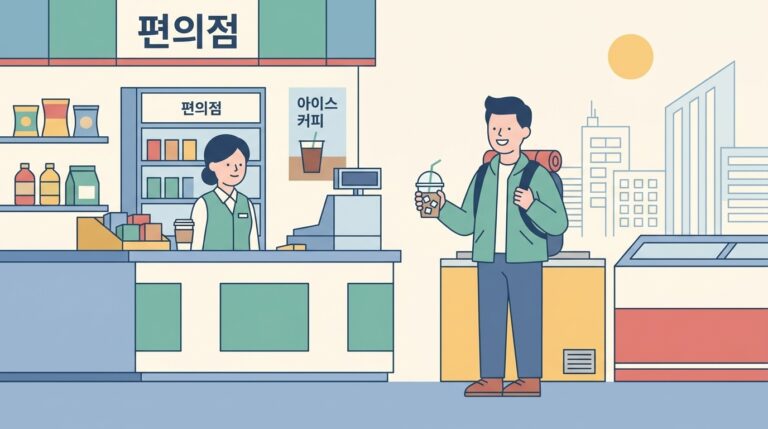
How to Ask for Trash Cans in Korean Convenience Stores Like a Local
안녕하세요! This is your Daily Hangul editor and 10-year Korean culture navigator. Have you ever experienced this ultra-relatable travel dilemma? You just enjoyed a delicious cup of iced coffee or hot cup ramen from GS25 or CU, wiped your mouth satisfied, and then… stood there awkwardly holding an empty cup with nowhere to put it. You look around the street, but in Korea, street trash cans are notoriously hard to find! Naturally, your eyes dart around the convenience store, but you cannot spot the garbage bin.
Asking where the trash can is located might sound simple, but in Korean culture, convenience store etiquette and trash sorting (bunli-sugeo) hold a special place. Learning how to politely ask for trash disposal will save you from awkward moments and make you look like an experienced local. This guide is crafted directly from actual foreign learners’ experiences and real-world feedback to give you maximum confidence during your trip to Korea!
Phase 2: Core Expressions Deep Dive
1. 쓰레기통 어디에 있어요? (Sseuregitong eodie issoyo?)
- Pronunciation: [Ssoo-reh-gee-tong uh-dee-eh it-so-yo?] (Think of ‘sue-reh-gee’ + ‘tongue’)
- Meaning: Literal: “Trash can where is located?” / Real Nuance: “Where is the trash bin?”
- K-Culture Moment: In late-night drama scenes where main characters clean up after sharing late-night snacks outside convenience stores.
- Editor’s Insight: This is the most versatile and natural phrase for B1 learners. It is polite, direct, and completely natural.
- Situation Spectrum: Casual (⚠️) | Semi-formal (✅) | Formal (✅)
- 🤔 Think About It: Why do you think public street bins are rare in Korea while store bins are highly organized?
2. 이거 버려도 돼요? (Igeo beoryeodo dwaeyo?)
- Pronunciation: [Ee-geo buh-ryeo-do dwae-yo?]
- Meaning: Literal: “Can I throw this away?” / Real Nuance: “May I dispose of this here? / Can you throw this away for me?”
- K-Culture Moment: Handing your small snack packaging to the friendly clerk at the counter when no bin is visible.
- Editor’s Insight: Softens the request dramatically compared to demanding a bin. It shows immediate consideration (Nunchi).
- Situation Spectrum: Casual (⚠️) | Semi-formal (✅) | Formal (✅)
- 🤔 Think About It: Asking before dumping personal items shows respect for the clerk’s personal workspace.
3. 일반 쓰레기랑 재활용 구분해야 하나요? (Ilban sseuregirang jaehwaryong gubunhaeya hanayo?)
- Pronunciation: [Eel-ban ssoo-reh-gee-rang jae-hwa-ryong goo-boon-hae-ya ha-na-yo?]
- Meaning: Literal: “General trash and recycling must separate?” / Real Nuance: “Should I separate general waste and recycling?”
- K-Culture Moment: Standing before multi-slot recycling bins inside modern large convenience stores.
- Editor’s Insight: A superb B1 expression! Using this instantly proves you understand Korea’s strict recycling system.
- Situation Spectrum: Casual (⚠️) | Semi-formal (✅) | Formal (✅)
- 🤔 Think About It: How does meticulous sorting reflect the collective environmental efforts in modern Korean society?
Phase 3: Textbook Korean vs Real Korean
Scenario 1
- 📖 Textbook Korean: 쓰레기통이 어디에 위치해 있습니까? (Sseuregitongi eodie wichihae isseumnikka?)
- 🗣️ Real Korean: 저기, 쓰레기통 어디에 있어요? (Jeogi, sseuregitong eodie issoyo?)
- 💡 Why?: The textbook phrase uses standard formal dictionary verbs like “위치해 있습니까” which sounds like an official written survey rather than spoken conversation.
Scenario 2
- 📖 Textbook Korean: 이것을 여기에 버려도 될까요? (Igeoseul yeogie beoryeodo doelkkal-yo?)
- 🗣️ Real Korean: 이거 혹시 버려주실 수 있나요? (Igeo hoksi beoryeojusil su innayo?)
- 💡 Why?: Adding the magic word 혹시 (hoksi – by any chance) instantly softens your tone and makes your request warm and polite.
Phase 4: K-Culture Deep Dive & Non-verbal Manners
4-1. Nunchi & Gestures
When asking the clerk in a busy convenience store, don’t just shout from afar! Catch their eye, give a light 15-degree head bow, hold up your empty cup or wrapper slightly, and ask politely. If they point toward a corner, bow lightly again saying “감사합니다” (Gamsahamnida).
4-2. Culture Code: Bunli-sugeo (분리수거)
Korea takes waste separation very seriously! Inside convenience stores, you will typically see separate slots:
1. 일반 쓰레기 (General Waste): Napkins, wooden chopsticks, food packaging film.
2. 플라스틱 / 캔 / 종이 (Recyclables): Plastic cups, cans, paper cups.
3. 국물 / 음료 버리는 곳 (Liquid Disposal): Remaining ramen soup or ice drink liquids must be poured here first before throwing away the cup!
Phase 5: Real Roleplay Scenario
Setting: A bustling GS25 convenience store near Hongdae Station at 10 PM. You just finished an iced Americano.
NPC: Friendly Store Clerk (20s)
- Clerk: 어서 오세요! (Eoseo oseyeo! / Welcome!)
- Learner (You): 🎭 [Politely bows while holding empty ice cup] 안녕하세요! 저기, 혹시 쓰레기통 어디에 있어요? (Annyeonghaseyo! Jeogi, hoksi sseuregitong eodie issoyo?)
- Clerk: 아, 카운터 옆쪽에 있습니다! (A, kaunteo yeopjjoge isseumnida! / Ah, it’s next to the counter!)
- Learner (You): 감사합니다. 이거 플라스틱 컵인데 재활용에 버리면 되나요? (Gamsahamnida. Igeo peullaseutik keobinde jaehwaryonge beoryeomyun dwaenayo?)
- Clerk: 네! 얼음이랑 남은 음료는 저기 통에 비우고 버려주세요. (Ne! Eoreumirang nameun eumryoneun jeogi tonge biugo beoryeojuseyo.)
- Learner (You): 🎭 [Nods in understanding] 아, 남은 음료는 버리는 통이 따로 있군요! (A, nameun eumryoneun beoriyeongeun tongi ttaro itgunyo!)
- Clerk: 네, 주황색 통에 버리시면 됩니다. (Ne, juhwangsaek tonge beorisimyeon doebnida.)
- Learner (You): 친절하게 알려주셔서 감사합니다! 좋은 하루 되세요! (Chinjeolhage allyeojusyeoseo gamsahamnida! Joeun haru doeseyo!)
🔀 Interactive Branching Choice
You have leftover iced tea in your plastic cup. What do you do?
* Choice A: Throw the cup with ice and liquid straight into the general bin.
* Choice B: Ask where to pour out liquid first, then recycle the cup.
* Choice C: Leave the full cup on top of the store table and walk away.
Feedback:
* Choice A (Bad): ⚠️ Liquids leak into trash bags, making clean-up difficult for clerks.
* Choice B (Best): ✅ Perfect! You poured out the liquid and recycled properly like a true local.
* Choice C (Risk): 🚫 Highly disrespectful. Tables are self-service clean zones in Korea.
Phase 6: 10-Second Emotion Shadowing Drill
Repeat these lines out loud matching the emotional guide and pause markers (/):
- [😊 Polite & Inquiring]
저기, / 쓰레기통 / 어디에 있어요?
(Jeogi, / sseuregitong / eodie issoyo?) -
[🥺 Soft & Asking Favors]
이거 / 혹시 / 버려도 돼요?
(Igeo / hoksi / beoryeodo dwaeyo?) -
[🙌 Grateful & Warm]
친절하게 / 알려주셔서 / 감사합니다!
(Chinjeolhage / allyeojusyeoseo / gamsahamnida!)
Phase 7: K-Culture Mini Dictionary
- 일반 쓰레기 (Ilban sseuregi) | General Waste | Non-recyclable items like used napkins and plastic wrappers.
- 재활용 (Jaehwaryong) | Recycling | Separated materials including plastics, glass, paper, and metal cans.
- 분리수거 (Bunli-sugear) | Waste Separation | The systematic habit of sorting trash by material type.
- 국물 버리는 곳 (Gungmul beoryeonun got) | Liquid/Soup Disposal Area | Dedicated sinks/buckets for ramen soup or ice drink residues.
Phase 8: Traveler’s Survival Kit
Survival Expressions TOP 3
- 이거 어디에 버려요? (Igeo eodie beoryeoyo?) – Where do I dump this?
- 국물 어디에 버려요? (Gungmul eodie beoryeoyo?) – Where do I pour the soup?
- 영수증은 버려주세요. (Yeongsujeungeun beoryeojuseyo.) – Please throw away the receipt for me.
Editor’s Travel Note
When traveling around Seoul, finding convenience stores or subway stations is your best bet for trash disposal. Make sure you use 네이버 지도 앱 다운로드 to locate nearby convenience stores effortlessly while exploring night markets or parks!
Phase 9: A Step Deeper
In the 1990s, public street trash cans in Korea were significantly reduced to minimize illegal household dumping and keep city streets clean. As a result, convenience stores took over an essential social role as clean hubs where people consume quick meals and manage waste responsibly. Understanding this small aspect of urban design turns a simple grocery run into a deep cultural reflection on civic etiquette.
💬 Your Turn: Have you ever spent 20 minutes walking around looking for a trash bin in Korea? Share your funny travel story in the comments below!
Phase 10: FAQ & Common Mistakes
Q: Can I throw away trash that I bought from another place inside a convenience store?
A: Small items (like a used tissue or bus ticket) are fine, but dumping large personal trash bags brought from outside is frowned upon and illegal.
Q: What if I cannot find any trash bin inside the store at all?
A: Gently ask the clerk: “저기, 이거 버려주실 수 있나요?” (Excuse me, could you throw this away for me?) Most staff will gladly help!
Q: Do I need to clean the dining table after eating cup ramen inside?
A: Yes! Convenience store dining spots are self-service. Wipe down any splashes with paper towels before leaving.
🚨 Common Mistakes TOP 3
- Throwing soup into general bags ❌ -> Correct Action: Always pour liquid into the liquid bucket (국물 버리는 곳) first.
- Leaving trash on eating counters ❌ -> Correct Action: Carry your items to the trash station or ask staff.
- Overly stiff formal phrasing ❌ -> Correct Action: Use natural conversational phrases like “어디에 있어요?” instead of written forms.
Phase 11: Action Mission & Engagement
- 🥉 Bronze: Say “쓰레기통 어디에 있어요?” out loud 3 times right now!
- 🥈 Silver: Leave a comment below using the word “혹시” (hoksi) in a polite Korean sentence.
- 🥇 Gold: Visit a real CU, GS25, or Seven-Eleven during your next trip to Korea and successfully dispose of your coffee cup using proper Korean!
🎮 K-Culture Mission: Watch a scene in your favorite K-drama where characters eat outside a convenience store and spot where the sorting bins are placed!
Phase 12: Interactive Quiz Challenge
Q1. You want to ask where the trash bin is softly. Which word adds instant polite warmth?
* A) 진짜 (Jinjja)
* B) 혹시 (Hoksi)
* C) 아무튼 (Amuteon)
Q2. Fill in the blank: “일반 쓰레기랑 _______ 구분해야 하나요?”
* A) 재활용 (Jaehwaryong)
* B) 영수증 (Yeongsujeung)
* C) 편의점 (Pyeonuijeom)
👉 Click to reveal Answers & Explanations!
- Q1 Answer: B) 혹시 (Hoksi) – Adding “혹시” (by any chance) makes your request polite and natural.
- Q2 Answer: A) 재활용 (Jaehwaryong) – “재활용” means recycling, making the full sentence translate to: “Do I need to separate general waste and recycling?”







