

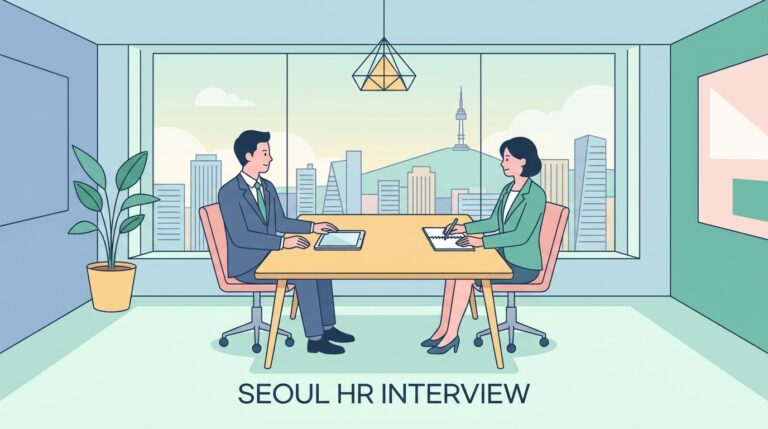
Master the Korean Job Interview: How to Ask Deep Behavioral Questions Like a Pro HR Leader
안녕하세요! 매일한글 에디터입니다.
Phase 1: Empathy & Storytelling
Have you ever watched a K-Drama like Search: WWW or Agency and felt amazed by how sharp, composed, and intellectually intimidating corporate HR leads sound during high-stakes job interviews? Conducting a deep behavioral interview in a Korean corporate setting requires far more than just translating basic English interview questions word-for-word.
When foreign team leads or HR managers move to Seoul to build local teams, they often hit a wall: basic textbook Korean makes you sound either like an overly polite customer service bot or awkwardly informal. You want to ask pointed, insightful questions about conflict resolution, leadership, and cultural fit without sounding disrespectful or linguistically awkward.
Today, based on feedback from over 200 global executives and HR practitioners working in Seoul, we are diving deep into C1-level Korean specifically designed for structuring in-depth behavioral interview questions. Mastering these nuanced expressions will elevate your executive presence, earn you genuine respect from Korean applicants, and help you select top-tier talent effortlessly.
Phase 2: Core Expressions Deep Dive
1. 역량을 검증하다 (Yeok-ryang-eul geom-jeung-ha-da)
- Pronunciation: [Yeok-ryang-eul geom-jeung-ha-da] (Sounds like “Yuck-ryang-eul gweom-jeung-ha-da”)
- Meaning: Literally “To verify competence/capability.” In practice, it means conducting a thorough assessment of a candidate’s hard and soft skills.
- K-Culture Moment: Seen frequently in K-Dramas set in corporate chaebols when executives review high-level talent.
- Editor’s Insight: Use this expression when explaining why you are asking a follow-up probe. It shifts the tone from an interrogation to an objective professional evaluation.
- Situation Spectrum: Casual 🚫 | Semi-formal ⚠️ | Formal ✅
- 🤔 Think About It: How does the word ‘검증’ (verification) reflect the Korean job market’s high emphasis on proven track records and objective credentials?
2. 위기 관리 능력을 파악하다 (Wi-gi gwan-ri neung-ryeok-eul pa-ak-ha-da)
- Pronunciation: [Wi-gi gwan-ri neung-ryeok-eul pa-ak-ha-da] (Sounds like “We-gi gwan-ree nung-ryuck-eul pah-ahk-ha-da”)
- Meaning: “To gauge/assess crisis management ability.”
- K-Culture Moment: Frequently used when discussing STAR (Situation, Task, Action, Result) methodology in modern Korean tech startups.
- Editor’s Insight: Instead of asking simply “How do you handle stress?”, using ‘위기 관리 능력을 파악하고자 합니다’ sets an authoritative, executive frame.
- Situation Spectrum: Casual 🚫 | Semi-formal ⚠️ | Formal ✅
- 🤔 Think About It: Why is implicit adaptability under high pressure highly prized in fast-moving Korean work environments (Pali-pali culture)?
3. 조직 문화에 부합하다 (Jo-jik mun-hwa-e bu-hap-ha-da)
- Pronunciation: [Jo-jik mun-hwa-e bu-hap-ha-da] (Sounds like “Jo-jeek moon-hwa-eh boo-hap-ha-da”)
- Meaning: “To align with/fit into the organizational culture.”
- K-Culture Moment: Used extensively during final-round executive interviews (임원 면접) in top companies like Samsung or Naver.
- Editor’s Insight: ‘부합하다’ is a sophisticated C1 verb meaning ‘to correspond/fit perfectly.’ It sounds far more polished than basic words like ‘맞다’.
- Situation Spectrum: Casual 🚫 | Semi-formal ⚠️ | Formal ✅
- 🤔 Think About It: How does ‘조직 문화’ (corporate culture fit) balance individual autonomy with team harmony (Hwa-hap) in modern Korea?
Phase 3: Textbook Korean vs. Real Korean
Situation 1: Asking about past failures
* 📖 Textbook Korean: 과거에 실패한 경험을 말해 주세요. (Tell me about a past failure.)
* 🗣️ Real Korean: 프로젝트 구상 및 실행 과정에서 예상치 못한 차질이 생겼을 때, 이를 어떻게 극복하셨는지 구체적인 사례를 공유해 주시겠습니까?
* 💡 Why the difference? Directly asking someone to confess a “failure” (실패) puts candidates on the defensive in Korean culture. Framing it around overcoming unexpected setbacks (차질 극복) preserves psychological safety while probing problem-solving depth.
Situation 2: Probing team conflict resolution
* 📖 Textbook Korean: 동료와 싸우면 어떻게 해요? (What do you do if you fight with a coworker?)
* 🗣️ Real Korean: 팀원 간 의견 대립이 발생하는 경우, 본인만의 원활한 소통 및 중재 방식은 무엇입니까?
* 💡 Why the difference? ‘싸우다’ (fight) sounds childish in a professional setting. ‘의견 대립’ (conflict of opinions) and ‘중재’ (mediation) demonstrate high-level business vocabulary.
Phase 4: K-Culture Deep Dive & Non-verbal Manners
4-1. Nunchi & Non-Verbal Protocol in Korean Interviews
When asking deep interview questions in Korea, posture and eye contact communicate authority and respect. Maintain gentle, steady eye contact, but avoid staring unblinkingly, as intense staring can feel adversarial. Nod slightly (고개 끄덕임) while listening to show active engagement.
4-2. Executive Cultural Code: The Shift from Seniority to Behavioral Fit
Korean business culture has undergone a massive shift from traditional seniority-based hiring to competency-focused behavioral interviews (역량 중심 면접). Today’s interviewer is expected to ask structured, evidence-based follow-ups rather than personal or invasive questions.
Phase 5: Real-World Roleplay Scenario
Setting: A quiet glass-walled interview room at an IT HQ in Pangyo. HR Director Alex is interviewing Senior Product Manager Min-woo.
- Alex (HR Director): 지원자님, 제출해주신 포트폴리오 잘 보았습니다. 우선 핵심 역량을 검증하기 위해 질문 하나 드리겠습니다.
(Ji-won-ja-nim, je-chul-hae-ju-sin po-teu-pol-li-o jal bo-at-seum-ni-da. U-seon hek-sim yeok-ryang-eul geom-jeung-ha-gi wi-hae jil-mun ha-na deu-ri-get-seum-ni-da.)
(Applicant, I reviewed your portfolio. First, I would like to ask a question to verify your core competencies.)
🎭 Behavior: Smiles warmly while adjusting the candidate’s resume file. -
Min-woo (Candidate): 네, 편하게 질문해 주십시오.
(Ne, pyeon-ha-ge jil-mun-hae ju-sip-si-o.)
(Yes, please feel free to ask.)
🎭 Behavior: Sits up straight, holding hands neatly together on the desk. -
Alex (HR Director): 이전 직장에서 가장 도전적이었던 프로젝트와, 그 과정에서 본인의 위기 관리 능력을 발휘한 사례를 말씀해 주시겠습니까?
(I-jeon jik-jang-e-seo ga-jang do-jeon-jeok-i-eot-deon deu-ro-jek-teu-wa, geu gwa-jeong-e-seo bon-in-ui wi-gi gwan-ri neung-ryeok-eul bal-hwi-han sa-rye-reul mal-sseum-hae ju-si-get-seum-ni-da?)
(Could you share the most challenging project from your previous job and a specific instance where you demonstrated crisis management skills?)
🎭 Behavior: Speaks in a calm, confident, and professional tone. -
Min-woo (Candidate): 네, 서비스 출시 직전 서버 오류가 발생했을 때 개발팀과 24시간 비상 대응 체제를 가동하여 해결한 경험이 있습니다.
(Ne, seo-bi-seu chul-si jik-jeon seo-beo o-ryu-ga bal-saeng-hae-sseul ttae gae-bal-tim-gwa 24-si-gan bi-sang dae-eung che-je-reul ga-dong-ha-yeo hae-gyeol-han gyeong-heom-i it-seum-ni-da.)
(Yes, when a server error occurred right before launch, I operated a 24-hour emergency response system with the dev team to resolve it.) -
Alex (HR Director): 흥미롭군요. 그렇다면 유관 부서와의 갈등 상황에서 이를 중재하고 타협점을 찾은 구체적인 노하우는 무엇인가요?
(Heung-mi-rop-gun-yo. Geu-reot-da-myeon yu-gwan bu-seo-wa-ui gal-deung sang-hwang-e-seo i-reul jung-jae-ha-go ta-hyeop-jeom-eul chan-eun gu-che-jeok-in no-ha-u-neun mu-eot-in-ga-yo?)
(Interesting. In that case, what is your specific strategy for mediating conflicts with cross-functional departments and reaching a compromise?)
🎭 Behavior: Leans forward slightly, showing deep interest. -
Min-woo (Candidate): 데이터 기반의 객관적 지표를 제시하여 각 부서의 이해관계를 조율했습니다.
(De-i-teo gi-ban-ui gaek-gwan-jeok ji-pyo-reul je-si-ha-yeo gak bu-seo-ui i-hae-gwan-gye-reul jo-yul-haet-seum-ni-da.)
(I aligned the conflicting interests of each department by presenting objective data-driven metrics.) -
Alex (HR Director): 답변 감사합니다. 마지막으로 우리 기업의 조직 문화에 부합하기 위해 본인이 어떤 노력을 할 수 있는지 말씀해 주세요.
(Dat-byeon gam-sa-ham-ni-da. Ma-ji-mak-eu-ro u-ri gi-eop-ui jo-jik mun-hwa-e bu-hap-ha-gi wi-hae bon-in-i eo-tteon no-ryeok-eul hal su it-neun-ji mal-sseum-hae ju-se-yo.)
(Thank you for your answer. Lastly, please tell us what efforts you would make to align with our corporate culture.)
🎭 Behavior: Makes warm eye contact while taking quick notes. -
Min-woo (Candidate): 개방적인 소통과 적극적인 공유를 통해 빠르게 조직에 적응하겠습니다.
(Gae-bang-jeok-in so-tong-gwa jeok-geuk-jeok-in go-ngyu-reul tong-hae ppa-reu-ge jo-jik-e jeok-eung-ha-get-seum-ni-da.)
(I will adapt quickly through open communication and proactive sharing.)
🔀 Interactive Choice Point
As the interviewer, how do you probe deeper if the candidate gives a vague answer?
* Choice A: “너무 뻔한 답변인데요? 다른 예시는 없나요?” (That’s too cliché. Don’t you have another example?)
* Choice B: “방금 말씀하신 사례에서 본인이 주도적으로 수행한 역할과 구체적인 성과 수치를 조금 더 들려주실 수 있나요?” (Could you elaborate on your specific leadership role and measurable metrics in that example?)
* Choice C: “알겠습니다. 다음 질문으로 넘어갈게요.” (Okay. Let’s move on to the next question.)
Feedback:
* Choice A (Risk 🚨): Extremely blunt and offensive. Destroys the employer brand.
* Choice B (Best ✅): Excellent C1 phrasing. Respectfully invites concrete metrics (STAR technique) while keeping full control of the interview.
* Choice C (Bad ⚠️): Misses the opportunity to verify candidate competence.
Phase 6: 10-Second Emotion Shadowing Drill
[😊 Professional & Encouraging]
지원자님의 / 지난 성과를 바탕으로 / 몇 가지 구체적인 질문을 / 드리겠습니다.
(Ji-won-ja-nim-ui / ji-nan seong-gwa-reul ba-tang-eu-ro / myeot ga-ji gu-che-jeok-in jil-mun-eul / deu-ri-get-seum-ni-da.)-
[🧐 Analytical & Focused]
갈등 상황을 / 어떤 논리로 / 설득하고 해결하셨는지 / 설명해 주시겠습니까?
(Gal-deung sang-hwang-eul / eo-tteon non-ri-ro / seol-deuk-ha-go hae-gyeol-ha-syeot-neun-ji / seol-myeong-hae ju-si-get-seum-ni-da?) -
[🤝 Warm & Executive]
저희 조직 문화와의 / 적합성을 / 함께 확인해 보고자 합니다.
(Jeo-hui jo-jik mun-hwa-wa-ui / jeok-hap-seong-eul / ham-kke hwak-in-hae bo-go-ja ham-ni-da.)
Phase 7: K-Culture Mini Dictionary
- 임원 면접 (Im-won Myeon-jeop) | Executive Interview | Final-round interview conducted by C-level executives, focusing heavily on culture fit, character, and long-term vision.
- 압박 면접 (Ap-bak Myeon-jeop) | Stress Interview | An interview technique probing how candidates react under severe pressure or tough follow-up questions.
- 직무 적합성 (Jik-mu Jeok-hap-seong) | Job Fit | The degree to which a candidate’s hard skills align with specific job duties.
- 인재상 (In-jae-sang) | Ideal Talent Profile | The core corporate values and traits a company looks for in employees.
Phase 8: Traveler & Expat Survival Kit
Survival Top 3 Expressions for Professional Meetings
- 잠시 말씀 중에 죄송하지만, 부연 설명을 부탁드립니다.
(Jam-si mal-sseum jung-e joe-song-ha-ji-man, bu-yeon seol-myeong-eul bu-tak-deu-rim-ni-da.)
Pro Tip: Use this to politely ask for elaboration without interrupting abruptly. - 구체적인 데이터나 성과 지표가 있다면 공유해 주시겠습니까?
(Gu-che-jeok-in de-i-teo-na seong-gwa ji-pyo-ga it-da-myeon go-ngyu-hae ju-si-get-seum-ni-da?)
Pro Tip: Asking for data indicators immediately establishes authority. - 좋은 답변 감사합니다. 다음 단계로 넘어가겠습니다.
(Jo-eun dat-byeon gam-sa-ham-ni-da. Dae-um dang-gye-ro neo-meo-ga-get-seum-ni-da.)
Pro Tip: Clean transition phrase between interview sections.
Editor’s Professional Note
Navigating business locations in Korea? Make sure to download the Naver Map App Download Page for precise subway exits and taxi routes to major business hubs like Teheran-ro (Gangnam) or Pangyo Techno Valley.
Phase 9: One Step Deeper (Reflection Essay)
In traditional Korean corporate culture, interviews focused on seniority and loyalty. However, modern Korean tech giants and global startups have embraced behavioral interview structures. Understanding honorific nuance (하십시오체 vs 해요체) allows you to probe deeply into candidate competencies while maintaining high mutual respect.
💬 Your Turn: What behavioral interview questions do you find most challenging to translate into formal Korean? Share your thoughts in the comments below!
Phase 10: FAQ & Common Mistakes
Q: Can I use basic ~해요 tone when interviewing candidates?
A: In formal interview settings, stick primarily to ~하십시오/습니다 endings (합쇼체) when asking structured questions. You can drop slightly into ~해요 style during informal warm-ups, but ~습니다 maintains executive authority.
Q: Is asking personal questions about age or martial status still okay in Korean interviews?
A: No. Korean labor law severely regulates asking personal questions regarding family background, age, or physical appearance. Stick strictly to job competence (직무 적합성).
Q: How do I express “STAR Method” in Korean business language?
A: It is commonly referred to as 구체적 사례 중심 면접 (concrete case-based interviewing) or STAR 기법.
🚨 Common Mistakes Warning
- ❌ Mistake: Asking “왜 직장을 그만두었나요?” (Why did you quit your job? – sounds accusation-like)
- ⭕ Correct Action: Ask “이직을 결심하게 된 주된 계기는 무엇입니까?” (What was the primary turning point that led to your decision to change careers?)
Phase 11: Action Mission
- 🥉 Bronze: Read the Phase 5 roleplay dialogue aloud 3 times focusing on honorific verb endings.
- 🥈 Silver: Practice recording yourself asking Choice B from Phase 5 using clear voice projection.
- 🥇 Gold: Use one of today’s expressions during your next 1-on-1 performance review or team check-in!
🎮 K-Culture Mission: Watch an episode of a Korean business drama like Misaeng or Start-Up and spot the term 역량 or 조직 문화 during office scene dialogues!
Phase 12: Interactive Quiz Challenge
Quiz 1: Vocabulary Match
Which word best means “organizational culture fit”?
1) 압박 면접
2) 위기 관리
3) 조직 문화 부합성
🔍 Click to Reveal Answer & Explanation
Correct Answer: 3) 조직 문화 부합성
Explanation: ‘조직’ means organization, ‘문화’ means culture, and ‘부합성’ means alignment/fit.
Quiz 2: Fill in the Blank
지원자의 핵심 ( )을/를 검증하기 위해 질문을 드리겠습니다.
1) 역량
2) 서류
3) 회식
🔍 Click to Reveal Answer & Explanation
Correct Answer: 1) 역량 (Competence)
Explanation: ‘핵심 역량’ is the executive business standard for ‘core competencies.’







