

안녕하세요! 매일한글 에디터입니다.
Have you ever felt completely drained in Seoul’s fast-paced environment, where “Palli-palli” (Hurry, hurry) seems to govern every waking second? K-Dramas often portray characters drinking iced Americanos until 2 AM to meet deadlines, only to collapse from “번아웃” (burnout). You might find yourself wanting to express that your battery is at 0%, but textbook phrases like “저는 피곤합니다” sound too detached or dry. As C2 advanced learners, you need nuanced, emotionally resonant Korean to discuss mental fatigue and the art of rest with native fluency. Based on feedback from our advanced learners at Daily Hangul, mastering mental health vocabulary helps you connect on a deeper level with Korean peers.
Phase 2: 핵심 표현 3선 심층 분석
1. 현타가 오다 (Hyeonta-ga oda)
- Pronunciation: [hyeon-ta-ga o-da] (Pronounced like “Hyeon-ta-gah oh-dah”)
- Meaning: Direct: “Reality time comes” vs Actual: Sudden moment of existential clarity or disillusionment after intense effort or burnout.
- K-Culture Moment: A high-flying corporate worker staring blankly at an empty convenience store instant noodle cup after working 14 hours straight.
- Editor’s Insight: Formed by combining “현실타격” (reality hit) or “현자타임”. Used when realizing an endeavor was futile or draining.
- Situation Spectrum: Casual ✅ / Semi-formal ⚠️ / Formal 🚫
- 🤔 Think About It: Why does Korean culture have specific slang for sudden existential realisations triggered by hyper-productivity?
2. 마음에 여유가 없다 (Maeum-e yeoyu-ga eopda)
- Pronunciation: [mah-eum-eh yeo-yoo-gah eop-dah] (Pronounced like “Mah-eum-eh yeo-yoo-gah eop-dah”)
- Meaning: Direct: “There is no extra space in my mind” vs Actual: Lacking emotional bandwidth or mental capacity to care for oneself or others.
- K-Culture Moment: Gently declining a social gathering invite from a close friend during peak burnout season.
- Editor’s Insight: “여유” implies leeway or breathing room. Saying you lack “여유” explains your unavailability gracefully without causing offense.
- Situation Spectrum: Casual ✅ / Semi-formal ✅ / Formal ✅
- 🤔 Think About It: How does emphasizing “mental space” shift the focus away from personal laziness toward systemic fatigue?
3. 쉬어 가다 (Swieo gada)
- Pronunciation: [shwee-eoh gah-dah] (Pronounced like “Shwee-eoh gah-dah”)
- Meaning: Direct: “Rest and go” vs Actual: Taking a deliberate, restorative pause in life before continuing a long journey.
- K-Culture Moment: Setting an out-of-office autoreply to take a quiet weekend retreat in Gangwon-do.
- Editor’s Insight: Unlike “쉬다” (to rest/sleep), “쉬어 가다” highlights momentum—resting as an active phase of continuous long-term progress.
- Situation Spectrum: Casual ✅ / Semi-formal ✅ / Formal ✅
- 🤔 Think About It: In a culture known for relentless speed, how does viewing rest as “resting while going” reframe self-care?
Phase 3: 교과서 한국어 vs 진짜 한국어
Situation 1: Refusing work overload due to mental exhaustion
* 📖 교과서 한국어: “저는 피곤해서 이 일을 더 할 수 없습니다.”
* 🗣️ 진짜 한국어: “요즘 번아웃이 와서 감당하기가 조금 힘드네요.”
* 💡 왜 다를까? Expressing burnout in native Korean shifts the focus from sheer physical fatigue to mental bandwidth, encouraging empathy rather than sounding uncooperative.
Situation 2: Advising a colleague or friend to slow down
* 📖 교과서 한국어: “휴식을 취하십시오.”
* 🗣️ 진짜 한국어: “잠시 숨 좀 돌리고 해요. 나를 챙기는 게 먼저예요.”
* 💡 왜 다를까? Natives use metaphors like “turning your breath” (숨 돌리다) and “taking care of myself” (나를 챙기다) to show warm solidarity.
Phase 4: K-Culture 딥다이브 & 비언어적 매너
- 4-1. Nunchi & Gesture: When sharing burnout symptoms, maintain lower eye contact and soft head tilts. A slight exhale while placing a hand gently over your chest signals emotional transparency without drama.
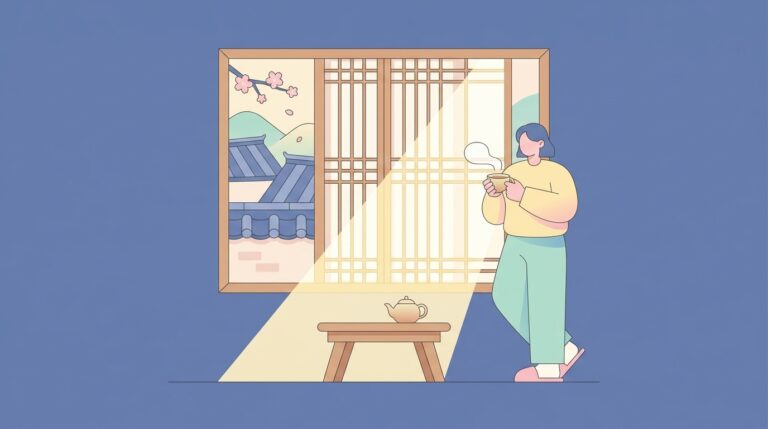
- 4-2. Culture Code: The surge of “Resting Culture” (쉼 문화) in Korea—exemplified by hit healing dramas like Daily Dose of Sunshine—reflects a society pivoting toward mental wellness. Modern Koreans escape burnout via “불멍” (fire-gazing) or secluded tea houses.
Phase 5: 실전 롤플레이 시나리오
Characters: You (a burned-out professional) & Min-jae (your empathetic Korean team lead at a Seoul design studio).
- Turn 1 You: 민재 팀장님, 잠시 이야기 나눌 수 있을까요? (Min-jae Team Lead, can we talk for a moment?)
- Turn 2 Min-jae: 그럼요! 무슨 일 있어요? 얼굴이 피곤해 보여요. (Sure! What’s wrong? You look tired.)
- Turn 3 You: 🎭 (한숨을 낮게 쉬며) 사실 요즘 번아웃이 와서 마음에 여유가 전혀 없어요. (Low sigh: To be honest, I’m suffering from burnout recently and have zero mental bandwidth.)
- Turn 4 Min-jae: 아… 그랬군요. 그동안 업무량이 너무 많았죠? (Ah… I see. The workload has been too heavy lately, right?)
- Turn 5 You: 네, 현타가 오면서 집중도 잘 안 되고 쉬어 가야 할 시점 같아요. (Yes, reality hit me hard, I can’t focus, and I feel it’s time to take a pause.)
- Turn 6 Min-jae: 솔직하게 말해줘서 고마워요. 일보다 건강이 우선이에요. (Thank you for being honest. Health comes before work.)
- Turn 7 You: 이해해 주셔서 감사합니다. 연차를 쓰고 마음을 좀 추스르고 오겠습니다. (Thank you for understanding. I’ll take leave and gather my thoughts.)
- Turn 8 Min-jae: 좋은 생각이에요. 푹 쉬고 에너지 충전해서 와요! (Great idea. Get good rest and come back recharged!)
🔀 Interactive Choice:
How do you request a break when feeling overwhelmed?
* A) “저 이제 일 못 하겠어요. 퇴사할게요.”
* B) “요즘 멘탈 관리가 힘들어서 잠시 쉬어 가고 싶습니다.”
* C) “아무것도 하기 싫은데 어떡하죠?”
Feedback:
* Option A (Risk): Extreme reaction; burns bridges needlessly.
* Option B (Best): Professional, emotionally mature C2 Korean that invites constructive conversation.
* Option C (Bad): Sounds overly juvenile in a professional context.
Phase 6: 10초 감정 섀도잉 드릴
- [🥺 솔직하고 지친 톤으로] 요즘 / 마음에 여유가 / 전혀 없어요.
- [😌 담담하고 의연하게] 잠시 / 숨 좀 돌리고 / 다시 시작할게요.
- [🌿 따뜻하고 다정하게] 자신을 / 챙기는 것도 / 능력이에요.
Phase 7: K-Culture 미니 사전 (핵심 키워드 4개)
- 멍때리다 (Meong-ttaerida) | Spacing out | The act of zoning out completely to refresh a tired brain.
- 멘탈케어 (Mental-care) | Mental self-care | Proactive mental health management in daily life.
- 번아웃 (Beon-ah-ut) | Burnout | State of mental and physical exhaustion caused by prolonged stress.
- 재충전 (Jae-chung-jeon) | Recharging | Taking time off to regain emotional and physical stamina.
Phase 8: 여행자를 위한 생존 키트
Top 3 Survival Phrases:
1. 혼자만의 시간이 필요해요. (Honja-man-ui sigani piryo-haeyo.) – I need some personal time.
2. 조용한 카페 추천해 주실 수 있나요? (Joyong-han kape chucheon-hae jusil su innayo?) – Can you recommend a quiet cafe?
3. 마음을 좀 정리하고 싶어요. (Maeum-eul jom jeong-ri-hago sip-eoyo.) – I want to sort out my thoughts.
Editor’s Travel Note:
When visiting Seoul, find serene spaces like Gangnam or Seoul Forest areas. Use 네이버 지도 앱 다운로드 to search for secluded book cafes or quiet Hanok tea houses.
Phase 9: “한 발 더 깊이” (생각 질문)
In traditional Korean culture, endurance (인내) was long glorified as a primary virtue. However, modern Korean society is experiencing a quiet paradigm shift. Recognizing mental exhaustion and admitting “I am burned out” is no longer viewed as weakness, but as an act of courageous self-awareness. By using expressions like “쉬어 가다,” you honor both your drive to succeed and your human need to heal.
💬 Your Turn: Have you ever experienced “현타” during your work or studies? How do you say “take a pause” in your native language? Drop your thoughts in the comments!
Phase 10: FAQ & 오해 방지 (FAQ Schema)
Q: Is it okay to say “번아웃” to my boss in Korea?
A: Yes! “번아웃” is widely understood in professional settings when paired with respectful phrasing like “마음에 여유가 없습니다.”
Q: What is the difference between “쉬다” and “쉬어 가다”?
A: “쉬다” means simply resting (e.g. sleeping at home), while “쉬어 가다” metaphorically implies taking a tactical break along a longer life path.
Q: How do I express mental burnout without sounding overly emotional?
A: Use “재충전이 필요하다” (I need to recharge) or “컨디션 조절이 필요하다” (I need to manage my condition).
🚨 흔한 실수 (Common Mistakes) Top 3:
1. Saying “멘탈이 죽었어요” ❌ -> Correct: “멘탈이 나갔어요” or “멘탈이 흔들려요” ✅
2. Saying “나는 피곤한 사람이에요” ❌ (Means “I am a tiring/annoying person”) -> Correct: “지금 피곤해요” ✅
3. Using casual slang like “현타” in formal board presentations ❌ -> Use “회의감이 들다” in formal contexts ✅
Phase 11: 액션 미션 & 참여 유도
- Bronze: Record yourself reciting the 3 Emotion Shadowing phrases from Phase 6.
- Silver: Write a short journal entry in Korean describing your ideal “쉬어 가다” weekend.
- Gold: Use “마음에 여유가 없다” or “재충전” in a real conversation with a native speaker.
- 🎮 K-Culture Mission: Watch a Korean drama episode and spot 2 scenes where characters express feeling drained or going on a retreat!
Phase 12: 인터랙티브 퀴즈 챌린지
- Choose the natural C2 expression for “I need a mental breather”:
* A) “제 뇌를 멈추고 싶어요.”
* B) “잠시 숨 좀 돌릴 시간이 필요해요.”
* C) “제 마음을 고치고 싶어요.”
정답 및 해설 보기
B is correct! “숨을 돌리다” is the authentic idiomatic expression for taking a breather.
-
Fill in the blank: “요즘 일이 너무 바빠서 마음에 ______가 없어.”
정답 및 해설 보기
여유 (Yeoyu – mental space/bandwidth).
-
True or False: “현타” can be freely used in an executive board meeting presentation.
정답 및 해설 보기
False! “현타” is casual slang. In formal board presentations, use “회의감” (skepticism/doubt) or “사기 저하” (decline in morale).






