

Phase 1: 공감 (Empathy & Storytelling)
안녕하세요! 매일한글 에디터입니다.
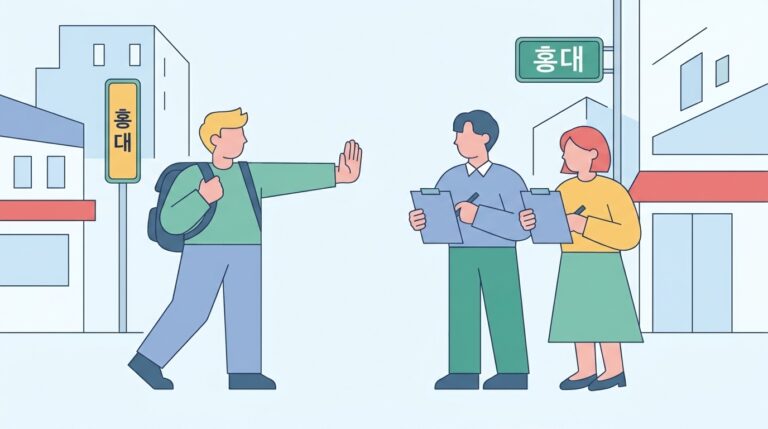
Imagine walking down the vibrant streets of Hongdae or Sinchon on a sunny afternoon. Suddenly, two polite strangers approach you with warm smiles and ask: “인상이 참 좋으시네요. 혹시 마음 공부나 한국 전통 문화에 관심 있으신가요?” (You look like you have a great demeanor. Are you interested in mind cultivation or traditional Korean culture?) It sounds friendly enough, but as many seasoned expats and advanced learners know, this is often the classic opener for pseudo-religious cult recruitment in Korea, known as 사이비 종교 (Saibi Jonggyo).
Navigating these unsolicited encounters requires more than just textbook Korean. As a C1-level learner, simply saying “아니요” might not always convey your firm boundary or diffuse the persistent persuasion techniques these groups use. Dealing with psychological pressure while maintaining safety and social dignity demands refined linguistic nuance and cultural intuition. In this lesson, backed by real feedback from long-term foreign residents and native speakers, you will master authoritative yet natural Korean expressions, non-verbal boundary cues, and strategic situational responses to handle cult encounters safely and gracefully.
Phase 2: 핵심 표현 3선 심층 분석 (Key Expressions Analysis)
1. 딱 잘라 거절하다
- Pronunciation: [Ttak jalla geojeolhada] (Pronounced like ‘ttak jal-la gweo-jeol-ha-da’, sharply cut off)
- Meaning: Literally “to cut off sharply and refuse.” Nuance: To give a firm, unequivocal, and decisive refusal without leaving room for hesitation.
- K-Culture Moment: Frequently seen in thriller or realistic K-dramas where a protagonist firmly shuts down a suspicious salesman or pushy recruiter on the street.
- Editor’s Insight: Cult recruiters thrive on hesitation. Using this phrase (or embodying its action) signals that you recognize their tactic and will not be manipulated.
- Situation Spectrum: Casual ⚠️ | Semi-formal ✅ | Formal ✅
- 🤔 Think About It: How does setting firm boundaries verbally differ between your home culture and Korea’s indirect communication culture?
2. 거절의 의사를 명확히 밝히다
- Pronunciation: [Geojeorui uisareul myeonghwakhi balghida]
- Meaning: Literally “to clearly declare one’s intention to decline.” Nuance: Expressing a clear, formal boundary in personal or professional settings.
- K-Culture Moment: Used in news reports, advisory podcasts, or serious personal discussions regarding scams and manipulative organizations.
- Editor’s Insight: This C1-level formal expression allows you to explain your actions strategically to authority figures, police, or university counselors if needed.
- Situation Spectrum: Casual 🚫 | Semi-formal ⚠️ | Formal ✅
- 🤔 Think About It: Why is formal language often the best shield against personal boundaries being overstepped?
3. 더 이상 연락하지 마세요
- Pronunciation: [Deo isang yeollakhaji maseyo]
- Meaning: “Please do not contact me anymore.”
- Nuance: A clear, direct command delivered in polite honorifics (존댓말), removing any ambiguity about future interactions.
- K-Culture Moment: Used in suspense dramas when a character cuts ties with toxic acquaintances or manipulative groups.
- Editor’s Insight: Adding “더 이상” (any further) sets a hard boundary that makes continued contact legally and socially inappropriate.
- Situation Spectrum: Casual ⚠️ | Semi-formal ✅ | Formal ✅
- 🤔 Think About It: In Korean culture, why does combining polite language with an assertive command carry so much social weight?
Phase 3: 교과서 한국어 vs 진짜 한국어 (Textbook vs. Real Korean)
Situation 1: Declining a street approach on the spot
- 📖 교과서 한국어: “저는 관심이 없으니 가주세요.”
- 🗣️ 진짜 한국어: “아, 됐습니다. 바빠서 가볼게요.”
- 💡 왜 다를까? Textbook phrases sound like an invitation to debate. Real Koreans use short, swift closures combined with a physical exit action (“바빠서 가볼게요” – I’m busy, so I’ll be going).
Situation 2: Exit strategy from a suspicious language exchange or workshop
- 📖 교과서 한국어: “이 모임은 이상합니다. 나중에 나가겠습니다.”
- 🗣️ 진짜 한국어: “제가 갑자기 급한 일이 생겨서 먼저 일어날게요. 더 이상 연락은 안 주셔도 됩니다.”
- 💡 왜 다를까? Arguing whether a group is weird (이상하다) provokes defense. Stating a sudden conflict (급한 일) and placing a hard stop (연락 안 주셔도 됩니다) ensures a clean exit.
Phase 4: K-Culture 딥다이브 & 비언어적 매너 (Deep Dive & Non-Verbal Manners)
4-1. 눈치 (Nunchi) & Non-Verbal Gestures
- The Palm Shield & Speed Walking: When approached, hold up one hand at chest height (palm facing them) and continue walking without breaking stride. Do not make prolonged eye contact.
- Tone Control: Keep your voice flat and low. Excessive smiling out of politeness is misconstrued as openness to dialogue.
4-2. Culture Code: Pseudo-Religions in Modern Korea
In modern South Korea, rapid urbanization and competitive social stress have given rise to coercive cult organizations. Shows like OCN’s Save Me (구해줘) highlight how these groups prey on isolated individuals, students, and foreigners seeking connection. Knowing the dynamic helps you recognize that setting boundaries is not rude—it is essential personal safety.
Phase 5: 실전 롤플레이 시나리오 (Roleplay Scenario)
Setting: A cozy cafe in Sinchon. Min-su (an acquaintance met through a study group) has brought a mysterious friend, pretending it’s a casual coffee chat, but begins discussing “ancestral karma” and secret mind sessions.
- 민수: (약간 어색하게 웃으며) Alex씨, 요즘 명상이나 마음 치유에 관심 많다고 했죠? 제 친구가 정말 좋은 수련 모임을 하거든요.
- Alex: (약간 의아해하며) 아, 그래요? 저는 그냥 소소하게 혼자 운동하는 정도인데요.
- 친구: (진지한 표정으로) 아니에요. Alex씨 얼굴에 조상님의 기운과 업보가 보여서 그래요. 오늘 같이 가보실래요?
- Alex: (손사래를 치며) 아… 조상님이요? 저는 그런 종교적이나 영적인 모임에는 전혀 관심이 없습니다.
- 민수: (설득하려는 듯) 종교 아니에요! 그냥 기운을 밝게 하는 공부예요. 딱 한 시간만요.
- Alex: (단호한 눈빛으로) 민수씨, 저는 분명하게 거절의 의사를 밝혔습니다. 이런 자리는 불편하네요.
- 친구: (끈질기게) 한 번만 들어보시면 정말 삶이 달라지는데…
- Alex: (가방을 챙기며) 제가 급한 일이 생겨서 먼저 일어날게요. 더 이상 이런 일로 연락하지 마세요.
🔀 인터랙티브 분기점 (Interactive Choice)
How should Alex handle it if Min-su follows him outside the cafe?
- Option A: “민수씨, 왜 이러세요? 당장 경찰 부를 거예요!”
- Option B: “민수씨, 마음은 감사하지만 이런 모임은 제 방식과 맞지 않아요. 앞으로는 개인적으로만 연락했으면 좋겠어요.”
- Option C: “네, 알겠어요. 어떤 모임인지 문자로 보 brochure나 보내주세요.”
[Feedback & Analysis]
* 🥇 Best Choice: Option B – Firmly reiterates personal boundaries while giving a clear condition for personal friendship without escalating unnecessary conflict.
* ⚠️ Risk Choice: Option A – Jumping to emergency threats immediately might create public scenes unless you are actively blocked or physically threatened.
* 🚫 Bad Choice: Option C – Showing passive interest (asking for materials) gives cult recruiters a foothold to keep contacting you.
Phase 6: 10초 감정 섀도잉 드릴 (Emotion Shadowing Drill)
[😒 덤덤하고 단호하게]아 / 됐습니다. / 바빠서 / 먼저 가볼게요.[🛑 단호하고 확실하게]저는 / 그런 모임에 / 전혀 / 관심이 없습니다.[😠 엄격하고 분명하게]제가 / 거절했으니 / 더 이상 / 연락하지 마세요.
Phase 7: K-Culture 미니 사전 (Mini Dictionary)
- 사이비 (Saibi) | Pseudo-religious / Cultish | Refers to fraudulent or high-control deceptive religious cults.
- 길거리 포교 (Gilgeori Pogyo) | Street proselytization | The act of recruiting members in public streets under disguises (e.g., surveys, psychological tests).
- 마음 공부 (Maeum Gongbu) | Mind study / Cultivation | A common bait phrase used by recruiters to sound secular and self-improvement focused.
- 세뇌 (Senae) | Brainwashing / Mind control | Psychological manipulation used by predatory groups.
Phase 8: 여행자를 위한 생존 키트 (Traveler’s Survival Kit)
Top 3 Survival Phrases
- 괜찮습니다, 지나갈게요. (Gwaenchansnimda, jinagalgeyo.) – I’m okay, let me pass.
- 사진이나 설문조사 안 합니다. (Sajinina seolmunjosa an hamnida.) – I don’t do photos or surveys.
- 도움 필요 없으니 그냥 가세요. (Doum pil-yo eops-euni geunyang gaseyo.) – I don’t need help, please go ahead.
Editor’s Travel Note
If you ever feel unsafe or followed, walk directly into a convenience store or safe shop. You can report non-emergency assistance via 1330 관광통역안내전화 Service or dial emergency services at 경찰청 112 신고 서비스 Portal.
Phase 9: 한 발 더 깊이 (One Step Deeper)
In Korean society, politeness (예의) is highly valued, which recruiters weaponize to make victims feel too awkward to walk away. True linguistic mastery at the C1 level involves knowing when to strip away soft indirectness and apply firm honorific boundaries. Protecting your personal autonomy is the ultimate mark of cultural intelligence.
💬 Your Turn: Have you ever encountered street recruiters or unexpected group invitations in Korea? Share your experience in the comments below!
Phase 10: FAQ & 오해 방지 (FAQ Schema)
Q: Isn’t it rude to walk away while someone is talking to me in Korea?
A: Under normal social circumstances, yes. However, deceptive street recruiters breach normal social etiquette first. Walking away decisively without engaging is standard practice among native Koreans.
Q: What if they claim to be college students doing a simple culture project?
A: Authentic university research projects require formal consent forms and official IDs. If they shift the conversation toward energy, ancestors, or private coffee meetings, politely decline and leave.
Q: Can I use informal Korean (반말) to force them away?
A: It is better to stick to firm, cold formal language (존댓말). Using 반말 can cause unwanted emotional escalation or conflict on the street.
🚨 흔한 실수 (Common Mistakes) TOP 3
- ❌ Mistake: Smiling awkwardly while saying “No thanks”.
- 👉 Correct Action: Maintain a neutral face and step past them.
- ❌ Mistake: Giving fake contact info.
- 👉 Correct Action: State “연락처는 드릴 수 없습니다” (I cannot give my contact number) directly.
- ❌ Mistake: Arguing about theology or logic.
- 👉 Correct Action: Cut the interaction immediately with “관심 없습니다”.
Phase 11: 액션 미션 & 참여 유도 (Action Missions)
- Bronze Mission: Practice saying “아, 됐습니다. 바빠서 가볼게요” aloud 5 times with a neutral expression.
- Silver Mission: Memorize the term ‘길거리 포교’ and explain its concept to a study partner.
- Gold Mission: Identify 2 non-verbal cues native Koreans use to decline unwanted solicitations in everyday vlog videos.
- 🎮 K-Culture Mission: Watch an episode of K-drama Save Me (구해줘) and note down expressions used when characters try to escape manipulative settings.
Phase 12: 인터랙티브 퀴즈 챌린지 (Interactive Quiz)
Q1. 길거리에서 누군가 “마음 공부 하실래요?”라고 물었을 때 가장 적절한 대답은?
A) “와, 재밌겠네요! 어디로 가면 되나요?”
B) “아, 됐습니다. 바빠서 가볼게요.”
C) “저는 마음 공부보다 수학 공부를 잘해요.”
🔍 정답 및 해설 보기
정답: B
해설: B번 표현은 상대방의 지속적인 설득을 차단하면서 빠르게 자리를 벗어날 수 있는 가장 적절하고 자연스러운 고급 한국어 거절 표현입니다.
Q2. True or False: 사이비 종교의 포교 활동에 거절할 때는 존댓말보다 반말을 쓰는 것이 항상 안전하다.
🔍 정답 및 해설 보기
정답: False
해설: 반말을 사용하면 불필요한 언쟁이나 감정적 충돌을 야기할 수 있습니다. 차가운 톤의 단호한 존댓말이 가장 효과적인 사회적 방어막입니다.







