

안녕하세요! 매일한글 에디터입니다. 👋
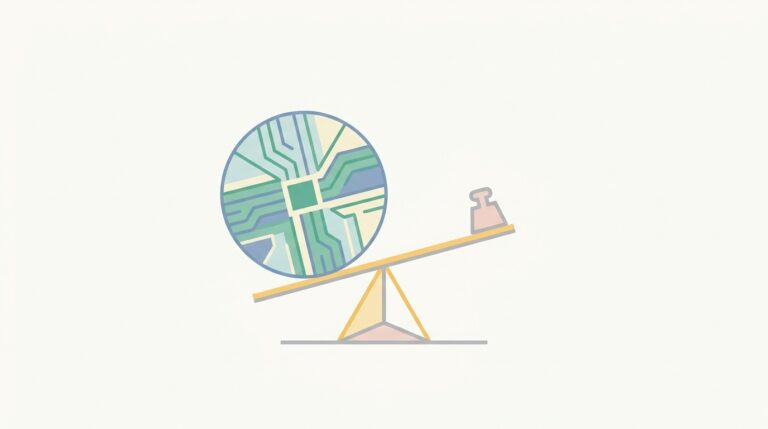
When reading global economic news in Korean, do you ever feel like standard dictionaries fall short of explaining the intense, high-stakes commentary around technology geopolitics? You are not alone! Many of our advanced C2 learners express frustration when trying to discuss complex strategic topics like the US-China semiconductor rivalry and Korea’s position in global supply chains.
Imagine sitting in a high-level strategy meeting or watching a Korean news documentary on Samsung Electronics and SK Hynix. Words like Sandwich Crisis or Super-gap pop up constantly, but understanding their deeper political, cultural, and corporate undertones requires more than just vocabulary lookup. Today, based on feedback from our C2 executive learners, we present a definitive guide to navigating Korea’s semiconductor narrative like a native industry expert. Mastering these expressions will elevate your business Korean, allowing you to articulate delicate geopolitical trade-offs with elegance, authority, and cultural precision.
Phase 2: 핵심 표현 3선 심층 분석
1. 샌드위치 신세 (Sandwich Sin-se)
- Pronunciation: [Sand-wi-chi Sin-se] (Sounds like “Sandwich” followed by seen-seh, echoing a state of being squeezed between two heavy layers)
- Meaning: Literally “Sandwich Status/Fate.” Metaphorically refers to being caught helplessly between two dominant opposing powers or pressures.
- K-Culture Moment: Frequently featured on news broadcasts discussing South Korea’s geopolitical squeeze between US technology export controls and China’s vast consumer market.
- Editor’s Insight: While “난처한 상황” (difficult situation) is neutral, 샌드위치 신세 captures the distinct structural pressure of being stuck between two giants.
- Situation Spectrum: Casual (⚠️) / Semi-formal (✅) / Formal (✅)
- 🤔 Think About It: Does your native culture view being in the middle as an opportunity for mediation, or primarily as a vulnerable predicament like Korean corporate culture does?
2. 초격차 (Cho-gyeok-cha)
- Pronunciation: [Cho-gyeok-cha] (Pronounced Choh-gyawk-chah, emphasizing the sharp explosion of gyeok)
- Meaning: Direct translation: “Super-gap.” Refers to maintaining an unassailable technological or operational lead that competitors cannot easily bridge.
- K-Culture Moment: Originally coined by Samsung leadership, this keyword appears in tech corporate keynotes, financial reports, and economic K-dramas.
- Editor’s Insight: This goes beyond simple competitive advantage (경쟁 우위); it implies a strategy of relentless innovation to make imitation mathematically impossible.
- Situation Spectrum: Casual (🚫) / Semi-formal (✅) / Formal (✅)
- 🤔 Think About It: How does your culture express the idea of maintaining a lead—do you focus on defending the market share or expanding the technological gap?
3. 고래 싸움에 새우 등 터진다 (Go-rae Ssam-e Sae-u Deung Teor-jin-da)
- Pronunciation: [Go-rae ssam-e sae-u deung teo-jin-da] (Rhythmic proverb: go-rae = whale, sae-u = shrimp)
- Meaning: “When whales fight, the shrimp’s back gets broken.” Innocent bystanders suffer damage when large powers clash.
- K-Culture Moment: Cited by analysts describing how Korean chipmakers face collateral disruption during US-China trade tensions.
- Editor’s Insight: This ancient proverb reflects historical Korean geopolitics, conveying sympathy while emphasizing structural vulnerability.
- Situation Spectrum: Casual (✅) / Semi-formal (✅) / Formal (✅)
- 🤔 Think About It: Idioms often use nature metaphors. What animals or natural forces represent geopolitical dynamics in your native language?
Phase 3: 교과서 한국어 vs 진짜 한국어
Situation 1: Describing Strategic Vulnerability
- 📖 교과서 한국어: 한국 기업들이 미중 갈등 때문에 큰 어려움에 직면해 있습니다. (Korean companies are facing great difficulties due to US-China conflict.)
- 🗣️ 진짜 한국어: 한국 반도체가 미중 패권 다툼 사이에 끼여 완전히 샌드위치 신세가 됐어요. (Korean semiconductors are completely caught in a sandwich position amidst the US-China hegemony battle.)
- 💡 왜 다를까? Textbook Korean uses passive state descriptions, whereas native speakers use vivid metaphors like “끼이다” (to be stuck in between) and “샌드위치 신세” to dramatize structural geopolitical pressure.
Situation 2: Emphasizing Market Dominance
- 📖 교과서 한국어: 경쟁사보다 앞서기 위해 기술 개발을 열심히 해야 합니다. (We must work hard on tech development to stay ahead of competitors.)
- 🗣️ 진짜 한국어: 후발 주자들이 따라오지 못하게 초격차 기술을 확보해야 합니다. (We must secure super-gap technology so latecomers cannot catch up.)
- 💡 왜 다를까? Advanced business Korean favors high-level compound terms like “후발 주자” (latecomers/followers) and “초격차” (super-gap) over plain verb phrases.
Phase 4: K-Culture 딥다이브 & 비언어적 매너
4-1. Executive Nunchi (눈치) & Boardroom Mannerisms
In high-level Korean corporate environments, discussing geopolitical risks requires careful body language. When discussing delicate dilemmas like the Sandwich Crisis, executive speakers rarely gesture wildly. Instead, they utilize controlled head nods, maintaining composed posture with palms resting lightly on the table. A slight lowering of pitch when mentioning sensitive international sanctions signals high political awareness and respect for corporate confidentiality.
4-2. Cultural Code: The Survival Narrative in Corporate K-Drama
If you have watched corporate thrillers like Reborn Rich (재벌집 막내아들), you have seen how business survival in Korea is framed almost as a military campaign. Because South Korea lacks abundant natural energy resources, technological sovereignty (기술 안보) is viewed as a national safety net. Understanding this framing helps you appreciate why semiconductor technology is discussed not merely as a commercial industry, but as a vital pillar of national security.
Phase 5: 실전 롤플레이 시나리오
Setting: A board advisory meeting at a Seoul tech think tank.
Characters:
* You: Senior Strategic Analyst
* Executive Director Kim (김 이사): Veteran corporate strategist
- 김 이사: 이번 미중 반도체 규제안 발표 이후 우리 수출 라인 영향은 어떻습니까?
(I-beon mi-jung ban-do-che gyu-je-an bal-pyo i-hu u-ri su-chul ra-in yeong-hyang-eun eo-tteos-seub-ni-kka?)
“What is the impact on our export lines following the recent US-China semiconductor regulation announcement?”
(🎭 Adjusting spectacles with a stern, concentrated gaze) -
You: 미국 장비 수출 통제와 중국 시장 매출 사이에서 그야말로 샌드위치 신세입니다.
(Mi-guk jang-bi su-chul tong-je-wa jung-guk si-jang mae-chul sa-i-e-seo geu-ya-mal-ro saen-deu-wi-chi sin-se-im-ni-da.)
“We are literally in a sandwich position between US equipment export controls and Chinese market revenue.”
(🎭 Speaking with a calm, deliberate cadence while presenting data charts) -
김 이사: 고래 싸움에 새우 등 터지는 격이군요. 돌파구는 어디에 있습니까?
(Go-rae ssam-e sae-u deung teo-ji-neun gyeok-i-gun-yo. Dol-pha-gu-neun eo-di-e is-seub-ni-kka?)
“It seems the shrimp’s back is breaking in a whale fight. Where is our breakthrough?”
(🎭 Frowning slightly while leaning forward) -
You: 단순한 가격 경쟁을 넘어 대체 불가능한 초격차 기술을 확보하는 것뿐입니다.
(Dan-sun-han ga-gyeok gyeong-jaeng-eul neo-meo dae-che bul-ga-neung-han cho-gyeok-cha gi-sul-eul hwak-bo-ha-neun geos-ppun-im-ni-da.)
“It is only by securing irreplaceable super-gap technology beyond simple price competition.”
(🎭 Nodding firmly with confident posture) -
김 이사: 공급망 다변화 정책은 차질 없이 진행되고 있습니까?
(Gong-geub-mang da-byeon-hwa jeong-chaek-eun cha-jil eob-si jin-haeng-doe-go is-seub-ni-kka?)
“Is the supply chain diversification policy proceeding without friction?”
(🎭 Tapping fingers lightly on the mahogany table) -
You: 동남아 거점 투자 확대를 통해 리스크를 분산시키는 중입니다.
(Dong-nam-a geo-jeom tu-ja hwak-dae-reul thong-hae ri-seu-keu-reul bun-san-si-ki-neun jung-im-ni-da.)
“We are currently diversifying risks by expanding investment bases in Southeast Asia.”
(🎭 Turning to the next slide on the slide deck) -
김 이사: 좋아요. 기술 안보가 위협받는 시기인 만큼 민첩하게 대응합시다.
(Jo-a-yo. Gi-sul an-bo-ga wi-hyeob-bad-neun si-gi-in man-keum min-cheob-ha-ge dae-eung-hab-si-da.)
“Good. Given that technology security is threatened, let us respond with agility.”
(🎭 Expressing approval with a steady nod) -
You: 예, 리스크 관리 TF팀을 가동하여 밀착 마크하겠습니다.
(Ye, ri-seu-keu gwan-ri TF-tim-eul ga-dong-ha-yeo mil-chak ma-keu-ha-ges-seub-ni-kka.)
“Yes, we will activate the Risk Management Task Force to closely monitor the situation.”
(🎭 Closing the binder neatly)
🔀 인터랙티브 분기점 (Choose Your Strategic Response)
When Director Kim asks: “짱짱한 초격차를 유지하려면 당장 무엇에 집중해야 합니까?” (To maintain a robust super-gap, what must we focus on immediately?)
- Option A: “R&D 인재 유출을 막고 핵심 특허를 사수해야 합니다.”
- Feedback (BEST): Highly professional! Focusing on talent retention and patent security shows acute understanding of tech sovereignty.
- Option B: “단순히 단가를 낮춰서 물량 공세로 밀어붙여야 합니다.”
- Feedback (BAD): Price cuts undermine long-term tech leadership in deep-tech sectors.
- Option C: “강대국의 눈치를 보며 모든 투자를 일시 중단해야 합니다.”
- Feedback (RISK): Halting investments during strategic shifts risks permanent loss of market dominance.
Phase 6: 10초 감정 섀도잉 드릴
[😟 우려를 표하며]
양대 강국 사이에 끼여 / 완전히 샌드위치 신세가 / 되고 말았습니다.
(Yang-dae gang-guk sa-i-e kki-yeo / wan-jeon-hi saen-deu-wi-chi sin-se-ga / doe-go mal-as-seub-ni-da.)-
[😤 단호하고 패기 있게]
후발 주자가 따라올 수 없는 / 초격차 기술만이 / 유일한 살길입니다.
(Hu-bal ju-ja-ga tta-ra-ol su eob-neun / cho-gyeok-cha gi-sul-man-i / yu-il-han sal-gil-im-ni-da.) -
[⚖️ 객관적이고 냉철하게]
고래 싸움에 / 새우 등 터지지 않도록 / 공급망을 다변화해야 합니다.
(Go-rae ssam-e / sae-u deung teo-ji-ji 않-to-rok / gong-geub-mang-eul da-byeon-hwa-hae-ya hab-ni-da.)
Phase 7: K-Culture 미니 사전
- 샌드위치 위기 (Sandwich Crisis | Saen-deu-wi-chi Wi-gi):
The economic state of being caught between lower-cost emerging competitors and higher-tech advanced nations. - 초격차 (Super-gap | Cho-gyeok-cha):
A strategy of expanding tech capability differences to maintain insurmountable market leadership. - 공급망 (Supply Chain | Gong-geub-mang):
The systemic network of tech components, raw materials, and logistics key to national economic security. - 기술 안보 (Technology Security | Gi-sul An-bo):
The strategic perspective that protecting advanced technological capabilities is essential for national sovereignty.
Phase 8: 여행자를 위한 생존 키트 (Business & Tech Summit Edition)
TOP 3 Essential Phrases
- 동시통역 기기가 지원되나요?
(Dong-si-thong-yeok gi-gi-ga ji-won-doe-na-yo?)
“Is simultaneous interpretation equipment provided?” - 발표자료집을 따로 받을 수 있을까요?
(Bal-pyo-ja-ryo-jib-eul tta-ro ba-deul su is-seul-kka-yo?)
“Can I receive a copy of the presentation deck separately?” - 명함 한 장 교환할 수 있을까요?
(Myeong-ham han jang gyo-hwan-hal su is-seul-kka-yo?)
“May I exchange business cards with you?”
Editor’s Travel & Business Note
Attending tech conferences at COEX or KINTEX? Make sure to download navigation and networking tools in advance. Use the 네이버 지도 앱 다운로드 to find convenient subway connections to Gangnam’s tech hubs, and keep T-money transit cards ready for hassle-free business commuting.
Phase 9: 한 발 더 깊이 (생각 질문)
South Korea’s socio-economic narrative has long been shaped by geographic and geopolitical imperatives. Surrounded by historical superpowers, Korean business culture developed a hyper-agile, crisis-driven resilience known as Ppaalli-Ppaalli combined with long-term technological hedge strategies. Language reflects this: metaphors of geopolitical vulnerability like 샌드위치 신세 co-exist alongside highly ambitious strategic terms like 초격차. Exploring these dualities gives advanced learners deep insight into Korea’s economic ethos.
💬 Your Turn: How does your home country’s media describe strategic economic competition? Do you use spatial metaphors similar to “Sandwich”? Share your thoughts in the comments below!
Phase 10: FAQ & 오해 방지
Q: Is
Frequently Asked Questions (FAQ)
Q: What does "샌드위치 신세 (Sandwich Sin-se)" mean in Korean and how do you pronounce it?
A: In Korean, "샌드위치 신세 (Sandwich Sin-se)" is pronounced [Sand-wi-chi Sin-se] and means: Literally "Sandwich Status/Fate." Metaphorically refers to being caught helplessly between two dominant opposing powers or pressures.
Q: What does "초격차 (Cho-gyeok-cha)" mean in Korean and how do you pronounce it?
A: In Korean, "초격차 (Cho-gyeok-cha)" is pronounced [Cho-gyeok-cha] and means: Direct translation: "Super-gap." Refers to maintaining an unassailable technological or operational lead that competitors cannot easily bridge.
Q: What does "고래 싸움에 새우 등 터진다 (Go-rae Ssam-e Sae-u Deung Teor-jin-da)" mean in Korean and how do you pronounce it?
A: In Korean, "고래 싸움에 새우 등 터진다 (Go-rae Ssam-e Sae-u Deung Teor-jin-da)" is pronounced [Go-rae ssam-e sae-u deung teo-jin-da] and means: "When whales fight, the shrimp's back gets broken." Innocent bystanders suffer damage when large powers clash.







