

Savoring Spring in Korea: How to Order and Enjoy Fresh Wild Greens Bibimbap Like a Local
Phase 1: Empathy (Storytelling Opening)
안녕하세요! 매일한글 에디터입니다. (Hello! I’m your lead editor at Daily Hangul.)
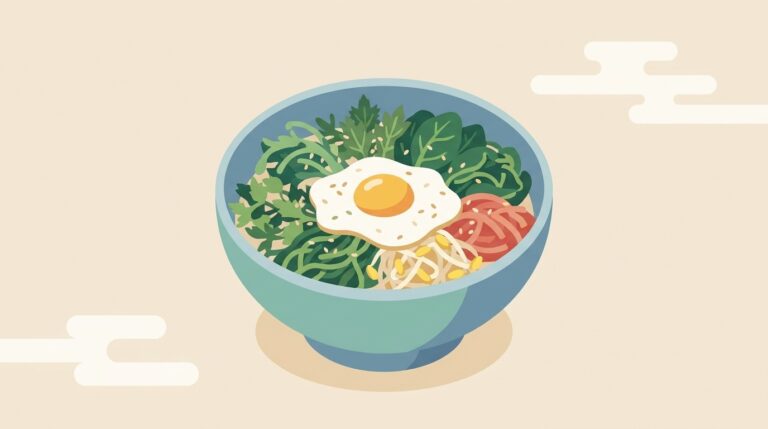
Imagine walking into a cozy traditional restaurant in Seoul on a breezy April afternoon. The air smells faintly of toasted sesame oil and warm rice. You sit down, eager to try Korea’s famed spring delicacy: 봄나물 비빔밥 (Bomnamul Bibimbap)—a vivid bowl of rice topped with vibrant, freshly harvested spring wild greens.
However, panic sets in when the server brings a colorful palette of wild herbs you’ve never seen before. Is that spicy red sauce going to overwhelm the herbal aroma? Which greens are bitter? How do you ask for extra sesame oil without sounding rude? Many intermediate Korean learners struggle with restaurant vocabulary because menus use specific culinary terms, and staff often speak in fast, warm spoken phrasing.
Don’t worry! Based on real classroom feedback from hundreds of intermediate learners, this guide will equip you with authentic, context-rich expressions to order, customize, and savor spring greens bibimbap with full confidence. Let’s turn your dining anxiety into your delicious core memory in Korea!
Phase 2: Core Expressions Deep Dive
1. 제철 나물이에요? (Jecheol namurieoyo?)
- Pronunciation: [Je-cheol na-mool-i-e-yo?] (Sounds like ‘Jae-chul’ as in ‘check your’ + ‘nah-mool’)
- Meaning: “Are these seasonal wild greens?”
- K-Culture Moment: Seen in traditional Korean food shows where hosts travel to countryside markets in spring to find freshly picked wild herbs.
- Editor’s Insight: ‘제철’ (jecheol) refers to food at the peak of its season. Asking this shows deep appreciation for Korean seasonal culinary culture!
- Situation Spectrum: Casual ⚠️ / Semi-formal ✅ / Formal ✅
- 🤔 Think About It: Does your home culture emphasize specific foods for each season, or do you eat the same produce year-round?
2. 덜 매운 양념으로 주세요 (Deol maeun yangnyeom-euro juseyo)
- Pronunciation: [Deol mae-oon yang-nyeom-eu-ro ju-se-yo]
- Meaning: “Please give me a less spicy sauce/dressing.”
- K-Culture Moment: Commonly used in food reality shows when guests want to savor the natural herbal aroma of spring greens without heavy gochujang.
- Editor’s Insight: Spring bibimbap often uses mild soy sauce or a light chilli sauce to highlight herbs like dallae (wild chives). Using ‘덜’ (less) sounds polite and refined.
- Situation Spectrum: Casual ⚠️ / Semi-formal ✅ / Formal ✅
- 🤔 Think About It: In your culture, is customizing sauce level at restaurants common, or considered demanding?
3. 쓱쓱 비벼 드세요 (Sseuk-sseuk bibyeo deuseyo)
- Pronunciation: [Sseuk-sseuk bi-byeo deu-se-yo]
- Meaning: “Mix it thoroughly and enjoy!”
- K-Culture Moment: Classic line spoken by friendly restaurant aunts (imoneim) while pouring sesame oil over your bowl.
- Editor’s Insight: ‘쓱쓱’ (sseuk-sseuk) is an onomatopoeia describing the energetic, smooth motion of mixing rice and vegetables with a spoon.
- Situation Spectrum: Casual ✅ / Semi-formal ✅ / Formal 🚫
- 🤔 Think About It: How does tactile mixing with sound effects change your emotional connection to the food?
Phase 3: Textbook Korean vs Real Korean
Situation 1: Asking if the dish is spicy
- 📖 교과서 한국어: 이 음식은 매우 매습니까? (Is this food very spicy?)
- 🗣️ 진짜 한국어: 이거 많이 매워요? (Is this quite spicy?)
- 💡 왜 다를까? Textbook Korean overuses stiff formal endings like ~습니까. Real Koreans use conversational ~요 endings with the natural adverb ‘많이’ to sound friendly.
Situation 2: Asking for extra sesame oil
- 📖 교과서 한국어: 참기름을 더 제공해 주십시오. (Please provide more sesame oil.)
- 🗣️ 진짜 한국어: 참기름 조금만 더 주실 수 있나요? (Could I get just a little more sesame oil?)
- 💡 왜 다를까? Asking politely with ‘조금만’ (just a little) softens your request, showing consideration (nunchi) for the busy restaurant staff.
Phase 4: K-Culture Deep Dive & Non-verbal Manners
4-1. Nunchi & Table Manners
When eating spring greens bibimbap, hold your spoon with your dominant hand and use it to mix thoroughly. In Korea, bibimbap is meant to be mixed until every grain of rice is coated in sauce and oil. Eating toppings separately without mixing might prompt a friendly server to come over and say, “쓱쓱 비벼 드셔야죠!” (You need to mix it vigorously!). Also, leave the rice bowl on the table rather than lifting it close to your mouth.
4-2. Culture Code: Spring Wild Herbs (봄나물)
Spring in Korea signifies awakening and renewal. After cold winters, Koreans head to mountains and local markets to pick fresh wild herbs like dallae (wild chive), naengi (shepherd’s purse), and chamdunamul (short-fruit pimpinella). Eating these herbs in spring isn’t just about taste; it’s a wellness tradition believed to banish spring fatigue (gonpungi) and replenish vital energy.
Phase 5: Real Roleplay Scenario
Setting: A popular traditional restaurant in Jeonju known for spring wild greens bibimbap.
NPC: Friendly restaurant manager (이모님 – Imonim).
- 이모님: 🎭 (밝게 미소 지으며) 어서 오세요! 몇 분이세요?
(Eoseo oseyeo! Myeot bun-iseyo? / Welcome! How many people?) - Learner: 🎭 (손가락으로 1을 보이며) 한 명이요. 봄나물 비빔밥 되나요?
(Han meong-iyo. Bomnamul bibimbap doenayo? / One person. Is spring greens bibimbap available?) - 이모님: 🎭 (메뉴판을 짚으며) 그럼요! 요즘 향긋한 달래랑 냉이가 아주 제철이에요.
(Geureomyo! Yojeum hyanggeut-han dallae-rang naeng-i-ga aju jecheol-ieyo. / Of course! Wild chives and shepherd’s purse are in season right now.) - Learner: 🎭 (궁금한 표정으로) 제가 매운 걸 잘 못 먹는데, 고추장 양념 많이 매워요?
(Jega maeun geol jal mot meokneunde, gochujang yangnyeom mani maewoyo? / I can’t eat very spicy food, is the gochujang sauce very spicy?) - 이모님: 🎭 (고개를 저으며) 그럼 간장 양념으로 바꿀까요? 달래 간장이 아주 고소해요!
(Geureom ganjang yangnyeom-euro bagkulkgayo? Dallae ganjang-i aju gosohae-yo! / Then shall I switch it to soy sauce dressing? Wild chive soy sauce is very savory!) - Learner: 🎭 (기쁘게 끄덕이며) 네, 덜 매운 양념으로 주세요! 참기름도 넉넉히 부탁드려요.
(Ne, deol maeun yangnyeom-euro juseyo! Chamgireum-do neongneok-hi 부탁deuryeoyo. / Yes, please give me the less spicy sauce! Please be generous with sesame oil too.) - 이모님: 🎭 (따뜻하게 숟가락을 놓아주며) 네~ 맛있게 쓱쓱 비벼 드세요!
(Ne~ mas-itge sseuk-sseuk bibyeo deuseyo! / Sure thing~ Mix it thoroughly and enjoy!) - Learner: 🎭 (두 손으로 그릇을 가볍게 감싸며) 감사합니다! 잘 먹겠습니다.
(Gamsahabnida! Jal meokgebseumnida. / Thank you! I will eat well.)
🔀 Interactive Branching Choice
When the server asks if you want traditional spicy gochujang or wild-chive soy sauce:
* Choice A: “상관없어요, 아무거나 주세요.” (I don’t care, give me anything.)
* Choice B: “달래 간장 양념으로 주세요! 향이 궁금해요.” (Please give me wild-chive soy sauce! I’m curious about the aroma.)
* Choice C: “고추장 제일 매운 걸로 주세요!” (Give me the absolute spiciest gochujang!)
Feedback:
* Choice A (Risk): Misses the opportunity to experience seasonal spring flavors tailored to your spice tolerance.
* Choice B (Best): Perfect! Demonstrates curiosity about Korean seasonal ingredients (dallae) and engages warmly with staff.
* Choice C (Bad): Excessive spice can completely mask the delicate herbal scents of spring wild greens!
Phase 6: 10-Second Emotion Shadowing Drill
[😊 Exciting & Eager]
이거 / 제철 나물이에요? / 향이 너무 좋아요!
(I-geo / jecheol namurieoyo? / hyang-i neomu joa-yo!)
Is this seasonal wild green? The aroma is wonderful!-
[🥺 Polite & Gentle]
제가 매운 걸 잘 못 먹어서 / 덜 매운 양념으로 / 부탁드릴게요.
(Jega maeun geol jal mot meok-eoseo / deol maeun yangnyeom-euro / 부탁deurilgeyo.)
Since I can’t eat spicy food well, I politely ask for less spicy dressing. -
[😋 Delighted & Enthusiastic]
참기름 넣고 / 쓱쓱 비벼 먹으니까 / 정말 맛있어요!
(Chamgireum neohgo / sseuk-sseuk bibyeo meok-eunika / jeongmal mas-itseoyo!)
Mixing it thoroughly with sesame oil makes it truly delicious!
Phase 7: K-Culture Mini Dictionary
-
봄나물 (Bomnamul) | Spring Wild Greens
Edible wild herbs harvested during spring in Korea. Rich in vitamins and natural aromatic bitterness. -
달래 (Dallae) | Wild Chive
A iconic spring herb with a mild onion-garlic aroma, frequently chopped into soy sauce dressings for bibimbap. -
냉이 (Naengi) | Shepherd’s Purse
A fragrant spring wild herb used in soups (doenjang-guk) and bibimbap toppings, famous for invigorating spring appetite. -
밥도둑 (Bapdoduk) | Rice Thief
A colorful Korean idiom referring to a dish so delicious that your bowl of rice vanishes instantly as if stolen!
Phase 8: Traveler Survival Kit
Survival Phrases TOP 3
- 비빔간장 따로 주실 수 있나요? (Bibim-ganjang ttaro jusil su itnayo?)
Can I get the mixing soy sauce on the side? - 봄나물 추가돼요? (Bomnamul chugadaeyo?)
Can I add extra spring greens? - 참기름 조금만 더 뿌려주세요! (Chamgireum jogumman deo ppuryeojuseyo!)
Please drizzle just a little more sesame oil!
Editor’s Travel Note
When hunting for authentic local bibimbap spots outside major tourist centers, avoid standard search engines. Instead, try a Naver Map app download to search for localized ratings using keywords like “봄나물비빔밥 맛집” (Spring wild greens bibimbap delicious spot). Most traditional eateries accept credit cards, but keeping small cash notes handy helps in rustic mountain markets.
Phase 9: One Step Deeper (Reflective Essay)
Korean culinary tradition deeply values 신토불이 (Sintoburi)—the concept that body and land are indivisible, meaning eating produce grown in your immediate local soil during its natural season restores inner balance. Spring wild greens bibimbap is the purest expression of this philosophy. By gathering herbs that pushed through frozen winter soil, Koreans welcome spring not just through calendars, but through communal physical nourishment.
💬 Your Turn: Have you ever eaten seasonal wild herbs or seasonal dishes in your home country? Share your favorite spring food memory in the comments below!
Phase 10: FAQ & Common Mistakes
Q: Can I request bibimbap without spicy gochujang entirely?
A: Absolutely! You can ask for “간장 양념” (soy sauce dressing) or say “고추장 빼주세요” (Please leave out the gochujang). Spring greens bibimbap tastes fantastic with savory soy sauce.
Q: Is bibimbap eaten hot or cold?
A: Standard bibimbap is served warm or at room temperature. However, Dolsot (stone pot) Bibimbap is served sizzling hot. Spring wild greens bibimbap is usually served warm to preserve delicate herb fragrances.
Q: Do I need to mix everything together completely before eating?
A: Yes! In Korean food culture, mixing unifies contrasting textures and flavors. Eating toppings individually without mixing is uncommon.
🚨 Common Mistakes TOP 3
- Mistake: Eating the toppings off the top like a salad.
Correct Action: Use your spoon to mix rice, wild greens, sauce, and sesame oil thoroughly (쓱쓱 비벼서). - Mistake: Pouring all the gochujang sauce before tasting.
Correct Action: Taste a small spoonful first, then add sauce gradually to avoid overpowering the wild herb aroma. - Mistake: Using chopsticks to scoop up rice.
Correct Action: Use chopsticks to loosen stubborn greens, but always use a spoon to eat mixed bibimbap.
Phase 11: Action Mission
- Bronze Mission: Practice saying “쓱쓱 비벼 드세요” out loud 3 times with enthusiastic hand motions.
- Silver Mission: Take a photo of your next meal, upload it to Instagram/X with the hashtag
#DailyHangulSpring, and write a caption using “제철”! - Gold Mission: Visit an authentic Korean restaurant or market this week and order your dish using “덜 매운 양념으로 주세요”!
🎮 K-Culture Mission: Watch a clip of a Korean travel vlog or K-Drama scene set in spring. Spot whenever characters mention “봄나물” or drizzling sesame oil!
Phase 12: Interactive Quiz Challenge
Question 1: Situation Judgment
If you want to try spring bibimbap with mild sauce to enjoy the fragrance of herbs, what should you say?
– A) 고추장 제일 많이 주세요.
– B) 덜 매운 양념으로 주세요.
– C) 물 한 컵만 주세요.
🔍 Click to view Answer & Explanation
Correct Answer: B) 덜 매운 양념으로 주세요.
Explanation: “덜 매운 양념으로 주세요” means “Please give me a less spicy sauce/dressing,” allowing you to enjoy delicate seasonal spring herbs like dallae and naengi without burning your palate.
Question 2: Fill in the Blank
Complete the iconic sound phrase for mixing bibimbap:
“참기름을 넣고 ( ___ ___ ) 비벼 드세요!”
🔍 Click to view Answer & Explanation
Correct Answer: 쓱쓱 (sseuk-sseuk)
Explanation: ‘쓱쓱’ is the lively onomatopoeia describing the smooth, thorough mixing of rice and dish ingredients.
Question 3: True or False
True or False: In Korea, lifting your rice bowl off the table to eat is considered standard table etiquette.
🔍 Click to view Answer & Explanation
Correct Answer: False
Explanation: In Korean dining etiquette, bowls remain on the table while you use your spoon to eat, unlike in some neighboring Asian cultures.







