

Phase 1: Empathy (Opening)
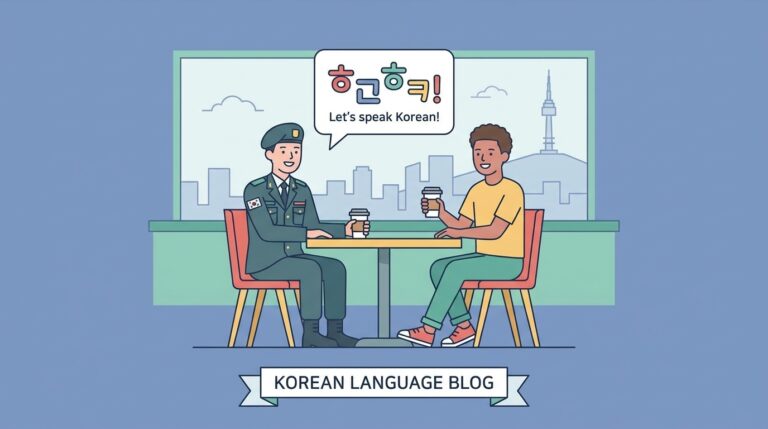
안녕하세요! 매일한글 에디터입니다. Have you ever watched a Korean drama where a male lead suddenly receives his enlistment notice, or listened to your Korean male friends reminisce over drinks about their boot camp memories? Mandatory military service (징병제) is a deeply rooted pillar of modern South Korean society. For many foreign learners, discussing military service can feel like stepping into a whole new world filled with unique vocabulary, hierarchy, and subtle emotional nuances. Today, we are going to unlock practical expressions and cultural insights that will help you talk naturally about this topic like a true native friend—built on real feedback from intermediate learners like you!
Phase 2: Core Expressions Deep Dive
1. 몸 조심히 다녀와 (Mom josimhi danyeowa)
- Pronunciation: mom joh-sim-hi da-nyeo-wa (Sounds like “Mom, joe-seem-hee dah-nyeo-wah”)
- Meaning: “Go and come back safely.” (Literal: “Move your body carefully and return.”)
- K-Culture Moment: Heard right outside boot camp training centers (훈련소) when families and friends bid farewell to enlistees.
- Editor’s Insight: It expresses deep, warm concern without sounding overly formal or dramatic.
- Situation Spectrum: Casual ✅ / Semi-formal ✅ / Formal ⚠️
- 🤔 Think About It: Why does Korean culture emphasize physical well-being and safe return in everyday farewells?
2. 군대 다녀왔어요? (Gundae danyeowasseoyo?)
- Pronunciation: goon-dae dah-nyeo-wat-seo-yo?
- Meaning: “Did you serve in the military?”
- K-Culture Moment: A standard icebreaker topic among young adults in university or corporate settings in Korea.
- Editor’s Insight: A polite and natural way to ask about someone’s service background without sounding intrusive.
- Situation Spectrum: Casual ✅ / Semi-formal ✅ / Formal ✅
- 🤔 Think About It: How does asking about shared life milestones shape social connection in Korean society?
3. 군대 이야기 (Gundae iyagi)
- Pronunciation: goon-dae ee-yah-gee
- Meaning: “Military stories / banter.”
- K-Culture Moment: Frequently joked about on Korean variety shows as the ultimate topic that men love to discuss endlessly.
- Editor’s Insight: Represents the vast collection of shared army experiences and funny anecdotes.
- Situation Spectrum: Casual ✅ / Semi-formal ✅ / Formal ✅
- 🤔 Think About It: How do challenging shared experiences turn into humor in adult friendships?
Phase 3: Textbook Korean vs. Real Korean
Situation 1: Wishing someone well before enlistment
* 📖 Textbook: 건강하게 군 복무를 마치시기 바랍니다. (Geonganghage gun bongmureul machisigi barambnida.)
* 🗣️ Real Korean: 몸 조심히 잘 다녀와! 다치지 마! (Mom josimhi jal danyeowa! Dachiji ma!)
* 💡 Why different? The textbook phrase sounds like an official letter. Close friends use warm, protective everyday words to show genuine care.
Situation 2: Stating that you completed military duty
* 📖 Textbook: 저는 군 복무를 완료했습니다. (Jeoneun gun bongmureul wanryeohaessseumbnida.)
* 🗣️ Real Korean: 저 군필이에요 / 제대했어요. (Jeo gunpirieyo / Jedeahaess-eoyo.)
* 💡 Why different? “군필” (military service completed) is the natural standard term used in everyday adult conversation.
Phase 4: K-Culture Deep Dive & Non-verbal Manners
4-1. Nunchi & Gestures
When a Korean friend brings up their military experiences, active listening (경청) is essential. Nodding attentively and responding with empathy (“아, 정말 고생했겠다” – Ah, you must have gone through a lot) shows great Nunchi (눈치). Avoid pushing for sensitive details about physical injuries or exemptions.
4-2. Cultural Code Analysis
Military service serves as a massive cultural bridge in Korea, cutting across regional and social backgrounds. From famous military snacks like “Gun-dae-ria” (army burgers) to shared hardship, understanding military context unlocks deeper conversations with Korean peers and enriches your understanding of K-Dramas like D.P. or Crash Landing on You.
Phase 5: Real Roleplay Scenario
Characters: Min-jun (recently discharged friend) and Alex (learning Korean)
- Turn 1 (Min-jun): 알렉스, 나 드디어 지난주에 제대했어!
(Alex, I finally got discharged last week!) - Turn 2 (Alex): 🎭 [Smiling brightly] 진짜? 너무 축하해! 그동안 정말 고생 많았어.
(Really? Huge congratulations! You went through so much.) - Turn 3 (Min-jun): 고마워! 군대 있는 동안 사회가 너무 그리웠어.
(Thanks! While in the army, I missed civilian society so much.) - Turn 4 (Alex): 🎭 [Leaning in with friendly curiosity] 군대에서 제일 기억에 남는 순간이 뭐야?
(What was the most memorable moment in the military?) - Turn 5 (Min-jun): 첫 휴가 나왔을 때 먹었던 치킨 맛을 평생 못 잊을 것 같아.
(I don’t think I’ll ever forget the taste of fried chicken on my first vacation leave.) - Turn 6 (Alex): 🎭 [Laughing sympathetically] 역시 치킨이 최고지! 몸 다친 데는 없지?
(As expected, chicken is the best! You didn’t get hurt anywhere, right?) - Turn 7 (Min-jun): 응, 다행히 몸 건강히 잘 다녀왔어. 너한테 군대 이야기 너무 많이 했나?
(Yeah, thankfully I returned safe and healthy. Did I talk too much about the army?) - Turn 8 (Alex): 🎭 [Waving hand warmly] 아니야, 완전 재밌어! 더 들려줘.
(No way, it’s super interesting! Tell me more.)
🔀 Interactive Decision Point
If Min-jun complains about waking up at 6 AM every day during service, how should Alex respond?
- Choice A: “군대 이야기 그만하고 다른 얘기 하자.” (Stop talking about military stories and let’s talk about something else.)
- Choice B: “와, 아침 6시 기상은 진짜 힘들었겠다! 고생했네.” (Wow, waking up at 6 AM must have been so tough! You worked so hard.)
- Choice C: “우리 나라에도 군대 있어.” (My country has a military too.)
Feedback:
* Choice A (🚫 Risk): Blatantly cuts off the conversation and feels insensitive.
* Choice B (✅ Best): Validates his experience with empathy and keeps the conversation warm.
* Choice C (⚠️ Bad): Shifts the focus away from his personal story into a generic fact.
Phase 6: 10-Second Emotion Shadowing Drill
[🥺 Warm & Caring]몸 / 조심히 / 잘 다녀와![🎉 Joyful & Enthusiastic]드디어 / 제대했구나! / 정말 고생했어![😊 Curious & Friendly]군대 생활 어땠어? / 제일 기억에 남는 게 뭐야?
Phase 7: K-Culture Mini Dictionary
- 전역 (Jeon-yeok) | Military discharge | Official term for finishing mandatory service.
- 군필 (Gun-pil) | Service completed | Demographic term describing someone who completed military duty.
- 휴가 (Hyu-ga) | Military leave | Official vacation break allowed during service.
- 훈련소 (Hul-lyeon-so) | Boot camp / Training center | The initial recruit training facility.
Phase 8: Survival Kit for Travelers
Top 3 Expressions
- 건강하게 잘 다녀오세요! (Geonganghage jal danyeo-oseyo!) – Stay safe and healthy!
- 제대 축하해요! (Jede chuk-hahaeyo!) – Congratulations on your discharge!
- 고생 많으셨어요. (Gosaeng maneusyeosseoyo.) – You worked so hard.
Editor’s Travel Note
When traveling near border regions or military installations in Korea, use the 네이버 지도 앱 다운로드 to check accurate bus routes and allowed civilian areas. Remember that photography around military posts is strictly forbidden.
Phase 9: One Step Deeper
In South Korea, mandatory military service is more than a legal obligation—it is a shared societal rite of passage. It shapes how young men build camaraderie, understand organizational hierarchy, and support one another. By learning how to talk respectfully about military life, you gain a powerful key to understanding Korean social dynamics on a much deeper level.
💬 Your Turn: Have you ever discussed military service with a Korean friend? Share your experience or questions in the comments below!
Phase 10: FAQ & Common Mistakes
Q: Is it polite to ask a male Korean friend about military service?
A: Yes, asking “군대 다녀왔어요?” is standard small talk. However, avoid probing into private health reasons if someone did not serve.
Q: What is the difference between 전역 and 제대?
A: Both mean military discharge. “전역” is the formal legal term, while “제대” is used commonly in everyday speech.
Q: Should non-male learners learn these expressions?
A: Absolutely! Knowing these terms helps you understand Korean media, workplace banter, and social conversations effortlessly.
🚨 Common Mistakes TOP 3
- Mistake: Asking “왜 군대 갔어요?” (Why did you go to the army?)
- Correct Action: Remember service is mandatory; ask “군대 생활 어땠어요?” (How was your army life?) instead.
- Mistake: Confusing 군대 (army/military) with 군인 (soldier).
- Correct Action: Use 군대 for the service/place, and 군인 for a person.
- Mistake: Joking that military food must be terrible to someone currently serving.
- Correct Action: Offer words of encouragement like “힘내세요!” instead.
Phase 11: Action Mission & K-Culture Mission
- Bronze Mission: Say “몸 조심히 다녀와!” out loud 3 times with warm emotion.
- Silver Mission: Write a warm comment on a friend’s social media post using “고생 많았어!”.
- Gold Mission: Identify military slang in a Korean movie or drama this week.
- 🎮 K-Culture Mission: Watch a clip of the K-Drama D.P. or Crash Landing on You and spot the words “전역” or “휴가”!
Phase 12: Interactive Quiz Challenge
- Which phrase is best used when wishing a friend well before enlisting?
- a) 제대 축하해!
- b) 몸 조심히 다녀와!
- c) 군대 다녀왔어?
정답 및 해설 보기
정답: b) 몸 조심히 다녀와! (Explanation: This phrase warmheartedly wishes them a safe trip and return.)
- True or False: “전역” and “제대” both refer to discharge from military service.
정답 및 해설 보기
정답: True (Explanation: “전역” is the formal word and “제대” is the everyday conversational term.)







