

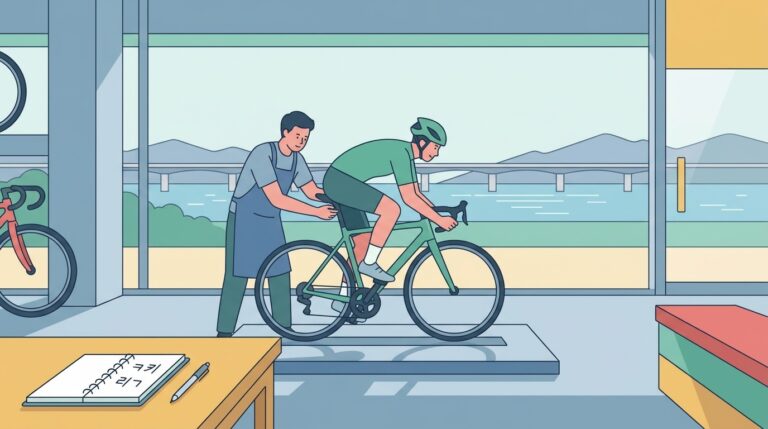
Riding in Seoul: How to Deal with Saddle Pain and Get the Perfect Bike Fit in Korean
Phase 1: Empathy (An Open Letter to My Sore Cycling Crew)
안녕하세요! (Annyeonghaseyo! – Hello!) Your friendly neighborhood Korean editor from Daily Hangul is here!
Picture this: It’s a gorgeous Saturday afternoon in Seoul. You’ve rented a sleek road bike, and you’re riding along the Han River (Hangang), wind in your hair, feeling like the main character of a healing K-Drama. You pass the beautiful Banpo Bridge, heading towards Hanang Park… and then, it hits you. A sharp, radiating ache right in your sit bones.
Every bump on the pavement feels like a personal attack. You try to shift your weight, but it’s no use. You’ve got the dreaded 안장통 (anjangtong – saddle sore/pain).
If you’ve ever had to awkwardly waddle into a Han River convenience store to grab a banana milk while trying not to touch your seat, you are not alone. Getting a proper bike fit (자전거 피팅) and describing your saddle discomfort in Korean can be incredibly tricky—even for advanced learners. Today, we’re going to master the exact, nuanced C1-level expressions you need to communicate with professional bike mechanics in Seoul, so you can ride pain-free and like a local!
Phase 2: Deep Dive into 3 Essential Expressions
1. 안장이 너무 딱딱해서 엉덩이가 배겨요 (An-jang-i neo-mu ttak-ttak-hae-seo eong-dong-i bae-gyeo-yo)
- Pronunciation: An-jang-i (Saddle) neo-mu (too) ttak-ttak-hae-seo (because it is hard) eong-dong-i (buttocks) bae-gyeo-yo (feels sore/pressed hard).
- Meaning: “The saddle is too hard, so my sit bones are aching from the pressure.”
- K-Culture Moment: You will hear this expression often in Korean cycling vlogs on YouTube when riders tackle long-distance paths like the Seoul-to-Busan route.
- Editor’s Insight: The verb 배기다 (baegida) is a fascinating Korean word with no direct single-word English equivalent. It describes that specific, uncomfortable feeling when a hard surface presses relentlessly against your bones (e.g., sleeping on a hard floor without a mattress, or riding on a stiff carbon saddle).
- Situation Spectrum: Casual (⚠️) / Semi-formal (✅) / Formal (✅)
- 🤔 Think About It: Does your native language have a specific word like baegida to describe pressure-induced soreness, or do you have to explain it using multiple words?
2. 패달링할 때 무릎 뒤쪽이 당기는 느낌이 들어요 (Pae-dal-ring-hal ttae mu-reup dwi-jjo-gi dang-gi-neun neu-kkim-i deu-reo-yo)
- Pronunciation: Pae-dal-ring-hal ttae (When pedaling) mu-reup dwi-jjo-gi (the back of the knee) dang-gi-neun (pulling) neu-kkim-i (feeling) deu-reo-yo (arises).
- Meaning: “When I pedal, I feel a pulling sensation in the back of my knee.”
- K-Culture Moment: A classic phrase used during a professional bike fitting session at high-end shops in districts like Mapo or Gangnam.
- Editor’s Insight: In bike fitting, a pulling sensation at the back of the knee usually indicates that your saddle height (안장 높이) is too high. Using the verb 당기다 (danggida – to pull/tighten) perfectly describes muscle tension to a Korean mechanic.
- Situation Spectrum: Casual (✅) / Semi-formal (✅) / Formal (✅)
- 🤔 Think About It: How does your culture view physical discomfort during sports? Is it “no pain, no gain,” or is there an emphasis on scientific, ergonomic harmony like in Korea’s booming “bike fitting” culture?
3. 골반이 양옆으로 흔들리지 않게 안장 위치 좀 잡아주시겠어요? (Gol-ban-i yang-yeop-eu-ro heun-deul-ri-ji ank-ge an-jang wi-chi jom jab-a-ju-si-ges-seo-yo?)
- Pronunciation: Gol-ban-i (Pelvis) yang-yeop-eu-ro (side to side) heun-deul-ri-ji ank-ge (so that it doesn’t rock) an-jang wi-chi (saddle position) jom (please) jab-a-ju-si-ges-seo-yo? (could you adjust/set?)
- Meaning: “Could you adjust the saddle position so that my pelvis doesn’t rock side to side?”
- K-Culture Moment: Used when interacting with certified fitters who use laser alignment and dynamic motion analysis.
- Editor’s Insight: 잡아주다 (jab-ajuda) literally means “to catch/hold for someone,” but in service contexts, it means to tune, calibrate, or fix a setting perfectly.
- Situation Spectrum: Casual (🚫) / Semi-formal (✅) / Formal (✅)
- 🤔 Think About It: Notice how the request uses indirect phrasing (~해 주시겠어요?) to show high respect to the technician’s expertise. How do you show respect to technicians in your country?
Phase 3: Textbook Korean vs. Real-Life Korean
Situation 1: Explaining saddle discomfort
- 📖 Textbook: 안장이 불편합니다. (An-jang-i bul-pyeon-ham-ni-da. – The saddle is uncomfortable.)
- 🗣️ Real-Life: 안장 코가 너무 숙여졌는지 앞쪽으로 자꾸 쏠려요. (An-jang ko-ga neo-mu sug-yeo-jyeot-neun-ji ap-jjo-geu-ro ja-kku ssol-ryeo-yo. – I think the nose of the saddle is tilted down too much because I keep sliding forward.)
- 💡 Why the difference? Textbooks teach generic adjectives like “uncomfortable.” Real riders pinpoint the geometry: 안장 코 (saddle nose) and 쏠리다 (to slide/lean towards one side).
Situation 2: Asking for a saddle height adjustment
- 📖 Textbook: 안장 높이를 낮춰 주세요. (An-jang nop-i-reul nat-chwo ju-se-yo. – Please lower the saddle height.)
- 🗣️ Real-Life: 안장이 너무 높아서 페달링할 때 까치발을 들게 돼요. 조금만 내려주세요. (An-jang-i neo-mu nop-a-seo pae-dal-ring-hal ttae kka-chi-bal-eul deul-ge dwae-yo. Jo-geum-man nae-ryeo-ju-se-yo. – The saddle is so high that I have to extend my tiptoes when pedaling. Please lower it just a touch.)
- 💡 Why the difference? 까치발 (kkachibal) is the Korean word for “tiptoes” (literally “magpie feet”). Describing how your body reacts helps the fitter visualize the issue instantly.
Phase 4: K-Culture Deep Dive & Non-Verbal Manners
4-1. Nunchi & Body Language at the Bike Shop
When explaining your pain to a Korean mechanic, don’t just use words! Pointing to your hip bones while saying “여기 뼈가 배겨요” (yeo-gi ppyeo-ga bae-gyeo-yo – my bones hurt here) is completely normal. When they make an adjustment, sit on the bike, pedal backward, and give a deep nod of appreciation (목례 – mongnye) while saying “아, 훨씬 편해졌어요!” (Ah, hwol-ssin pyeon-hae-jyeot-eo-yo! – Oh, it feels much better!).
4-2. The Han River Cycling Cult (한강 라이딩 문화)
In Korea, cycling isn’t just exercise; it’s a social ritual. After a hard ride, Koreans head to a Han River convenience store for 편의점 라면 (instant ramen cooked on automatic induction stoves) and a cold beer or iced coffee. Knowing how to tune your bike is your ticket to joining these cycling clubs (donghohoe – 동호회).
Phase 5: Real-Life Roleplay Scenario
- Setting: A high-end bike fitting studio in Mapo, Seoul, near the Han River bike path.
- Characters:
- 민우 (Min-woo): A meticulous, friendly bike fitting expert.
- Alex (You): An passionate cyclist suffering from chronic riding pain.
민우: 어서 오세요! 오늘 자전거 피팅 예약하고 오신 분 맞으시죠? 어디가 가장 불편하신가요?
(Eor-seo o-se-yo! O-neul ja-jeon-geo pi-ting ye-yak-ha-go o-sin bun maj-eu-si-jyo? Eo-di-ga ga-jang bul-pyeon-ha-sin-ga-yo?)
“Welcome! You booked a bike fitting session today, right? Which area is bothering you the most?”
Alex: 🎭 (Rubbing lower back and sighing) 네, 맞아요. 조금만 오래 타면 안장통이 너무 심해서요. 허리도 끊어질 것 같이 아파요.
(Ne, maj-a-yo. Jo-geum-man o-rae ta-myeon an-jang-tong-i neo-mu sim-hae-seo-yo. Heo-ri-do kkeun-eo-jil geot gat-i a-pa-yo.)
“Yes, that’s right. If I ride even just a little while, my saddle pain gets too severe. My lower back feels like it’s going to snap, too.”
민우: 아, 그러시군요. 우선 평소 타시는 자세대로 롤러 위에서 페달링을 한번 해 보시겠어요?
(Ah, geu-reo-si-gun-yo. U-san pyeong-so ta-si-neun ja-se-dae-ro rol-reo wi-e-seo pae-dal-ring-eul han-beon hae bo-si-ges-seo-yo?)
“Ah, I see. First, could you pedal on the roller in your usual riding posture?”
Alex: 🎭 (Mounting the bike and pedaling) 네, 이렇게 타는데… 페달을 밟을 때 무릎 앞쪽에 무리가 오는 느낌이 들어요.
(Ne, i-reo-ke ta-neun-de… pae-dal-eul balb-eul ttae mu-reup ap-jjo-ge mu-ri-ga o-neun neu-kkim-i deu-reo-yo.)
“Yes, I ride like this… but when I step on the pedals, I feel a strain on the front of my knees.”
민우: 아! 지금 보니까 안장이 너무 뒤로 밀려 있고, 높이도 약간 낮네요. 이러면 허벅지 앞쪽에 과부하가 걸려요.
(Ah! Ji-geum bo-ni-kka an-jang-i neo-mu dwi-ro mil-ryeo it-go, nop-i-do yak-gan nat-nae-yo. I-reo-myeon heo-beok-ji ap-jjo-ge gwa-bu-ha-ga geol-ryeo-yo.)
“Ah! Looking at it now, your saddle is pushed too far back, and the height is slightly low. This overloads the front of your thighs.”
Alex: 🎭 (Nodding with realization) 아, 그래서 허벅지가 금방 털렸군요! 안장 위치를 앞으로 좀 당겨야겠네요?
(Ah, geu-rae-seo heo-beok-ji-ga geum-bang teol-ryeot-gun-yo! An-jang wi-chi-reul ap-eu-ro jom dang-gyeo-ya-get-nae-yo?)
“Ah, so that’s why my thighs got exhausted so quickly! I guess we should pull the saddle position forward a bit?”
민우: 네, 맞습니다. 안장을 5mm 정도 앞으로 당기고, 높이를 1cm 올려볼게요. 한번 다시 타보세요.
(Ne, mat-seub-ni-da. An-jang-eul o-mil-ri jeong-do ap-eu-ro dang-gi-go, nop-i-reul il-sen-chi ol-ryeo-bol-ge-yo. Han-beon da-si ta-bo-se-yo.)
“Exactly. I will pull the saddle forward by about 5mm and raise the height by 1cm. Try riding it again.”
Alex: 🗣️ (Pedaling again with a bright smile) 와, 신세계네요! 페달링할 때 무릎이 훨씬 부드럽고 엉덩이 압박도 덜해요!
(Wa, sin-se-gae-nae-yo! Pae-dal-ring-hal ttae mu-reup-i hwol-ssin bu-deu-rop-go eong-dong-i ap-bak-do deol-hae-yo!)
“Wow, this is a whole new world! My knees feel much smoother when pedaling, and there is way less pressure on my butt!”
🔀 Choose Your Path!
What do you say next to wrap up the session?
- **A:
Frequently Asked Questions (FAQ)
Q: What does "안장이 너무 딱딱해서 엉덩이가 배겨요 (An-jang-i neo-mu ttak-ttak-hae-seo eong-dong-i bae-gyeo-yo)" mean in Korean and how do you pronounce it?
A: In Korean, "안장이 너무 딱딱해서 엉덩이가 배겨요 (An-jang-i neo-mu ttak-ttak-hae-seo eong-dong-i bae-gyeo-yo)" is pronounced [An-jang-i (Saddle] and means: "The saddle is too hard, so my sit bones are aching from the pressure."






