

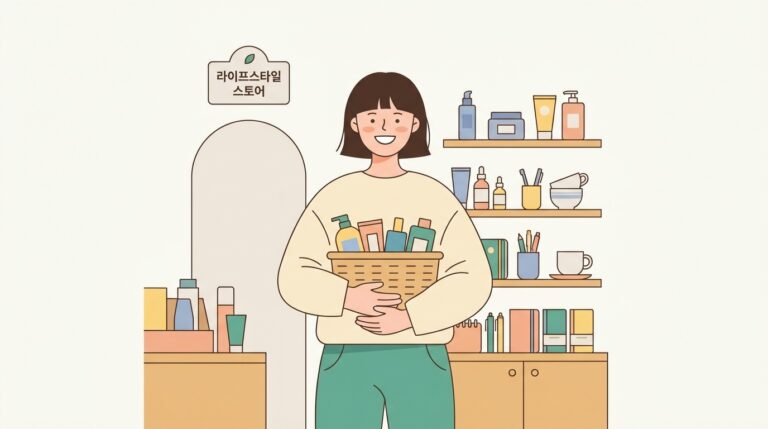
Master Daiso Like a Native: The Ultimate Guide to Korean Budget Shopping (C2 Level)
Phase 1: Empathy (Connection & Storytelling)
안녕하세요! It’s your favorite local curator from Daily Hangul!
Imagine this: You walk into a multi-story Daiso in Hongdae or Myeongdong, looking for a quick travel charger. Suddenly, you are surrounded by an overwhelming maze of aesthetic storage bins, professional-grade skincare collaborations, and quirky kitchen gadgets that you didn’t know existed but now absolutely need.
For advanced learners, shopping at Daiso isn’t just about grabbing cheap items; it’s a cultural expedition. It’s where the high-velocity trend cycle of Korea meets the philosophy of 가성비 (gaseongbi – cost-effectiveness) and 소확행 (sohwakhaeng – small but certain happiness). However, the real challenge at this level isn’t just finding things; it’s decoding the highly nuanced idiomatic expressions, consumer slang, and unspoken social etiquette that local “Daiso hunters” use. Today, we’re leveling up your Korean from textbook-fluent to street-smart marketplace master.
Phase 2: Deep-Dive into 3 Essential Expressions
1. 가성비 갑 (Gaseongbi Gap)
- Pronunciation: [Ga-seong-bi Gap] (Sounds like “gah-sung-bee gahp”)
- Meaning: Literal: “Lord of Cost-Effectiveness” / Nuance: Absolutely unbeatable value for money.
- K-Culture Moment: You will hear beauty YouTubers reviewing Daiso’s famous VT Reedle Shot line, slapping their cheeks in disbelief, and declaring, “이건 진짜 가성비 갑이에요!” (This is seriously the lord of cost-effectiveness!).
- Editor’s Insight: Gap (갑) originates from the legal term for the dominant party in a contract (versus Eul/을, the weaker party). In modern slang, suffixing something with 갑 means it reigns supreme over its category.
- Situation Spectrum: Casual (✅) / Semi-formal (✅) / Formal (⚠️ – use ‘가성비가 극대화된’ instead)
- 🤔 Think About It: How does your culture express the balance between price and quality? Is there a word that carries the same socio-economic weight as “갑”?
2. 품절 대란 (Pumjeol Daeran)
- Pronunciation: [Pum-jeol Dae-ran] (Sounds like “poom-juhl dae-rahn”)
- Meaning: Literal: “Out-of-stock Havoc” / Nuance: A massive nationwide sell-out craze.
- K-Culture Moment: When Daiso launched its viral cosmetic collaborations, lines formed before opening. Netizens posted pictures of empty shelves with the caption “또 품절 대란…” (Another out-of-stock national crisis…).
- Editor’s Insight: Daeran (대란) means a great rebellion or crisis. Using this term elevates a simple inventory shortage to an epic, shared social phenomenon.
- Situation Spectrum: Casual (✅) / Semi-formal (✅) / Formal (✅)
- 🤔 Think About It: Why do you think micro-trends catch fire so quickly in Korea’s highly digitized society?
3. 꿀템 / 득템 (Kkultem / Deuktem)
- Pronunciation: [Kkul-tem / Deuk-tem] (Sounds like “gool-tem” / “deuk-tem”)
- Meaning: Literal: “Honey Item” / “Gain Item” / Nuance: An incredibly useful, hidden gem / A successful, satisfying purchase.
- K-Culture Moment: On Instagram, searching the hashtag
#다이소꿀템reveals thousands of clever hacks using cheap organizational tools. - Editor’s Insight: Kkul (꿀 – honey) is Korean slang for anything sweet, easy, or highly beneficial. Deuk (득) comes from Hanja (得), meaning to acquire or profit.
- Situation Spectrum: Casual (✅) / Semi-formal (⚠️) / Formal (🚫)
- 🤔 Think About It: Does your native language use food metaphors (like “honey”) to describe highly desirable material goods?
Phase 3: Textbook Korean vs. Real-Life Korean
Situation 1: Asking if a viral item is in stock
- 📖 Textbook: “이 제품은 지금 재고가 있습니까?” (Is this product in stock right now?)
- 🗣️ Real-Life: “혹시 이거 요즘 SNS에서 유명한 건데, 혹시 들어왔나요? 아니면 다 빠졌나요?” (Excuse me, this is really famous on social media lately, did it come in? Or is it completely gone/sold out?)
- 💡 Why the difference? The textbook phrase sounds like a formal inventory audit. Real-life Korean utilizes soft qualifiers like 혹시 (by any chance) and vivid phrasal verbs like 빠지다 (to drain out/be sold out) to sound polite yet natural.
Situation 2: Expressing amazement at the low price
- 📖 Textbook: “가격에 비해 품질이 매우 우수합니다.” (The quality is very excellent compared to the price.)
- 🗣️ Real-Life: “이 가격에 이 퀄리티가 나오는 게 말이 안 돼요. 진짜 미친 가성비네요.” (It makes no sense that this quality comes at this price. This is truly insane cost-effectiveness.)
- 💡 Why the difference? C2 speakers use idiomatic constructs like 말이 안 되다 (to not make sense) and intensive prefixes like 미친 (insane/crazy) to express genuine enthusiasm rather than robotic appreciation.
Phase 4: K-Culture Deep-Dive & Non-Verbal Etiquette
4-1. The Art of “Daiso Browsing” (눈치 & Body Language)
When hunting for 품절 대란 items inside a packed multi-story Daiso, spatial awareness (눈치 – nunchi) is key.
* The Soft Tap: If someone is blocking the highly coveted cosmetics shelf, do not say “Excuse me” loudly. Instead, make soft eye contact, slightly bow your head, and say “잠시만요~” (Jam-si-man-yo – Just a moment) while gently pivoting your shoulder.
* The Basket Etiquette: If you carry a basket (바구니), keep it close to your thigh. Swinging it in narrow aisles is considered inconsiderate in high-density Korean retail environments.
4-2. The “Daiso Cosmetic” Revolution
In the past, budget shops were associated with sub-par chemical goods. Today, Korean beauty giants like Amorepacific and VT Cosmetics manufacture dedicated product lines exclusively for Daiso. This has democratized skincare, making C2-level consumer literacy highly relevant. Knowing terms like 피부 장벽 (skin barrier) and 유효 성분 (active ingredients) will help you read the back of Daiso packaging like a pro.
Phase 5: Real-Life Roleplay Scenario
The Setup
- Setting: The bustling cosmetics aisle of Daiso, Gangnam Branch.
- Characters:
- Ji-su (지수): A savvy local shopper who knows every hack.
- Min-woo (민우): A foreign exchange student seeking the legendary Reedle Shot.
The Dialogue
- 민우: (핸드폰 화면을 보여주며) 🎭 Slightly hesitant, scratching his neck
“저기요, 혹시 요즘 난리 난 그 리들샷, 오늘 재고 좀 남아 있나요?” - 지수 (직원): 🎭 Sighs softly, looking apologetic
“아, 그거요? 그거 요즘 완전히 품절 대란이라 아침 오픈런 아니면 구하기 힘들어요.” - 민우: 🎭 Disappointed, shoulders dropping
“아… 진짜요? 역시 득템하기 하늘의 별 따기네요. 언제쯤 물건이 다시 들어올까요?” - 지수: 🎭 Leaning in, whispering a secret insider tip
“매주 화요일이랑 목요일 아침 10시에 물류 차량 들어오거든요? 그때 맞춰서 오시면 살 확률이 높아요.” - 민우: 🎭 Eyes widening in gratitude
“와, 진짜 고급 정보네요! 혹시 그거 말고 요즘 쓸 만한 다른 가성비 갑 뷰티템은 없을까요?” - 지수: 🎭 Pointing enthusiastically to the bottom shelf
“이거 모델링 팩 한번 써보세요. 팩 전문 브랜드 숍에서 파는 거랑 성분이 똑같은데 단돈 2,000원이에요. 이거 완전 혜자템이에요!” - 민우: 🎭 Picking up three packets, smiling
“대박! 이 가격에 이 성분이라니… 밑져야 본전이니까 종류별로 쟁여 가야겠어요.” - 지수: 🎭 Nodding in approval
“탁월한 선택이세요! 그건 정말 돈 버는 거예요.”
🔀 Interactive Choice
What would you say next to make sure you get the receipt for tax refund?
* A (Best): “저 혹시 이거 세금 환급(Tax Refund) 매장에서 바로 처리 가능한가요?”
* B (Bad): “텍스 리펀 주세요.” (Too abrupt, lacks polite particle and context)
* C (Risk): “영수증에 세금 빼주세요.” (Grammatically awkward; sounds like you want them to manually subtract taxes at the register)
Feedback
- A is Best: Polite, grammatically perfect for C2, and uses the correct industry term 세금 환급.
- B is Bad: Sounds demanding and relies heavily on English without natural framing.
- C is Risk: Could cause confusion as tax refunds are processed through the self-checkout system, not by manual cashier subtraction.
Phase 6: 10-Second Emotion Shadowing Drill
Practice these high-frequency emotional outbursts with native rhythm. / represents a natural micro-pause.
- [🥺 Disappointed & Whining]
- “아… / 진짜 겨우 왔는데 / 또 품절이야? / 대박 아쉽다…”
- R Romanization: A… / jin-jja gyeo-u wan-neun-de / tto pum-jeor-i-ya? / dae-bak a-swip-da…
- [🤩 Ecstatic & Amazed]
- “이게 진짜 / 단돈 오천 원이라고? / 이건 무조건 / 쟁여야 돼!”
- R Romanization: I-ge jin-jja / dan-don o-cheon-won-i-ra-go? / i-geon mu-jo-geon / jaeng-yeo-ya dwae!
Phase 7: K-Culture Mini-Dictionary
- 혜자스럽다 (Hye-ja-seor-eop-da) | To be incredibly generous in portion or quality relative to price. Originally named after actress Kim Hye-ja’s convenience store lunchbox line.
- 혜자템 (Hye-ja-tem) | An item of supreme value. The direct opposite of a “창렬템” (overpriced, disappointing item).
- 쟁이다 (Jaeng-i-da) | To hoard or stock up on items. Commonly used when a viral product is back in stock.
- 오픈런 (O-peun-reon) | Konglish for “Open Run”. Rushing to a store the moment it opens to secure limited-edition or viral items.
Phase 8: Traveler’s Survival Kit
Survival Phrases TOP 3
- “혹시 이 지점에 재고 없으면 다른 지점 재고 조회해 주실 수 있나요?”
- Romanization: Hok-si i ji-jeom-e jae-go eop-seu-myeon da-reun ji-jeom jae-go jo-hoe-hae ju-sil su in-na-yo?
- Pro Tip: Daiso staff can check live inventory of nearby stores on their PDA devices!
- “셀프 계산대 카드로 계산할 때 봉투 추가 어떻게 하나요?”
- Romanization: Sel-peu gye-san-dae ka-deu-ro gye-san-hal ttae bong-tu chu-ga eo-tteo-ke ha-na-yo?
- Pro Tip: Daiso checkout machines require you to scan a barcode or click a button to purchase a plastic/paper bag.
- “이거 불량품인 것 같은데 교환이나 환불 규정이 어떻게 되나요?”
- Romanization: I-geo bul-ryang-pum-in geot gat-eun-de gyo-hwan-i-na hwan-bul gyu-jeong-i eo-tteo-ke doe-na-yo?
- Pro Tip: Keep your paper receipt; exchange/refund is usually valid for 14 days at any branch nationwide.
Editor’s Travel Note
Before heading out, make sure to download the Daiso Mall App on your phone. It allows you to search for specific items and check real-time stock levels at individual branches nearby, saving you from a wasted trip! Please note: App store region restrictions and membership features are subject to change over time.
Phase 9: “Going Deeper” (Cultural Reflection)
In modern Korea, shopping at Daiso has transcended mere necessity. It represents a psychological defense mechanism against high inflation. For Gen Z, “다이소 털기” (looting Daiso) is a form of stress relief. Spending 10,000 KRW ($7 USD) yields a basket full of tiny joys, reflecting the societal shift toward instant gratification when long-term goals like buying a house seem distant.
💬 Your Turn: Is budget shopping in your country viewed as a fun lifestyle trend, or purely as a functional chore? Share your thoughts in the comments below!
Phase 10: FAQ & Common Mistakes
Q: Can I use foreign credit cards at Daiso self-checkout kiosks?
A: Yes, almost all Daiso self-checkout kiosks accept international cards like Visa, Mastercard, and UnionPay. Simply select the “Card (신용카드)” option on the screen.
Q: What is the maximum price of an item at Daiso?
A: No matter how premium the product looks, Daiso maintains a strict price cap of 5,000 KRW. If you see something marked 5,000 KRW that looks like it should cost 20,000 KRW, that is the ultimate 혜자템!
Q: Can I return an item purchased at a Seoul branch to a branch in Busan?
A: Yes! As long as you have the original receipt and the packaging is unopened, you can process returns or exchanges at any official Daiso branch nationwide within 14 days.
🚨 Common Mistakes Alert!
- Calling all bags “비닐봉지” (Vinyl bag): While understood, ask for “종이 쇼핑백” (Paper shopping bag) or “다회용 백” (Reusable bag) to sound more environmentally conscious.
- Looking for items on the wrong floor: Larger Daisos have specialized floors (e.g., character items, kitchenware). Always check the floor directory near the elevator before wandering.
- Assuming everything is 1,000 KRW: While Daiso’s base price is 1,000 KRW, items can range up to 5,000 KRW. Always double-check the price tag before scanning.
Phase 11: Action Mission
- 🥉 Bronze Mission: Next time you go shopping, use the word “가성비” instead of “싸다” (cheap) when talking about prices.
- 🥈 Silver Mission: Take a photo of your favorite budget item and post it on Instagram with the hashtag
#내돈내산(My own money, my own purchase) and#득템. - 🥇 Gold Mission: Go to a local Daiso, find a staff member, and ask them about a viral product’s restocking schedule using the exact phrases learned in Phase 5.
Phase 12: Interactive Quiz Challenge
Test your high-society shopping IQ!
1. Situational Judgment
You bought a phone stand for 2,000 KRW, and it works better than a 30,000 KRW brand product. What slang best describes this?
* A) 창렬템
* B) 혜자템
* C) 품절템
2. Fill in the Blank
“이 화장품은 요즘 SNS에서 난리 난 ____________이라서 구하기가 정말 힘들어요.”
* A) 소확행
* B) 품절 대란
* C) 오픈런
View Answers & Explanations
- Correct Answer: B) 혜자템
Explanation: 혜자템 refers to an item with incredibly high value for its cheap price. 창렬템 means overpriced trash. -
Correct Answer: B) 품절 대란
Explanation: 품절 대란 (out-of-stock crisis/craze) fits perfectly in the context of a highly sought-after viral item that is hard to find.






