

Master K-Camping: ‘Auto-Camping’ vs. ‘Chabak’ – The Ultimate Korean Outdoor Guide (C1)
Phase 1: Empathy (Welcome to the K-Camping Craze!)
안녕하세요! (Annyeonghaseyo!) It’s your favorite Daily Hangul editor and local culture navigator here!
If you have been watching recent K-Dramas like Hospital Playlist or variety shows like House on Wheels, you’ve probably noticed a major trend: Koreans are absolutely obsessed with camping. But when you start planning your own Korean outdoor adventure, you will quickly run into two terms that seem to dominate the scene: 오토캠핑 (Auto-Camping) and 차박 (Chabak).
At first glance, they might seem like the same thing—after all, both involve cars and the great outdoors. But in Korea, choosing between the two is a major lifestyle statement that dictates your gear, your vibe, and even the etiquette you need to follow. Many advanced learners get these confused, leading to booking disasters or awkward interactions at campsites.
Don’t worry! Today, we are diving deep into the nuanced vocabulary of Korean camping culture. By the end of this guide, you’ll not only know the difference but also sound like a seasoned local camper when discussing your weekend plans with Korean friends.
Phase 2: Deep Dive into 3 Essential Expressions
1. 차박 (Chabak)
- Pronunciation: [Cha-bak] (Sounds like “cha” as in charity + “bahk” like the first syllable of boxing)
- Meaning: Car-camping / Sleeping in your car (specifically modified for sleeping)
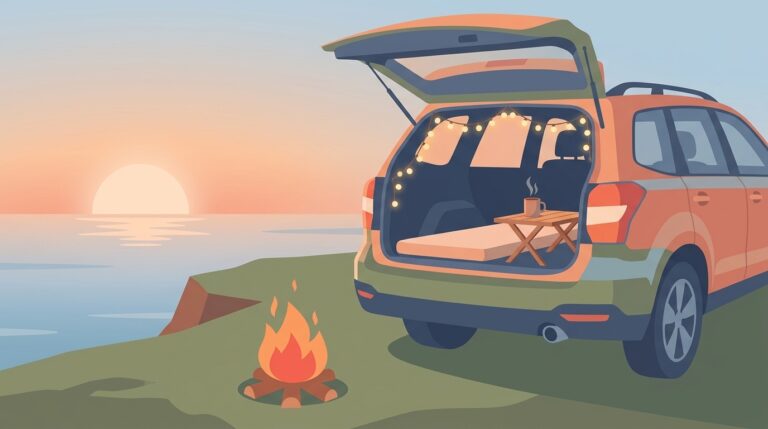
- K-Culture Moment: Think of those aesthetic Instagram reels where someone opens the trunk of their SUV to reveal fairy lights, a cozy mattress, and a view of the sunset over the East Sea.
- Editor’s Insight: Cha (차) means car, and bak (박) comes from sukbak (숙박 – lodging/staying the night). Unlike Western car-camping where you might pitch a tent next to your car, Chabak specifically means sleeping inside the vehicle after folding down the rear seats (평탄화 – pyeongtanhwa or flat-bedding).
- Situation Spectrum: Casual (✅) / Semi-formal (✅) / Formal (⚠️ – Used in industry contexts, but conversational)
- 🤔 Think About It: Chabak reflects the Korean desire for minimalism, mobility, and quick romantic getaways in a densely populated country where booking a traditional campsite can be harder than ticketing a BTS concert. How does this compare to your country’s road-trip culture?
2. 불멍 (Bul-meong)
- Pronunciation: [Bul-meong] (Sounds like “bool” as in bullet + “meong” as in mung bean)
- Meaning: Staring blankly at a campfire (Campfire meditation)
- K-Culture Moment: You’re sitting around a fire pit at 11 PM, the firewood crackling, drinking canned beer, and nobody is speaking—everyone is just entranced by the flames.
- Editor’s Insight: This is a portmanteau of bul (불 – fire) and meong (멍 – from meong-hada, meaning to space out). It’s a vital mental-health trend in hyper-busy Korea. You will also hear mul-meong (물멍 – staring at water/ocean) and 숲멍 (sup-meong – staring at the forest).
- Situation Spectrum: Casual (✅) / Semi-formal (✅) / Formal (🚫)
- 🤔 Think About It: Why has “spacing out” (meong-ttaerigi) become such a celebrated, therapeutic activity in modern Korean society?
3. 장비빨 (Jangbi-bbal)
- Pronunciation: [Jang-bi-bpal] (Sounds like “jahng-bee” + “bahl” with a very sharp, tense ‘p/b’ sound)
- Meaning: The power of gear / Relying heavily on expensive equipment
- K-Culture Moment: A beginner camper shows up with a premium snow peak tent, an aesthetic wood roll-table, three different types of lanterns, and a professional-grade espresso maker.
- Editor’s Insight: Jangbi (장비) means equipment, and the suffix -bpal (빨) is a slang term meaning “the effect/force of” something (like hwajang-bpal – the power of makeup). In Korea’s highly aesthetic-driven camping scene, having the right “look” and high-end gear is a huge subculture.
- Situation Spectrum: Casual (✅) / Semi-formal (⚠️) / Formal (🚫)
- 🤔 Think About It: Is camping in your culture more about rugged survival, or do people also focus heavily on the aesthetic and gear (장비빨)?
Phase 3: Textbook Korean vs. Real-World Korean
Situation 1: Explaining your weekend plans
- 📖 Textbook: “주말에 자동차와 텐트를 가지고 캠핑을 갈 예정입니다.” (I plan to go camping with a car and a tent this weekend.) – Accurate but sounds like a manual.
- 🗣️ Real-World: “이번 주말에 가볍게 차박이나 때리려고요.” (I’m thinking of doing a quick, casual Chabak session this weekend.)
- 💡 Why the difference? The verb 때리다 (to hit) is used as a slang booster in casual Korean to mean “doing an activity impulsively or casually” (e.g., 커피 때리다 – grab a quick coffee).
Situation 2: Praising someone’s amazing camping setup
- 📖 Textbook: “캠핑 장비가 아주 훌륭하고 멋지십니다.” (Your camping equipment is very excellent and cool.) – Too formal, sounds distant.
- 🗣️ Real-World: “우와, 장비 장난 아니네요! 완전 장비빨 제대로인데요?” (Wow, your gear is no joke! You’ve got that ultimate gear-flex going on!)
- 💡 Why the difference? “장난 아니다” (no joke) and “제대로다” (doing it properly/fully) are essential colloquialisms to show genuine enthusiasm and compliment someone’s dedication to their hobby.
Phase 4: K-Culture Deep Dive & Non-Verbal Manners
4-1. The Art of ” 매너타임 ” (Manner Time)
In Korea, campsites have strict rules, but none is more sacred than 매너타임 (Manner Time). Usually starting at 10:00 PM or 11:00 PM, this is the designated quiet hours.
* The Gesture: Whispering with your hand slightly covering your mouth, turning down your camping lanterns to a warm dim glow, and stepping lightly to avoid waking others sleeping in nearby tents.
* The Taboo: Loud music or using a generator during Manner Time is considered extremely rude and will quickly earn you a complaint (민원 – minwon) from the campsite manager.
4-2. The “Chabak” Aesthetic (감성 차박)
Unlike traditional rugged camping, Korean Chabak is heavily tied to the concept of 감성 (Ganseong – emotion/aesthetic). It’s not just about sleeping in a car; it’s about curating a cozy, light-filled, interior-like space inside your trunk. Key cultural elements include:
* 평탄화 (Pyeongtanhwa): The absolute first step of Chabak—folding the seats 100% flat and adding a custom mattress.
* 꼬꼬무/꼬마전구 (Mini string lights): Hanging warm yellow fairy lights inside the car frame is mandatory for the Ganseong vibe.
Phase 5: Real-Life Roleplay Scenario
Setting: Min-jun (an experienced Korean camper) and Sarah (an advanced foreign learner) are planning a weekend trip. Sarah wants to try camping in Korea for the first time.
Characters:
- 민준 (Min-jun): The ultimate camp-guru who loves 장비빨.
- 사라 (Sarah): Eager to experience authentic Korean outdoor culture.
민준: 사라 씨, 이번 주말에 날씨도 좋은데 캠핑이나 갈래요?
      (Sarah, the weather is great this weekend. Want to go camping?)

사라: 오, 좋아요! 저 요즘 인스타에서 차박 영상 진짜 많이 봤거든요. 우리 차박 가요!
      (Oh, I'd love to! I've seen so many Chabak videos on Instagram lately. Let's do Chabak!)

민준: 차박이요? 차박은 차 안에서 자는 거라 평탄화 작업이랑 감성 조명이 필수인데, 차종이 어떻게 돼요?
      (Chabak? Since we sleep in the car, flattening the seats and aesthetic lighting are essential. What kind of car do you have?)

사라: 제 차는 준중형 SUV라 시트가 끝까지 접혀요! 매트만 깔면 되겠어요.
      (Mine is a mid-sized SUV, so the seats fold all the way down! We just need to lay down a mattress.)

민준: 완벽하네요! 그럼 오토캠핑장 대신 조용한 노지로 갈까요, 아니면 편의시설이 있는 오토캠핑장 내 차박 존으로 갈까요?
      (Perfect! Then shall we go to a quiet wild spot, or a Chabak zone inside an auto-camping site with amenities?)

사라: 처음이니까 화장실이 있는 캠핑장으로 가요. 가서 맛있는 것도 먹고 불멍도 해요!
      (Since it's my first time, let's go to a campsite with a restroom. Let's eat delicious food and do some bul-meong there!)

민준: 하하, 불멍에 삼겹살은 국룰이죠. 제가 이번에 새로 산 스토브랑 랜턴 가져갈게요. 장비빨 좀 보여드려야겠네요.
      (Haha, bul-meong and pork belly is the unwritten law. I'll bring the stove and lantern I newly bought. Gotta flex my gear power!)

사라: 와, 벌써부터 설레요! 매너타임만 잘 지키면 문제없겠죠?
      (Wow, I'm already excited! As long as we keep the Manner Time, we'll be fine, right?)
🔀 Interactive Choice Point
Min-jun asks: “사라 씨, 캠핑장 도착해서 사이트 구축하고 나서 바로 뭐부터 할래요?” (Sarah, after we arrive at the campsite and set up our site, what do you want to do first?)
- A: “바로 삼겹살 구우면서 술 한잔 때려요!”
- Feedback (Best): Excellent! Using “때려요” in this context shows you perfectly understand the casual, stress-relieving vibe of Korean camping culture. Min-jun will love your enthusiastic, local energy!
- B: “텐트 안에서 조용히 독서합시다.”
- Feedback (Bad): While peaceful, camping in Korea is highly social and food-centric. Suggesting quiet reading right away might make the atmosphere a bit too stiff for a fun weekend trip.
- C: “캠핑장 사장님한테 매너타임 언제인지 따지러 가요.”
- Feedback (Risk): “따지다” means to aggressively dispute or argue. Checking the rules is good, but asking with this word sounds combative. Use “여쭤보러 가요” (let’s go ask politely) instead!
Phase 6: 10-Second Emotion Shadowing Drill
Practice saying these with the exact emotional nuance of a native speaker. The slashes / represent natural pausing points.
- [😊 Filled with excitement and anticipation]
- “와, / 진짜 오랜만에 / 불멍 하니까 / 힐링 제대로 되네요!”
- Wa, / jinjja oraenmane / bul-meong hanikka / healing jedaero doeneyo!
- (Wow, / doing bul-meong / for the first time in a while / is so deeply healing!)
- [🥺 Playfully teasing a friend flexing their expensive gear]
- “아니, / 하룻밤 자는데 / 무슨 장비가 / 이래 많아요? / 완전 장비빨이네!”
- Ani, / harutbam janeunde / museun jangbiga / irae manhayo? / Wanjeon jangbi-bpal-ine!
- (Hey, / you’re only staying one night / but why do you have / so much gear? / Total gear-flexing!)
Phase 7: K-Culture Mini-Dictionary
- 노지 캠핑 (No-ji Camping) | Wild Camping | Camping in non-designated spots like beaches or riverbanks without electricity or running water. Highly adventurous.
- 밀키트 (Meal Kit) | Camping Meal Kits | Pre-packaged, ready-to-cook meals. In Korea, buying advanced camping meal kits (like budae-jjigae or gopchang-jeongol) is more common than prepping ingredients from scratch.
- 알빙 (R-ving) | RV-ing | A portmanteau of RV and Camping. Refers to traveling and camping in a caravan or motorhome.
- 데크 (Deck) | Wooden Deck Platform | Most premium Korean auto- campsites offer elevated wooden platforms to pitch tents on, protecting them from mud and moisture.
Phase 8: Traveler’s Survival Kit
Survival Phrases TOP 3
- “여기 매너타임이 몇 시부터예요?”
- Yeogi manner-time-i myeot si-buteo-yeyo?
- Pro Tip: Use this when checking in at an auto-campsite to show you are a respectful camper.
- “혹시 장작 추가로 구매할 수 있나요?”
- Hoksi jangjak chugaro gumae-hal su innayo?
- Pro Tip: “Jangjak” means firewood. Crucial phrase when your fire is dying during bul-meong.
- “쓰레기 분리수거장은 어디에 있나요?”
- Sseuregi bunri-sugeojang-eun eodie innayo?
- Pro Tip: Korea is extremely strict about garbage sorting. Always ask where the recycling station is before packing up.
Editor’s Travel Note
When planning a camping trip in Korea, the most crucial tool is the Camfit App or using Naver Maps to search for “오토캠핑장” (Auto-campsites). Traditional wild camping (노지) is increasingly restricted due to environmental rules, so booking a designated spot is highly recommended. Note: Campsite reservation rules and fees can change seasonally, so always check the platform beforehand.
Phase 9: “Going One Step Deeper” (Societal Insight)
In the West, camping is often associated with escaping civilization and surviving in the rugged wild. In Korea, however, camping is an extension of urban comfort relocated to nature. It is deeply communal yet highly respectful of personal boundaries. This duality is why things like Manner Time are so strictly observed; in a country where personal space is scarce, respecting the silence of others in nature is the ultimate form of social consideration.
💬 Your Turn: Would you prefer the organized convenience of a Korean Auto-Camping site, or the aesthetic, minimalist freedom of Chabak? Let us know in the comments below!
Phase 10: FAQ & Misconception Buster
Q: Can I do ‘Chabak’ anywhere I park my car in Korea?
A: Absolutely not! Sleeping in your car at public beach parking lots, national parks, or private properties can result in heavy fines. You should search for designated Chabak zones (차박지) or use auto-campsites that allow car entry.
Q: What is the main difference between Auto-Camping and Chabak?
A: Auto-Camping (오토캠핑) typically involves pitching a large tent next to your parked car and utilizing campsite facilities like electricity. Chabak (차박) focuses on sleeping directly inside your modified vehicle, often prioritizing mobility and simpler setups.
Q: Do I need to bring my own firewood to campsites?
A: Most managed auto-campsites sell firewood (장작) at their convenience stores (매점). However, wild camping spots do not, so you’ll need to purchase it at a local mart beforehand.
🚨 Common Mistakes Warning Plate
- Mistake 1: Leaving trash behind after Chabak (known as 쓰레기 무단투기).
- Correct Action: Always bring biodegradable trash bags and dispose of everything at designated recycling stations.
- Mistake 2: Playing music out loud after 10 PM.
- Correct Action: Switch to headphones or turn off devices entirely once Manner Time begins.
- Mistake 3: Not securing your tent/car tarp against strong winds.
- Correct Action: Korean coastal campsite winds can be fierce. Always use proper pegs (팩다운).
Phase 11: Action Mission & Engagement
- Bronze Mission: Write down your favorite camping style in the comments using either “오토캠핑” or “차박”.
- Silver Mission: Share an Instagram story of your favorite outdoor spot and tag it with
#차박and#불멍. - Gold Mission: Next time you speak with a Korean friend, tell them: “나중에 우리 같이 불멍 하면서 삼겹살 먹어요!” (Let’s do bul-meong and eat pork belly together sometime!)
🎮 K-Culture Mission
Watch an episode of the Korean variety show House on Wheels (바퀴 달린 집) or Camping Vibes (감성캠핑). Write down three camping gear words you recognize from the show!
Phase 12: Interactive Quiz Challenge
1. Which word refers to “staring blankly at a campfire to destress”?
- A) 물멍 (Mul-meong)
- B) 불멍 (Bul-meong)
- C) 숲멍 (Sup-meong)
2. True or False: You can legally do ‘Chabak’ in any public parking lot in Korea.
- True
- False
▶ Click here to reveal the Answers & Explanations!
- Correct Answer: B) 불멍 (Bul-meong)
- Explanation: ‘Bul’ (불) means fire. Mul-meong is staring at water, and Sup-meong is staring at trees.
- Correct Answer: False
- Explanation: Doing Chabak in non-designated public areas can lead to fines. Always use official sites or legal Chabak zones!







